
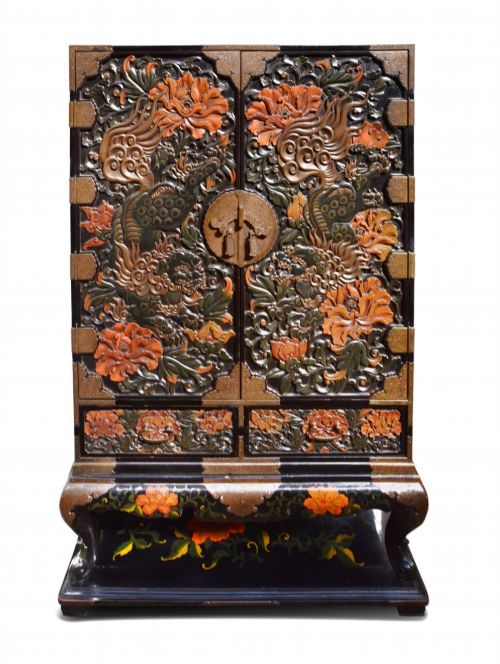


19th Century Japanese Cabinet
These pieces of a 19th century japanese cabinet bring intricate lacquerwork and refined craftsmanship into a room.
19th Century Japanese Cabinet
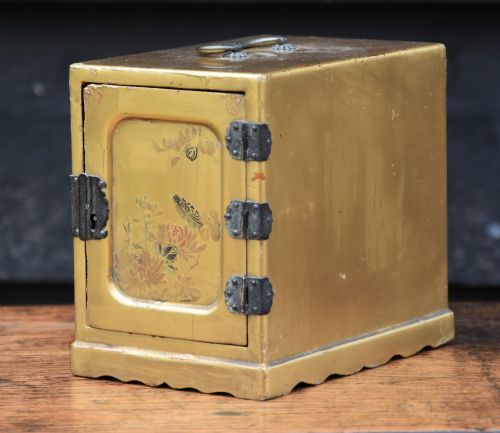
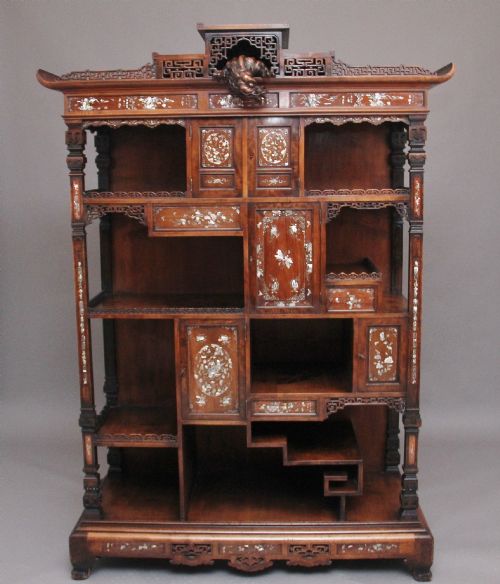
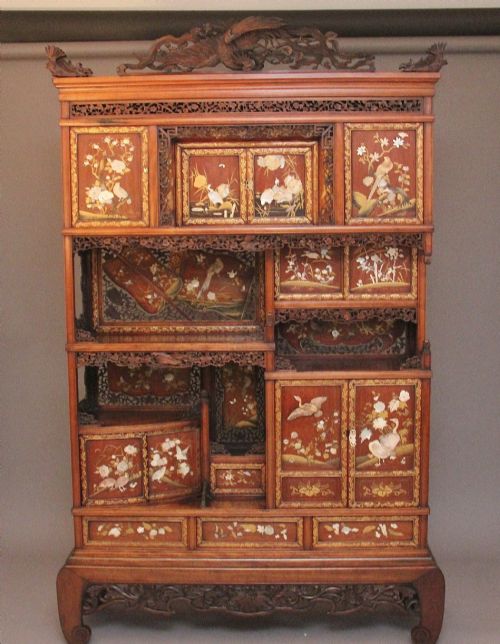
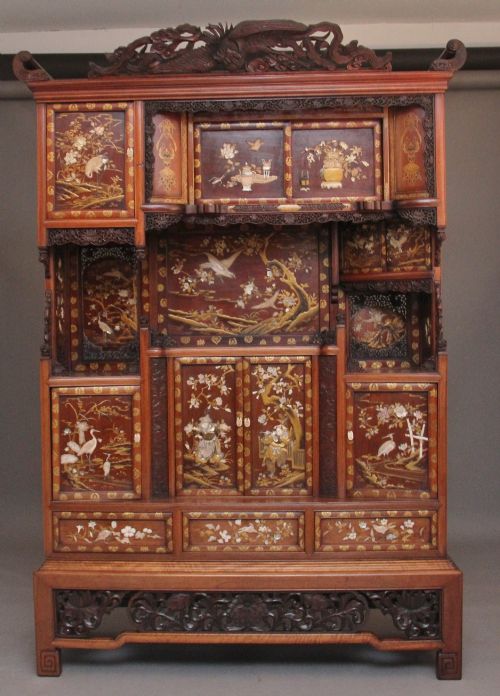
A 19th century japanese cabinet encompasses table models, larger display pieces known as shodanas, and miniature storage items designed for collectors. The evidence shows these pieces emerging primarily from the Meiji period alongside European interpretations influenced by the Aesthetic Movement and Japonisme.
Buyers meet varying formats ranging from compact jewellery boxes and writing cabinets to substantial cabinets on stands. Hardwood, lacquer, and parquetry define the physical presence of these items in domestic interiors.
Materials and construction
Craftsmen built these cabinets using hardwoods like elm and walnut, applying surface finishes of lacquer, gold leaf, and gilt. Bronze mounts and bone inlay frequently accent the timber structures.
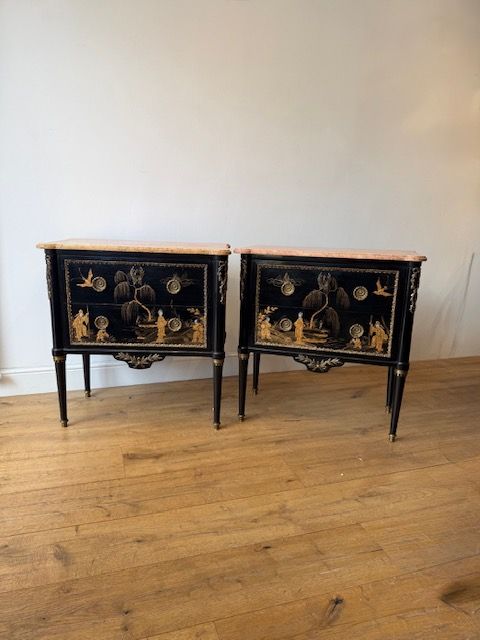
Joinery combines traditional parquetry and marquetry with carved details, uniting Japanese techniques with European cabinet-making methods seen in French and English workshops.
Several miniature cabinets include hidden compartments designed for concealing secret correspondence.
Assessing the execution
Quality rests upon the depth and precision of the lacquerwork and the complexity of the parquetry patterns. Finer examples display meticulous alignment in wood inlays and detailed gilt decoration without surface disruption.
The integration of metal mounts and the crispness of carved elements distinguish superior pieces from standard production work.
Gabriel-Frederic Viardot·Beurdeley
The 19th Century Japanese Cabinet Glossary
- Shodana
- A Japanese tiered display cabinet featuring asymmetrical shelving and small cupboards. These pieces often incorporate sliding doors and intricate woodwork.
- Lacquer
- A durable glossy finish applied in multiple layers to a wooden substrate. It provides a protective and decorative surface characteristic of East Asian furniture.
- Parquetry
- Geometric mosaic woodwork formed by small veneer tiles fitted together. Artisans utilise this technique to create patterned geometric surfaces on cabinet doors and panels.
- Japonisme
- A Western artistic movement inspired by Japanese art and design during the late nineteenth century. It heavily influenced European makers adopting Asian motifs.
- Meiji Period
- The era in Japanese history spanning from 1868 to 1912. Furniture from this time frequently combines traditional craft with styles destined for export markets.
19th Century Japanese Cabinet: Frequently Asked Questions
What is a shodana cabinet?
A shodana is a traditional Japanese display cabinet characterised by multiple shelves, small drawers, and cupboards arranged in an asymmetrical layout. These pieces served to display small ornaments and precious objects.
Craftsmen often decorated them with lacquer, metal mounts, and carved panels. They form a significant portion of the larger nineteenth-century items found in collections.
How do I care for lacquer furniture?
Lacquer surfaces require gentle dusting with a soft cloth and protection from direct sunlight and extreme humidity changes. Avoid chemical cleaning products that can damage the delicate finish.
Maintaining stable room temperatures prevents the wood underneath from expanding and cracking the lacquer layer.
What distinguishes Meiji period pieces?
Meiji period works date from 1868 to 1912, a time when Japanese craftsmanship met international demand. They often feature sophisticated parquetry, detailed metalwork, and deep lacquer finishes.
European interpretations influenced by the same aesthetic often replicate these motifs using local timbers like walnut and padouk.
Where were table cabinets placed?
Table cabinets and jewellery boxes sat upon larger desks, sideboards, or dedicated stands within period rooms. They provided secure storage for documents, letters, and small valuables.
Their decorative exteriors allowed them to function as ornamental objects as well as practical storage units.