


Japanese Art Metalwork
Japanese art metalwork brings disciplined bronze casting, complex enamel work and mixed metal inlay into the room.
Japanese Art Metalwork
When you search for japanese art metalwork, you encounter pieces originating primarily from the Meiji, Taisho and Edo periods, spanning the nineteenth and early twentieth centuries. The selection on this page consists chiefly of vases, decorative chargers, bowls, plaques and sculptures.
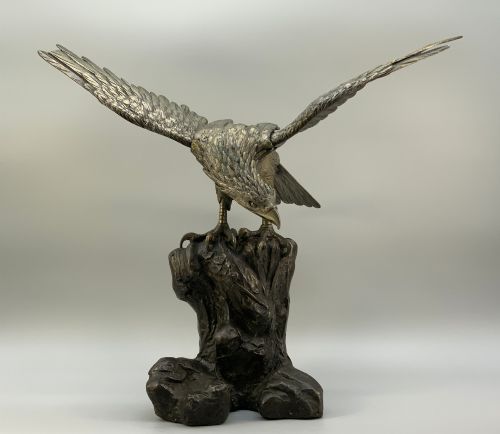
The forms range from archaic bronze bowls and garden bridge models to patinated bird and hawk okimono figures, alongside geisha figures and lidded gourd pots. Meiji period creations dominate the selection, showing the technical ambition of metalworkers from that era.
Production methods bridge traditional vessel casting and intricate decorative surface work. Objects vary from simple bronze jardinières to heavily ornamented pieces featuring birds, flowers, dragons and auspicious symbols.
Materials and Technique
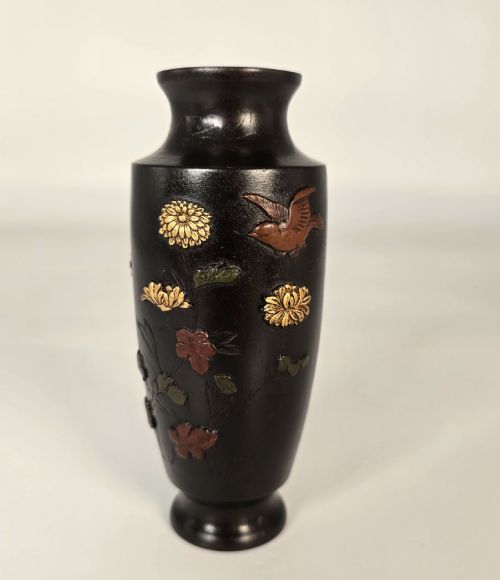
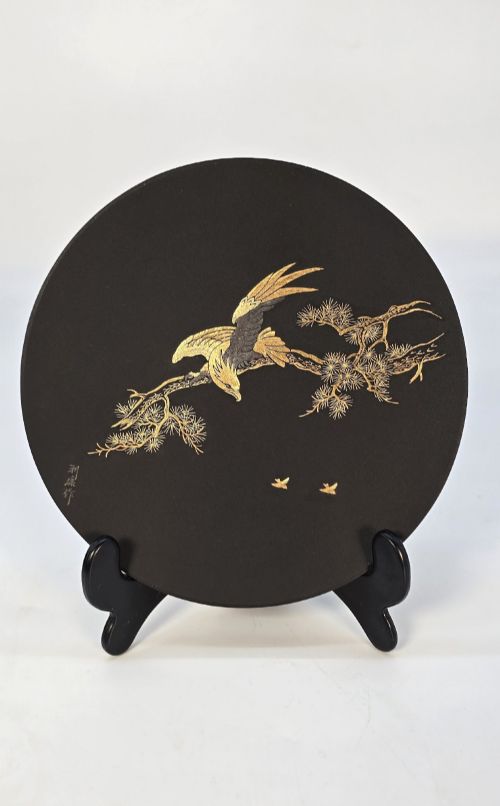
Artisans utilised bronze, copper, brass, iron and silver as the foundational metals for casting and shaping vessels, plaques and sculptures. Surfaces received patination treatments, sometimes combining gold and silver inlay to create contrasting visual details.
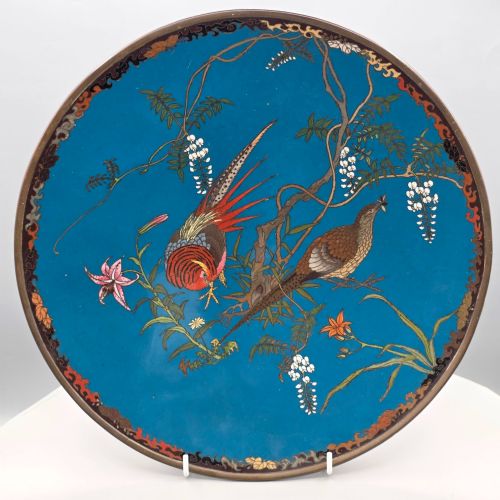
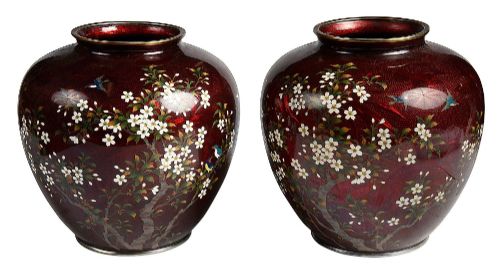
Cloisonné enamel work appears frequently, using thin silver wires to partition colour fields filled with enamels, including translucent ginbari and basse-taille techniques on red enamel grounds. Mixed metal compositions integrate multiple alloys within a single design to achieve distinct tonal effects.
Listings feature bronze, copper, silver and enamel works spanning the Edo, Meiji and Taisho periods.
Design and Execution
Quality rests upon the precision of the metal casting and the exactness of wire placement in cloisonné items. Pieces at the upper end display crisp detailing in feathers, scales and floral motifs without irregularity in the enamel cells.
The integration of mixed metal elements and the depth of patination separate standard production from masterworks. Successful execution requires balanced composition and deliberate restraint in ornamentation across bronze, silver and enamel surfaces.
Ando Jubei
The Japanese Art Metalwork Glossary
- Cloisonné
- An enamel technique where metal wire creates cells on a metal body, which are then filled with coloured paste and fired. This method produced detailed pictorial chargers and vases.
- Okimono
- A freestanding Japanese decorative object meant for display on a shelf or in a tokonoma alcove. These sculptures often depict animals, figures or folklore scenes in bronze.
- Ginbari
- A textured foil background applied beneath translucent enamel to create a reflective pattern. It gives depth to red enamel vases from the Meiji period.
- Mixed Metal
- The combination of different metallic alloys such as bronze, copper, brass and silver within one object. Craftsmen used this technique to contrast colours and textures.
- Patinated
- A treated surface finish applied to metal through chemical or thermal means to alter its colour. This process adds depth and ages the appearance of bronze and iron.
Japanese Art Metalwork: Frequently Asked Questions
What is Japanese art metalwork?
It encompasses cast and wrought metallic items produced in Japan during the Edo, Meiji and Taisho periods. These works include bronze vases, cloisonné chargers, iron plaques and mixed metal sculptures.
Master artisans combined traditional casting with intricate surface decoration, utilising patination, wire inlay and enamel to create highly detailed decorative objects.
How were cloisonne chargers made?
Craftsmen soldered thin metal wires onto a copper or bronze base to outline intricate patterns of birds, flowers and symbols. The resulting cells were filled with glass paste and fired multiple times.
After firing, the surface was ground down and polished until the metal wires and hardened enamel formed a smooth, continuous plane.
How do I identify a Meiji period piece?
Meiji period items, produced between eighteen sixty-eight and nineteen twelve, typically display ambitious technical mastery in bronze patination and cloisonné enamel. Look for complex floral, avian or dragon motifs and refined metalwork techniques.
Signatures or marks on the base of vases and chargers can also point towards specific workshops or prominent makers active during this era.
Where should I display these antiques?
Bronze vessels, patinated sculptures and cloisonné chargers suit stable surfaces with adequate lighting to highlight surface textures and patination. Placing them away from direct sunlight protects enamel colours over time.
Larger items like jardinieres or garden bridges require dedicated floor space, while smaller okimono figures fit comfortably on cabinet shelves or side tables.