




Dark Brown Urn
A dark brown urn brings sober classical form and rich metallic or wooden depth to a room, holding the eye with balanced proportion.
Dark Brown Urn
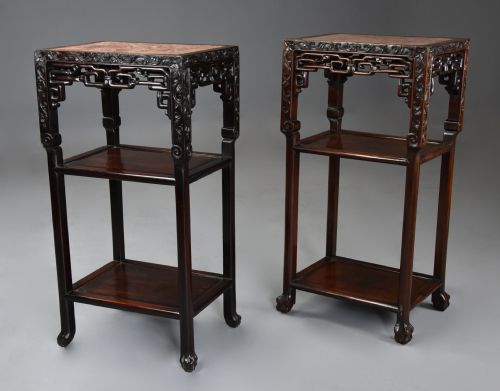
A dark brown urn encompasses decorative vessels, campana forms, and sculptural vases originating from the eighteenth, nineteenth, and early twentieth centuries. These objects span English garden planters, French spelter castings, and Japanese Meiji bronzes alongside Chinese hardwood and marble stands.
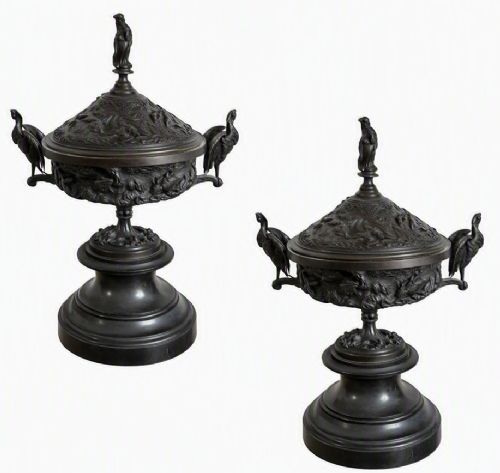
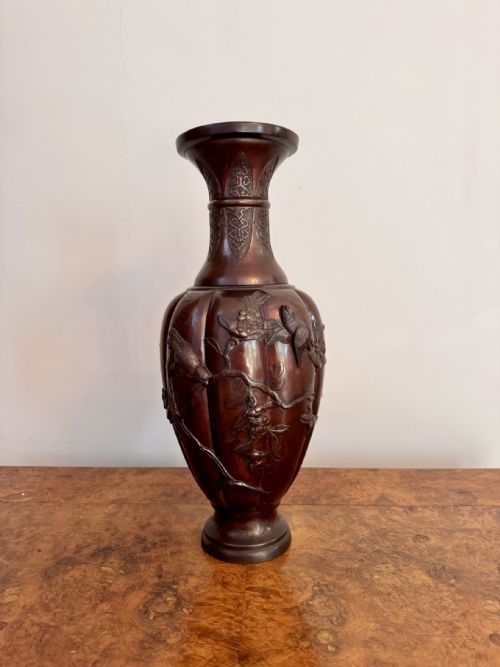
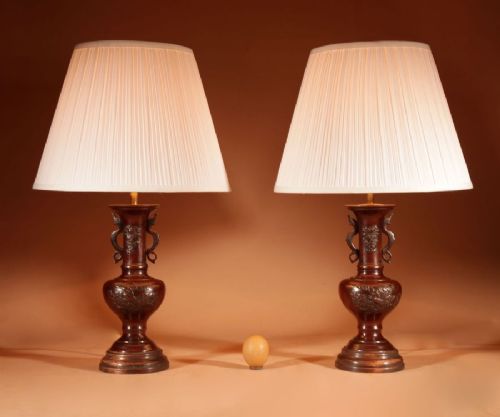
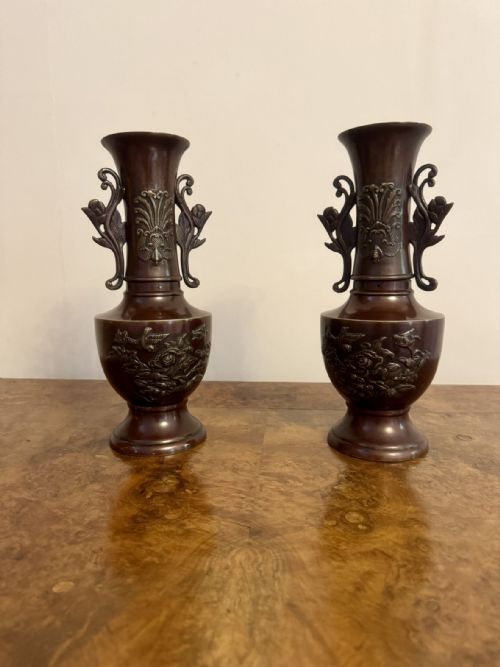
The version most commonly encountered on this page is the nineteenth-century bronze vase or Japanese Meiji period vessel displaying patinated surfaces and twin handles. Such pieces frequently arrive in matched pairs, reflecting their original purpose as symmetrical interior ornaments.
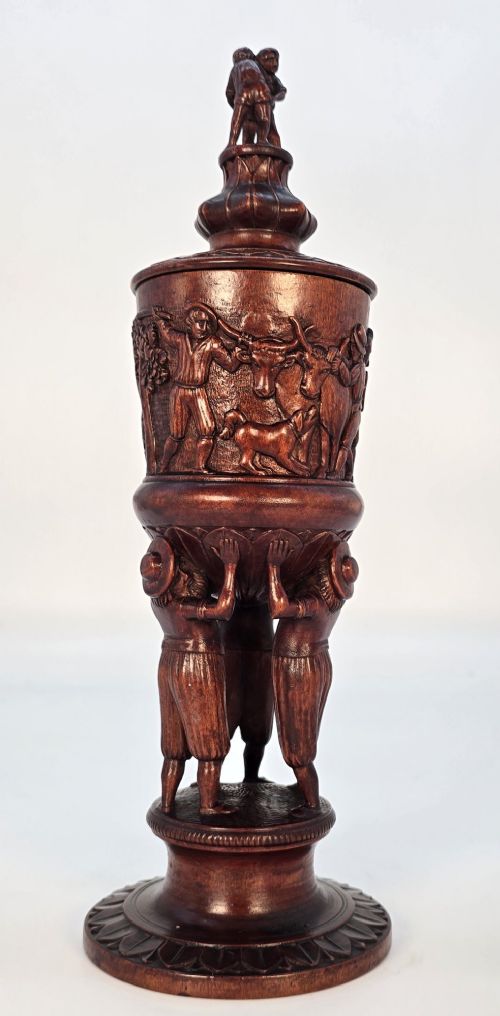
Beyond metal vessels, the selection includes treen fruitwood campana shapes and turned wooden items that share the characteristic deep brown palette. These forms bridge the gap between classical antiquity revivals and nineteenth-century decorative arts.
How they were made
Metal vessels on this page are cast in bronze or spelter, often utilising lost-wax or traditional foundry methods to achieve crisp handles and relief decoration. Artisans then applied chemical patination to produce deep brown and black-brown surface finishes.
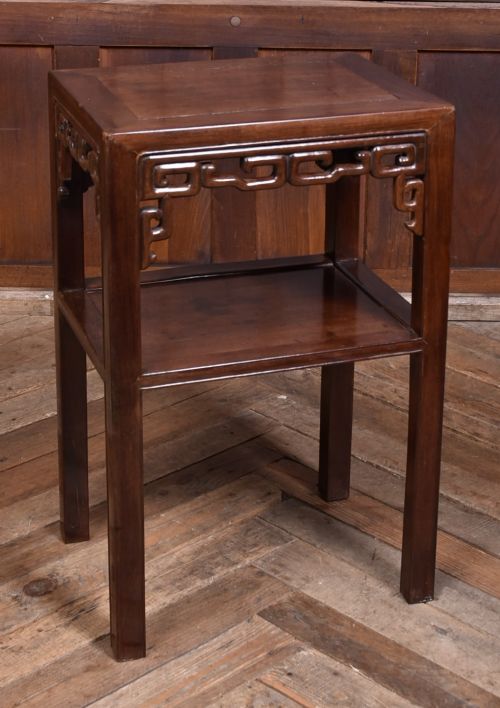
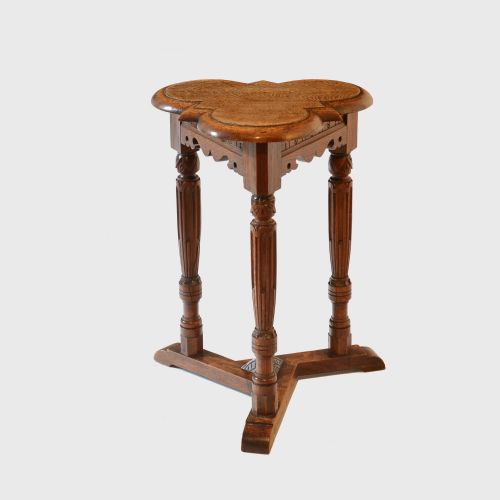
Wooden examples rely on turning, carving, and joinery in dense timbers such as mahogany, walnut, fruitwood, and huali hardwood. Makers shaped these materials on lathes or worked them by hand to create smooth campana contours and sturdy display stands.
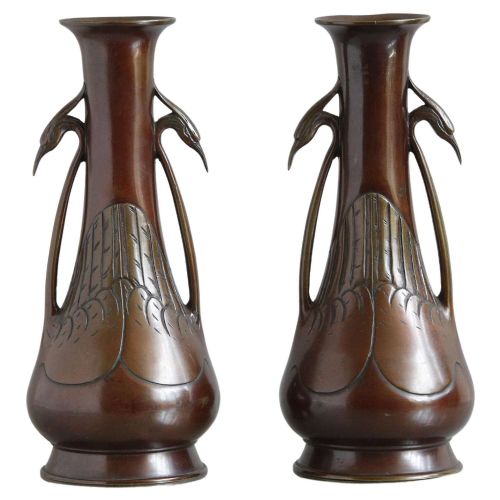
Several bronze urns feature handles shaped as lifelike egrets and storks, quietly turning utility vessels into miniature aviaries.
What varies in quality
Quality rests upon the crispness of the casting detail in bronze pieces and the precision of the turning in wooden examples. Finer specimens exhibit deeply undercut handles, cleanly defined motifs, and harmonious proportions without clumsy repairs.
The integrity of the patination or polished timber surface determines visual depth. Superior objects retain original patinated finishes that show subtle tonal variations rather than flat, modern paint applications.
Jules Moigniez·Charles Korschann·Shelley
The Dark Brown Urn Glossary
- Campana urn
- A bell-shaped vessel with a flaring rim and a pedestal base, originating in classical antiquity and widely revived in later centuries. This profile is common among metal and wooden garden and interior urns.
- Meiji Period
- The era in Japanese history spanning from 1868 to 1912, noted for exceptional bronze casting and patination. Pieces from this period frequently feature naturalistic handles shaped as birds or foliage.
- Patinated bronze
- Metal that has undergone chemical treatment to alter its surface colour to deep brown, green, or black. This finish protects the metal while providing historical depth.
- Treen
- Small handmade wooden household objects and vessels turned on a lathe. These items highlight the natural grain of fruitwood and hardwoods.
Dark Brown Urn: Frequently Asked Questions
How do I distinguish bronze from spelter urns?
Bronze is a heavy, durable copper alloy that takes a deep, stable patination and rings clearly when struck gently. It holds fine cast details sharply across handles and decorative reliefs.
Spelter is a softer zinc-based alloy commonly used in nineteenth-century French manufacturing as a bronze substitute. It feels lighter, often shows a painted surface rather than a chemical patina, and can be more brittle.
How do I care for a patinated bronze urn?
Dust the surface regularly with a soft, dry cloth to prevent particulate buildup without disturbing the delicate patinated finish. Avoid using metal polishes, abrasive cleaners, or water.
Keep the vessel away from direct sunlight and excessive humidity to protect the original metallic tones. Wax is rarely required on bronze unless specifically recommended for that finish.
Where should I place a wooden urn or plant stand?
Position wooden vessels and stands away from direct heat sources such as radiators and fireplaces to prevent the timber from drying out and splitting. Stable indoor environments preserve the joins of antique hardwood and fruitwood.
Pair wooden stands with complementary ceramic or bronze vases to recreate nineteenth-century display arrangements. Ensure the floor or tabletop is level to support heavy marble tops securely.