
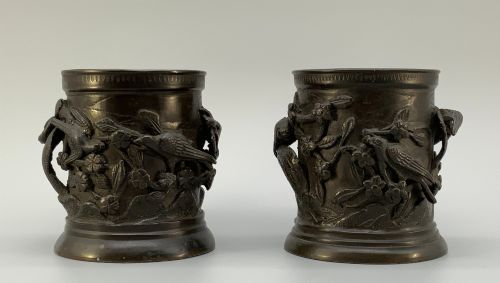
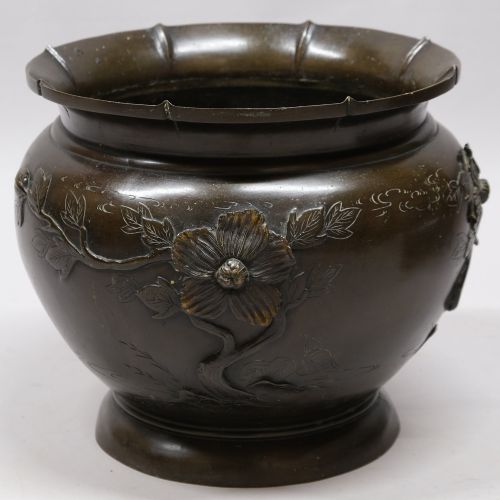


Japanese Bronze Pot
A japanese bronze pot brings sculptural weight and meticulous metalwork into a room, spanning jardinières, vases and brush pots from the Edo and Meiji periods.
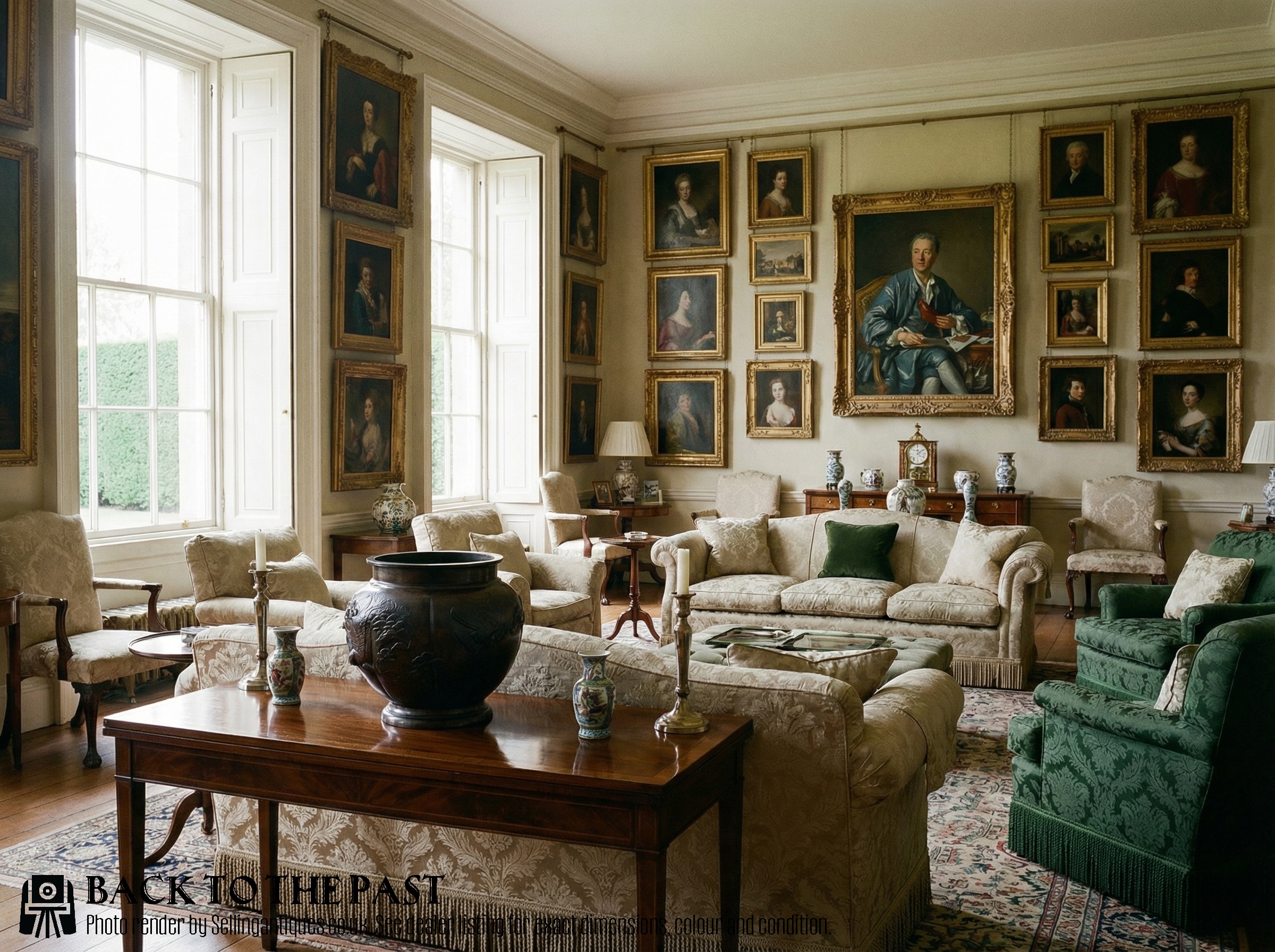
Japanese Bronze Pot
When you search for a japanese bronze pot, you encounter vessels designed for domestic display, floral arrangement and scholarly utility. The selection spans grand jardinières and planters meant for interior foliage alongside smaller brush pots, sake kettles and vases.
The pieces on this page originate predominantly from the 19th century, drawing heavily on the Meiji and Edo periods. You will regularly find robust planters and bowls alongside pairs of decorative vases.
Makers produced these works to serve specific traditional functions, such as ikebana displays or desk organisation, which dictates the proportions and openings of the vessels you see here.
Materials and Casting Techniques
The foundation of these objects is standard bronze, often finished with a deliberate patination to achieve deep brown or dark green tones. Artisans also utilised mixed metals to create contrasting highlights across the surface of the vessels.
Decoration frequently incorporates cloisonné and champlevé enamel work, embedding coloured glass pastes into recessed metal channels. Certain items integrate brass, copper, silver and cast iron elements to enhance the decorative scheme.
Japanese Bronze Pot Retail Price Guide 2026
Typical asking prices for japanese bronze pot among the pieces listed under this phrase on Sellingantiques today, from the lower quarter to the upper quarter. They describe what is for sale here now, not the wider market.
Several heavy bronze planters weigh nearly three kilograms, proving that mid-nineteenth-century desk accessories possessed serious muscle.
Assessing the Craftsmanship
Quality rests in the crispness of the casting and the precision of any applied surface detail. Superior examples display clean lines and securely set enamel work without pooling or uneven thickness.
The depth and durability of the patination differentiate standard production from finer work. Weight and balance also signal standard, as substantial walls and purposeful footing indicate a higher grade of manufacture.
The Japanese Bronze Pot Glossary
- Jardiniere
- A large decorative pot or stand designed to hold a plant or floral arrangement. These vessels often feature prominent patination or relief decoration.
- Meiji Period
- The era in Japanese history lasting from 1868 to 1912, characterised by extensive artistic production for export. Much of the metalwork from this time exhibits remarkable technical proficiency.
- Edo Period
- The period lasting from 1603 to 1868 under the Tokugawa shogunate. Pieces originating from this era reflect earlier traditional domestic and scholarly aesthetics.
- Cloisonne
- An enamelling technique where metal wire is soldered to the base to form compartments that hold enamel paste. These sections are subsequently fired and polished smooth.
- Brush Pot
- A cylindrical vessel used in East Asian studies to hold writing brushes. They appear in bronze and mixed metal configurations.
Japanese Bronze Pot: Frequently Asked Questions
How were these bronze pots originally used?
These vessels served practical roles in Japanese interiors, functioning as planters for indoor greenery, containers for floral displays, and receptacles for scholars' writing brushes.
Larger bowls acted as floor-standing jardinières, while smaller vessels sat on desks or low tables to organise ink and brushes.
How do I tell an Edo piece from a Meiji piece?
Distinguishing between the periods relies on stylistic cues and documented dates associated with the metalwork. Edo items generally reflect restrained, traditional scholarly forms.
Meiji works often display more intricate surface decoration and relief work, reflecting the demands of international trade during that era.
What is mixed metal decoration?
Mixed metal work involves combining bronze with contrasting metals like copper, brass and silver on a single object. Artisans used this technique to create pictorial details and colourful highlights across the surface.
This method requires advanced metallurgical skill to fuse and finish the disparate materials securely.
How should I clean an antique bronze pot?
Maintenance requires minimal intervention to preserve the historic patination built up over a century or more. Dusting with a dry, soft cloth is generally sufficient for regular care.
Avoid commercial polishes or abrasive cleaners, as these will strip away the original finish and diminish the character of the metal.