


Dark Bronze Bird Statue
A dark bronze bird statue captures feathered subjects with naturalistic weight, bringing sculptural presence to a desk or mantelpiece.
Dark Bronze Bird Statue
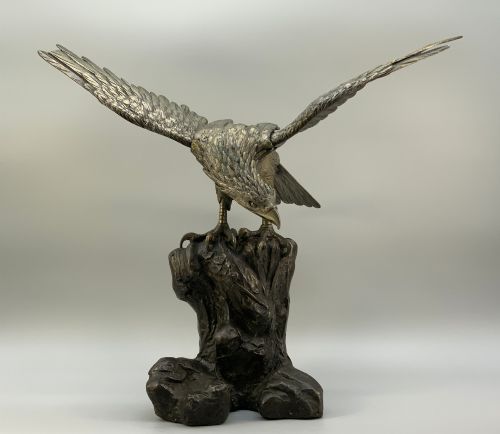
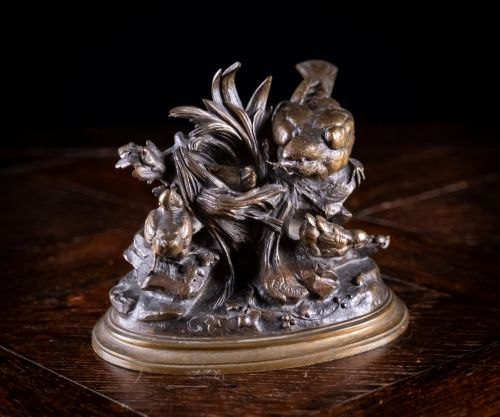
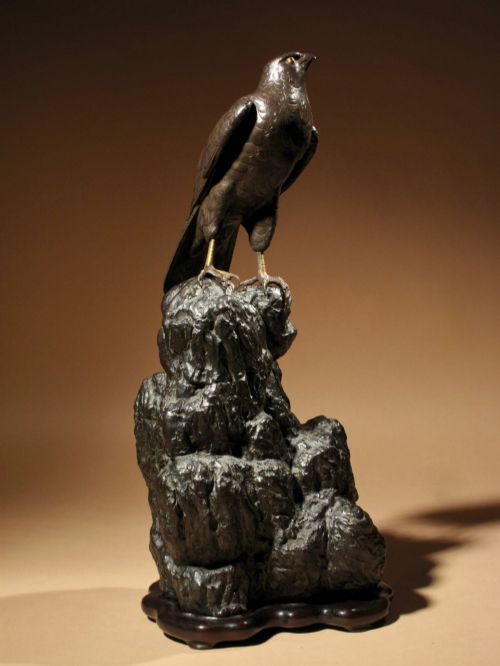
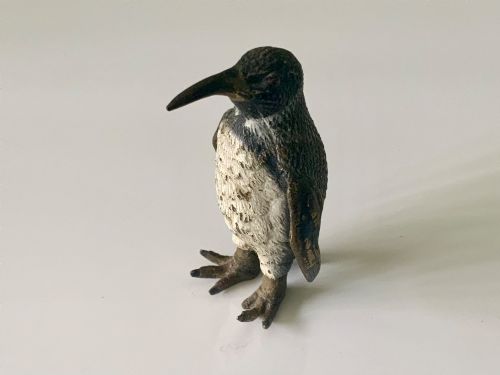
A dark bronze bird statue encompasses figures of birds created across the nineteenth and early twentieth centuries, spanning French animalier studies, Japanese Meiji okimono, and Austrian novelty bronzes. These sculptures depict raptors, fowl, and exotic species perched on rocks, wood bases, or marble plinths, reflecting a sustained fascination with avian forms.
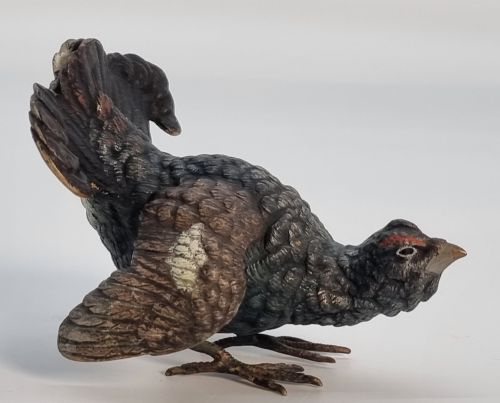
The versions most commonly encountered on this page include hawks, eagles, and grouse executed in patinated or cold painted bronze, often mounted on stone or wood. Makers captured both realistic naturalist poses and whimsical caricature subjects, ranging from small cabinet pieces to large scale decorative works.
Materials and technique
Foundries utilised traditional lost wax or sand casting methods to shape molten bronze into complex avian anatomy, capturing feather texture and muscular tension. Surfaces were subsequently treated with chemical patination to achieve deep dark tones, or embellished with cold painted polychrome enamels.
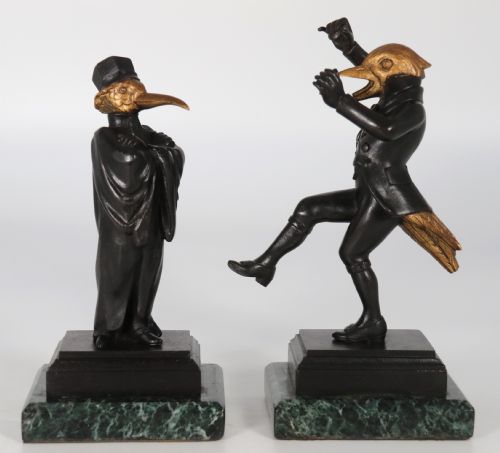
Many sculptures incorporate complementary natural materials, mounting the heavy metal figures onto bases of carved root wood, marble, or mahogany. Parcel-gilt highlights and hand painted details were applied to enhance specific plumage and accessory elements.
The collection includes theatrical birds wearing expressions of distinct human disapproval.
Distinctions in quality
The distinction between tiers rests upon the fidelity of the anatomical modelling and the crispness of the chasing work executed after casting. Superior examples retain fine feather detailing and convincing posture without softness in the metal surface.
Foundry pedigree and signature visibility elevate certain works, as skilled casting and deliberate patination preserve depth in dark bronze surfaces. The integration of fitted supports, such as carved root wood or marble plinths, further distinguishes the finished composition.
Louis Emile Cana·Bergman·Antoine Louis Barye·Barbedienne·P J Mêne·Maurice Bouval·Gyoko·Christophe Fratin
The Dark Bronze Bird Statue Glossary
- Animalier
- A nineteenth century sculptural movement focusing on realistic depictions of animals. Practitioners studied anatomy closely to render subjects in dynamic or observant poses.
- Cold painted bronze
- A technique where metal sculptures are painted with polychrome oil or enamel colours after casting, rather than firing the pigment under heat.
- Okimono
- A traditional Japanese decorative figurine designed for display on a tokonoma or shelf. These pieces are typically carved or cast with meticulous attention to natural detail.
- Patination
- The chemical treatment of a bronze surface to create a specific colour or dark weathered finish. This process protects the metal while defining sculptural contours.
- Parcel-gilt
- A decorative treatment where selected areas of a bronze sculpture are partially gilded with gold leaf. This method provides contrast against darker patinated sections.
Dark Bronze Bird Statue: Frequently Asked Questions
How do I identify a Meiji period bird?
Meiji period bird sculptures often originate from Japan and frequently depict eagles or hawks with intricate feather chiselling. Many incorporate signature stamps or natural root wood bases.
They reflect the high standard of Japanese metalworking exported during the late nineteenth century.
What is an animalier bronze sculpture?
Animalier bronzes are nineteenth century works dedicated to accurate animal subjects, popularized by European sculptors. These pieces emphasise natural movement and realistic anatomical study.
Birds of prey and wading fowl were common subjects within this genre.
How do I care for dark bronze?
Maintain dark bronze surfaces by dusting gently with a soft, dry cloth. Avoid chemical polishes that can strip the original patination.
Keep the sculptures away from excessive moisture and direct sunlight to protect the finish.
What distinguishes cold painted bronze?
Cold painted bronzes feature applied surface colours that are not fired in a kiln. This technique allows for vibrant plumage on small bird figures.
Care should be taken to preserve these delicate painted surfaces from abrasion.