





Bronze Eagle and Bird
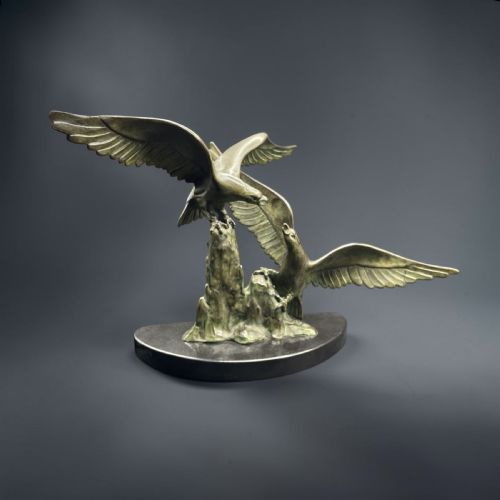
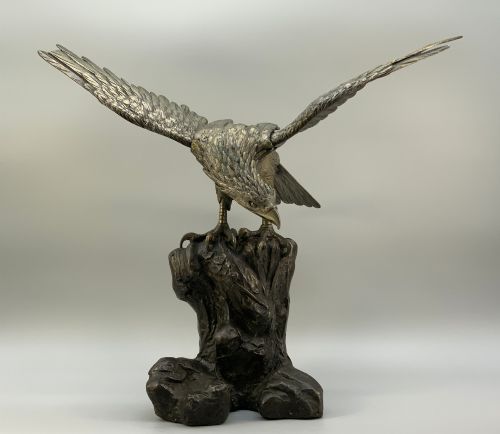
These bronze eagle and bird sculptures bring formidable raptor presence into a room, forged in nineteenth century European and Japanese workshops.
Bronze Eagle and Bird
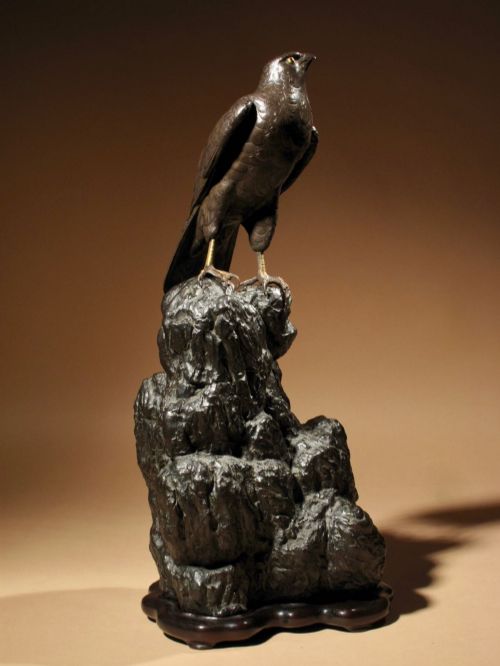
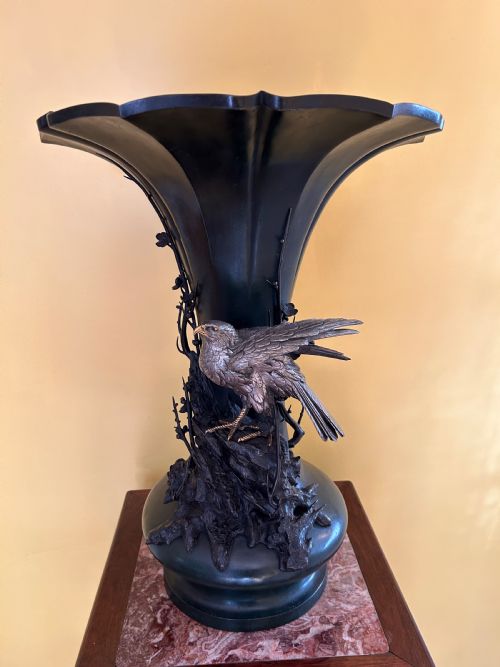
When you search for bronze eagle and bird, you encounter powerful sculptural representations of birds of prey, often locked in dramatic interactions with other creatures or perched resolutely on natural forms. These works span nineteenth century European Animalier traditions and Japanese Meiji period metalwork, capturing birds with intense anatomical focus.
The pieces on this page are most frequently cast in bronze, patinated bronze, or mixed metal, and occasionally mounted on root wood bases or fashioned as vases. You find hawks, goshawks, and eagles depicted by notable makers such as Antoine Louis Barye and Christophe Fratin alongside Japanese artisans.
Materials and construction methods
Foundries utilised traditional casting techniques to shape molten bronze into complex avian forms, achieving varied surfaces through chemical patination or silvering. Sculptors incorporated mixed metals and gilt cast brass to articulate feathers, beaks, and talons with precision.
Makers often integrated natural elements directly into the design, pairing heavy cast metal raptors with carved root wood bases or depicting them upon craggy rock formations.
Bronze Eagle and Bird Retail Price Guide 2026
Typical asking prices for bronze eagle and bird among the pieces listed under this phrase on Sellingantiques today, from the lower quarter to the upper quarter. They describe what is for sale here now, not the wider market.
Listings feature nineteenth century pieces in bronze, patinated bronze, dark patina, mixed metal, root wood, and gilt.
Distinctions in quality
The distinction between standard decorative items and exceptional sculptural works rests on the crispness of the chasing and the sophistication of the patina. Superior examples display meticulous detail in every feather and muscle, reflecting the direct touch of a skilled hand after the casting process.
Compositional energy and the reputation of the founder or artist further elevate certain pieces, distinguishing mass production from masterful artistic execution.
Antoine Louis Barye·Barbedienne·Christophe Fratin·Gyoko
The Bronze Eagle and Bird Glossary
- Animalier
- A nineteenth century artistic movement focused on the realistic depiction of animals. Artists in this tradition studied anatomy closely to capture creatures in motion or repose.
- Patinated bronze
- Bronze that has been treated with chemical solutions to produce a specific surface colour or tone. This process protects the metal and enhances the sculptural depth.
- Meiji Period
- A Japanese era lasting from 1868 to 1912 marked by immense craftsmanship in metalwork and decorative arts. Works from this time frequently demonstrate extraordinary technical control.
- Okimono
- A Japanese decorative object intended for display in a traditional interior alcove. These sculptures are prized for their intricate detail and adherence to natural forms.
- Root wood
- Wood harvested from the root mass of a tree, selected for its twisted, organic grain. It serves as a naturalistic mount for bronze sculptures.
Bronze Eagle and Bird: Frequently Asked Questions
What distinguishes French Animalier bronzes?
French Animalier bronzes focus on dynamic realism and anatomical precision, capturing predatory birds in active moments like devouring prey.
These pieces reflect the nineteenth century fascination with wild nature and often bear the signatures of renowned sculptors and prominent foundries.
How do Meiji period bronzes differ?
Meiji period bronzes showcase exceptional mastery of mixed metals, silvering, and fine patination techniques developed by Japanese artisans.
They frequently integrate organic elements like root wood bases and are often categorised as traditional okimono sculptures meant for display.
Where were these sculptures displayed?
Historically, these bronze raptors sat upon desks, mantels, and display tables within refined nineteenth century interiors.
Today, they function as striking focal points in studies, living rooms, and collector cabinets.
How should I care for patinated bronze?
Patinated bronze requires minimal intervention, needing only gentle dusting with a soft, dry cloth to preserve the surface finish.
Avoid using chemical polishes or abrasive cleaners, which can strip away the historical patina and damage the metal.