
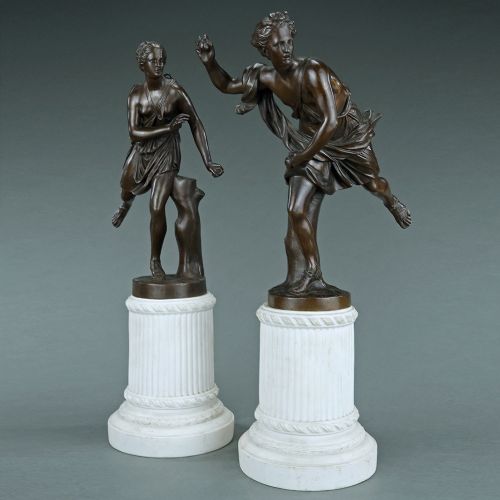

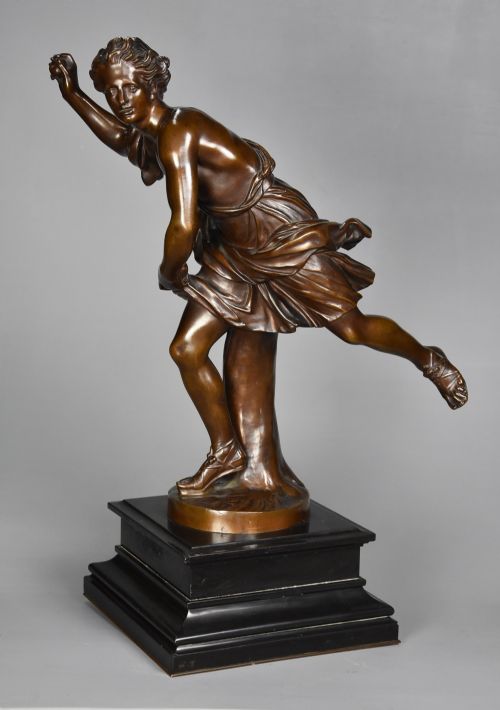


Barbedienne Foundry Bronze Sculpture
These barbedienne foundry bronze sculpture works bring nineteenth century French casting skill straight into a room.
Barbedienne Foundry Bronze Sculpture
Barbedienne foundry bronze sculpture pieces span the nineteenth century, capturing classical figures, mythological subjects and French animalier animal studies with notable fidelity. Buyers seeking barbedienne foundry bronze sculpture encounter works produced during the active decades of the foundry, drawing upon antique statuary and academic models.
The inventory on this page shows pieces ranging from mythological subjects like Atalanta and Hippomenes to majestic birds of prey and big cats by Antoine Louis Barye. Formats include grand standing figures, substantial animal groups and reductions of canonical museum sculptures.
Origins trace directly to nineteenth century French workshops, where the founder Ferdinand Barbedienne collaborated with leading sculptors of the era. The selection demonstrates the firm breadth, moving from grand mythological interpretations to detailed wildlife bronzes.
Materials and casting methods
The works utilise cast bronze as the primary medium, frequently finished with patinated bronze, dark patina, gilt bronze or parcel-gilt bronze surfaces. These chemical and metallic finishes highlight anatomical details and drapery folds.
Foundry practice involved meticulous chasing and patination following the cast, often mounted upon marble bases or ebonised wood plinths to enhance the display profile of the sculpture.
Even a bronze stork standing on a turtle required serious nineteenth century foundry patience to cast.
Distinctions in quality
The integrity of the cast and the precision of the signature or foundry stamp also define the standing of a piece, alongside the quality of any associated marble or ebonised wood base.
Ferdinand Barbedienne·Antoine Louis Barye
The Barbedienne Foundry Bronze Sculpture Glossary
- Animalier
- A nineteenth century French artistic movement focusing on the realistic portrayal of animals, particularly predators and wildlife.
- Patina
- The surface coloration and sheen developed on bronze through age or chemical treatment, ranging from rich dark tones to gilded highlights.
- Reduction
- A smaller scale bronze cast taken from a larger original monument or statue, frequently utilised by the Barbedienne foundry.
- Chasing
- The manual finishing process where a metalworker refines the cast surface using chisels and punches to sharpen details.
- Grand Tour
- Souvenir sculptures collected by travellers in Europe during the nineteenth century, reproducing classical antiquities.
Barbedienne Foundry Bronze Sculpture: Frequently Asked Questions
How do I identify a Barbedienne bronze?
Look for foundry stamps or signatures cast directly into the bronze, typically bearing the name Barbedienne along the base or edge.
The quality of the chasing and the depth of the patination also offer strong indicators of authentic nineteenth century foundry work.
Were these sculptures cast during the artist's lifetime?
Many works were produced by the foundry in collaboration with contemporary sculptors or as authorised reductions of classical and academic masterworks.
Dating usually falls within the nineteenth century, corresponding with the active operational periods of the founder Ferdinand Barbedienne.
How should I display a bronze sculpture?
Place the sculpture on a stable surface away from direct heat sources and excessive moisture to protect the metal patina and any marble or wooden bases.
Ensure adequate lighting that highlights the surface tones and three-dimensional modelling of the cast.
What maintenance does a bronze sculpture require?
Dust the surface gently with a soft, dry cloth to prevent particulate accumulation without disturbing the chemical patina.
Avoid applying polishes, oils or abrasive cleaners directly onto the bronze or its gilt and patinated surfaces.