

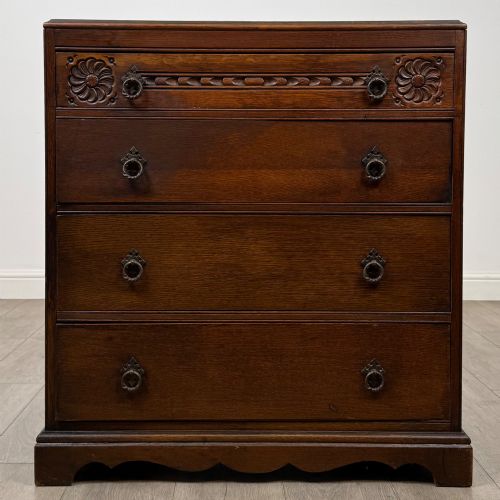
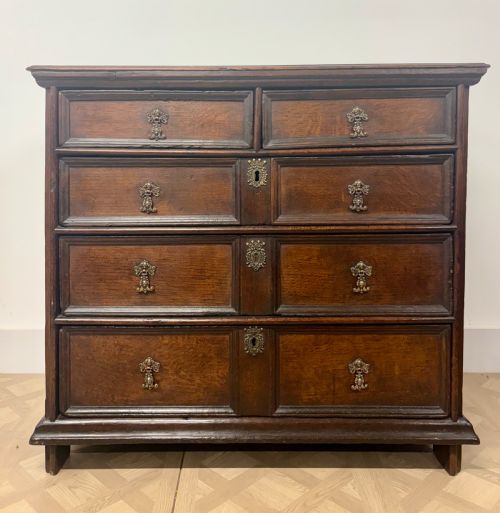
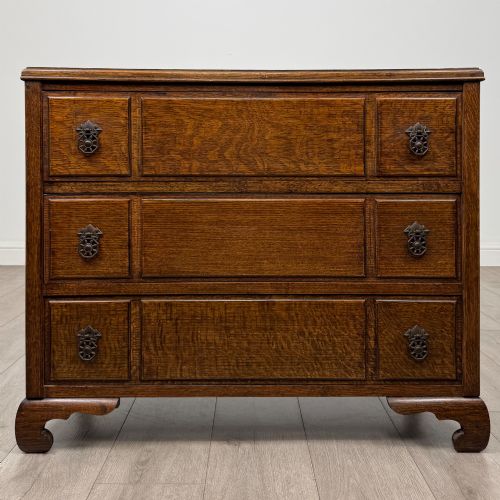
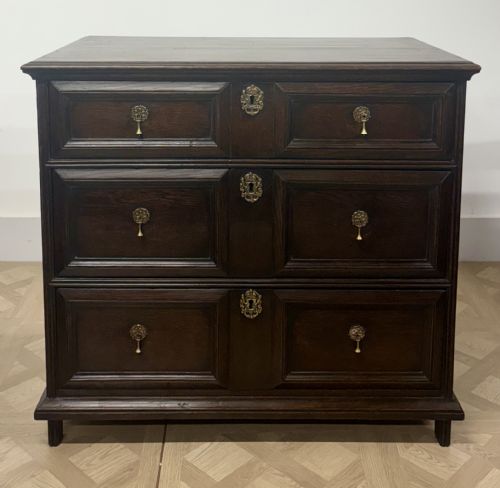
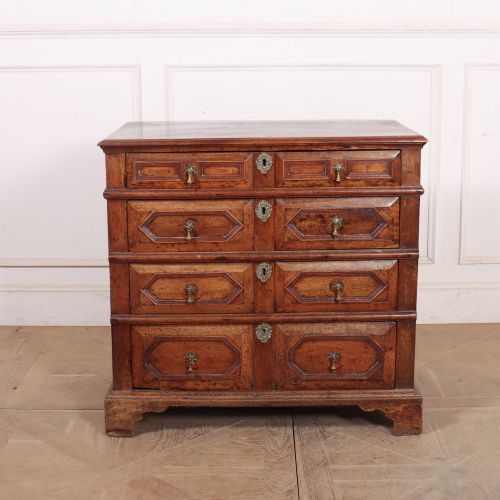

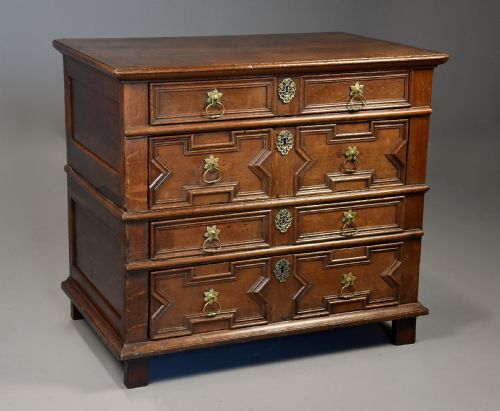
Jacobean Oak Tallboy
A jacobean oak tallboy embodies the robust joinery and deep grain of early English timber, offering substantial storage with centuries of character.

Jacobean Oak Tallboy
A jacobean oak tallboy brings together sturdy proportions and historic timber, drawing on forms associated with seventeenth-century furniture making. Buyers seeking this type often encounter pieces spanning several eras, from original seventeenth-century examples to later Edwardian revivals.
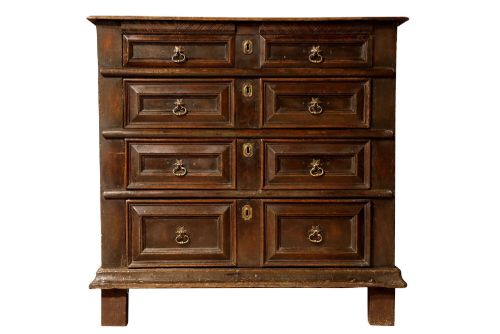
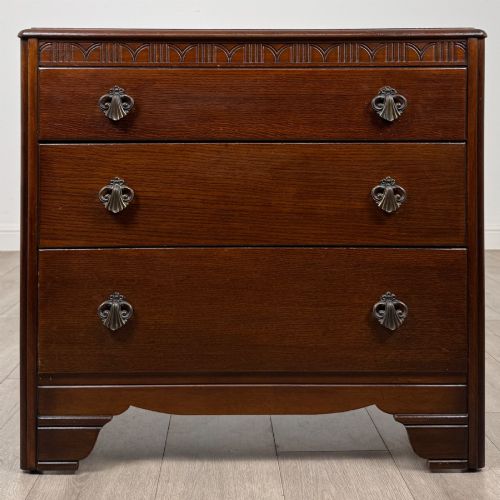
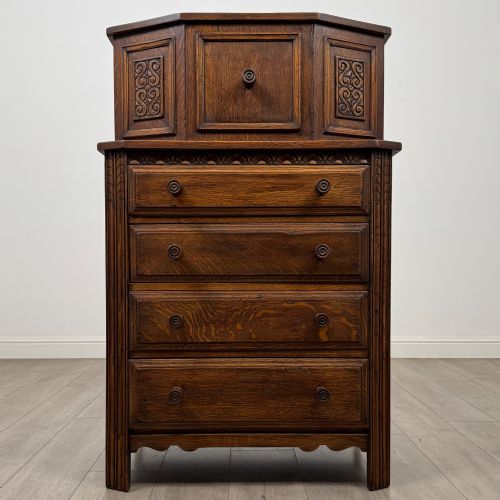
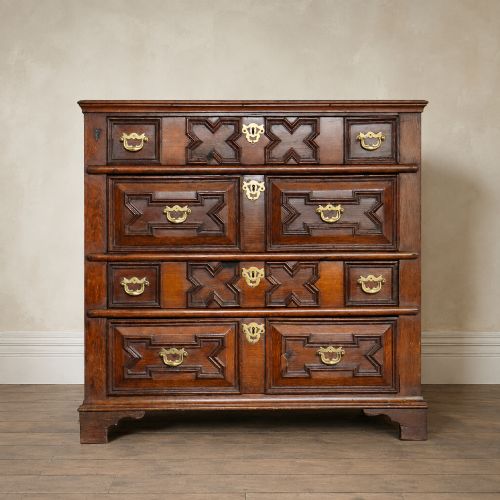
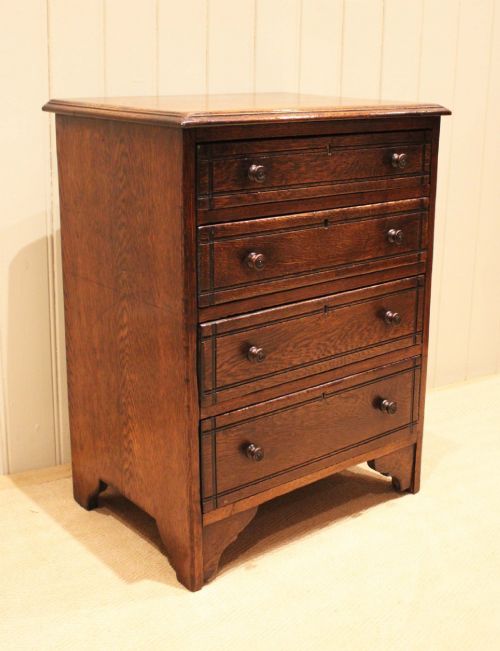
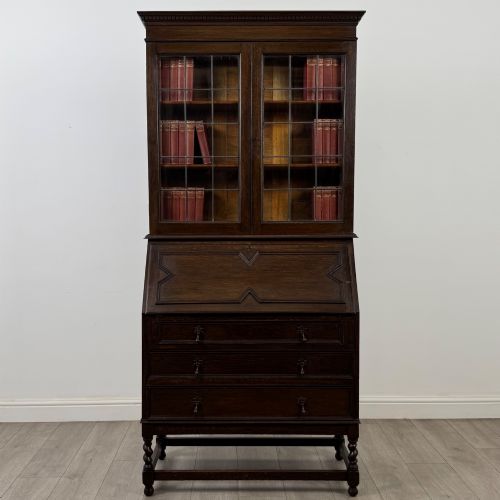
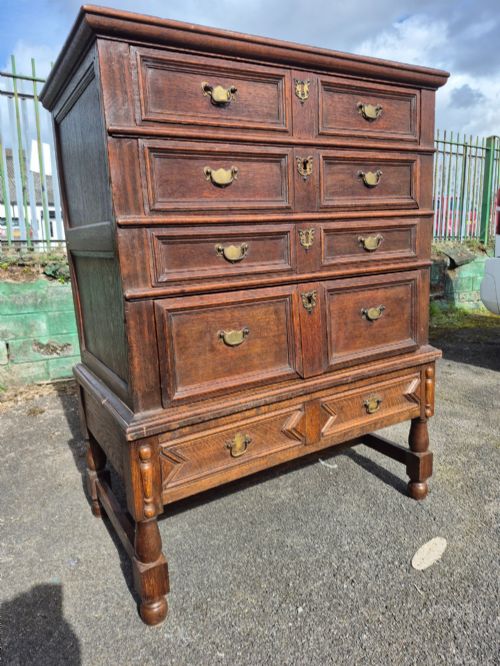
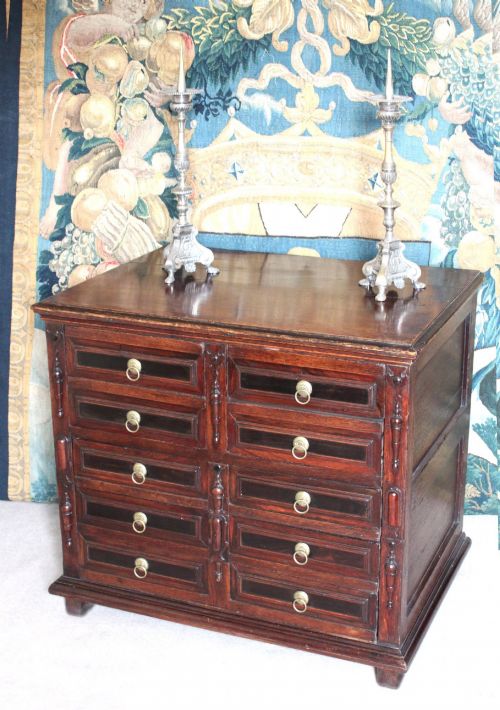
The selections on this page incorporate forms such as chests of drawers, two-part chests, chests on stands, and bureau bookcases. While true seventeenth-century pieces appear alongside Edwardian and 1920s revivals, the core aesthetic relies on heavy timber and traditional partitioning.
The structural layout frequently utilises stacked drawer arrangements, sometimes split into two distinct sections to ease movement. This configuration provides the vertical storage capacity that defines the tall format.
Materials and Construction Methods
Makers relied primarily on solid oak, selected for durability and worked with hand tools to produce pegged joints and panelled sides. Secondary woods like walnut and fruitwood appear in specific elements, adding tonal contrast to drawer fronts.
Surface ornamentation relies heavily on geometric mouldings applied to drawer fronts, creating depth through shadow and relief rather than applied veneers. Hardware typically involves brass drop handles and escutcheons secured to the drawer faces.
Listings feature pieces spanning from the 17th century through the Edwardian period and into the 1920s, constructed primarily in solid oak with occasional walnut and brass details.
Evaluating Construction and Age
Distinction across the range rests on the integrity of the timber and the retention of original elements such as brasses and backboards. Pieces showing period construction methods alongside honest surface wear carry greater historical weight than later revivals.
The crispness of geometric mouldings and the smoothness of drawer operation indicate the original joiner's skill. Alterations to bases or replacement of internal linings shift a piece away from its original state.
The Jacobean Oak Tallboy Glossary
- Tallboy
- A tall chest of drawers, often constructed in two stacked sections to allow easier transport. It maximises vertical storage space.
- Geometric Moulding
- Applied raised mouldings arranged in geometric patterns on drawer fronts, typical of seventeenth-century case furniture. This technique created shadow and texture.
- Two-Part Chest
- A chest of drawers built as two separate carcasses, one stacking directly on top of the other. This design aided movement in historic houses.
- Chest on Stand
- A drawer section elevated on an open frame with legs, lifting the storage compartment off the floor. This form lightens the overall visual weight.
- Patina
- The surface sheen and colour developed by wood through age, handling, and light exposure over centuries. It serves as an indicator of genuine age.
Jacobean Oak Tallboy: Frequently Asked Questions
How do I identify a true period piece?
Examine the construction methods visible on the drawer sides, backboards, and interior framing. Hand-cut joints and timber shrinkage provide reliable indicators of age.
Compare the surface patina and wear patterns around the handles with expected handling marks from centuries of use.
Can I use a tallboy in a modern bedroom?
The substantial vertical presence makes these pieces effective for clothing storage while occupying a modest floor footprint. Their neutral timber tones blend readily with contemporary interior palettes.
Ensure adequate clearance for opening drawers and verify that floor levels support heavy timber furniture.
What is the difference between original and revival pieces?
Original seventeenth-century pieces display period-specific tool marks, hand-split oak boards, and historic joinery techniques. Revival pieces from the Edwardian era or the 1920s emulate these historic styles using slightly more standardised milling.
Checking the hardware fixings and secondary woods helps clarify the manufacturing era.
How do I care for antique oak surfaces?
Maintain the wood by applying traditional wax sparingly and buffing gently with a soft cloth. Avoid placing timber furniture near direct heat sources or in fluctuating humidity.
Protect the surface from moisture by using coasters and mats beneath any objects placed on top.