


Irish Georgian Desk
When you handle an irish georgian desk, you hold heavy mahogany and rich walnut shaped by Dublin cabinet makers who mastered proportion and carve work.
Irish Georgian Desk
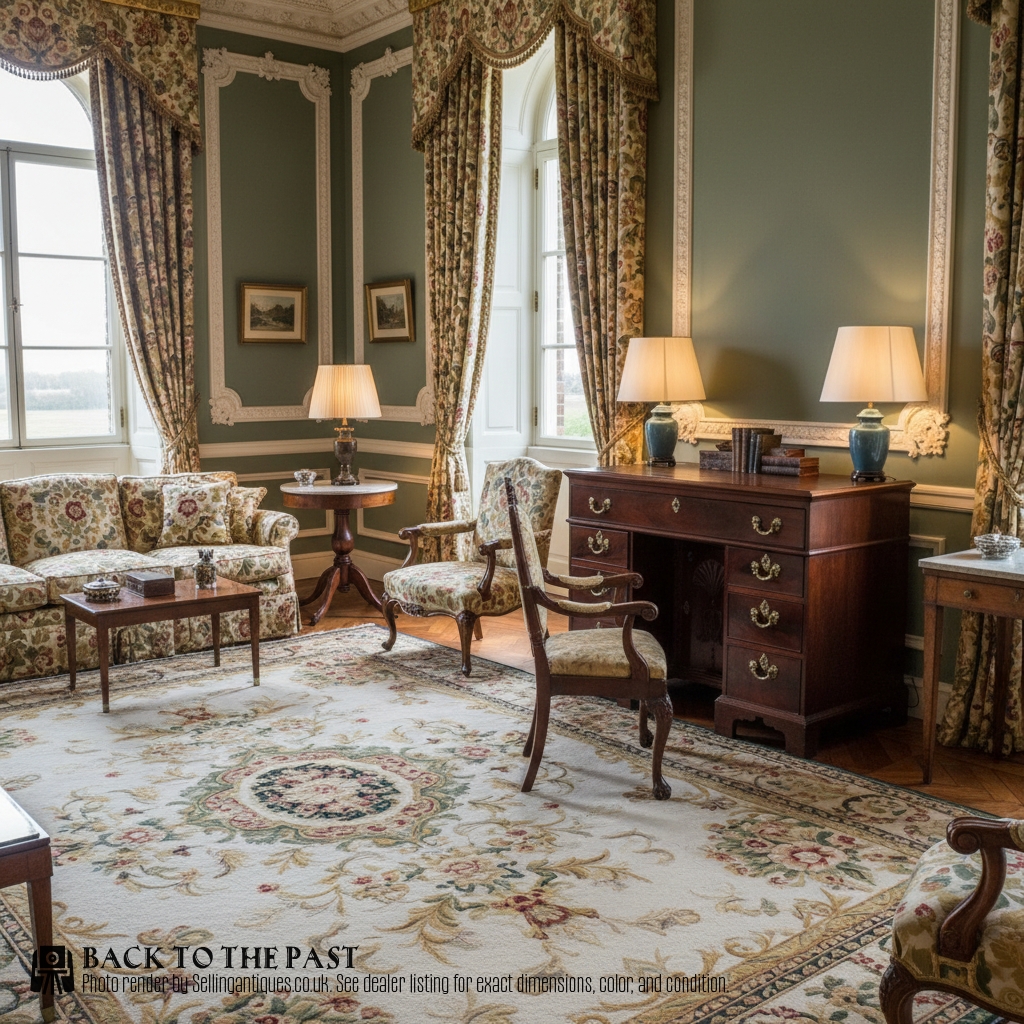
An irish georgian desk represents the height of eighteenth century cabinet making, built from dense timbers like mahogany and walnut with distinctive regional carving. These pieces range from compact bureau cabinets on stands to kneehole desks and large library tables created for grand houses.
The selection here encompasses formal George II and George III designs alongside related bureau forms and writing furniture. Makers often employed figured walnut or rich mahogany, fitted with brass hardware and leather inserts for daily correspondence.
How they were made
Joiners built these desks using solid mahogany and walnut timbers, often selecting red walnut for early pieces and figured grain for drawer fronts. Brass handles, escutcheons and sometimes castors secured the heavy sections and drawer assemblies.
Workshops utilised mortise and tenon joinery for structural stability, pairing it with hand-cut dovetails on all drawer boxes. Secondary woods lined the interiors, while leather and fabric provided writing surfaces.
The listings span the eighteenth and nineteenth centuries, featuring mahogany, walnut, rosewood, brass and leather.
What varies in quality
The standard of carving sets the better examples apart, with crisp execution in shell motifs, acanthus leaves and claw and ball feet. Regional cabinet makers varied in how deeply they undercut the wood and how carefully they matched timber grains across prominent surfaces.
Interior architecture also distinguishes the grade of a piece, separating simple pigeonholes from fitted compartments with secret drawers and inlaid veneers. Original brassware and untouched secondary timbers elevate the integrity of a desk.
Gillington of Dublin·George Austin·Austin
The Irish Georgian Desk Glossary
- Bureau
- A desk featuring a sloping lid that folds down to reveal a writing surface and small drawers. This form frequently sits upon bracket feet or a dedicated stand.
- Kneehole desk
- A flat-topped desk with a central recessed space for the legs, flanked by pedestals of small drawers. This form became popular during the eighteenth century.
- Secretaire
- A cabinet or chest incorporating a pull-down writing flap or drawer to conceal a fitted interior of pigeonholes and small compartments. These units combine storage with writing utility.
- Walnut
- A dense timber utilised extensively for furniture before mahogany gained dominance in the mid eighteenth century. Red walnut varieties show a warm reddish-brown tone under polish.
- Dovetail
- A joint formed by interlocking wedge-shaped fingers, used primarily to join drawer sides to drawer fronts. Hand-cut dovetails indicate traditional workshop construction.
Irish Georgian Desk: Frequently Asked Questions
How do I identify an irish piece?
Irish pieces often display distinct carving motifs, such as deep undercutting on shell details and robust proportions in the cabriole legs.
Makers also utilised specific regional timbers like red walnut alongside native oak and pine for secondary framing.
What is a kneehole desk?
A kneehole desk is a compact form featuring a central recess for seating, flanked by stacks of small drawers on each side.
Cabinet makers designed these for writing and correspondence in libraries or private studies.
How should I care for walnut?
Keep wooden furniture away from direct sunlight and sudden temperature shifts to prevent timber shrinkage and veneer splitting.
Apply a traditional wax polish occasionally to nourish the grain and maintain the surface sheen.
Are bureau cabinets practical?
Bureau cabinets provide enclosed storage above a fold-down writing flap, concealing internal compartments for papers and letters.
They offer a combination of display space, document organisation and a private writing surface.