

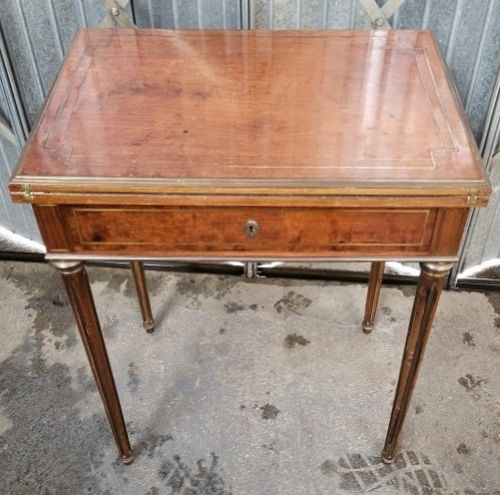
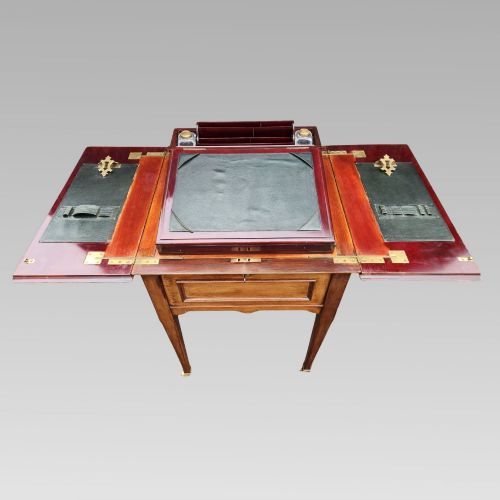


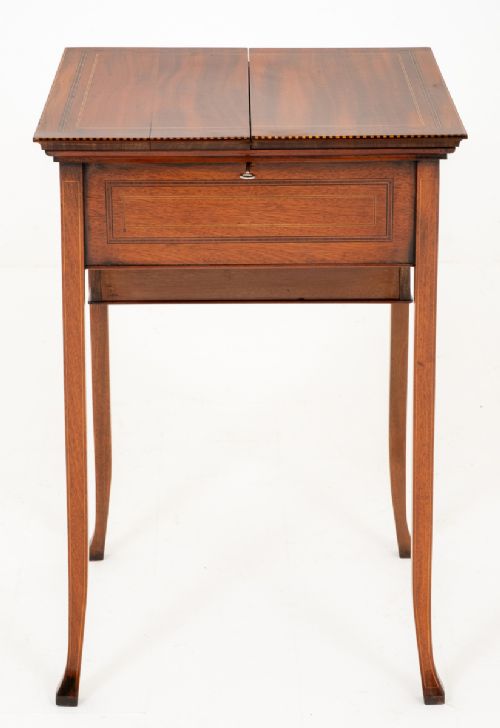


Metamorphic Writing Table
A metamorphic writing table transforms from an ordinary side table or desk into a multi-functional piece with clever hidden mechanisms.
Metamorphic Writing Table
A metamorphic writing table combines the appearance of a standard table or compact desk with mechanical cleverness, shifting forms through folding, rising, or pop-up actions. When you search for a metamorphic writing table, you are looking at items designed to save space or serve multiple practical purposes in a study, library, or drawing room.
The versions you are most likely to meet on this page span the Edwardian period and the nineteenth century, often appearing in forms such as ladies writing desks, side tables, or library tables. They emerge from periods including the eighteenth century, Regency, and Georgian eras, frequently showing refined cabinetry.
Makers and workshops constructed these pieces to alter their height or surface area seamlessly, using fold-over leaves, lift actions, and riser mechanisms. These designs allowed nineteenth-century and Edwardian users to transition quickly from casual reading to serious correspondence or cartography.
What Varies in Quality
The sophistication of the mechanical action dictates much of the distinction between standard examples and the finest pieces. Smooth, reliable movement in a pop-up, fold-over, or riser mechanism relies on precise engineering and robust internal framing.
Timber selection and decorative embellishment further divide the range. Fine examples display carefully matched veneers, crisp boxwood inlay, and quality brass hardware, whereas simpler pieces rely on straightforward joinery and plain timber.
Metamorphic Writing Table Retail Price Guide 2026
Typical asking prices for metamorphic writing table among the pieces listed under this phrase on Sellingantiques today, from the lower quarter to the upper quarter. They describe what is for sale here now, not the wider market.
Listings for metamorphic writing tables include examples from the eighteenth century, Regency period, Edwardian era, and the early twentieth century.
J.C Vickery of London
The Metamorphic Writing Table Glossary
- Metamorphic
- Furniture designed with concealed mechanical actions to transform into another form or function. These pieces alter their shape to serve as desks, tables, or compendiums.
- Riser mechanism
- An internal arrangement of weights, springs, or levers that elevates a writing surface or reading desk. This allows the furniture to adjust from a low table height to a standing or working position.
- Veneer
- A thin layer of superior wood applied to a secondary timber base to create decorative patterns on tabletops and drawer fronts. Cabinetmakers used this technique to achieve striking grain figures.
- Compendium
- A multi-purpose piece of furniture fitted with compartments for writing materials, stationery, and other desk accessories. These often incorporate military or campaign styles.
Metamorphic Writing Table: Frequently Asked Questions
What is a metamorphic writing table?
A metamorphic writing table is a piece of furniture that uses mechanical devices to change its shape or function. It typically looks like a side table or small desk until opened or adjusted.
These pieces were popular in the eighteenth, nineteenth, and early twentieth centuries for domestic and library use. Their clever designs allowed users to maximise space without sacrificing workspace.
How do the mechanisms work?
The mechanisms use hinges, pivots, folding leaves, and counterbalanced risers to alter the height and surface area of the furniture. Users can lift, slide, or fold parts of the table to reveal compartments or writing surfaces.
Many designs allow a compact side table to become a full-sized desk or reading stand. The engineering relies on concealed brass fittings and wooden runners.
Where were they used in the home?
These tables suited libraries, studies, drawing rooms, and compact townhouses where space was at a premium. A library table could transform for cartography or reference work.
Smaller ladies writing desks offered private storage for correspondence in more intimate rooms. Their dual purpose made them versatile additions to period interiors.
How do I identify an Edwardian example?
Edwardian metamorphic tables often feature lighter woods like satinwood or inlaid mahogany. They frequently incorporate Art Nouveau influences or Sheraton Revival decorative details.
Construction from this period around 1900 to 1910 often combines traditional cabinetmaking with refined spring-loaded or folding mechanisms. Their lighter proportions distinguish them from earlier Georgian and Regency pieces.