


Georgian Metamorphic Furniture
Georgian metamorphic furniture turns a single mahogany table, chair or step into two or three different things with a clever hidden mechanism.
Georgian Metamorphic Furniture
Georgian metamorphic furniture transforms to serve multiple purposes in smaller domestic spaces, shifting from a chair to library steps or a compact table to an expansive dining surface. When you search for georgian metamorphic furniture, you encounter ingenious pieces built during the Georgian, Regency, and William IV eras that conceal clever mechanical changes beneath traditional cabinetwork.
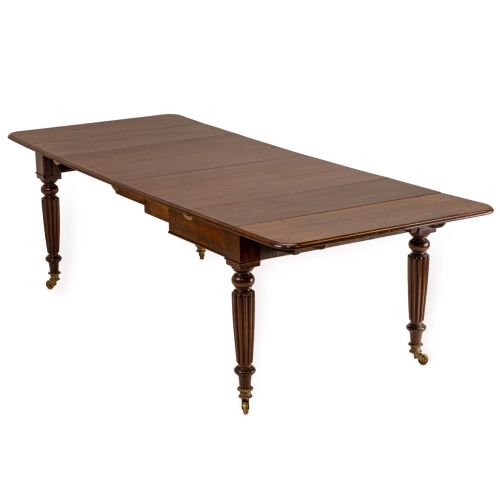
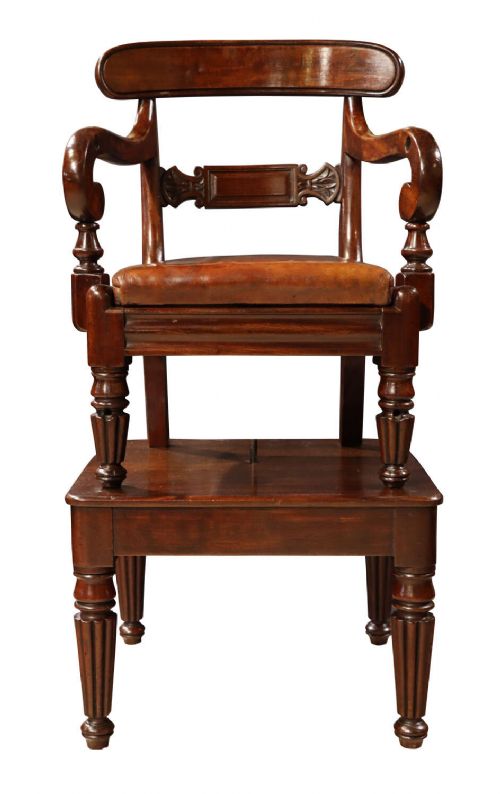
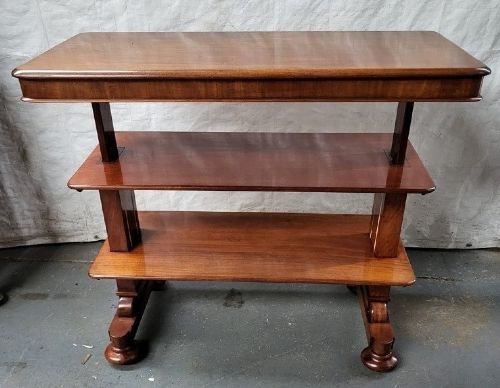
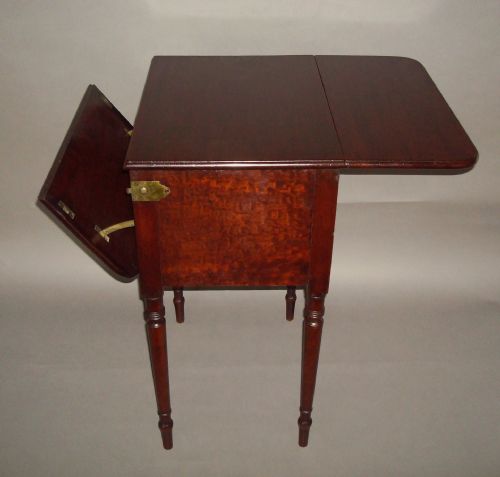
The selections on this page span several practical forms made for domestic and library use, including extending dining tables, child high chairs, serving buffets, and library armchairs that unfold into steps. Mahogany dominates the corpus, often paired with brass fittings, leather inserts, and cane work to support the daily wear of these dual-purpose designs.
How they were made
Cabinetmakers built these pieces primarily from solid and veneered mahogany, utilising brass hinges, pivots, and ratchets to allow smooth movement without weakening the structural frame. Finer examples incorporate satinwood inlay, leather writing surfaces, and cane seating to maintain elegance when the object is fully transformed.
The internal mechanics rely on precise joinery and concealed tracks that guide sliding leaves and folding sections securely into place. Every joint and hinge is fitted to withstand frequent shifting between functions while keeping the exterior appearance indistinguishable from standard high-status furniture.
Morgan and Sanders patented ingenious space-saving devices that let Regency homeowners turn their seating into library steps before tea.
What varies in quality
Quality rests entirely on the smoothness and reliability of the hidden mechanism, where superior pieces operate effortlessly without binding or sagging in either configuration. Maker stamps and refined secondary woods distinguish workshop pieces built with absolute precision from simpler provincial adaptations.
The integrity of the timber and the crispness of brass mounts reveal the maker's original ambition, with top-tier examples preserving their original actions and surface patination intact. Lesser pieces show signs of excessive wear or replacement hardware that disrupts the seamless transition between forms.
J.Jarvis·Morgan and Sanders
The Georgian Metamorphic Furniture Glossary
- Metamorphic furniture
- Pieces designed to transform from one form of furniture into another through mechanical action. This ingenuity allowed households to save space and serve multiple functions in a single room.
- Cellarette table
- A low cabinet or table fitted for holding wine bottles securely. In metamorphic variants, the top or interior often adjusts to provide a stable surface or storage access.
- Library steps
- Folding or unfolding steps used to reach high bookshelves. Metamorphic versions cleverly conceal these steps inside the framework of an armchair or small table.
- Deception table
- A piece of furniture designed to disguise its true function or mechanism until operated. These clever items surprised guests by revealing writing surfaces or hidden compartments.
- Mahogany
- A dense, durable tropical hardwood favoured by cabinetmakers for its rich reddish-brown colour and stability. It provides the strong structural body required to house moving metamorphic joints.
Georgian Metamorphic Furniture: Frequently Asked Questions
What is georgian metamorphic furniture?
Georgian metamorphic furniture refers to 18th and 19th-century tables, chairs and buffets designed with hidden mechanisms that transform their shape and use.
These clever designs allowed a single object to serve two or three distinct domestic purposes, such as an armchair that folds out into library steps.
How do you use a metamorphic library chair?
A metamorphic library chair operates by releasing concealed latches that allow the back and seat sections to pivot outward and downward.
This action converts the comfortable armchair into a sturdy set of wooden steps for reaching high bookshelves in a gentleman's library.
What materials were used for these pieces?
Cabinetmakers relied heavily on solid and veneered mahogany to build the robust frames required to support moving internal hardware.
Brass hinges, pivots, and ratchets were standard for the mechanisms, while secondary woods like satinwood, leather, and cane added refined surface detail.
How do I identify a Regency period piece?
Regency pieces often display bolder classical proportions, darker mahogany tones, and more complex mechanical actions developed for elite urban interiors.
Maker stamps on the brass or wood components can occasionally confirm attribution to specific workshops like Morgan and Sanders or J.Jarvis.