


Inlaid Wooden Writing Table
An inlaid wooden writing table offers a disciplined surface for correspondence, combining cabinetmaking with meticulous decorative banding.
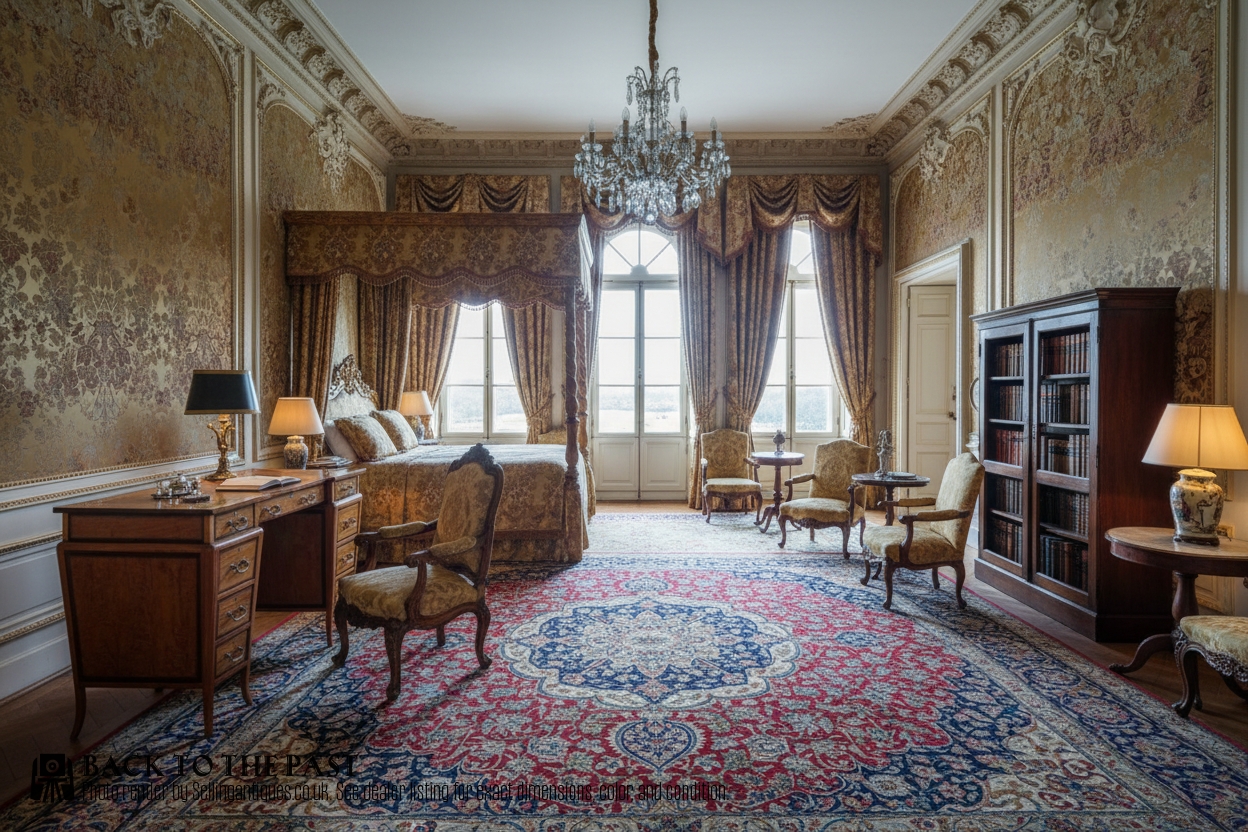
Inlaid Wooden Writing Table
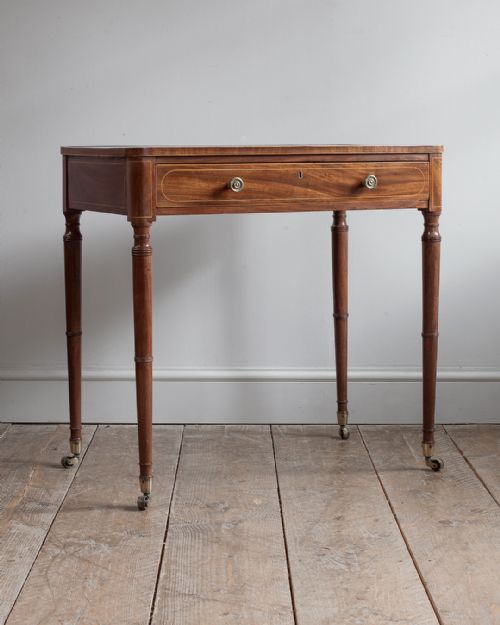
An inlaid wooden writing table spans forms from compact ladies' desks to twin pedestal writing desks and Pembroke tables. These pieces emerge across Georgian, Regency, Victorian, and Edwardian periods.
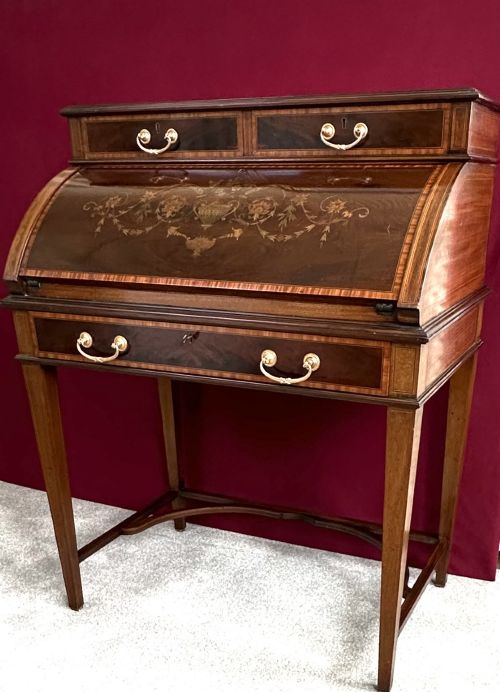
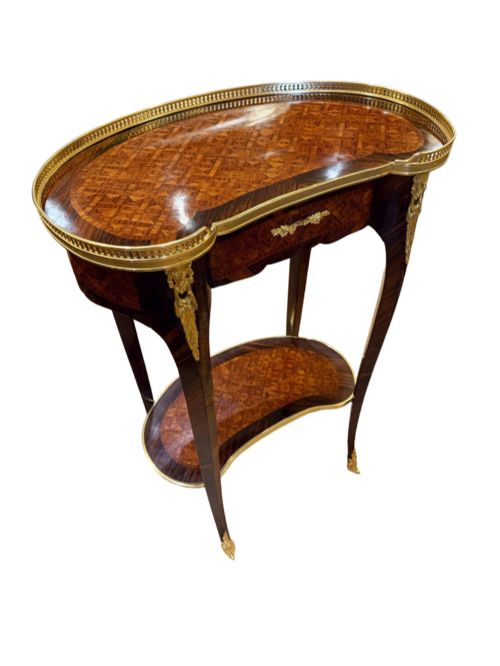
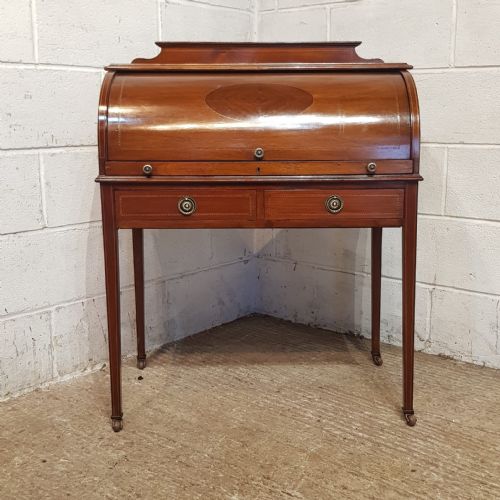
The layout often incorporates drawers, leather tops, or fall fronts, fulfilling domestic or campaign requirements. Edwardian and Victorian iterations frequently display kidney shapes or cylinder mechanisms.
Makers utilised mahogany, satinwood, walnut, and rosewood as grounds for intricate decorative work. The surviving examples demonstrate how writing furniture evolved to suit both grand libraries and private boudoirs.
Materials and technique
Cabinetmakers built the primary carcase using timbers such as mahogany, walnut, or satinwood. These solid foundations and veneered surfaces provided stable planes for subsequent decoration.
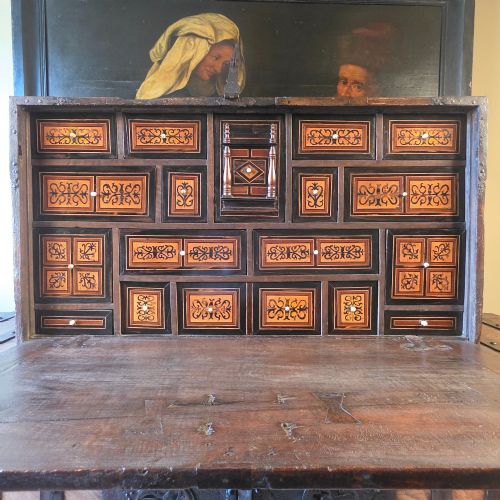
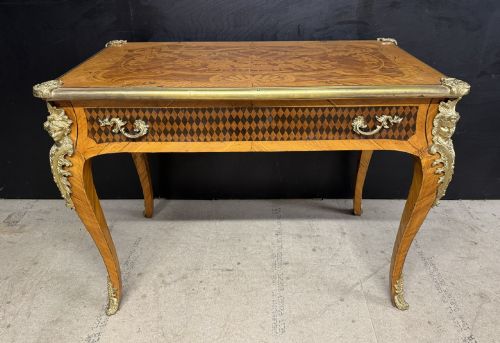
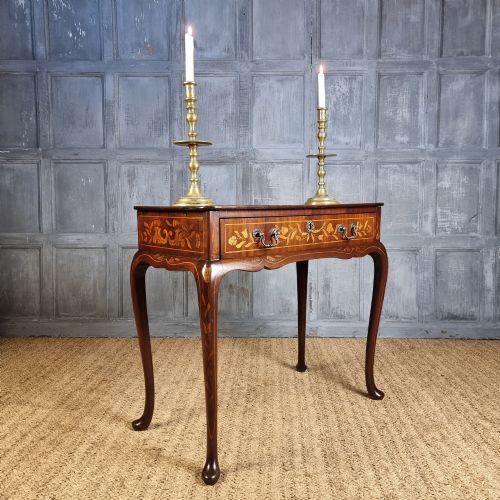
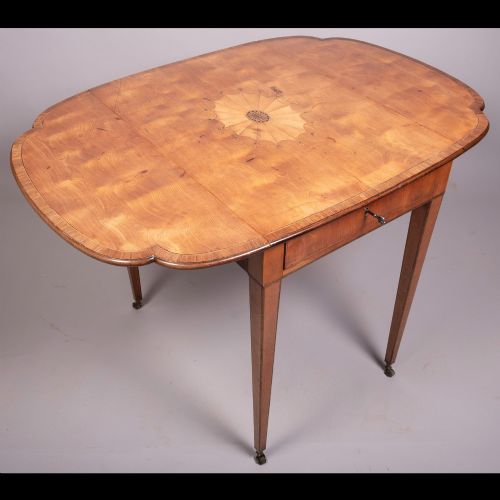
Wood inlay, marquetry, and parquetry formed the visual signature, utilising boxwood, brass, or exotic woods cut into geometric and floral patterns. Ormolu mounts and leather writing inserts completed the construction of high-status examples.
Listings feature writing furniture spanning the Georgian, Victorian, and Edwardian eras, constructed from mahogany, satinwood, and walnut.
Craftsmanship and design
The distinction between tiers rests upon the precision of the cabinetwork and the complexity of the inlay. Finely articulated banding and balanced timber selection separate ordinary utility pieces from ambitious workshop productions.
Hardware execution and secondary wood choice further indicate the standard of manufacture. Well-wrought ormolu mounts and uniform patination reveal the care invested by the original maker.
Maple & Co·Collinson & Lock
The Inlaid Wooden Writing Table Glossary
- Marquetry
- Veneers applied to a carcase in pictorial or decorative patterns, often utilising diverse tinted woods. This technique creates complex floral or geometric scenes across the writing surface.
- Parquetry
- Geometric wood inlay arranged in repetitive motifs such as cubes or chequers. It provides a structured decorative border or top.
- Satinwood
- A durable hardwood with a lustrous yellowish sheen, frequently favored during the Georgian and Edwardian periods. It serves as a bright contrasting ground for darker banding.
- Pembroke table
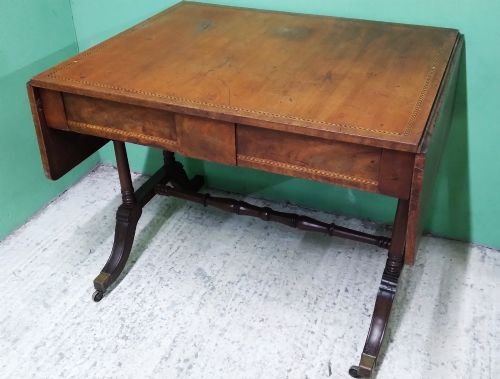
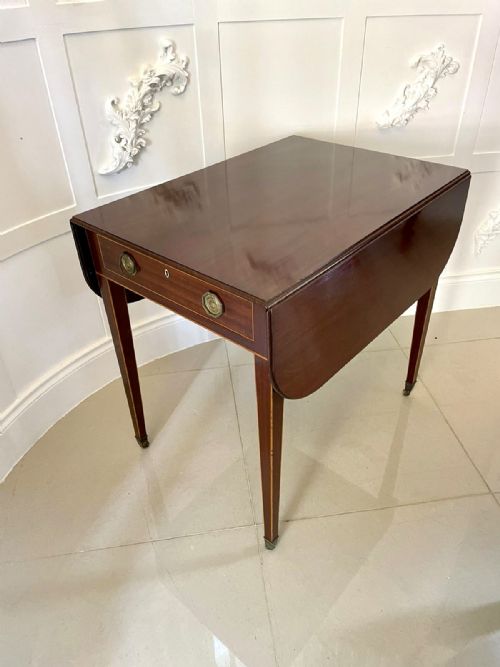
- A small table with hinged drop flaps on either side, often fitted with a single drawer. These versatile pieces functioned well for writing or light dining.
- Ormolu
- Gilded bronze mounts applied to furniture for decorative accent. It frames drawers and corners on elaborate nineteenth-century desks.
Inlaid Wooden Writing Table: Frequently Asked Questions
What is an inlaid wooden writing table?
An inlaid wooden writing table is a desk or freestanding table decorated with contrasting wood veneers, banding, or marquetry. These pieces combine a functional writing surface with ornamental cabinetwork.
They appear in various formats, from compact Pembroke and kidney tables to large pedestal desks, serving private studies and reception rooms alike.
How do I date an inlaid wooden writing table?
Dating relies on identifying the underlying timber, structural form, and style of the inlay. Georgian examples often display restrained mahogany and linear boxwood banding, while Victorian and Edwardian pieces frequently feature elaborate marquetry and satinwood.
Hardware, secondary woods inside the drawers, and overall construction methods further narrow down the decade of production.
Where were these tables used?
These tables occupied libraries, private studies, drawing rooms, and boudoirs as designated furniture for correspondence and administration. Ladies' writing desks specifically served private chambers for letter writing.
Freestanding centre tables allowed writers to position themselves away from walls, taking advantage of natural light in grand rooms.
How should I care for a wooden writing table?
Maintenance involves keeping the timber away from direct heat sources and fluctuating humidity to prevent veneer lifting. Regular dusting with a dry, soft cloth preserves the finish.
Leather writing inserts benefit from occasional specialist conditioning to prevent cracking while retaining their suppleness.