

Louis XV Style Bureau Plat
These pieces of louis xv style bureau plat are nineteenth century writing desks and tables built for grand rooms.
Louis XV Style Bureau Plat
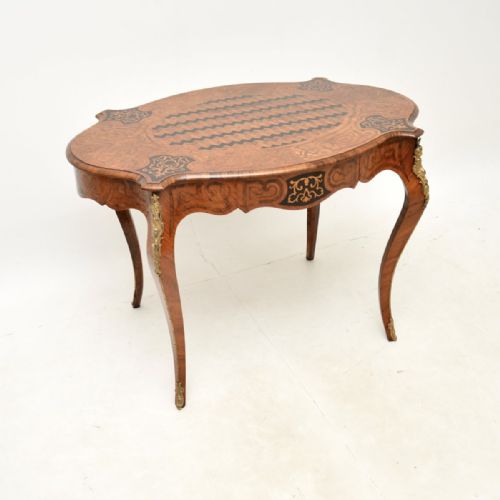
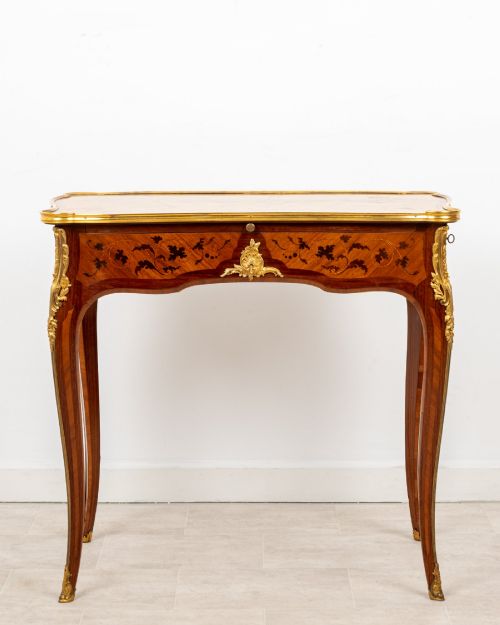
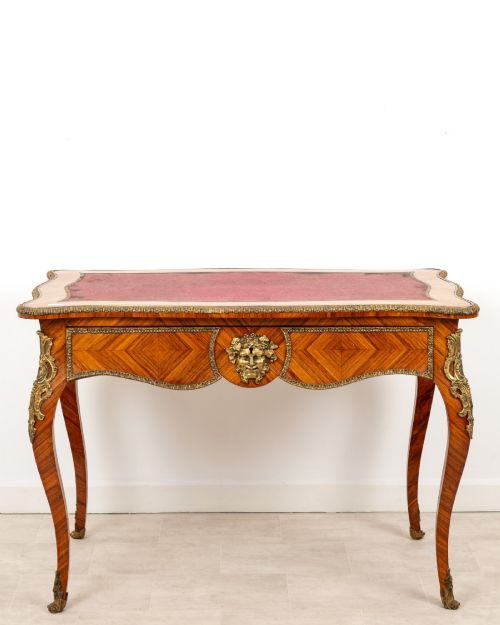
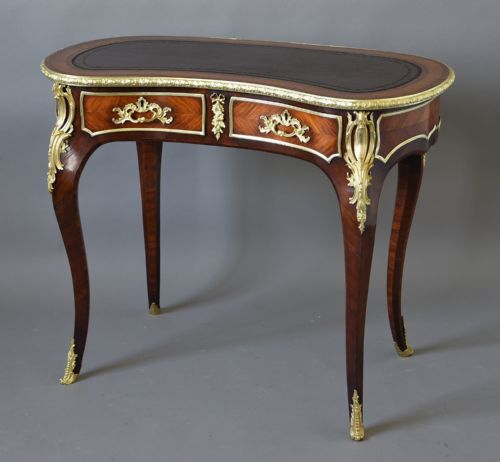
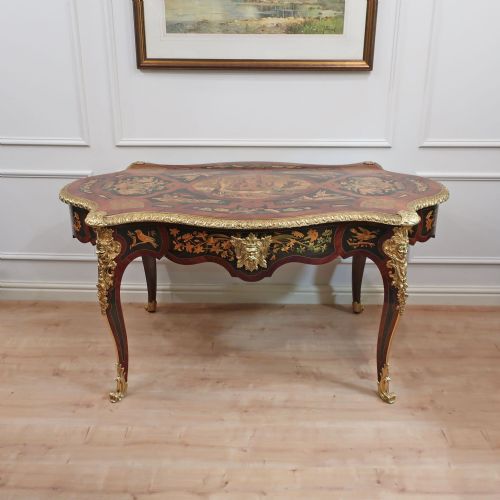
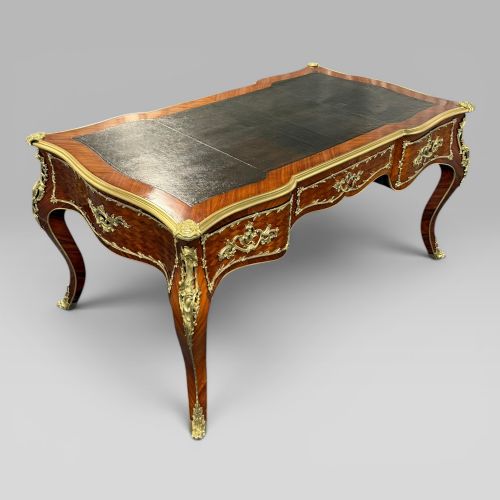
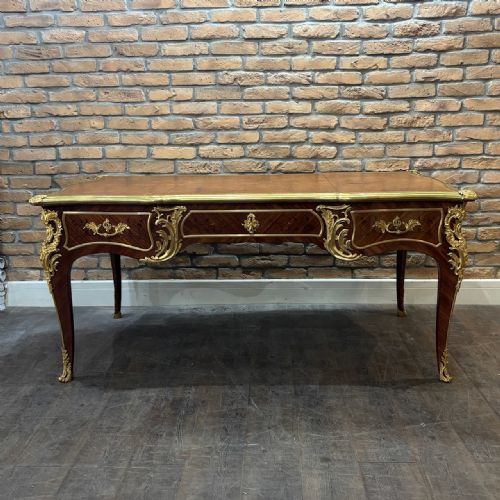
A louis xv style bureau plat is a freestanding writing table designed to sit in the centre of a room rather than against a wall. The pieces on this page appear mostly from the nineteenth century, including Victorian and Edwardian examples alongside French revival workshops.
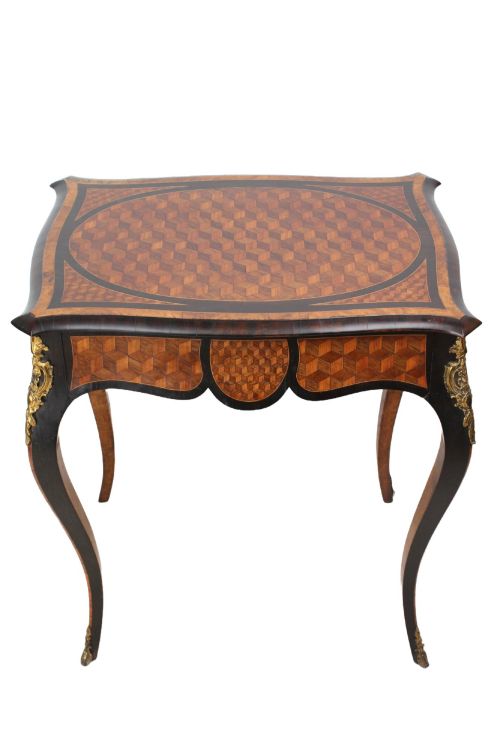
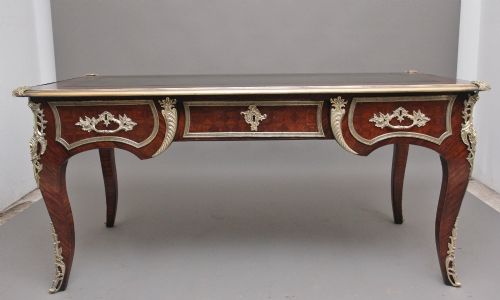
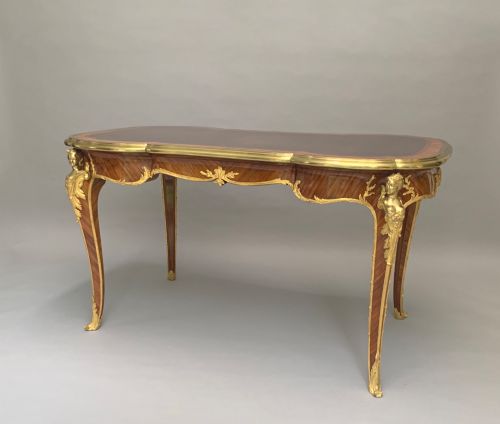
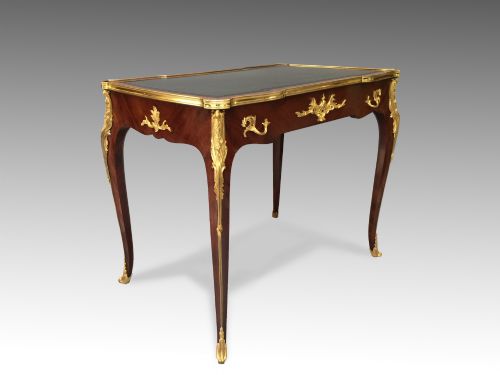
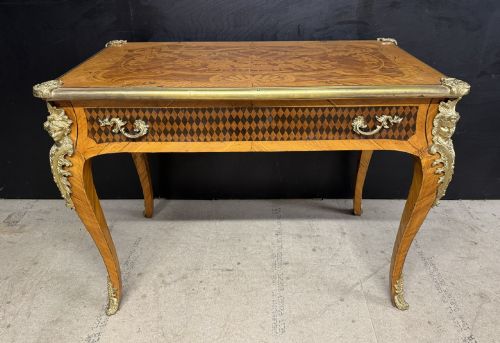
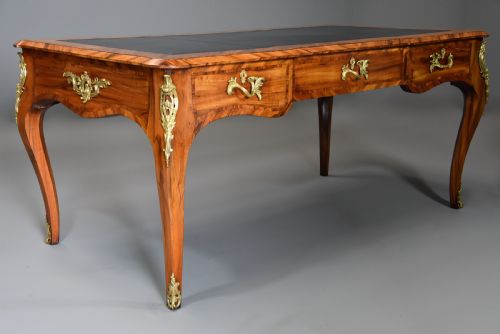
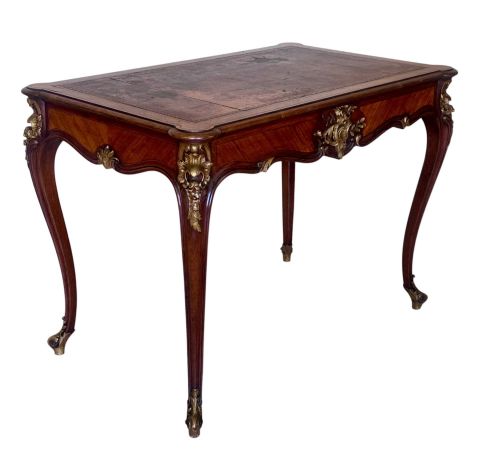
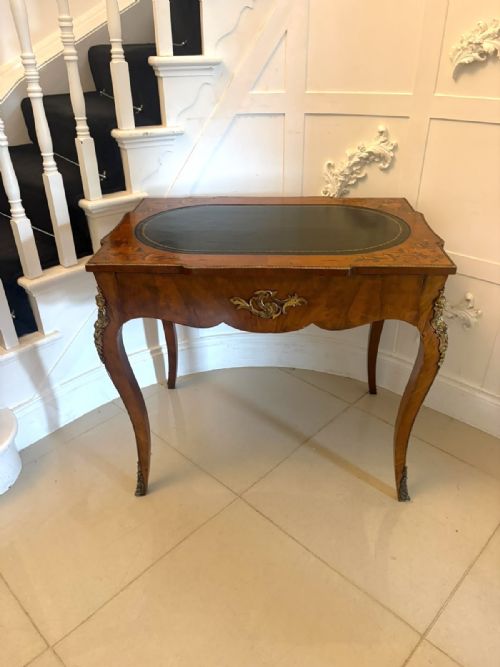
Most items take the form of kidney shaped tables or rectangular desks with leather inset tops and cabriole legs. Makers produced these grand writing surfaces in walnut, kingwood, rosewood, and mahogany, drawing inspiration from French rococo designs.
Materials and Technique
Cabinetmakers constructed carcass frames in walnut or mahogany before applying elaborate veneers of kingwood, rosewood, and burr walnut in marquetry and parquetry patterns. Many examples incorporate brass or leather writing surfaces fitted into the timber frame.
Casters and heavy mounts of ormolu and gilt bronze accent the curves of cabriole legs, terminating in cast brass sabots. Workshops utilised bronze casting techniques to produce decorative mounts that followed the asymmetrical contours of the woodwork.
Several desks hide small pull out writing slides on the sides, perfect for moments when the main leather top is already covered in books.
Judging Quality
The distinction between standard production and masterwork pieces rests in the crispness of the ormolu mounts and the precision of the timber marquetry. Finer desks display hand chased gilt bronze details that fit the wood contours precisely, while lesser examples use repetitive cast metal elements.
Timber selection dictates overall visual depth, with master makers choosing figured kingwood and burr walnut with natural grain movement. The construction of internal drawer linings and the weight of the bronze mounts separate ordinary nineteenth century revival furniture from works by notable makers.
JAS Shoolbred·Francois Linke·Edwards and Roberts·CH Jeanselme and Co·Durand·Fournier·Zweiner
The Louis XV Style Bureau Plat Glossary
- Bureau plat
- A flat topped writing table designed to stand freestanding in a room, usually featuring drawers beneath the writing surface. These desks emerged in France during the eighteenth century and inspired later revival pieces.
- Ormolu
- Gilt bronze mounts applied to furniture edges, corners, and legs for decoration and protection. The technique involves applying a mercury and gold amalgam to cast bronze.
- Marquetry
- Decorative patterns formed by fitting together thin slices of various coloured woods onto a furniture carcass. Craftsmen arrange grain patterns to create floral or geometric pictures.
- Cabriole leg
- A furniture leg that curves outward at the knee and tapers inward toward the foot, mimicking animal limbs. This form appears frequently on rococo revival desks.
- Sabot
- A metal shoe or mount fitted to the foot of a cabriole leg to protect the timber from wear. Makers cast these in brass or ormolu to match other hardware on the piece.
Louis XV Style Bureau Plat: Frequently Asked Questions
What is a bureau plat used for?
These pieces served as writing desks and correspondence tables for wealthy households in nineteenth century drawing rooms and studies. The wide leather top provided a smooth surface for writing letters while drawers held stationery and ink.
Because the backs are finished with matching veneers and mounts, owners placed them in the middle of rooms rather than against walls. They functioned as both practical writing furniture and prominent decorative statements.
How do I tell nineteenth century pieces from newer ones?
Examine the timber shrinkage, hand cut dovetails in the drawer construction, and the patination on the bronze mounts. Nineteenth century revival pieces show natural wear to the leather and softening of the wood grain over decades of use.
Cast metal mounts on older desks display individual hand finishing rather than uniform modern casting marks. The underlying construction timbers inside the carcass will also reveal older sawing methods.
Where should I place a bureau plat?
These desks require open floor space where visitors can walk around all four sides, as the back is finished with the same care as the front. Placing one in the centre of a study or living room allows the piece to function visually from every angle.
Keep the timber away from direct sunlight and strong heat sources to prevent the kingwood and walnut veneers from drying out or splitting over time.