


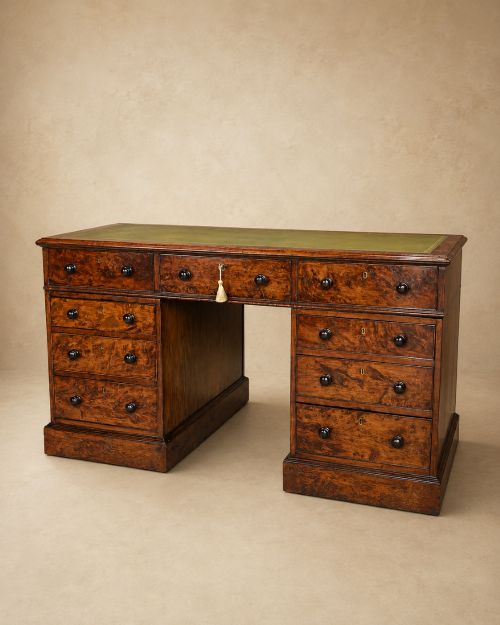
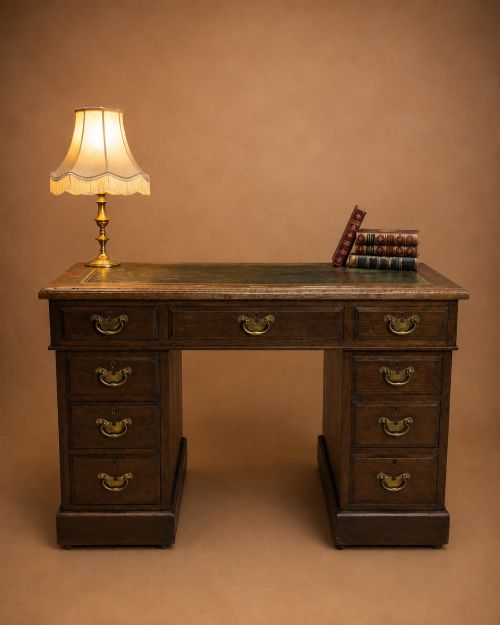
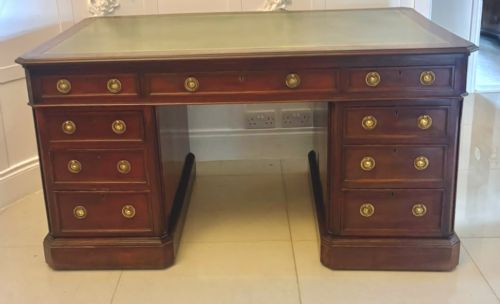
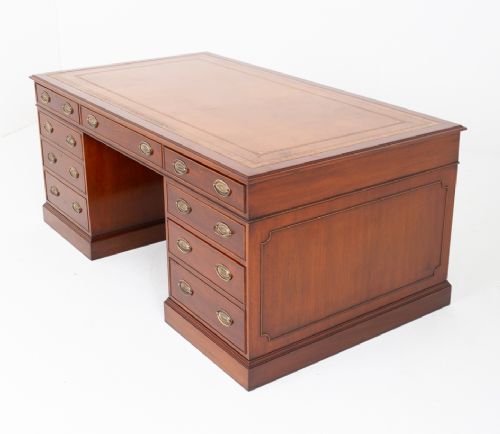
Traditional Leather Top Desk
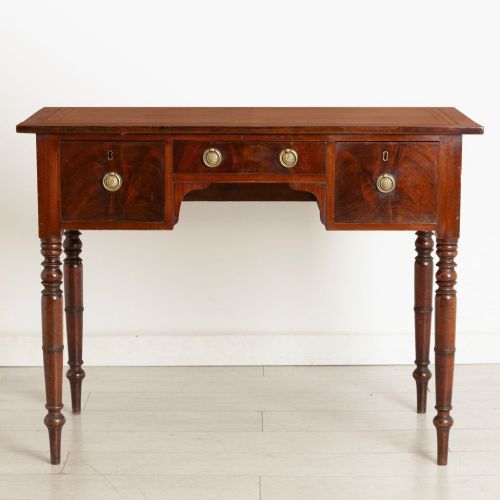
A traditional leather top desk provides a generous working surface bound in hide, carrying the heft and character of Victorian and Edwardian studies.
Traditional Leather Top Desk
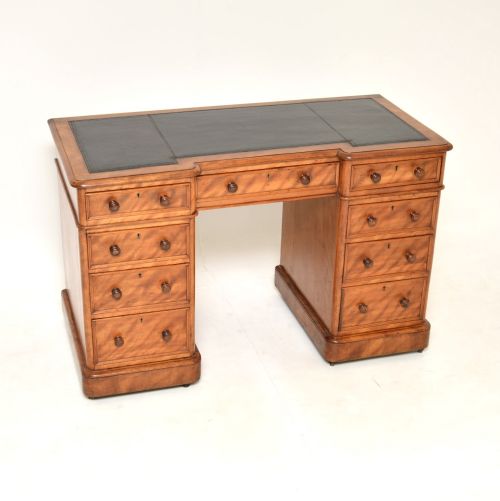
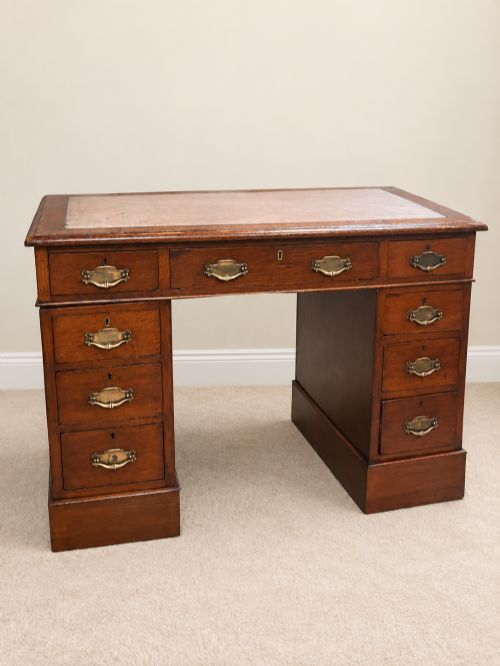
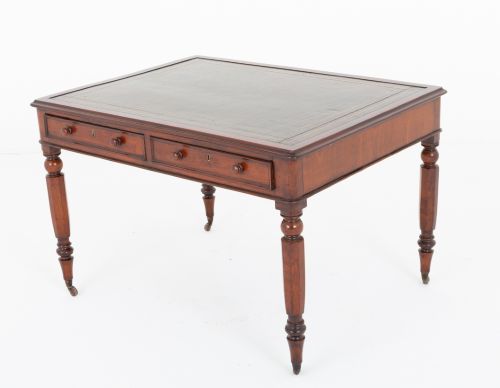
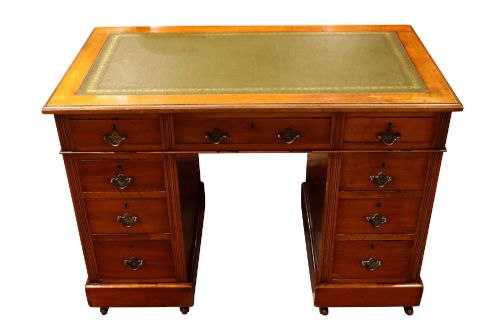
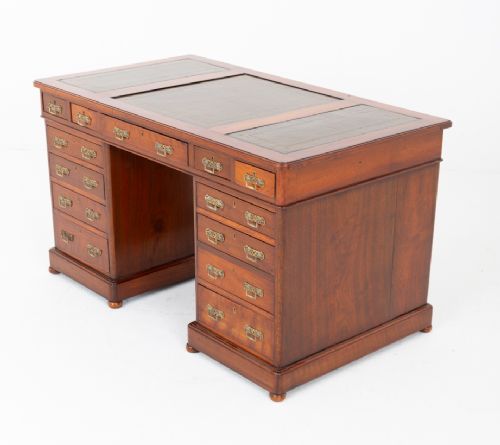
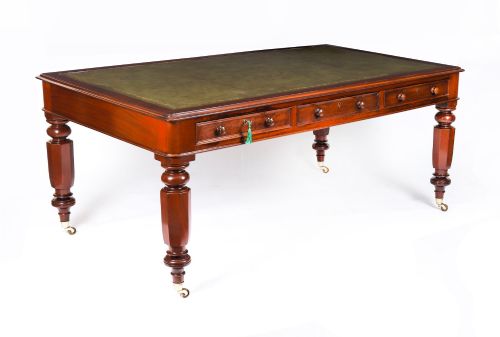
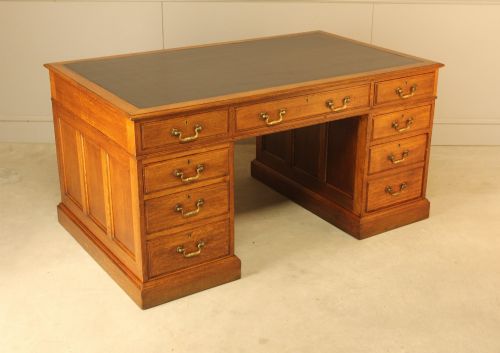
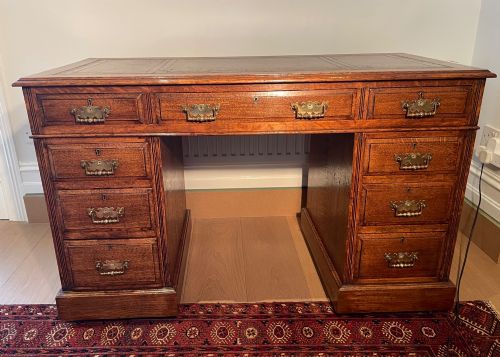
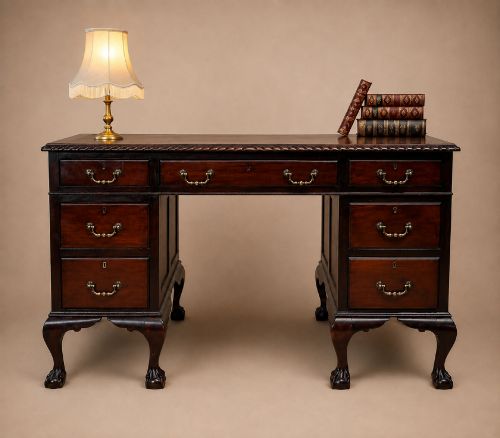
A traditional leather top desk encompasses substantial pedestal forms, kneehole writing tables, and large partners desks designed for two users facing each other. These pieces emerge primarily from the nineteenth century and early twentieth century, spanning Victorian, Edwardian, and revival periods.
Pedestal configurations dominate the selection, featuring banks of drawers flanking a central recess, alongside freestanding library tables intended for placement in the middle of a room rather than against a wall.
Makers adapted classical proportions to suit the administrative needs of offices and grand libraries, resulting in sturdy freestanding units and smaller kneehole variants.
Materials and Construction
Cabinet makers utilised dense hardwoods including mahogany, oak, walnut, and burr walnut for the primary carcase and drawer fronts, frequently applying satinwood for contrast or interior details.
The writing surfaces are inset with panels of leather, often decorated with blind tooling or gilt borders around the perimeter to frame the workspace.
Craftsmanship and Proportion
The distinction between standard examples and finer workshop productions rests on the selection of timber figures, such as highly figured burr walnut veneers or dense, rich mahogany grains.
Superior items display careful attention to secondary timbers within drawer linings and the retention of original brass handles and fitted internal stationery compartments.
Proportion and finishing to all four sides indicate a desk intended for freestanding placement, requiring greater joinery skill than pieces meant to sit against a wall.
Trollope & sons desk·Wylie & Lochhead Glasgow·Whytock & Reid of Edinburgh
The Traditional Leather Top Desk Glossary
- Pedestal desk
- A heavy writing desk supported by two banks of small drawers that rest directly on the floor. These units offer substantial storage space beneath the main writing surface.
- Partners desk
- A large double-sided desk designed for two people to work opposite one another, featuring drawers and cupboards on both faces. They often stand freely in the centre of a room.
- Blind tooling
- A decorative technique that impresses gold leaf or foil into heated leather using metal stamps. This creates a neat border around the edge of the writing surface.
- Kneehole desk
- A compact desk with a central recess for the legs, flanked by smaller sets of drawers. They traditionally stood against walls in smaller studies.
- Writing slide
- A pull-out shelf housed above the drawers that extends the usable surface area. They provide temporary space for papers without cluttering the main desk.
Traditional Leather Top Desk: Frequently Asked Questions
How do I care for the leather top?
Clean the hide gently using a slightly damp cloth and apply a specialist leather cream periodically to prevent drying. Avoid placing hot cups or direct sunlight on the surface.
Regular conditioning maintains the suppleness of the leather and preserves the gilt tooling applied around the edges.
Can these desks be dismantled for moving?
Many pedestal desks separate into three distinct pieces: two drawer pedestals and the top surface. Larger partners desks often break down in a similar modular fashion.
Removing the drawers prior to transport lightens the load and protects the internal carcase joints during transit.
How do I date a wooden desk?
Examine the timber species, drawer construction methods, and hardware styles to determine the likely era of manufacture. Victorian pieces often use mahogany with hand-cut dovetails, while Edwardian examples show different revival influences.
Original brass castors and stamped maker marks inside the drawer boxes provide further clues to the exact decade of production.