





Davenport Desk with Drawers
These davenport desk with drawers pieces are compact writing cabinets offering fitted workspaces and side storage, ideal for tight rooms needing historic character.
Davenport Desk with Drawers
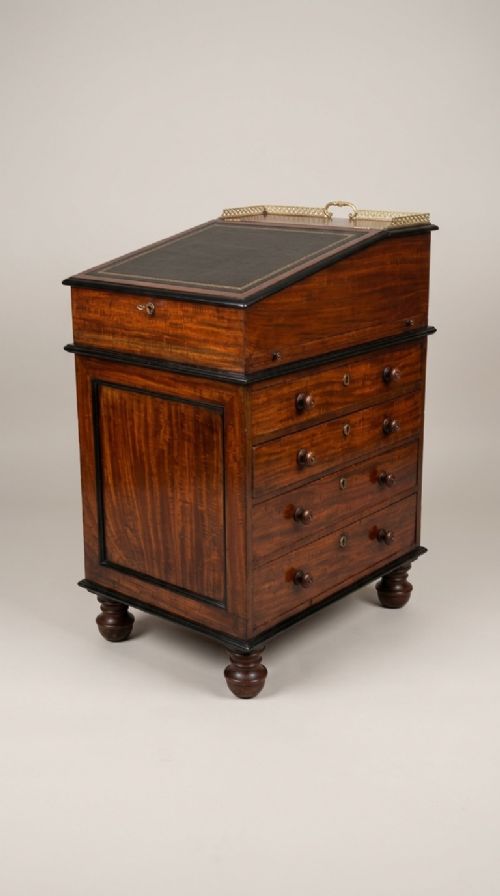
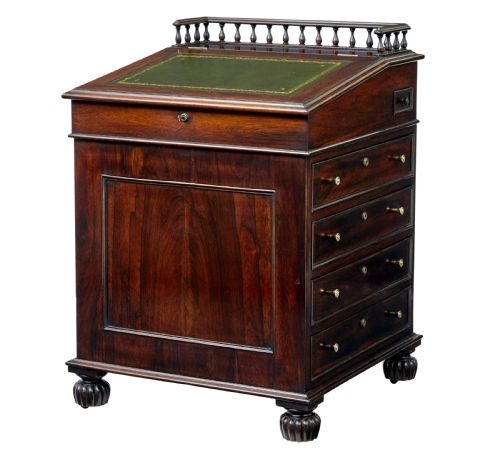
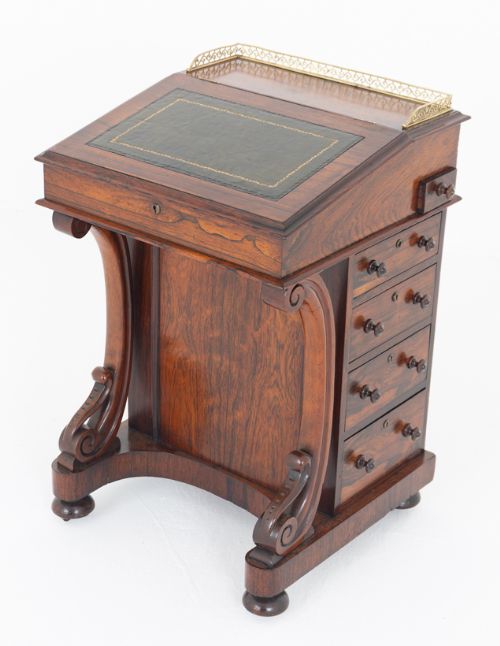
A davenport desk with drawers combines a sloping writing surface with a pedestal of side drawers, creating a compact workstation for correspondence. The form emerged during the Regency period and remained popular through the Victorian and Edwardian eras.
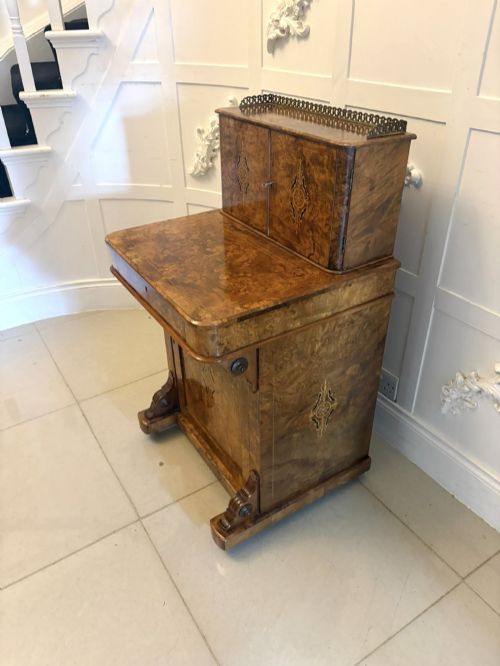
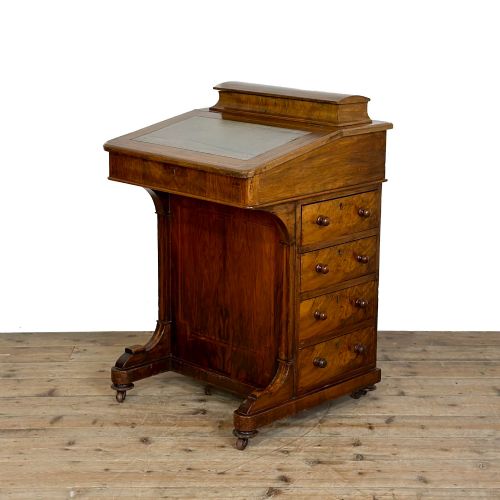
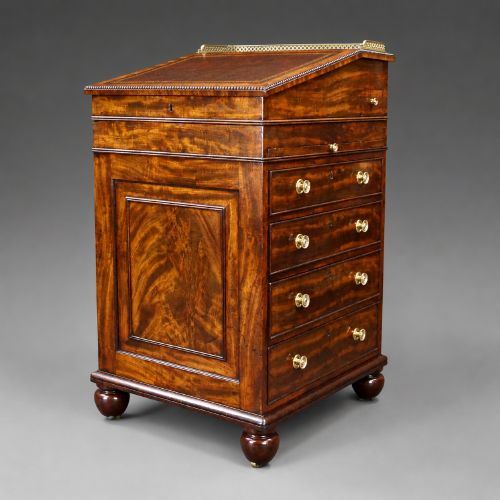
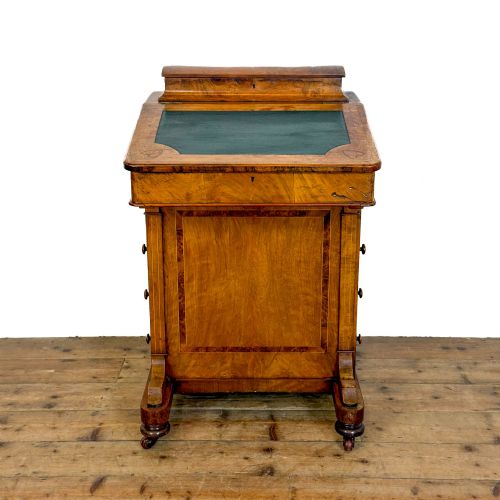
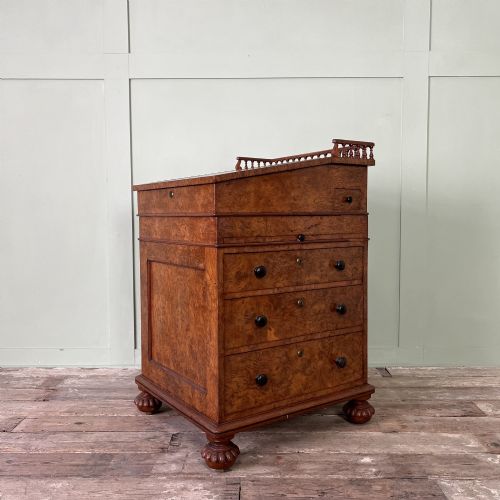
Most examples seen here are Victorian or Regency pieces, constructed in rich timbers like mahogany, rosewood, and burr walnut. Buyers frequently encounter versions featuring four side drawers paired with stationery compartments beneath a sloping lid.
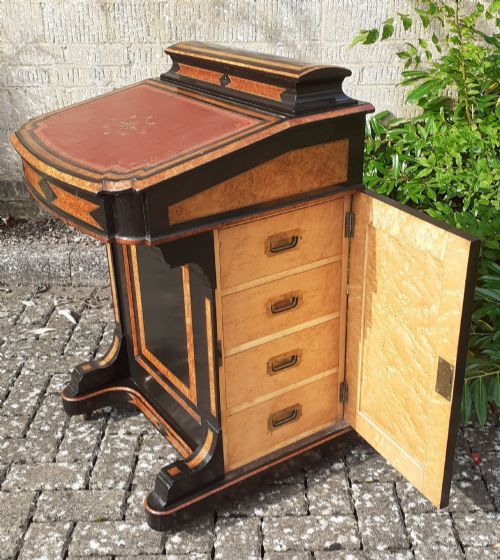
Makers adapted the basic pedestal form across different stylistic movements, producing Sheraton Revival satinwood models, Aesthetic Movement walnut pieces, and elaborate piano top variants. Each iteration maintains the signature combination of small footprint and ample internal storage.
Materials and construction
Cabinet makers utilised dense hardwoods such as mahogany, rosewood, and walnut as structural bases, often applying highly figured veneers like burr walnut or flame mahogany to the primary display surfaces. Solid timbers provided the stability needed for sliding tops and pivoting writing compartments.
Drawer construction relied on hand-cut dovetail joints fitted with cedar or oak linings, accompanied by turned wooden handles or cast brass pulls. Writing slopes incorporated inset panels of tooled leather to provide a durable surface for ink pens.
Davenport Desk with Drawers Retail Price Guide 2026
Typical asking prices for davenport desk with drawers among the pieces listed under this phrase on Sellingantiques today, from the lower quarter to the upper quarter. They describe what is for sale here now, not the wider market.
Many davenports hide secret pivoting drawers behind false fronts, originally designed to keep family gossip safe from prying housemaids.
What separates the finest examples
The choice of timber veneer dictates much of the visual appeal, with book-matched burr walnut or flame mahogany showing superior grain selection across the entire carcase. Grain continuity from the top slope down through the drawer fronts indicates thoughtful construction by skilled cabinet makers.
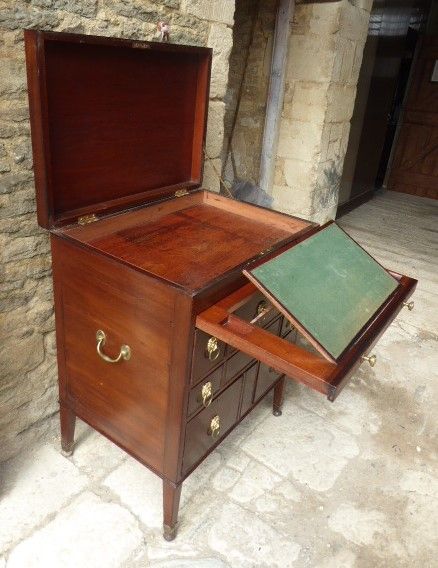
Complexity of internal fittings and mechanical actions distinguishes standard production from exceptional pieces. Superior items include concealed secret drawers, sliding desktop mechanisms, and fully fitted maple interiors with original brass hardware.
Gillows·Gillow and Co·Thomas Turner·James Shoolbred
The Davenport Desk with Drawers Glossary
- Burr walnut
- A figured timber obtained from the growth warts of walnut trees, prized for its swirling grain patterns on writing slopes and drawer fronts.
- Flame mahogany
- A timber veneer displaying a dramatic, flickering flame-like grain pattern, frequently utilised on high-grade Regency and Victorian furniture.
- Pedestal desk
- A furniture form supported by one or two banks of drawers beneath the main work surface, which defines the structural layout of a davenport.
- Marquetry
- The art of applying decorative pieces of veneer to a structure to form geometric or floral designs, often seen on Victorian walnut examples.
- Stationery box
- A compartment mounted on the rear top of the desk designed to hold paper, envelopes, and ink bottles.
Davenport Desk with Drawers: Frequently Asked Questions
Where did the davenport desk get its name?
The furniture form is traditionally associated with a Captain Davenport who commissioned a compact, practical desk for shipboard use during the late eighteenth century. Cabinet makers subsequently refined the design for domestic residential interiors.
Over the Regency and Victorian periods, the concept evolved from a simple naval writing box on legs into a heavily ornamented household cabinet with side drawers and stationery compartments.
How do I use a sliding top davenport?
The sliding top mechanism allows the entire writing slope to push forward toward the user, creating more legroom when seated at the cabinet. Pulling the top back secures the internal mechanism when the desk is closed.
Care should be taken when operating older sliding mechanisms to ensure the tracks remain clean and unobstructed by modern writing equipment.
Were davenport desks used by men or women?
Davenports served primarily as lady's writing desks due to their diminutive proportions and delicate scale, fitting easily into drawing rooms and boudoirs for morning correspondence. The enclosed compartments provided private storage for personal letters and sealing wax.
Larger freestanding models equipped with drawers on both sides were occasionally utilised in libraries or studies by both gentlemen and ladies.