


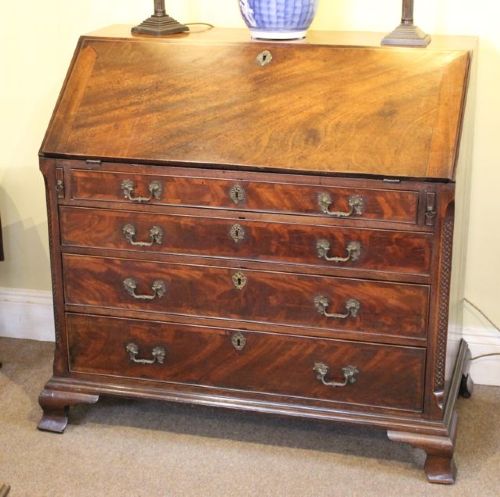
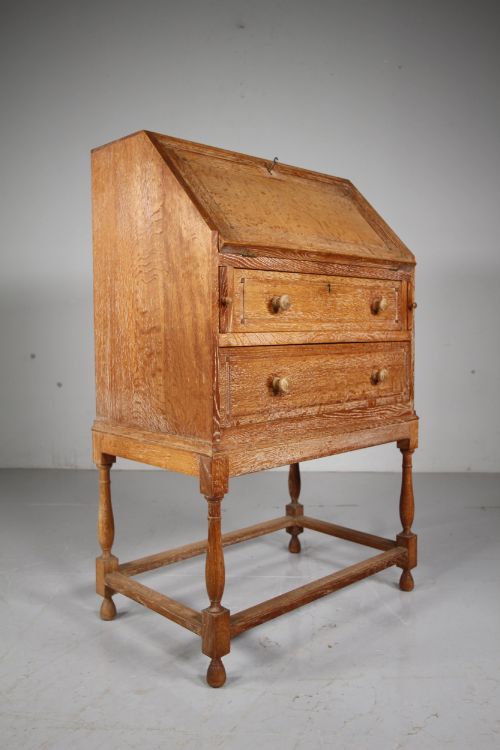
Slope Front Writing Desk
A slope front writing desk offers a hinged writing flap that opens to reveal internal compartments, combining practical workspace with concealed storage.
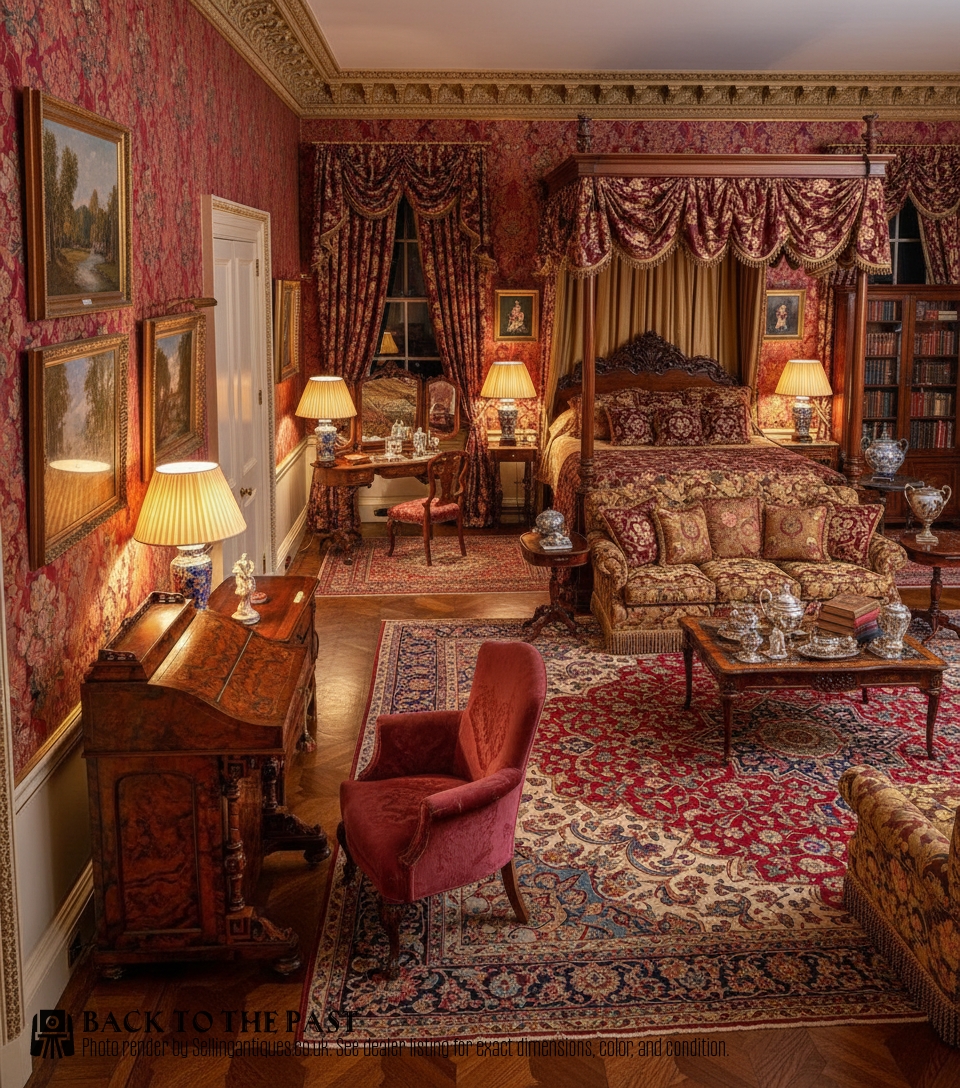
Slope Front Writing Desk
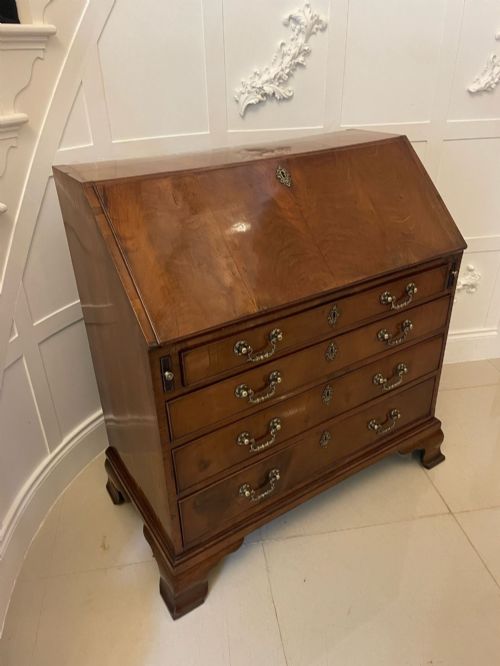
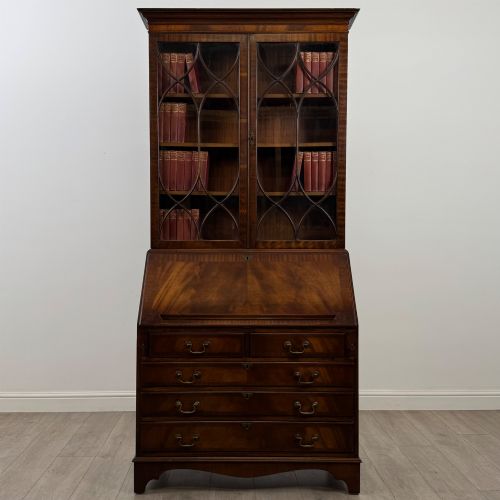
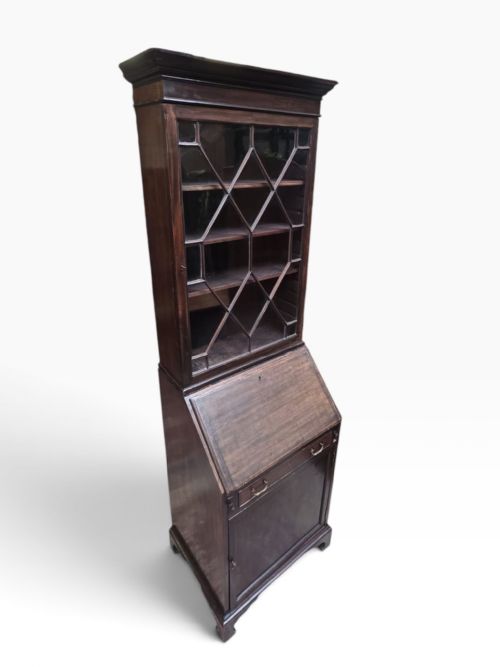
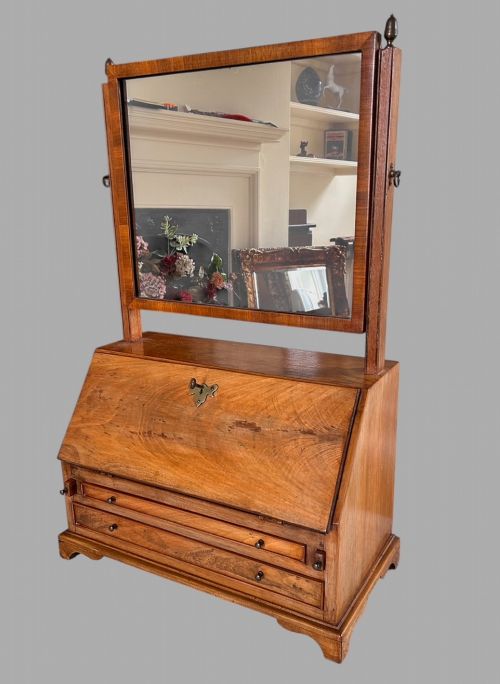
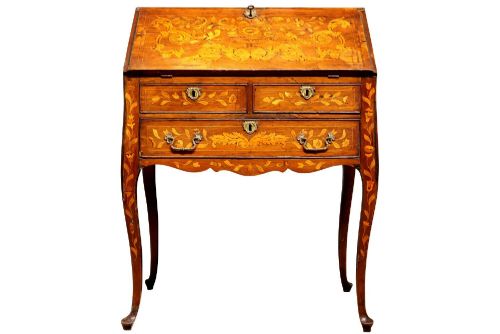
A slope front writing desk is typically encountered as a bureau or bureau bookcase spanning the eighteenth, nineteenth, and twentieth centuries. These pieces range from compact oak and mahogany examples to elaborate burr walnut and marquetry variations originating in English and continental workshops.
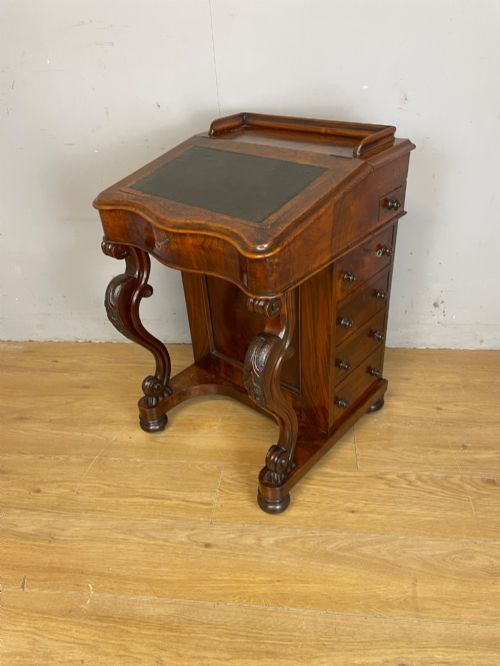
Buyers frequently encounter Edwardian golden oak iterations alongside Georgian pieces featuring fitted interiors and pigeonholes. Smaller variants such as Davenport desks and desk boxes also appear within the selection.
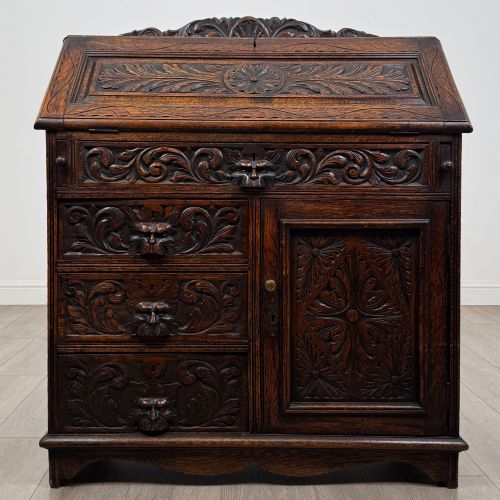
Stylistic influences extend from Queen Anne and George II designs to Arts and Crafts interpretations and Jacobean revivals. Each iteration provides a dedicated slant surface intended for correspondence and record keeping.
Materials and Construction
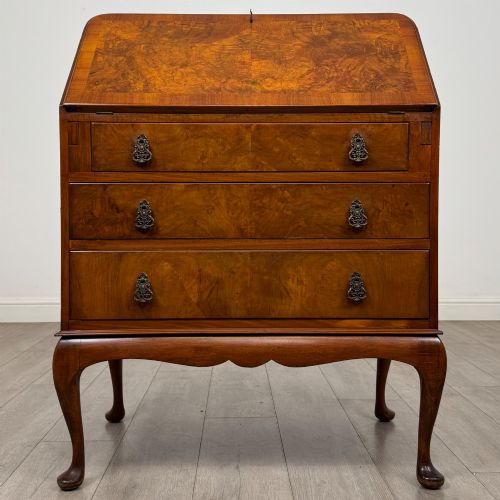
Cabinetmakers utilised dense hardwoods including mahogany, oak, and walnut, frequently selecting burr walnut veneers to create figured grain patterns across the fall front. Secondary timbers like cedar and fruitwood appear within internal drawer construction.
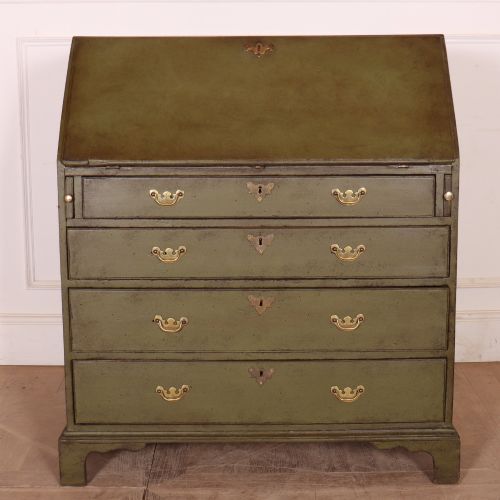
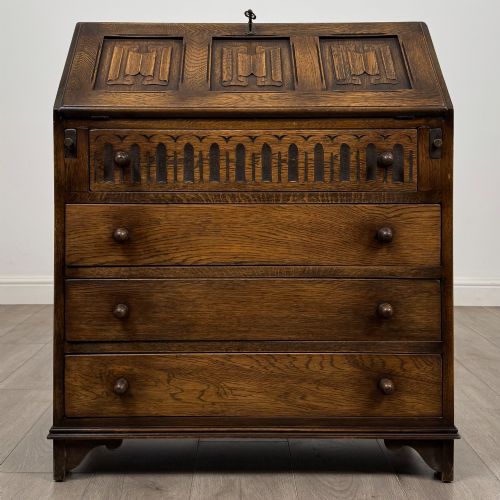
Decorative techniques involve floral marquetry, hand painting, and carved elements such as linenfold motifs or green man masks. Brass handles, escutcheons, and hinges secure the fall front and drawers while providing functional contrast to the timber.
Slope Front Writing Desk Retail Price Guide 2026
Typical asking prices for slope front writing desk among the pieces listed under this phrase on Sellingantiques today, from the lower quarter to the upper quarter. They describe what is for sale here now, not the wider market.
Some slope front desks conceal hidden release buttons that spring open secret compartments within the pigeonhole nest.
Judging Execution
Quality rests upon the selection of timber veneers and the precision of the internal drawer layout. Superior examples display consistent grain alignment across the sloping lid and tightly fitted pigeonholes within the writing compartment.
The sophistication of decorative embellishments, from floral marquetry to carved mouldings, distinguishes standard utility furniture from pieces produced by skilled makers. Structural integrity in the hinges and drawer linings further separates workshop standards.
Heals of London·Stanley Webb Davies
The Slope Front Writing Desk Glossary
- Bureau
- A writing desk featuring a sloping hinged lid that drops down to form a writing surface over a set of drawers. This term is frequently used interchangeably with slope front writing desk.
- Fall front
- The hinged panel on a bureau or desk that drops down to provide a flat writing surface. It conceals a fitted interior of small drawers and pigeonholes when closed.
- Marquetry
- Inlaid patterns of wood veneers applied to furniture surfaces to create decorative pictorial designs. Floral motifs are commonly found on Dutch examples.
- Davenport
- A compact form of writing desk featuring a sloping desktop and drawers opening to the side. These pieces often incorporate brass mounts and stationary compartments.
- Pigeonhole
- Small compartmentalised spaces built into the interior of a desk for storing letters and documents. They are typically revealed when the fall front is opened.
Slope Front Writing Desk: Frequently Asked Questions
What is a slope front writing desk?
A slope front writing desk is a piece of furniture featuring an angled hinged lid that lowers to create a writing surface. It generally encloses a series of small drawers and pigeonholes.
Such items were designed for correspondence and household administration. They provide both an operational writing space and enclosed storage beneath.
How were these desks used?
Owners sat at the desk to write letters, manage accounts, and store important documents securely behind the locked fall front. The internal compartments kept writing materials and papers organised.
When closed, the sloping lid protected the contents from dust and kept the room tidy. The surface also served as a writing tablet in studies and parlours.
Where do I place one at home?
These desks suit studies, living rooms, and quiet corners where the fall front can open without blocking pathways. Their compact footprint makes them practical for rooms with limited floor space.
Pair the desk with a low chair that allows comfortable writing posture when the flap is lowered. Adequate natural or task lighting nearby helps when using the internal compartments.
How do I date a bureau?
Dating relies on timber choice, construction methods, hardware, and stylistic details such as bracket feet or cabriole legs. Eighteenth-century pieces often use solid mahogany or walnut with hand-cut dovetails.
Later Edwardian and twentieth-century versions may show machine-sawn elements and golden oak finishes. Maker labels or stamps, when present, provide definitive chronological reference.