
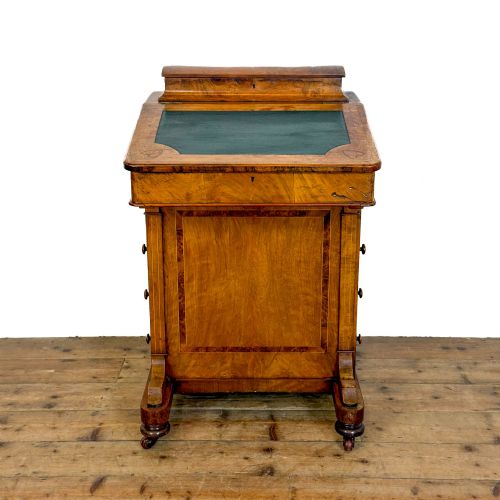


Victorian Inlaid Davenport
These Victorian inlaid davenport desks combine compact proportions with refined writing surfaces, offering practical storage alongside decorative marquetry.
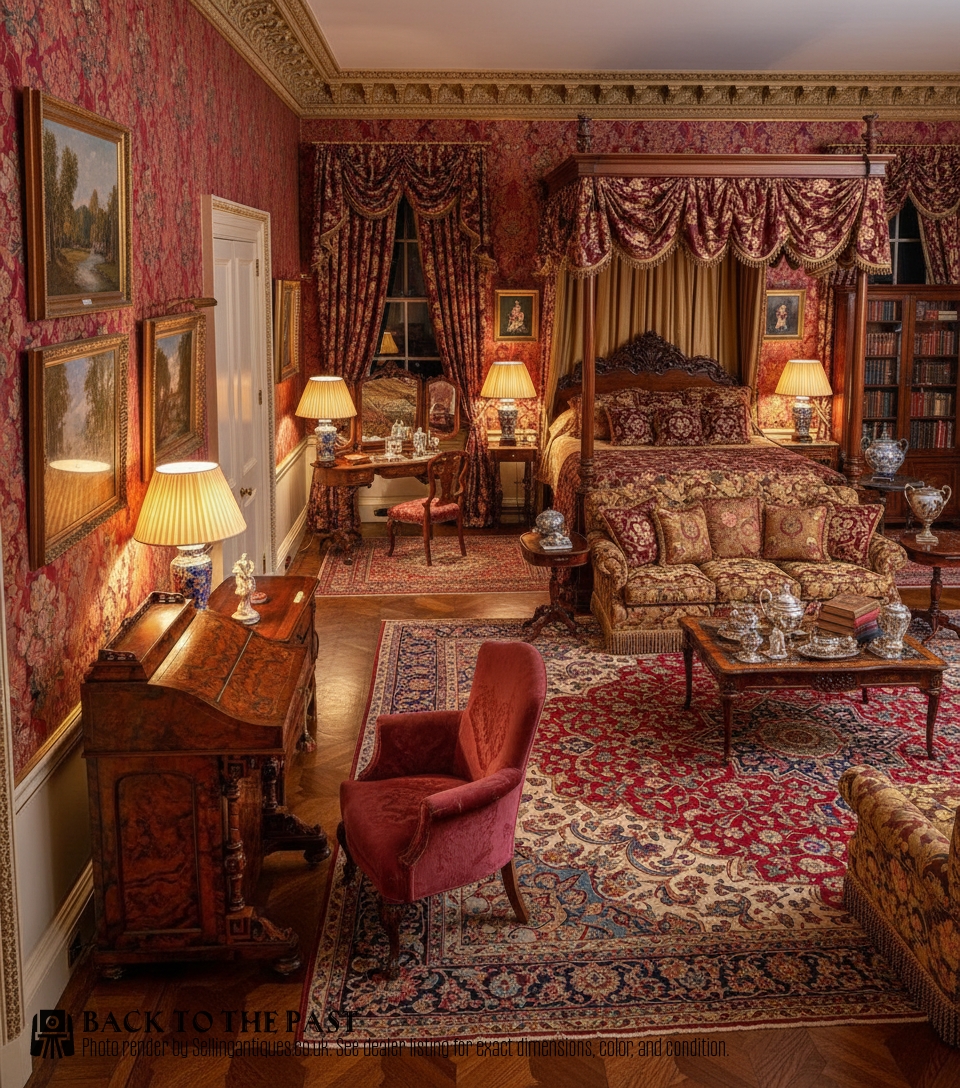
Victorian Inlaid Davenport
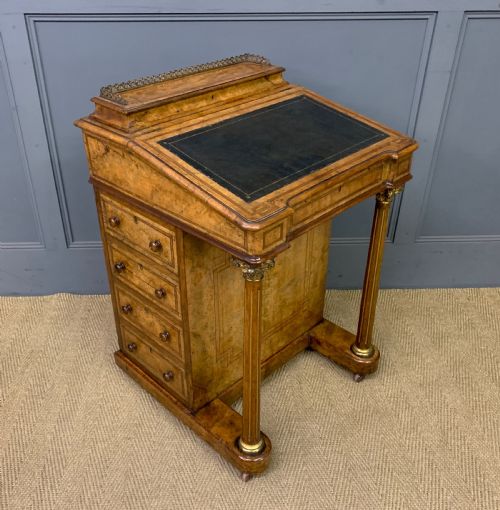
A victorian inlaid davenport is a compact writing desk designed for domestic use, frequently featuring a sloped leather-lined writing surface and a set of side drawers. The form developed during the nineteenth century into a sophisticated piece of furniture that balanced utility with ornamental presence.
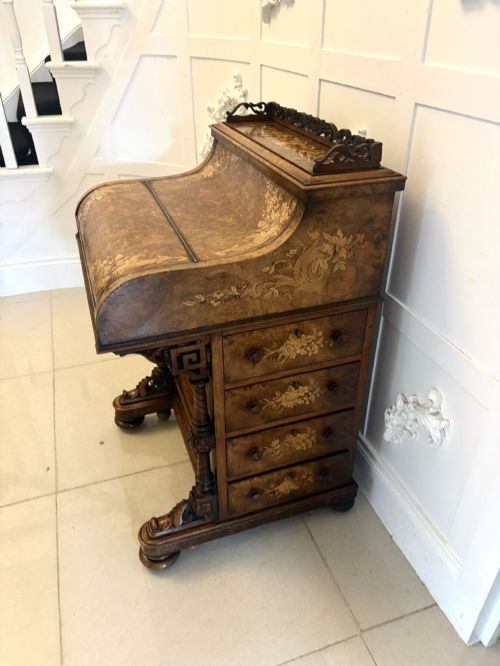
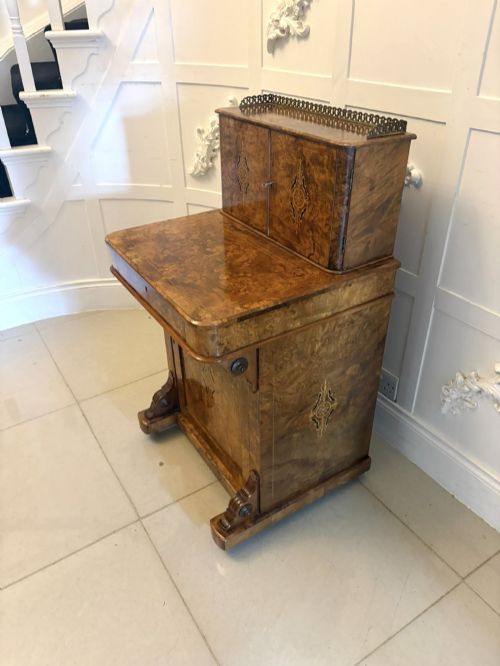
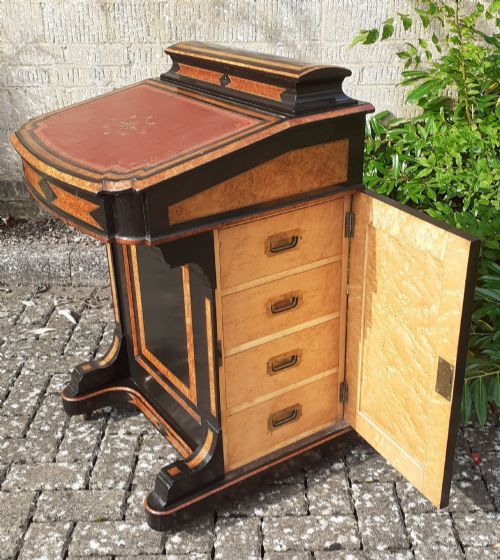
The versions most commonly met on this page are constructed from burr walnut or rosewood, adorned with boxwood, satinwood, or marquetry inlay. Many examples incorporate stationery cabinets, side drawers, and superstructure elements such as whatnots or piano top mechanisms.
What varies in quality
The depth and execution of the marquetry inlay separate standard productions from superior examples, with finely cut floral motifs demonstrating greater artisan skill. The choice of timber grain, particularly highly figured burr walnut or select amboyna, dictates the visual impact of the piece.
Internal configuration and mechanical complexity also differentiate the range. Pop-up stationery compartments and piano top mechanisms reflect higher manufacturing ambition than fixed stationary layouts.
Burr walnut and rosewood form the primary structural timbers seen across the walnut and rosewood listings.
Johnson and Appleyard·James Shoolbred and Co
The Victorian Inlaid Davenport Glossary
- Davenport
- A compact form of Victorian writing desk typically fitted with a sloping desktop and side drawers. The design was named after a Captain Davenport who commissioned such a desk.
- Marquetry
- Decorative woodwork where pieces of veneer are fitted into a ground material to form intricate designs. Floral motifs and geometric scrolls frequently appear on these surfaces.
- Burr walnut
- Timber taken from a tree growth that produces complex, swirling grain patterns. It is highly valued for furniture facings.
- Piano top
- A desk variant featuring a sliding lid that retracts in a manner reminiscent of a piano fall. This mechanism often reveals an interior stationery compartment.
- Whatnot
- A set of open shelves mounted upon the upper section of a desk. It provides elevated display space for books or small decorative objects.
Victorian Inlaid Davenport: Frequently Asked Questions
How do I use a davenport desk?
The sloping top provides a compact surface for writing correspondence, while the interior compartments hold stationery and paperwork. Side drawers swing or pull out to store additional writing materials.
Because the desk is compact, it functions well in smaller rooms as a decorative yet practical workspace. Many examples are freestanding, allowing them to be placed away from walls.
Which woods are most common?
Burr walnut appears frequently across these listings, often accented with boxwood and satinwood inlay. Rosewood is also common, occasionally paired with elaborate marquetry work.
Less frequent variants utilise amboyna or ebonised finishes to achieve a distinct appearance.
Are these desks suitable for daily use?
The writing slope is traditionally lined with leather to provide a stable surface for penwork. The internal drawers offer adequate storage for modern stationery items.
Care should be taken with antique leather surfaces and polished timber finishes when using them for regular writing tasks.