
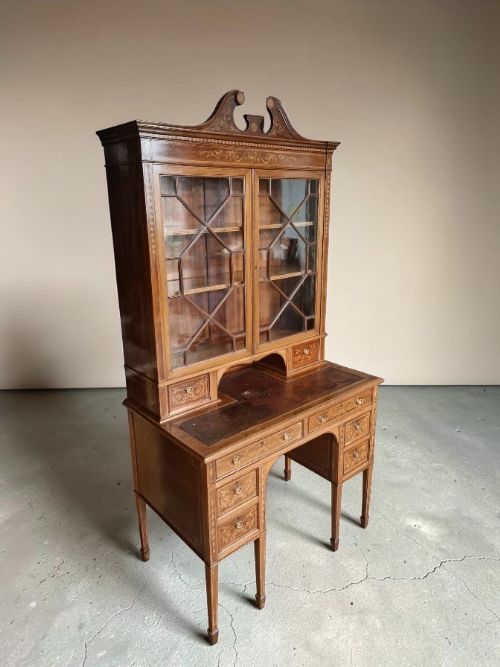

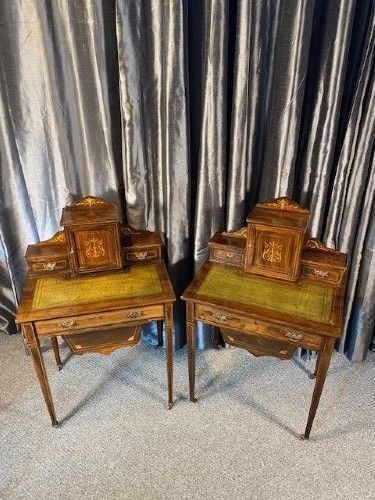
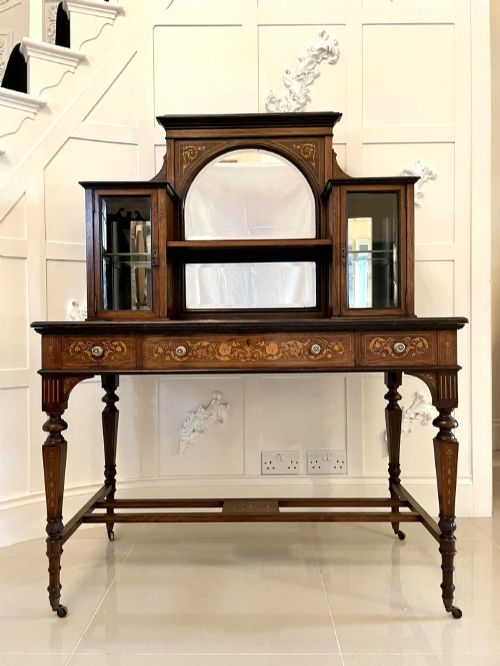
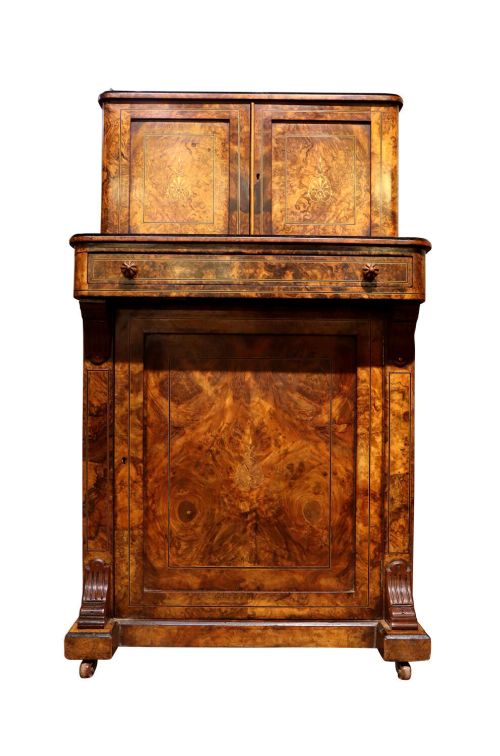



Ladies Escritoire Desk
These ladies escritoire desk pieces provide compact personal writing space, combining refined woodwork with compartments for correspondence.
Ladies Escritoire Desk
A ladies escritoire desk is a compact writing furniture form designed for personal correspondence, encompassing writing tables, bureaus, and cabinets. When you search for this phrase, you meet pieces primarily from the nineteenth century alongside Edwardian examples.
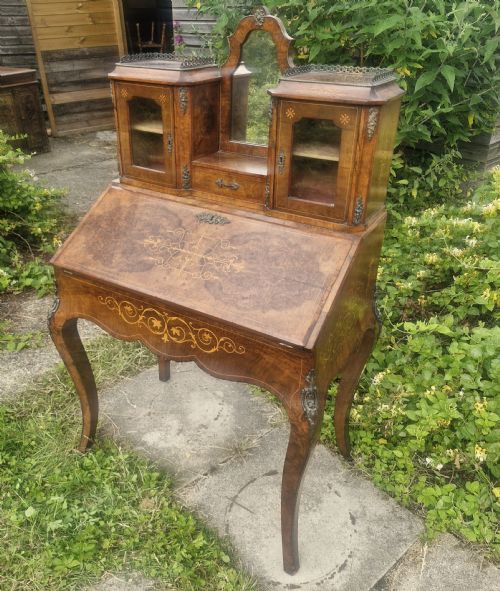
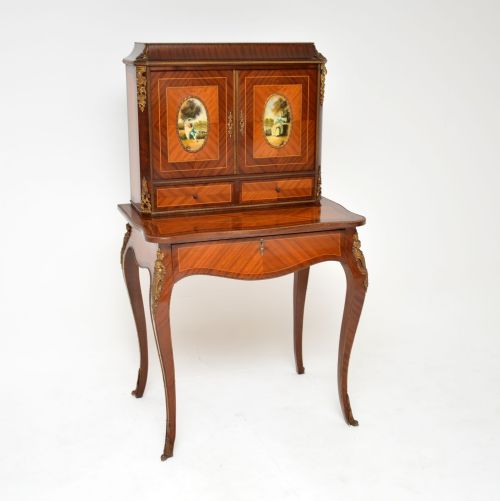
The selection ranges from Victorian burr walnut and rosewood desks to French Louis XV revival models and satinwood bonheur du jour pieces. These variations demonstrate the evolution of small writing furniture across English and continental workshops.
Materials and Construction
Cabinet makers utilised dense hardwoods including rosewood, walnut, kingwood, and mahogany as foundations for intricate marquetry and inlay. Burr walnut veneer provides distinct figuring across primary surfaces.
Metal ornamentation includes cast and chased brass ormolu mounts, while writing surfaces frequently incorporate inset leather panels. Specialised hardware such as secret drawers and mirrored superstructures appear on select French and English cabinets.
Some nineteenth-century ladies desks contain hidden secret drawers designed to safeguard personal correspondence from curious household eyes.
Quality and Execution
Distinctions in quality rest upon the precision of the marquetry, the depth of the timber figuring, and the crispness of the bronze or ormolu mounts. Finer examples display meticulous hand-painting and balanced proportions.
The integration of functional elements such as folding mechanisms, secret compartments, and fitted interior drawers dictates the standing of individual writing desks within the broader spectrum of period furniture.
John MaClean·Mathieu Befort·Befort Jeune
The Ladies Escritoire Desk Glossary
- Escritoire
- A small writing cabinet featuring a fall-front desk section or sliding writing surface.
- Bonheur du jour
- A light Dainty ladies writing desk originating in France, typically fitted with a small cabinet or superstructure on the top.
- Ormolu
- Gilt-bronze mountings applied to furniture surfaces for decorative effect during the eighteenth and nineteenth centuries.
- Marquetry
- Decorative veneer patterns formed by fitting together contrasting pieces of wood, shell, or other materials.
- Burr walnut
- Wood taken from the burl growth of a walnut tree, yielding swirling grain patterns prized in cabinet making.
Ladies Escritoire Desk: Frequently Asked Questions
What is a ladies escritoire desk?
A ladies escritoire desk is a compact piece of nineteenth or early twentieth-century furniture designed specifically for private correspondence and letter writing.
These pieces typically incorporate small drawers, pigeonholes, and a dedicated writing surface within a footprint smaller than standard partner or library desks.
How do you distinguish a bonheur du jour?
A bonheur du jour is a specific type of ladies desk distinguished by an upright superstructure, cabinet, or tier of small shelves fitted to the rear of the main writing surface.
This form emerged in eighteenth-century France and continued through Victorian and Edwardian revivals, often featuring fine marquetry and ormolu mounts.
Where were these desks placed?
These desks were situated in private drawing rooms, boudoirs, and personal bedrooms rather than formal libraries.
Their decorative finishes, including satinwood, mahogany, and floral marquetry, allowed them to coordinate with domestic parlor furnishings of the Victorian and Edwardian eras.
What materials are common on French models?
French desks from the nineteenth century frequently combine kingwood or walnut foundations with elaborate floral marquetry, vernis martin painted panels, and gilded ormolu mounts.
Marble tops also appear on select French cabinets and escritoires of this period.