
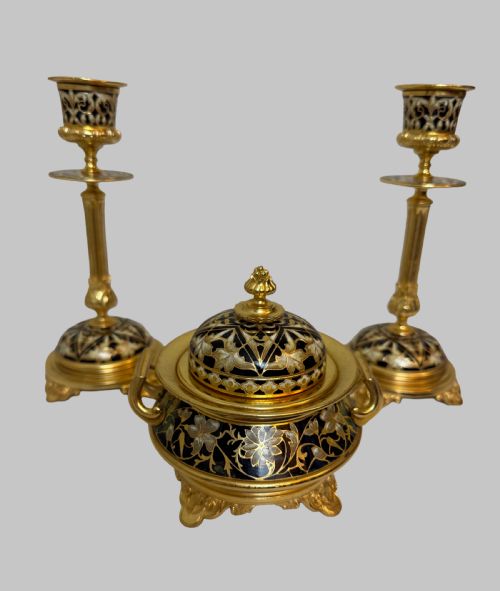


Gold Ormolu Writing Desk
A gold ormolu writing desk brings French elegance to a room, offering gilded mounts and polished surfaces for daily correspondence.
Gold Ormolu Writing Desk
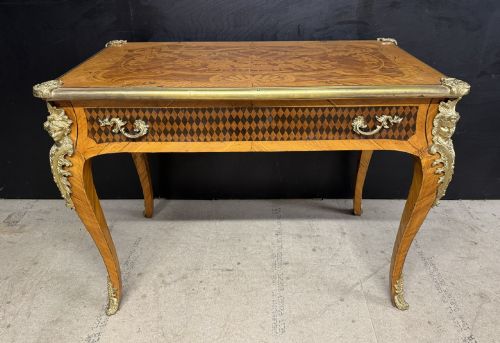
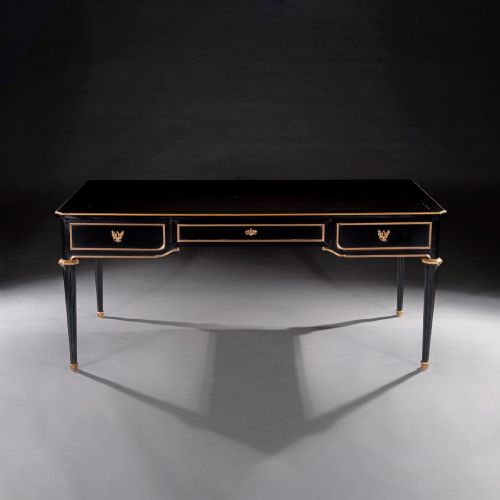
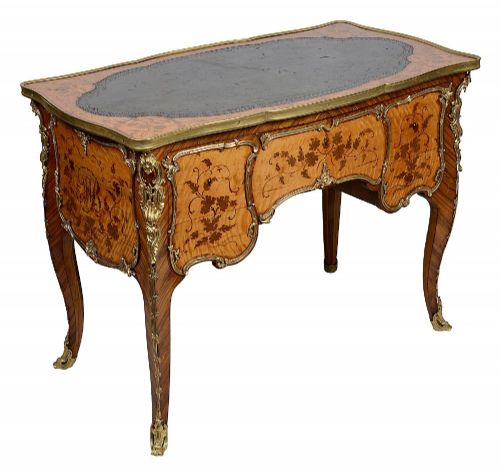
A gold ormolu writing desk combines structured wooden forms with cast metal mounts, often taking the shape of a bureau plat or a writing table. The pieces found here span the nineteenth century and the Edwardian era, reflecting historical revivals from French Empire to Louis XV and Louis XVI styles.
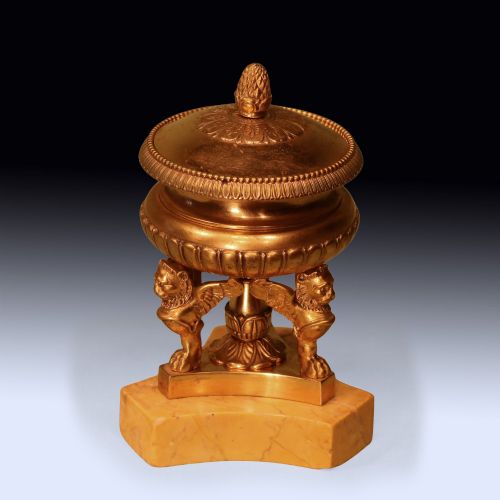
Most examples rely on classical French silhouettes, featuring shaped writing surfaces, frieze drawers, and cabriole or tapered legs. Alongside full-sized desks, the selection includes smaller desk accessories and inkstands sharing the same gilt bronze ornamentation.
Materials and Construction
Cabinetmakers built the foundations using timbers such as mahogany, kingwood, ebony, and walnut, frequently applying intricate marquetry or ebonised finishes. Metal elements were cast in bronze or brass before receiving a gold ormolu finish, creating a contrast against the dark wood.
Inlaid veneers, marble tops, and leather writing inserts completed the construction. The metal mounts were fastened to the wood with precision pins and screws, aligning with the decorative vocabulary of French cabinetmaking.
Listings feature pieces from the nineteenth century alongside Edwardian examples, spanning mahogany, kingwood, marble, and gilt bronze.
Assessing Quality and Craftsmanship
The crispness of the bronze chasing distinguishes finer ormolu mounts from simpler castings. High-grade pieces exhibit deep relief and sharp detail in the foliage and scrollwork, whereas lesser examples appear flat and lack definition.
The choice of timbers and the precision of the marquetry inlay also signal superior workshops. Well-executed carcass construction ensures that drawers glide smoothly and the writing surface remains level.
Paul Sormani·Albert Marionnet
The Gold Ormolu Writing Desk Glossary
- Ormolu
- Gilt bronze produced by applying a mercury and gold amalgam to cast bronze and firing it to leave a golden layer. The technique creates a lasting metallic sheen.
- Bureau Plat
- A freestanding double-sided writing table with drawers in the frieze, popular in eighteenth-century France and revived later. It sits centrally in a room rather than against a wall.
- Marquetry
- The art of applying pieces of veneer to a structure to form decorative patterns or pictures. Different coloured woods create natural contrasts without paint.
- Champlevé
- An enamelling technique where troughs are dug into metal and filled with vitreous enamel before firing. It frequently appears on nineteenth-century inkstands and desk sets.
- Frieze
- The central horizontal band of a desk situated directly beneath the top surface. This section usually houses the writing drawers.
Gold Ormolu Writing Desk: Frequently Asked Questions
How do I care for ormolu mounts?
Ormolu mounts require gentle dusting with a soft, dry brush to prevent dirt accumulation in the recessed chasings. Avoid abrasive cleaners or metal polishes, which strip away the remaining gold layer.
Applying wax to the surrounding wood should be done carefully to avoid touching the metal. Maintaining a stable room humidity prevents the timber beneath the mounts from shrinking or expanding.
Where were these desks made?
The majority of these pieces originate from France, particularly Paris workshops specialising in nineteenth-century revival furniture. French cabinetmakers exported these luxury goods across Europe to satisfy demand for Louis XV and Louis XVI aesthetics.
Some examples reflect international adaptations of French design principles produced during the Victorian and Edwardian periods. Their construction methods align with traditional European cabinetmaking standards.
How do I identify Louis XV style?
Louis XV style furniture relies on asymmetrical curves, naturalistic floral motifs, and flowing cabriole legs. Straight lines are largely absent, replaced by sinuous contours that mimic organic growth.
Ormolu mounts on these pieces tend to wrap around corners and frame drawer edges with rococo scrolls. This aesthetic prioritised comfort and grace over rigid classical symmetry.