
Inlaid Wood Credenza
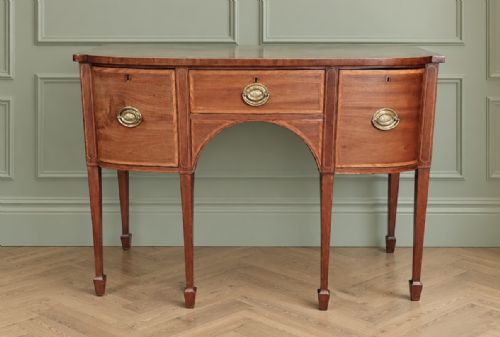
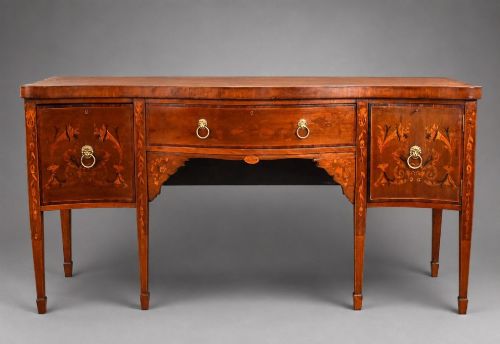
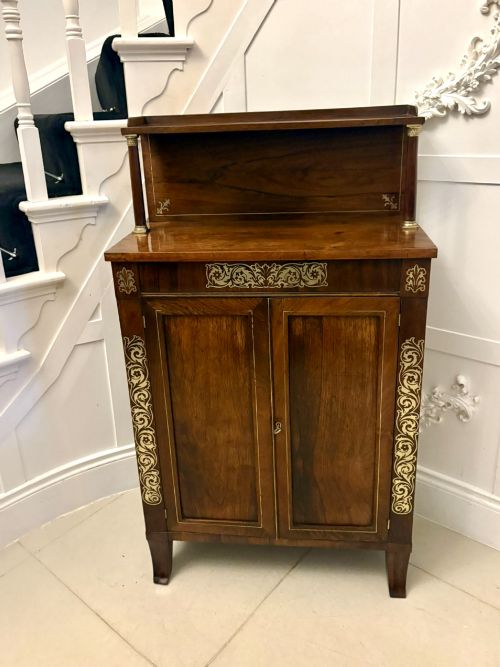
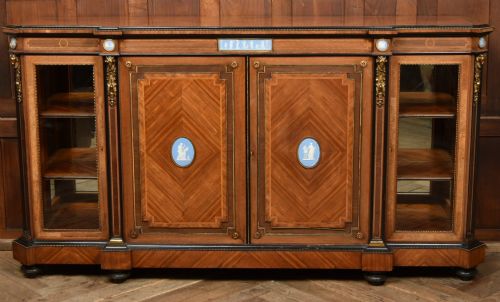
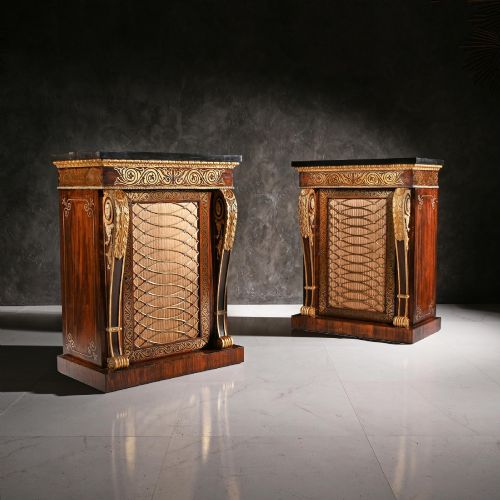
An inlaid wood credenza brings rich timber and delicate contrasting stringing into a room, offering both display space and concealed storage.
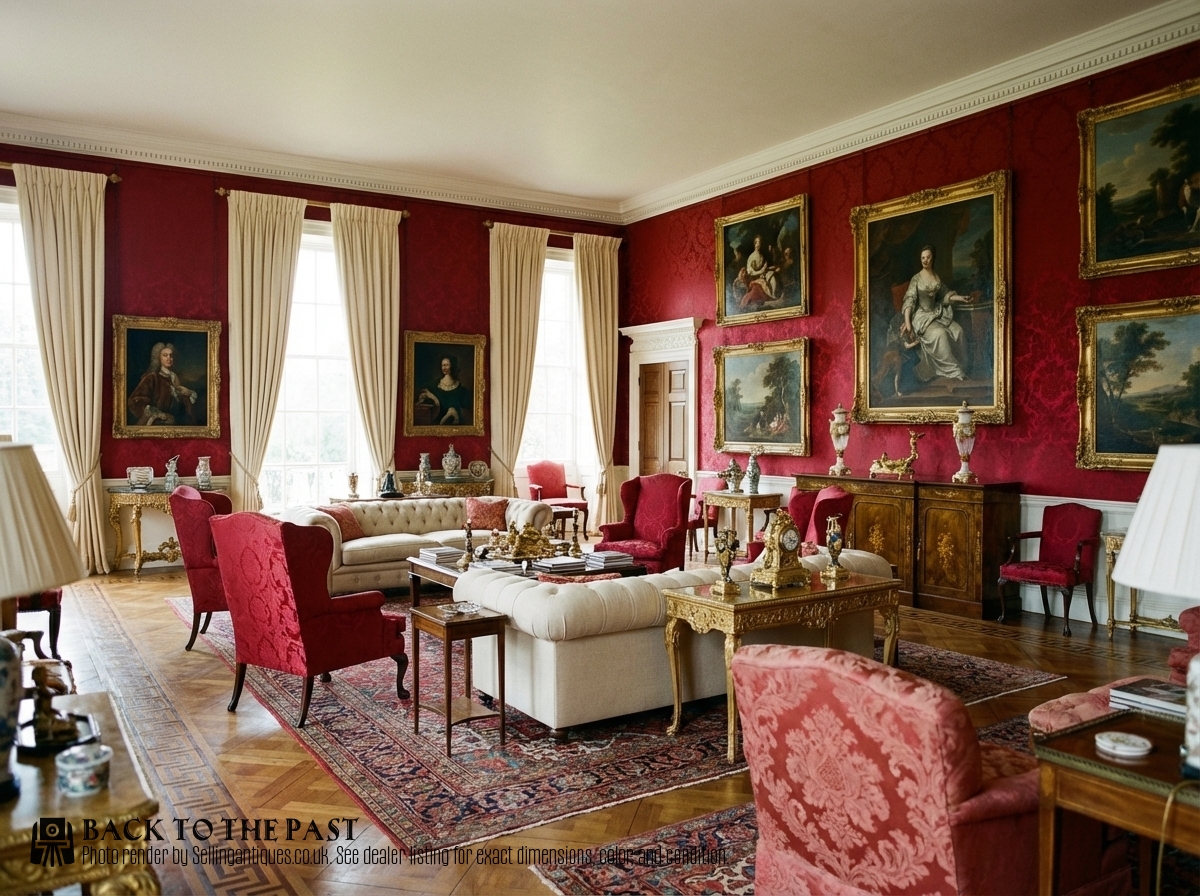
Inlaid Wood Credenza
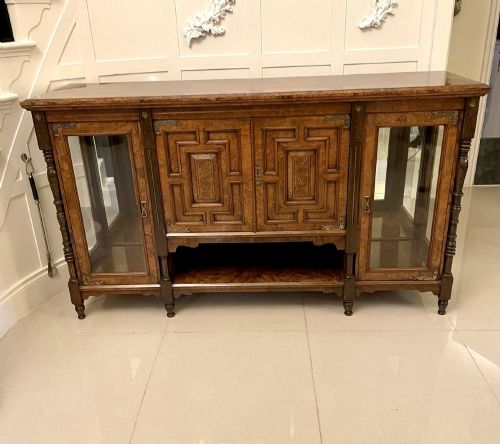
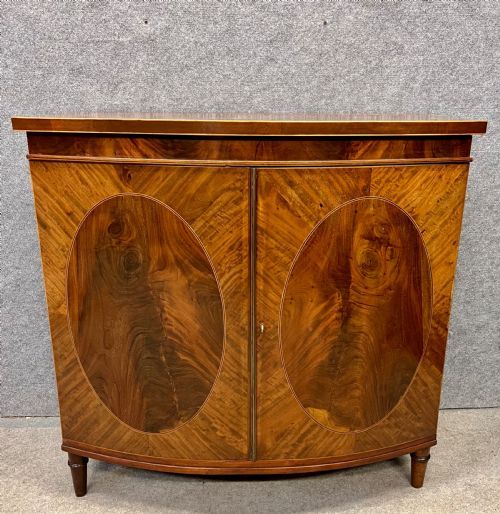
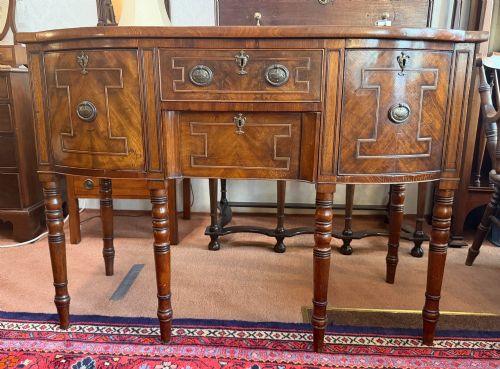
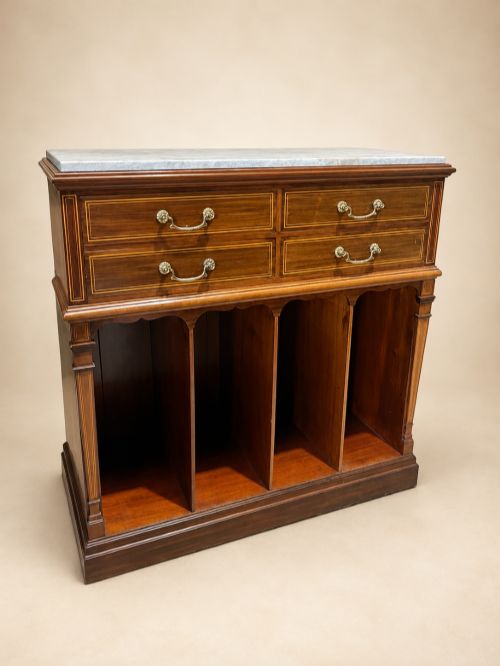
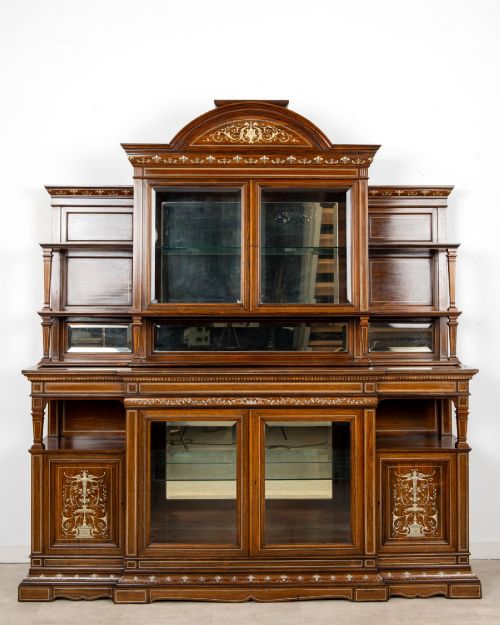
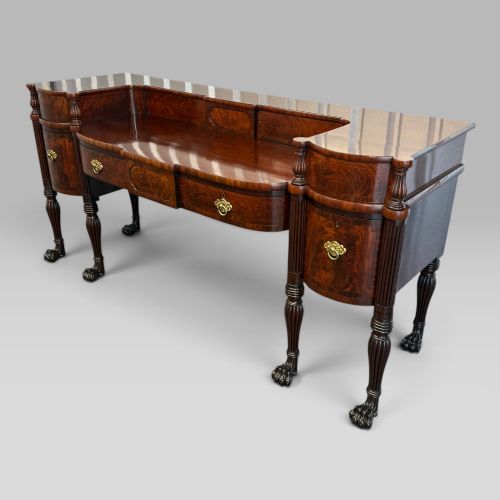
An inlaid wood credenza encompasses low storage cabinets, sideboards, and display pieces originating primarily from the Georgian, Victorian, and Edwardian eras. These items serve as substantial focal points in dining rooms and living spaces, fulfilling both practical storage needs and decorative functions.
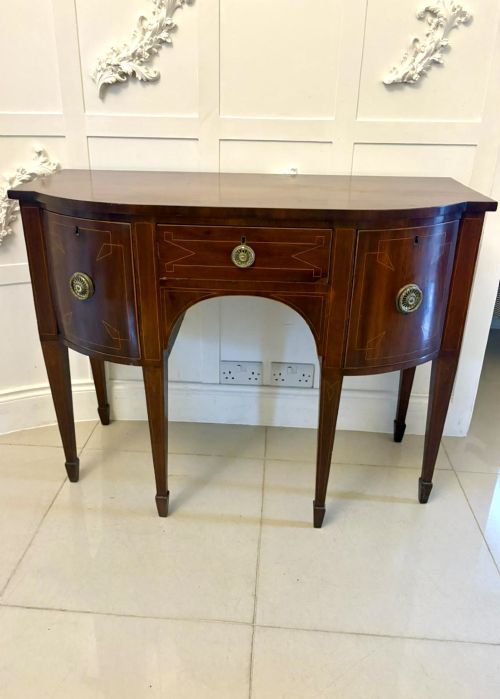
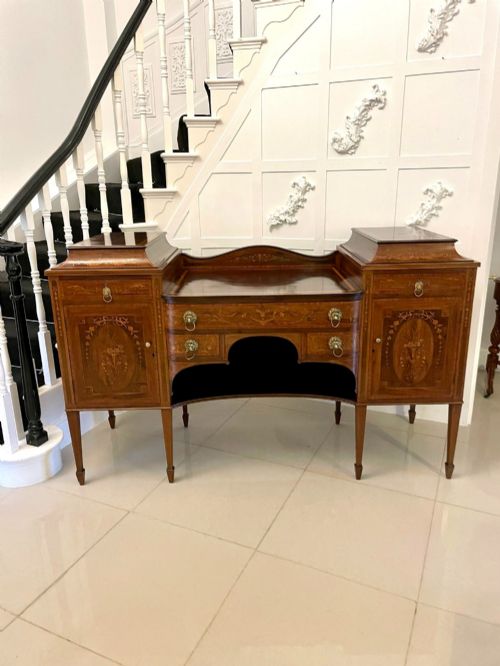
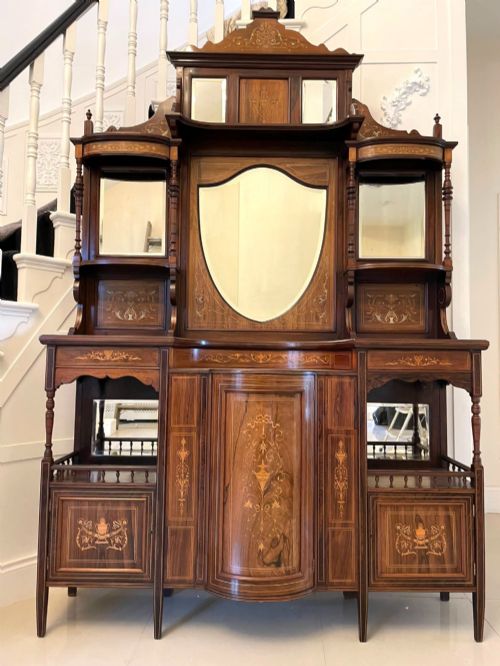
The versions most commonly encountered on this page date from the nineteenth century, spanning Victorian burr walnut examples and Edwardian satinwood pieces. Makers of these periods favoured mahogany, rosewood, and walnut carcasses enhanced with contrasting boxwood and satinwood details.
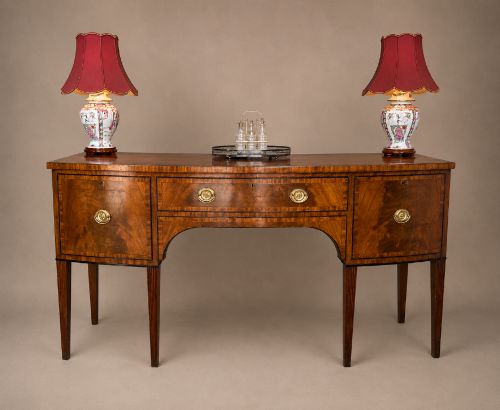
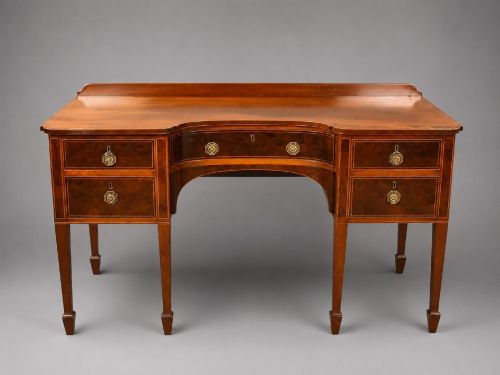
Object types stretch beyond traditional credenzas to include side cabinets, chiffoniers, and bow-fronted sideboards bearing similar decorative inlay. Each form retains the characteristic low profile and horizontal emphasis designed to anchor a principal wall.
Materials and Technique
Cabinet makers constructed the primary carcasses from dense native and exotic hardwoods such as mahogany, walnut, and rosewood, often selecting figured veneers for visual depth. These foundational timbers provided the stable canvas necessary for intricate surface decoration.
Decoration relied heavily on marquetry and contrasting stringing, incorporating boxwood, satinwood, and occasionally ebony to form geometric or floral motifs. Brass mounts, ormolu details, and fine glazing further enriched the finished cabinetry.
Some Victorian craftsmen secreted small, felt-lined hidden compartments within these cabinets to guard secret love letters.
Craftsmanship and Proportion
Quality rests in the precision of the timber selection, where figured grains and book-matched veneers are handled with deliberate symmetry. Superior examples demonstrate meticulous hand-cut marquetry that integrates seamlessly into the surrounding wood without gaps or rough edges.
Structural integrity and secondary woods also dictate the tier of a piece, separating standard production from exhibition-grade commissions. Refined interior fittings, original brass hardware, and balanced proportions elevate certain credenzas above purely utilitarian furniture.
Hewetsons London·Collinson and Lock·Louis Constantin Le Gaigneur
The Inlaid Wood Credenza Glossary
- Marquetry
- The art of applying pieces of veneer to a structure to form decorative patterns and pictures. Craftsmen cut various coloured woods to fit precisely together before gluing them down.
- Stringing
- Thin lines of contrasting wood inlaid into grooves on the furniture surface. This technique creates delicate geometric borders around panels and drawer fronts.
- Ormolu
- Gilded bronze mounts applied to furniture for decorative accent. The technique was particularly popular on high-status nineteenth-century cabinets.
- Burr Walnut
- Timber taken from the warted growths on walnut trees, yielding highly swirling grain patterns. Cabinet makers prized this wood for its decorative veneer potential.
Inlaid Wood Credenza: Frequently Asked Questions
What is an inlaid wood credenza?
An inlaid wood credenza is a low storage cabinet featuring decorative wood veneers and contrasting stringing. These pieces emerged as prominent interior furnishings during the nineteenth century.
They combine practical shelving or cupboard space with ornate surface decoration, making them suitable for formal reception rooms.
How do I style a credenza?
A credenza anchors a room when placed against a principal wall in a dining area or hallway. Its flat top surface accommodates lamps, ceramics, or decorative trays.
Consider the surrounding timber tones in the room to ensure the mahogany, walnut, or rosewood finish complements existing furniture.
How can I date my credenza?
Dating relies on examining the secondary timbers, construction methods, and stylistic cues present in the piece. Georgian items often display simpler mahogany proportions, while Victorian versions favour heavier walnut and elaborate marquetry.
Cabinet hardware and the complexity of the inlay also offer reliable chronological indicators.
What woods were used?
Cabinet makers utilised a foundation of dense timbers including mahogany, walnut, and rosewood. These hardwoods provided both structural strength and attractive grain patterns.
Decorative surfaces frequently incorporated contrasting lighter elements such as boxwood and satinwood for intricate stringing and floral motifs.