


Inlaid Walnut Console
An inlaid walnut console brings warmth and intricate detail to a hallway or drawing room.
Inlaid Walnut Console
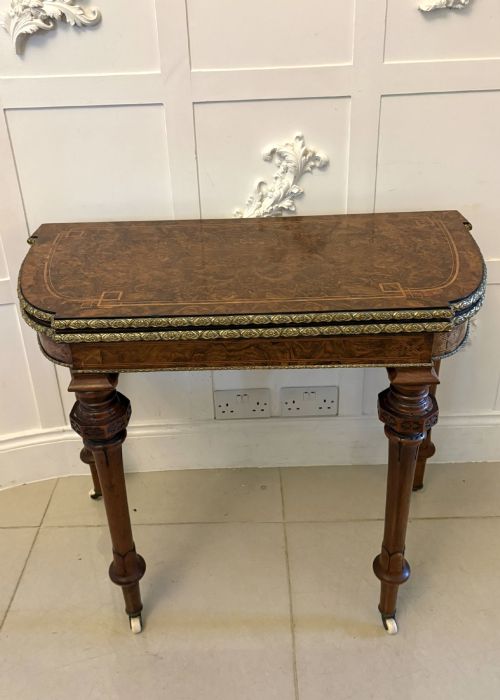
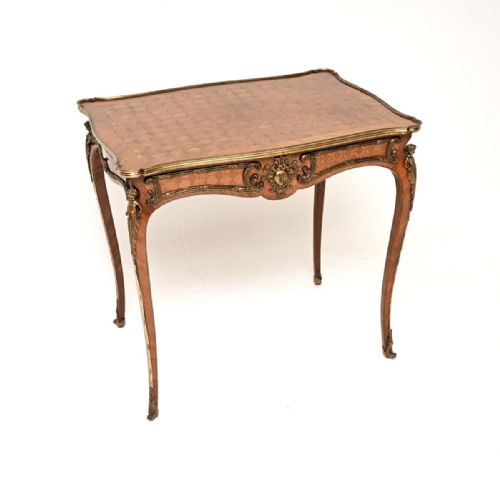
An inlaid walnut console is a decorative surface designed to sit against a wall, often featuring detailed wood decoration across the top or front. When searching for an inlaid walnut console, buyers encounter diverse forms ranging from French marble-topped pier tables to Victorian fold-over card tables that double as consoles when closed.
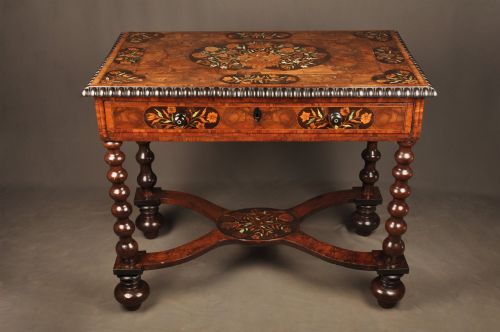
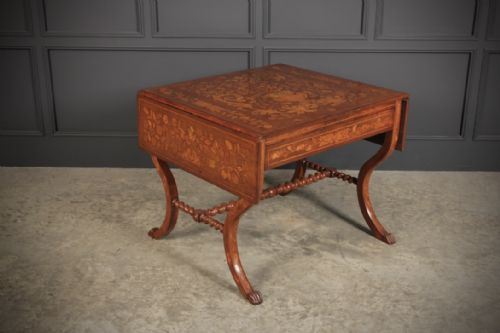
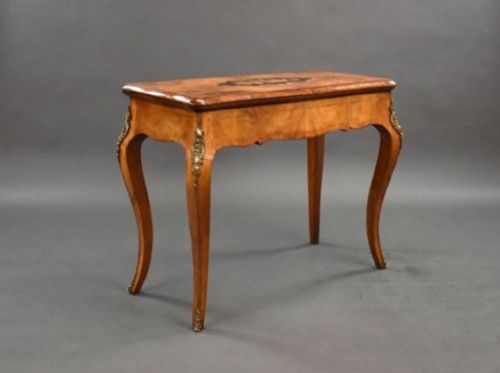
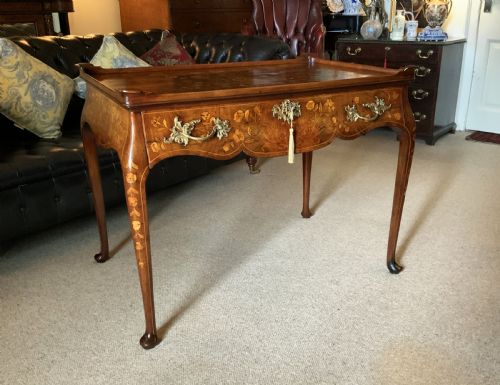
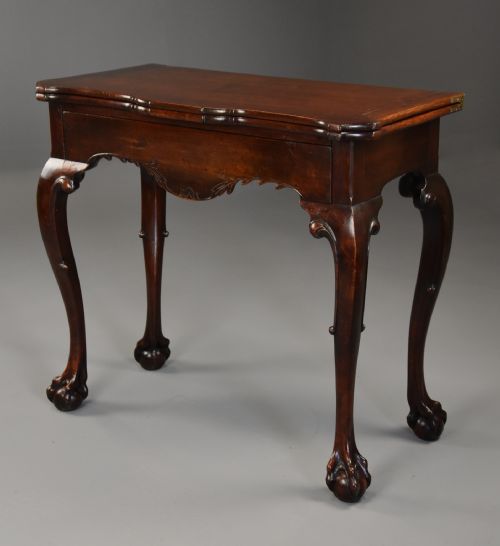
The pieces appearing on this page span the eighteenth and nineteenth centuries, with a strong representation of Victorian burr walnut examples. Makers utilised various regional styles, including Dutch Baroque floral marquetry and French Empire influences, producing tables that served for card games, writing, or formal display.
How They Were Made
Craftsmen built these tables using solid walnut and figured burr walnut veneers over secondary timbers, applying contrasting woods such as boxwood, fruitwood, and satinwood for intricate marquetry and parquetry patterns. The natural grain of the burr walnut provides a rich, mottled background that highlights the precision of the botanical and geometric inlays.
Many examples incorporate cast or chased ormolu and gilt bronze mounts, which frame the walnut panels and protect the corners of the legs. On French and Victorian pieces, marble tops and delicate Tunbridge Ware details appear alongside complex hinged mechanisms for folding card tables.
Birds and blooming flowers hide within the intricate wooden inlay of eighteenth-century Dutch tables, waiting quietly in the grain.
What Varies in Quality
The standard of an inlaid walnut console depends heavily on the depth and botanical complexity of the marquetry, alongside the selection of the burr walnut veneer itself. Superior examples display crisp, finely shaded inlay work using diverse exotic timbers rather than simple, repetitive geometric bands.
Construction details also dictate distinction, evident in the choice of heavier ormolu mounts, the integrity of the secondary timbers, and the smoothness of the mechanism on fold-over tops. Pieces bearing attribution to established workshops demonstrate superior cabinet-making that maintains structural stability across centuries.
Gillows·Pietro Ferrario
The Inlaid Walnut Console Glossary
- Marquetry inlay
- An elaborate technique of arranging small pieces of veneer to form pictorial designs such as flowers and birds. This method allows artisans to depict complex natural scenes across the flat surfaces of the furniture.
- Burr walnut
- A prized timber harvested from walnut tree growths, known for its swirling, highly figured grain patterns. Cabinet-makers sliced this wood into thin veneers to cover larger table surfaces.
- Ormolu
- Gilt bronze decorative mounts applied to the edges and legs of furniture. This material provides metallic contrast against the dark tones of the walnut.
- Console table
- A table designed to stand against a wall, frequently secured with brackets or resting on front legs. These items served decorative and functional purposes in formal reception rooms.
- Parquetry
- Geometric wood inlay patterns resembling mosaics. Unlike marquetry, parquetry relies on angular shapes like squares and triangles to create repeating designs.
Inlaid Walnut Console: Frequently Asked Questions
What is an inlaid walnut console used for?
These pieces functioned primarily as decorative side tables in hallways or drawing rooms, offering a surface for lamps, clocks, or collected curiosities. Many surviving examples also double as fold-over card tables or writing desks.
Their narrow profile allowed them to sit flush against walls without obstructing pathways in formal homes.
How do I identify a Victorian walnut console?
Victorian examples often feature highly figured burr walnut veneers paired with elaborate floral marquetry and serpentine front edges. You will frequently find them designed as card tables that fold open to reveal baize-lined playing surfaces.
They also tend to incorporate turned walnut pillar supports and ceramic castors concealed beneath the feet.
Where were walnut consoles made?
Production spanned across England, France, Italy, and the Netherlands, with each region imparting distinct stylistic characteristics. English makers favored restrained burr walnut and Sheraton proportions, while French workshops utilised heavy ormolu mounts and marble tops.
Dutch makers frequently applied dense floral and bird marquetry influenced by Baroque traditions.
How do I care for antique walnut furniture?
Keep walnut furniture away from direct sunlight and heat sources to prevent the burr veneers from drying out and lifting. Regular dusting with a soft, dry cloth preserves the polished surface without building up chemical residues.
Apply traditional wax sparingly only when the wood appears dry to maintain the natural patina.