
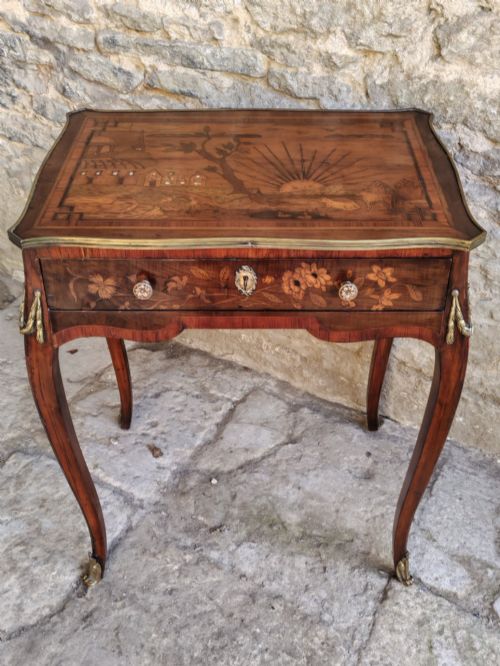
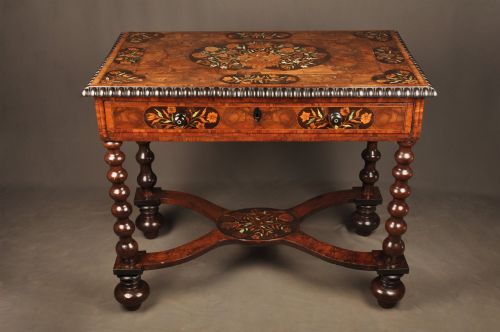

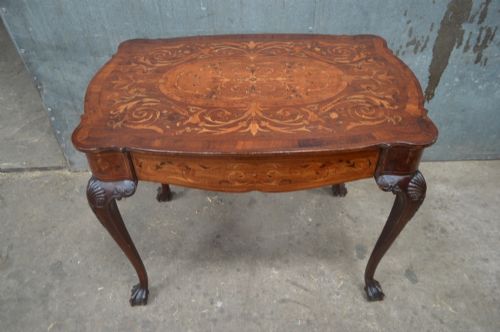
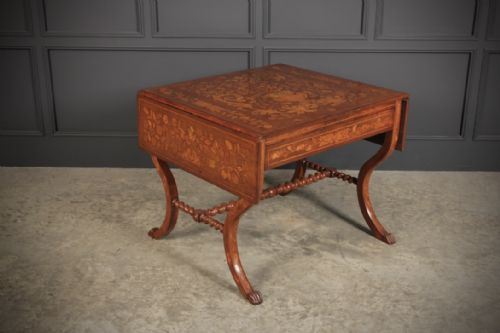


Dutch Inlaid Table
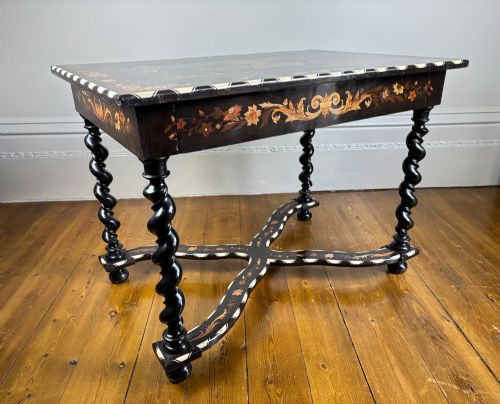
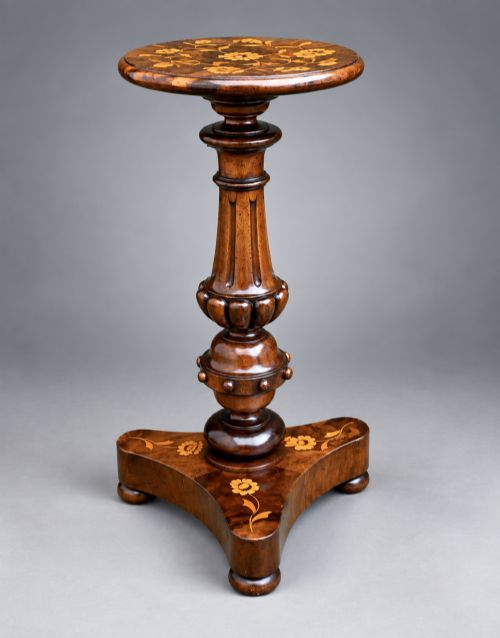
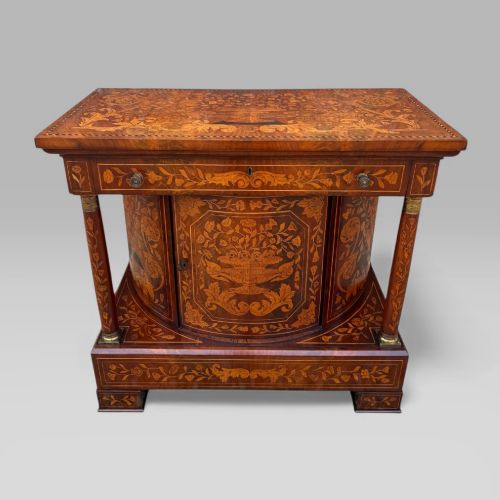
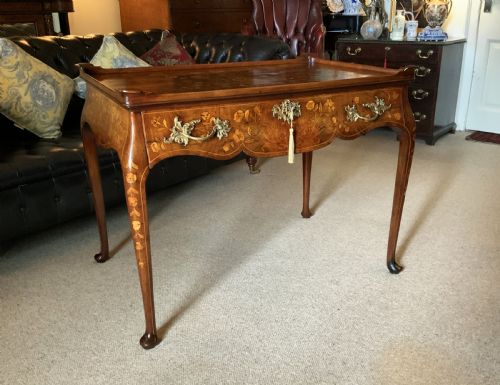
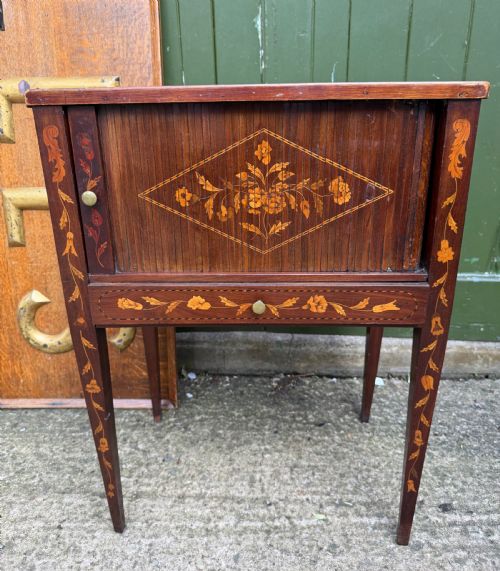
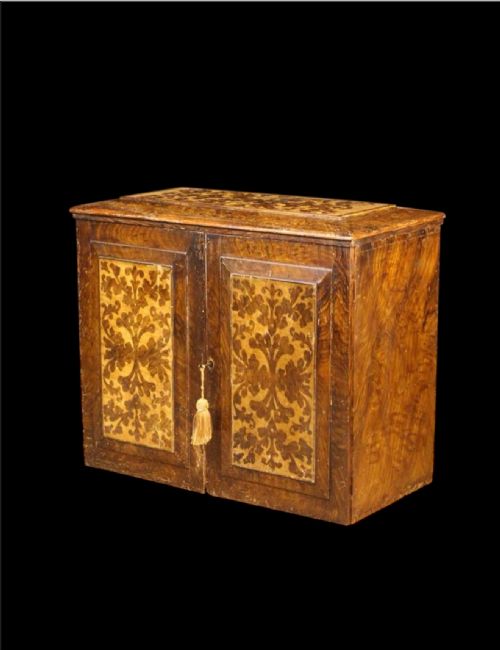
A dutch inlaid table brings elaborate floral marquetry and rich cabinet timbers together into centre pieces, card tables and side tables spanning several centuries.
Dutch Inlaid Table
A dutch inlaid table encompasses a variety of forms including side tables, centre tables, card tables, and console tables designed with decorative wood surfaces. These pieces appear across periods from the seventeenth century through the nineteenth century, including Georgian and Edwardian examples.
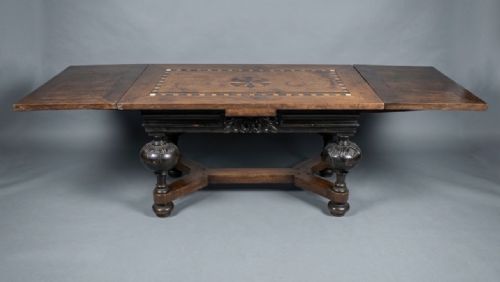
The domestic forms range from small occasional wine tables and dressing table mirrors to large partners desks and draw leaf tables. Walnut and mahogany serve as the primary foundations for these complex floral and pictorial inlay schemes.
How they were made
Cabinet makers utilised fruitwood, boxwood, and marquetry veneers set into walnut, mahogany, and ebony carcases to build these tables. Detailed floral and bird motifs were meticulously cut and fitted into the primary timber backgrounds.
Secondary elements incorporated brass fittings, glass, and bone inlay alongside traditional joinery techniques such as draw leaves, fold-over tops, and gate legs. The construction balanced structural stability with expansive decorative surface areas.
What varies in quality
The standard of execution in the marquetry work dictates the visual success of the piece, separating tight, intricate floral and animal compositions from simpler geometric layouts. Precision in cutting contrasting timbers like fruitwood and boxwood defines the finer examples.
The choice of primary carcase timber, whether figured walnut, dense mahogany, or ebonised wood, influences the overall depth of the object. Cohesion between the structural form, such as serpentine sides or demi-lune profiles, and the decorative veneer scheme marks superior cabinet making.
The Dutch Inlaid Table Glossary
- Marquetry
- Decorative veneer work cut and fitted together to form pictures or floral patterns on a wooden surface. This technique defines the visual character of most pieces.
- Parquetry
- Geometric mosaic woodwork arranged in regular patterns such as cubes or stripes. It provides a structured contrast to flowing floral inlay.
- Card table
- A folding or swivel-top table designed specifically for playing games. These often feature baize-lined surfaces and concealed wells.
- Centre table
- A freestanding table finished on all sides to sit in the middle of a room rather than against a wall. These frequently display elaborate marquetry across the entire top.
- Draw leaf table
- A table fitted with pull-out extension leaves beneath the main top. This mechanism expands the surface area without removing the primary boards.
Dutch Inlaid Table: Frequently Asked Questions
Where did they place these tables?
These tables functioned primarily in reception rooms, parlours, and drawing rooms as centre tables, console tables, or card tables for evening entertainment. Smaller occasional tables and dressing mirrors found placement in private chambers and bedrooms.
Their decorative surfaces were intended to catch the light and display floral and bird motifs to visiting guests. Freestanding forms sat centrally while console and side tables occupied wall spaces.
How do I care for the wood and inlay?
Keep these pieces away from direct sunlight and heat sources to prevent the delicate fruitwood and boxwood veneers from drying, shrinking, or lifting from the walnut or mahogany base. Maintain stable indoor humidity levels.
Apply a microcrystalline wax sparingly to nourish the timber and protect the polished surface without building up heavy residues. Avoid excessive moisture during cleaning.
What is the difference between marquetry and parquetry?
Marquetry involves cutting and assembling various coloured woods to create pictorial scenes, scrolls, and detailed floral arrangements. Artisans use this method to depict naturalistic subjects across the table top.
Parquetry relies on geometric shapes like squares, triangles, and diamonds to form repeating abstract patterns. This technique creates a structured, architectural surface rather than a picture.
How can I tell an eighteenth-century table from a nineteenth-century one?
Eighteenth-century examples often display Dutch Baroque or Rococo influence with organic serpentine outlines, rich walnut foundations, and naturalistic floral marquetry. Construction details and timber patination reflect the working methods of that era.
Nineteenth-century pieces frequently utilise denser mahogany carcases and may show revival styles drawing inspiration from earlier periods. The precision of the saw cuts and the specific tone of the fruitwood veneers can also offer clues.