


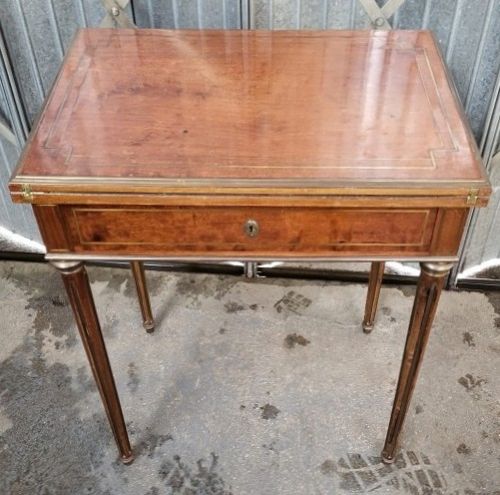

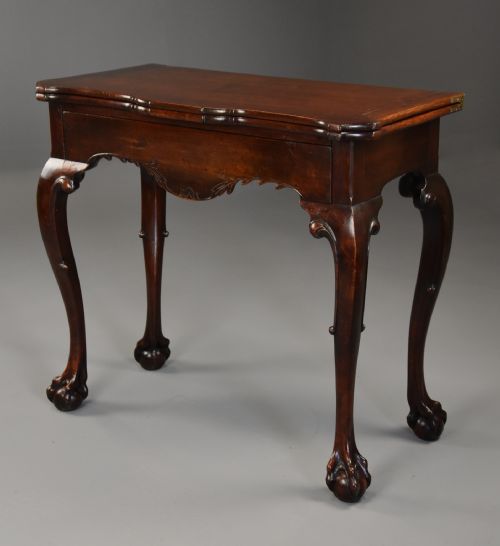


Inlaid Walnut Card Table
An inlaid walnut card table is a folding piece of social furniture designed for indoor games, combining rich timber figure with intricate surface detail.
Forms and Origins
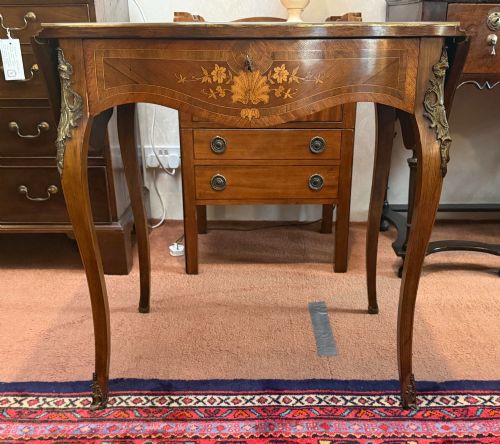
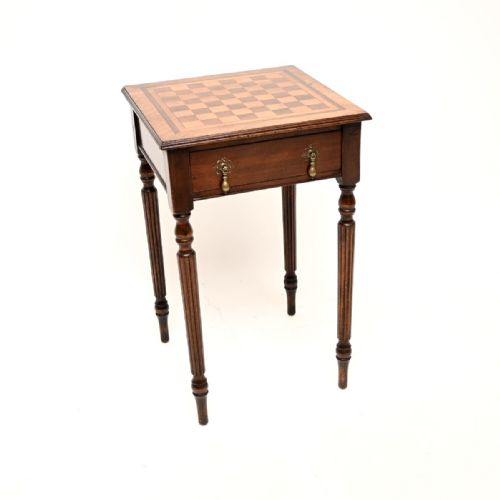
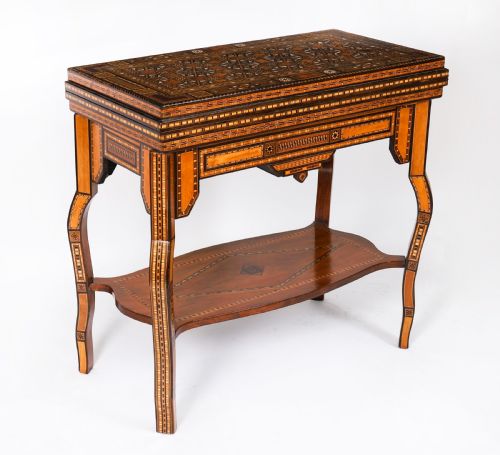
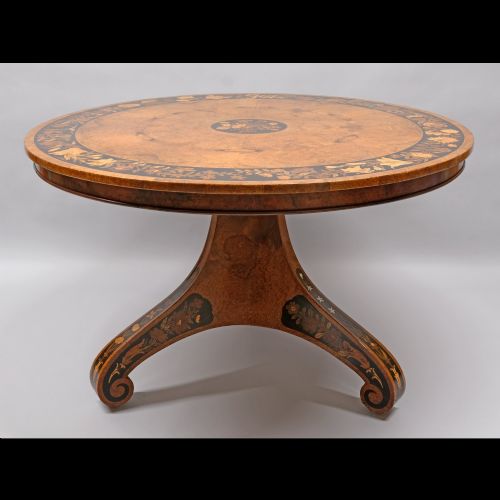
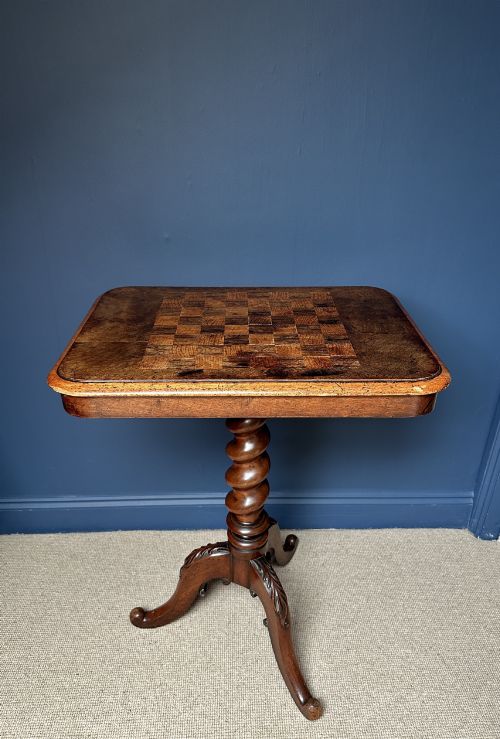
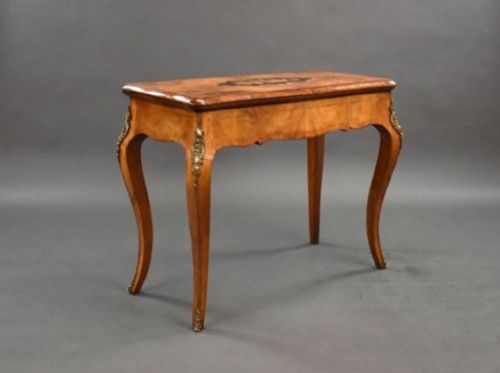
When you search for an inlaid walnut card table, you encounter pieces spanning from the eighteenth century through to the Victorian period, with the majority originating in the nineteenth century. These items appear as fold-over tables, games tables, and demi-lune or serpentine shapes that serve as console or side tables when closed. Regional variations include Dutch Baroque and French Louis XVI style examples alongside English Victorian productions.
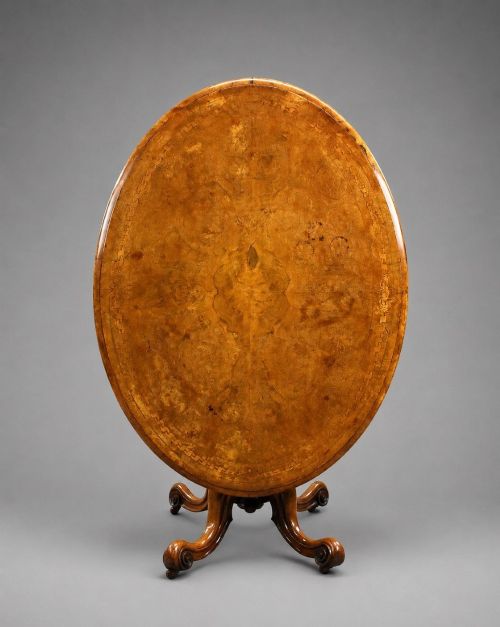
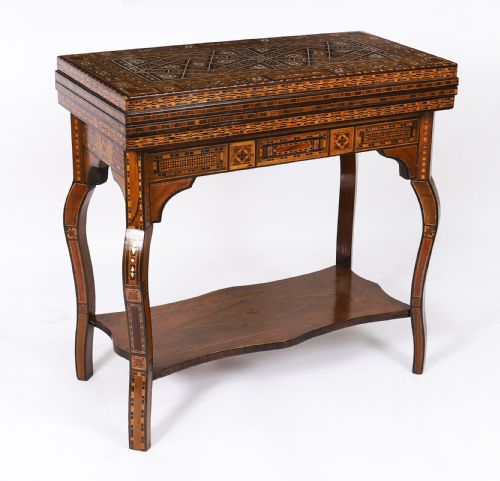
The primary form involves a hinged top that rotates and opens to reveal a baize or leather interior intended for card playing. Certain pieces incorporate workbox or sewing elements beneath the playing surface, combining social utility with domestic storage. Formats range from rectangular freestanding tables to oval loo tables adapted for games.
Materials and Technique
Makers constructed these tables using walnut and burr walnut veneers applied to carcase timbers, enriched with contrasting boxwood, fruitwood, and exotic woods inlay. Marquetry inlay creates floral or geometric patterns across the top and frieze, while Tunbridge Ware incorporates minute mosaic wood segments into specific designs. Ormolu mounts, brass details, and gilt bronze provide structural accent and edge protection.
Surfaces rely on figured grain patterns such as burr and burl walnut to create natural visual movement across the folding top. Cabinetmakers integrated hinged mechanisms to allow the timber surface to double in area when opened for play.
Retail Price Guide 2026
Typical UK retail prices for inlaid walnut card table, calculated from the Sellingantiques database of over a million retail prices indexed since 2003. This retail price guide relies exclusively on Sellingantiques data; no external sources or auction records are used, so the figures do not describe the wider market.
Listings feature walnut, burr walnut, fruitwood, boxwood inlay, and ormolu across 18th-century, 19th-century, and Victorian periods.
Standards of Execution
Quality separates through the precision of the marquetry and the selection of the walnut veneer, where exhibition pieces display finely figured burr walnut and complex floral arrangements. The integration of ormolu mounts and exotic woods indicates higher workshop ambition and greater initial cost.
The crispness of the boxwood and fruitwood inlay against the dark walnut ground dictates visual success. Structural integrity in the folding mechanism and the alignment of the top when closed separate standard domestic examples from superior workshop output.
Gillows
The Inlaid Walnut Card Table Glossary
- Burr walnut
- A figured timber obtained from tree growths containing clustered bud traces, creating intricate swirling patterns on veneer surfaces. It forms the primary decorative skin of nineteenth-century tables.
- Marquetry
- The art of forming decorative patterns by fitting together veneer slices of various woods. It creates the floral motifs seen across the folding tops.
- Ormolu
- Gilded bronze applied as decorative mounts to furniture edges and legs. It provides contrast against the dark walnut timber.
- Tunbridge Ware
- Woodworking technique involving tiny mosaic blocks assembled to form pictorial designs. It appears in specialist inlaid panels on the table top.
- Demi-lune
- Half-moon shape characteristic of certain console and card tables designed to stand flush against a wall.
Frequently Asked Questions
How do you open an inlaid walnut card table?
Most examples feature a top that swivels on the frame before folding out flat to reveal the playing surface, supported by a swing leg or a gateleg action.
Take care not to force the hinge mechanism if timber movement has stiffened the joint over the decades.
What were these tables used for originally?
They served households for evening card games, social gatherings, and assembly rooms before folding shut to function as side or console tables during the day.
Many incorporate hidden compartments or lined interiors specifically for counters and playing cards.
How do you distinguish Victorian pieces from earlier ones?
Victorian examples frequently utilise burr walnut veneers combined with heavy marquetry or ormolu mounts, dating predominantly from the mid to late nineteenth century.
Eighteenth-century versions tend to display simpler walnut grain figures and restrained inlay without Victorian mass-production flourishes.
Where should you place one in a modern room?
Position the table against a hallway or living room wall in its closed console position to showcase the marquetry top and burr walnut figure.
Ensure it stays away from direct heat sources to prevent the walnut veneer from lifting or cracking.