
Inlaid Study Desk
An inlaid study desk brings refined craftsmanship and useful writing surfaces to a room, uniting rich cabinet timbers with delicate contrasting ornamentation.
Inlaid Study Desk
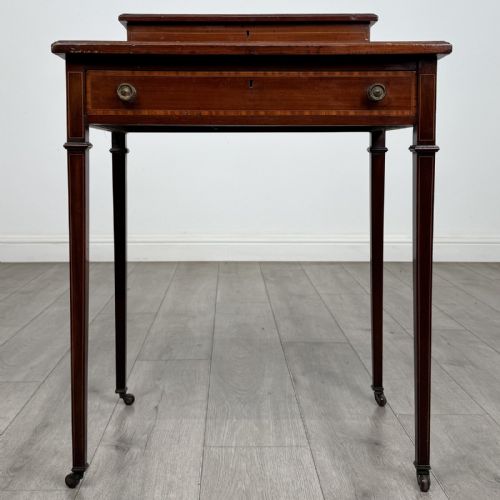
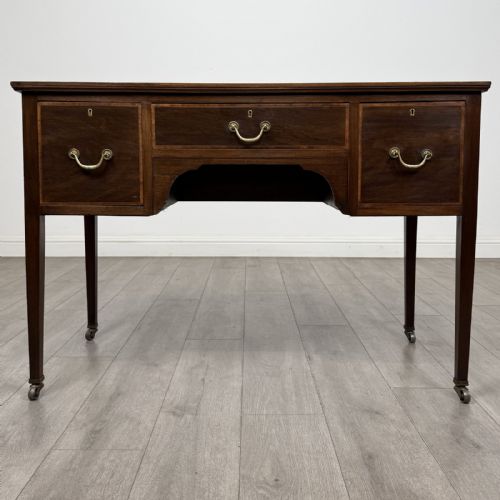
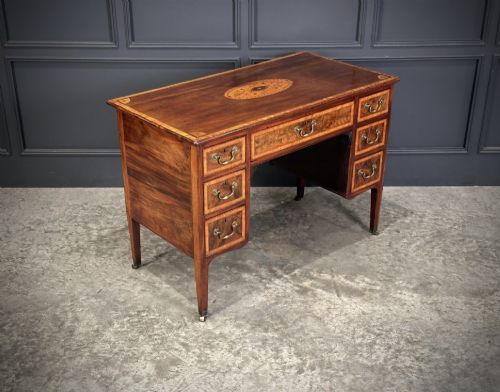
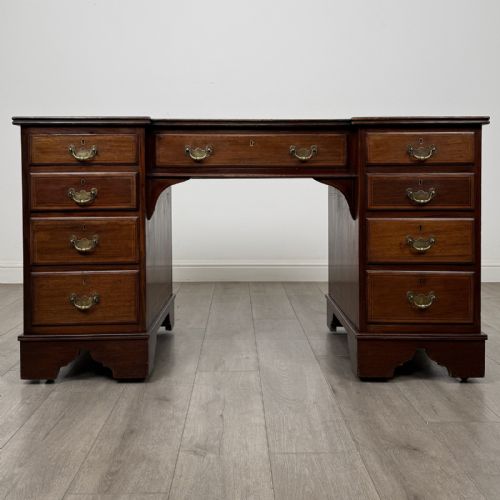
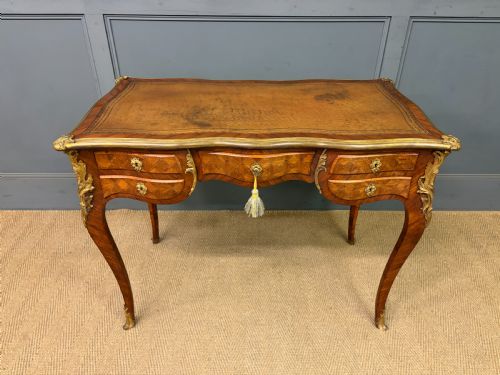
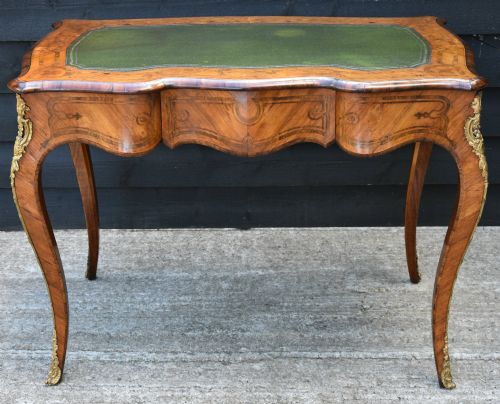
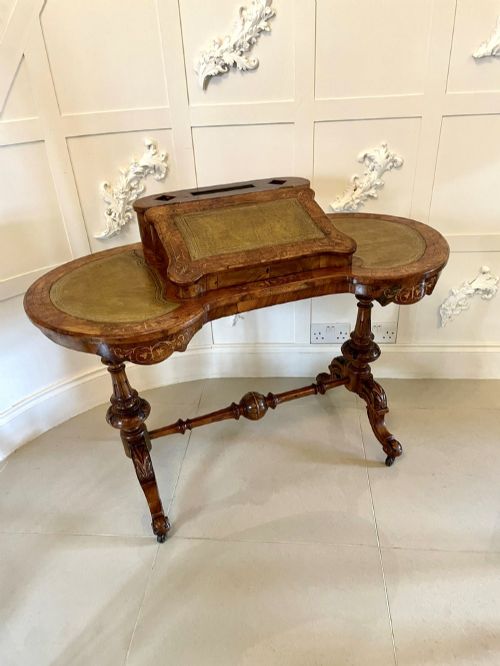
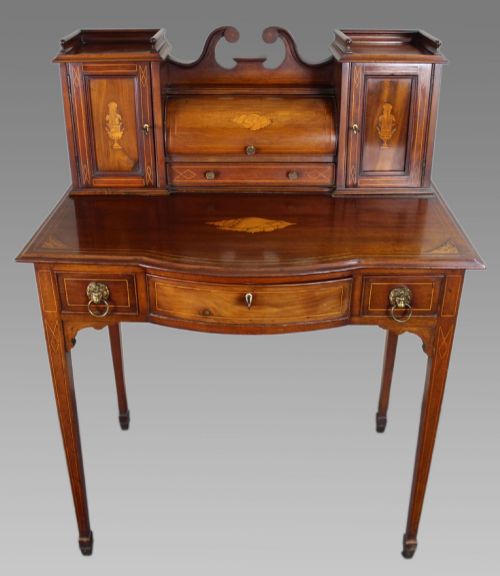
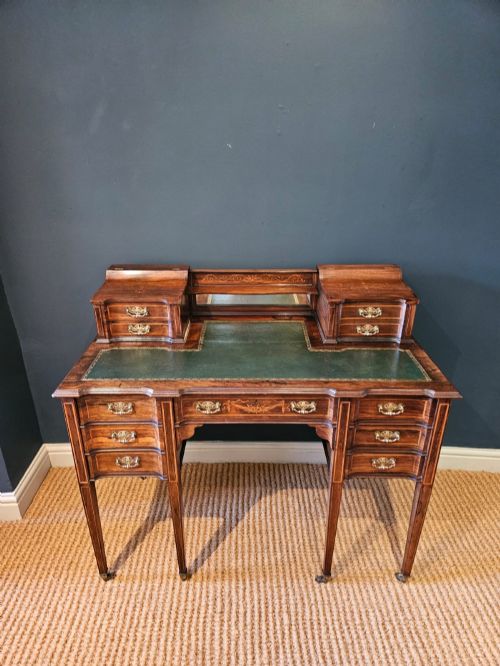
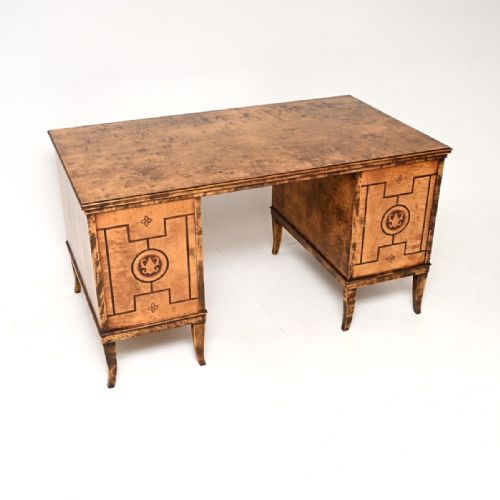
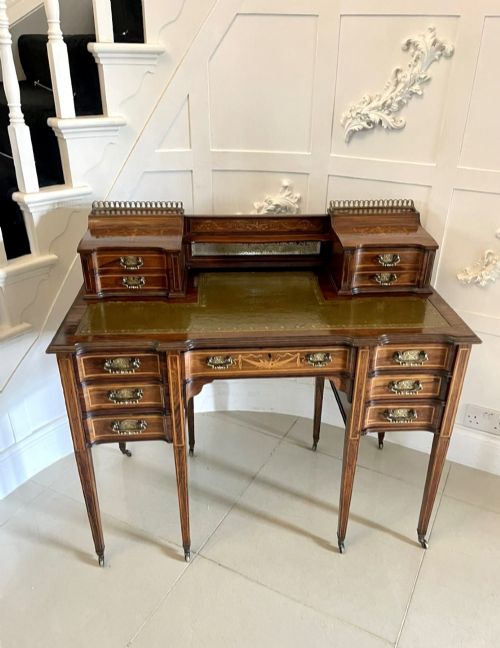
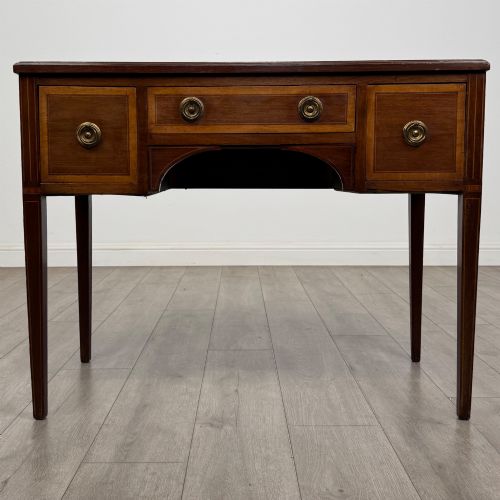
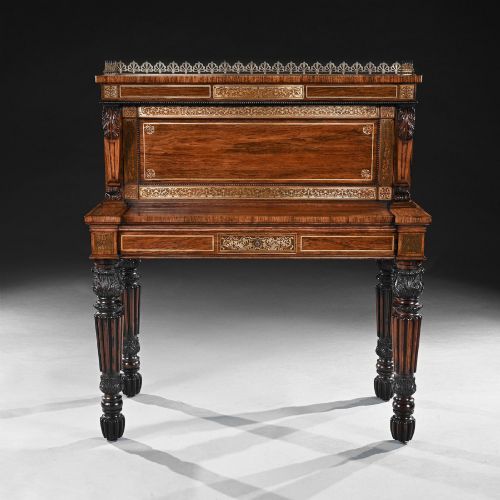
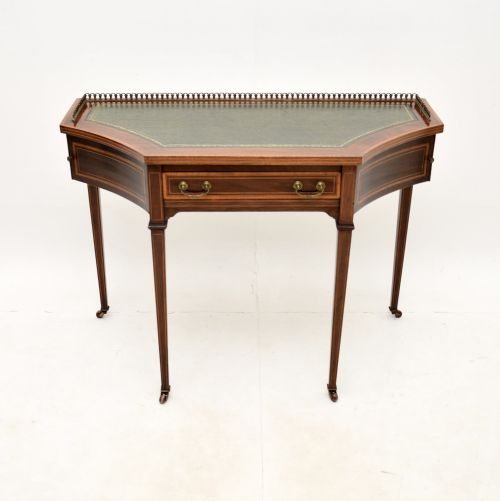
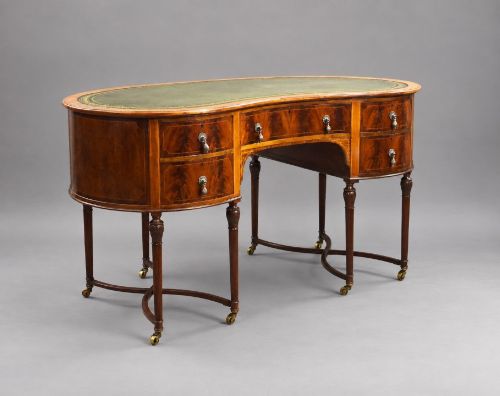
An inlaid study desk is a dedicated writing or working table ornamented with contrasting wood veneers, stringing or marquetry. The pieces found here span the Georgian, Victorian, Edwardian and early twentieth-century periods, taking forms such as pedestal desks, writing tables, kidney-shaped desks and Carlton House desks.
Edwardian satinwood and mahogany writing tables appear frequently, alongside Victorian rosewood and walnut examples. Cabinetmakers constructed these desks for domestic libraries, studies and boudoirs, often incorporating fitted stationery compartments, leather writing inserts and multiple small drawers.
How they were made
Workshops built these desks using solid timbers and secondary woods like mahogany, walnut, rosewood and satinwood, applying decorative veneers to large flat surfaces. Craftsmen executed inlay work by recessing thin slices of contrasting wood, brass or ivory into channels cut into the primary surface.
Makers integrated leather writing panels, cast brass handles and occasional ormolu mounts to complete the functional design. Structural stability relied on traditional joinery techniques such as dovetailed drawer construction and mortise and tenon frames.
Listings feature mahogany, satinwood, rosewood, walnut and brass materials across Victorian and Edwardian periods.
What varies in quality
The standard of an inlaid study desk depends upon the precision of the cabinetwork and the intricacy of the decorative elements. Superior examples display tightly fitted marquetry, well-figured timber grains and robust internal drawer construction without structural movement.
Renowned workshop attribution and the retention of original brass hardware, leather inserts and keys elevate a piece above standard domestic furniture. Finer desks maintain crisp edges to the inlay work and balanced proportions across freestanding designs.
Maple and Co·Gillows Oxford Street Workshop·Edwards and Roberts·Jackson and Graham
The Inlaid Study Desk Glossary
- Marquetry
- Decorative patterns formed by fitting together thin veneers of various woods and other materials onto a structural carcass. This technique allows for elaborate pictorial or geometric designs across desk tops and drawer fronts.
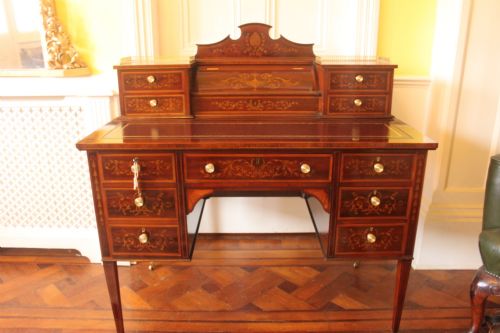
- Carlton House desk
- A form of writing desk featuring a curved superstructure fitted with small drawers and pigeonholes above a leather-lined writing surface. The configuration originated in the late eighteenth century and remained popular during the Edwardian revival.
- Kidney-shaped desk
- A writing table designed with a concave curve at the front to accommodate the user. These pieces often stand on slender tapering legs and feature extensive satinwood or mahogany inlay.
- Satinwood
- A hard, durable timber with a natural golden lustre and satin-like sheen, frequently utilised for veneers and inlay work on late eighteenth-century and Edwardian furniture.
- Pedestal desk
- A heavy freestanding desk comprising two supporting pedestals of drawers beneath a rectangular top. Many incorporate central kneehole compartments and leather writing surfaces.
Inlaid Study Desk: Frequently Asked Questions
What is a Carlton House desk?
A Carlton House desk is a distinctive writing desk featuring a curved gallery of small drawers and pigeonholes wrapping around the back and sides of the writing surface. This arrangement provided dedicated compartments for stationery and correspondence.
First produced around the late eighteenth century, these desks were revived with enthusiasm during the Edwardian period. They offer a combination of decorative elegance and practical compartmentalised storage.
How do I identify an Edwardian desk?
Edwardian desks often feature light timbers such as satinwood, mahogany or birch, frequently decorated with delicate floral marquetry or satinwood inlay. These pieces frequently adopt revival styles inspired by Sheraton designs.
Cabinetmakers working in this era produced numerous kidney-shaped tables and freestanding writing desks intended for refined domestic interiors. Their construction tends to be lighter and more slender than earlier Victorian counterparts.
Were these desks used for writing?
These tables served as the primary domestic workspaces for correspondence, household accounts and reading before the widespread adoption of modern office furniture. The inset leather panels provided a smooth, durable surface for ink writing.
Many examples include multiple small drawers, locking mechanisms and fitted stationery compartments to keep writing materials organised within the study or library.
What is the difference between inlay and marquetry?
Inlay involves cutting recesses into a solid wood surface and gluing contrasting materials such as wood, brass or ivory directly into the channels. This method creates geometric borders, stringing and linear patterns.
Marquetry assembles an entire picture or decorative motif from a mosaic of thin veneers before applying the finished sheet to the furniture carcass. Both techniques appear extensively across nineteenth- and early twentieth-century writing desks.