




Louis XVI Revival Desk
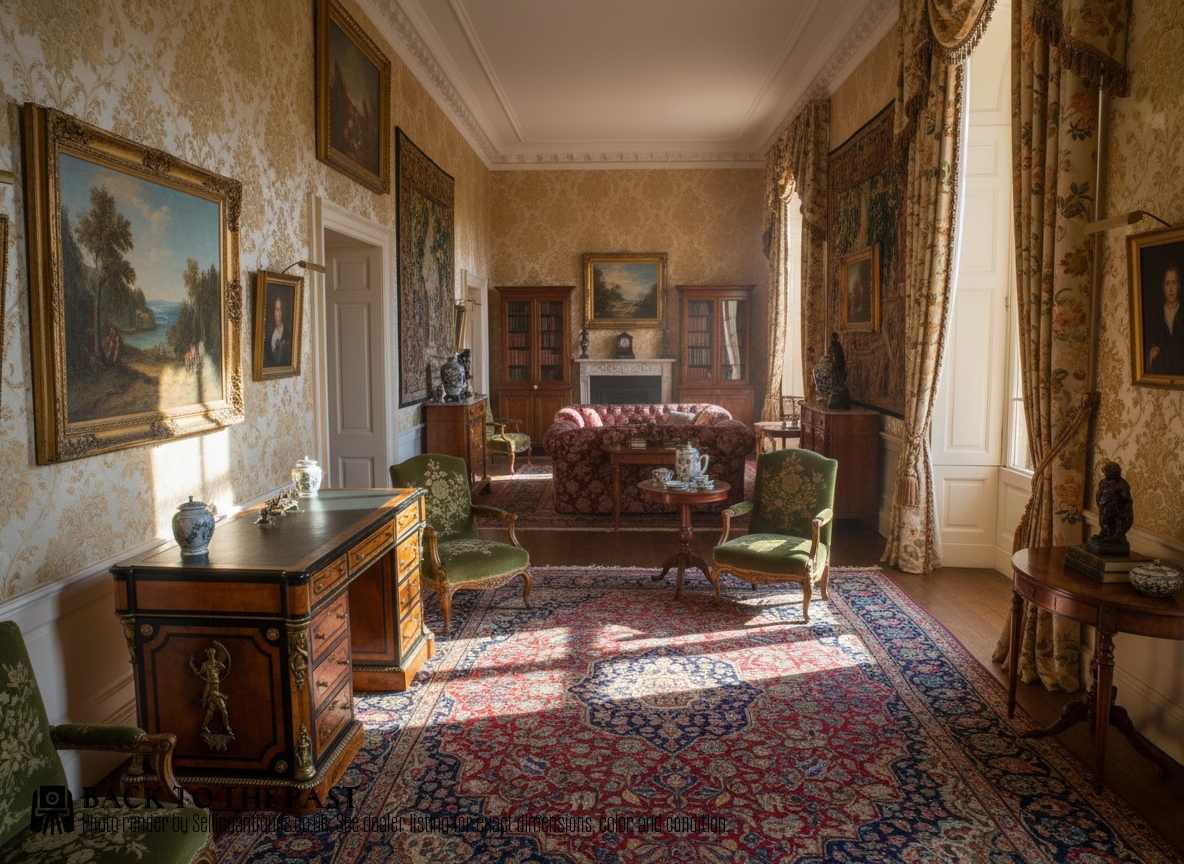
A louis xvi revival desk brings French classical symmetry and refined mounts into a study, offering an elegant surface for daily correspondence.
Louis XVI Revival Desk
A louis xvi revival desk revives the restrained classical forms and straight-lined elegance of eighteenth-century French cabinetmaking. Pieces meeting this description typically emerge from the nineteenth century, drawing heavily on French Louis XVI style and Victorian interpretations of continental design.
Buyers frequently encounter writing tables, pedestal desks, and bureau plat forms shaped by these revival currents. They combine traditional structural forms with the decorative vocabularies seen across the broader mix of desks and writing tables in the record.
How they were made
Maker's workshops employed dense timbers such as rosewood and mahogany, often enhanced by intricate marquetry and parquetry patterns. Ebonised wood also appears, providing a dark, uniform ground for applied metalwork.
Gilt bronze and brass ormolu mounts punctuate the timber surfaces, framing drawers and corners with classical cast ornament. Leather inserts frequently line the writing surfaces, secured by delicate gilt tooling.
Materials in these records include rosewood, mahogany, ebonised wood, and ormolu mounts.
What varies in quality
The refinement of the cast bronze mounts distinguishes finer examples from simpler workshops. Crisp chasing in the metal and tight, precise parquetry indicate superior craftsmanship in a louis xvi revival desk.
Selection of timber grain and the depth of the marquetry work dictate the visual hierarchy of these pieces. Proportion and the fidelity of the classical detailing separate standard production from exceptional cabinetmaking.
Donald Ross·Alphonse Tahan
The Louis XVI Revival Desk Glossary
- Ormolu
- Gilt bronze mounts applied to furniture and clocks. This technique creates metallic highlights against timber surfaces.
- Marquetry
- Inlaid wood veneers forming decorative pictures or geometric patterns. Craftsmen carefully fit contrasting timbers to achieve pictorial depth.
- Parquetry
- Geometric wood inlay forming repeating patterns such as cubes or chequers. It creates a structured, architectural surface on table tops.
- Bureau Plat
- A freestanding double-sided writing table with drawers in the frieze. It represents a classic French form adapted during revival periods.
Louis XVI Revival Desk: Frequently Asked Questions
What defines a louis xvi revival desk?
These pieces draw inspiration from eighteenth-century French classical design, featuring straight tapered legs and symmetrical mounts. They reflect nineteenth-century revivals of continental cabinetmaking.
Craftsmen utilised rich timbers and gilt bronze to emulate the luxury of the original French royal court furniture.
How are these desks structured?
Most examples take the form of writing tables or pedestal desks with integrated drawers. They prioritise clean architectural lines over curving rococo excess.
Writing surfaces are frequently inset with leather, surrounded by banded wood veneers and decorative brass borders.
Where were these pieces made?
Many desks originate from French workshops or British cabinetmakers influenced by continental styles. Makers in both regions adopted the Louis XVI vocabulary during the nineteenth century.
Imported French pieces often feature distinctive ormolu mounts and precise marquetry work characteristic of Paris ateliers.
How do I care for the surface?
Protect timber and gilt mounts from direct sunlight and fluctuating humidity to prevent veneer cracking. Gentle dusting with a dry cloth preserves the polished finish.
Avoid chemical polishes on ormolu mounts, as harsh agents can damage the original gilding over time.