



Victorian Frieze Drawer Table
A victorian frieze drawer table brings honest nineteenth-century craft into a working room, offering deep timber and built-in storage.
Victorian Frieze Drawer Table
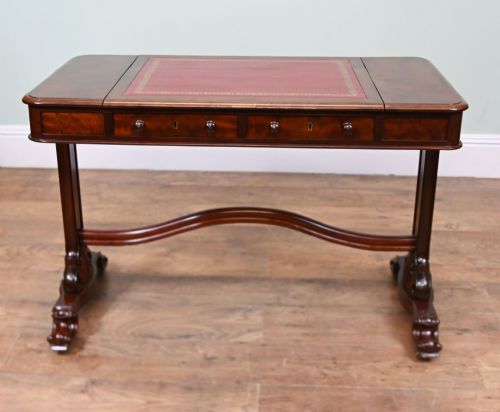
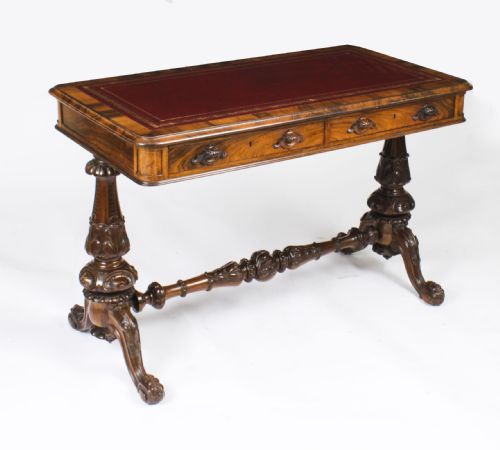
A victorian frieze drawer table is a practical nineteenth-century form designed for writing, dining, or general library use, featuring one or more concealed or visible drawers directly beneath the top surface. These pieces range from compact pine and oak side tables to large mahogany and rosewood writing desks, library tables, and centre tables.
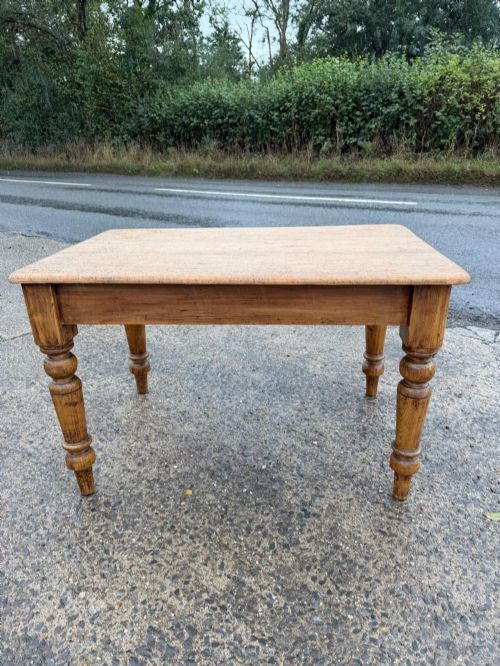
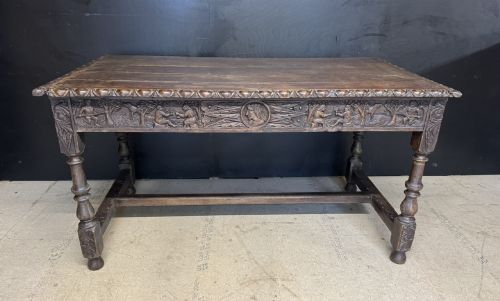
Buyers meeting this form will encounter diverse regional and stylistic variations, including rustic country pine versions, formal library drum tables, and heavily carved revival pieces. The listings show construction across several decades of the nineteenth century, alongside occasional twentieth-century interpretations.
How they were made
Cabinet makers utilised dense hardwoods like mahogany, walnut, rosewood, and oak for formal library and writing tables, whilst sturdy utility pieces relied on pine or mixed construction. Drawer construction typically involved hand-cut dovetails, and surfaces frequently received leather inserts for writing or intricate parquetry decoration.
Decoration on these tables relied on carved details such as stags' heads, fluted columns, and shaped galleries, particularly on Renaissance Revival and Gothic Revival examples. Timber was selected for figured grain patterns, especially in walnut and mahogany drum tables.
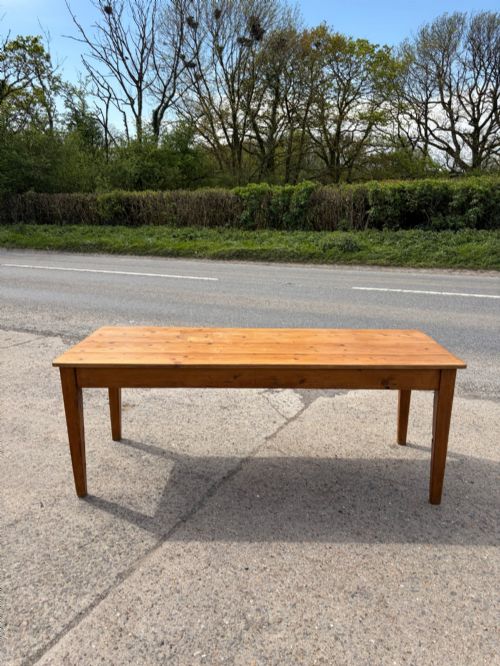
Listings show these tables executed in mahogany, oak, pine, rosewood, walnut, and satinwood, spanning multiple styles including Gothic Revival and Regency.
What varies in quality
The distinction between standard utility pieces and high-end examples rests upon timber selection and the refinement of carving. Plain pine kitchen tables sit at the functional end of the spectrum, while figured rosewood, parquetry work, and attributed workshop production represent the finer tier.
Structural integrity and the retention of original drawer linings, brass hardware, and leather writing surfaces dictate the standing of an individual piece. Elaborate architectural details like turned and fluted columns or integrated rear galleries elevate certain examples above simple side tables.
Edwards & Roberts·Donald Ross
The Victorian Frieze Drawer Table Glossary
- Frieze drawer
- A drawer built into the horizontal band immediately beneath the tabletop. This is the defining characteristic uniting these diverse writing, side, and library tables.
- Drum table
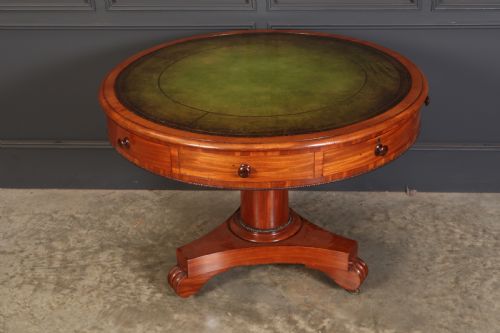
- A round library table featuring a deep top fitted with multiple drawers arranged around the circumference. These pieces often rotate on a central pillar.
- Parquetry
- Geometric wood mosaic work used to decorate furniture surfaces. It appears on the tops of finer writing tables.
- Gallery
- A raised wooden or brass border along the back or edges of a table. It prevents books or papers from sliding off.
- Renaissance Revival
- A nineteenth-century design style drawing inspiration from sixteenth-century European architecture and ornament. It frequently incorporates heavy carved detail.
Victorian Frieze Drawer Table: Frequently Asked Questions
What is a frieze drawer table?
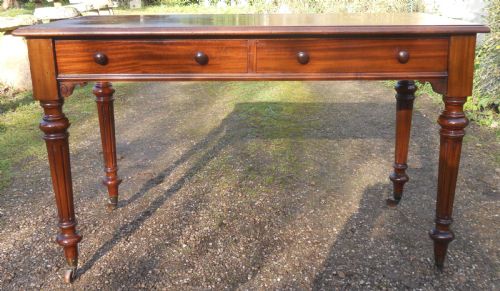
A frieze drawer table is a nineteenth-century furniture form equipped with one or more drawers integrated into the structural rail beneath the top surface.
These pieces encompass writing desks, library tables, side tables, and serving tables from the Victorian era and surrounding decades.
How were these tables used?
They served multiple domestic and institutional functions, primarily as writing desks, library study tables, or sideboards in grand rooms.
Today, many owners utilise them as study desks, hallway consoles, or laptop workstations within modern interiors.
Which woods are most common?
Mahogany and oak appear most frequently across the surviving inventory, followed by rosewood, walnut, pine, and satinwood.
Finer reception and library pieces utilise dense hardwoods, whilst utility and kitchen tables often employ pine.
How do I spot a drum table?
A drum table is distinguished by its circular top and deep frieze, which conceals multiple drawers arranged in a continuous ring.
These were traditionally placed in libraries and centre spaces for easy access to writing materials from any angle.