



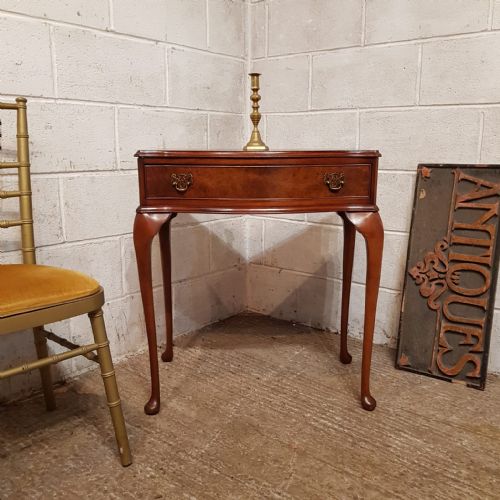


1920s Writing Table
A 1920s writing table brings period character and practical workspace to a room, offering sturdy timbers and distinct period style.
1920s Writing Table
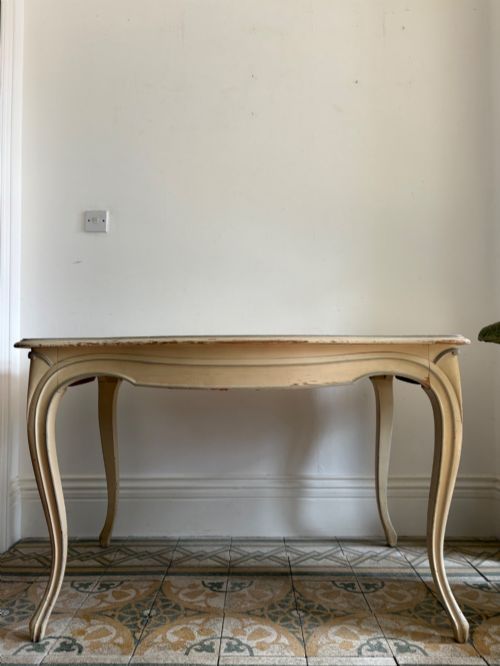
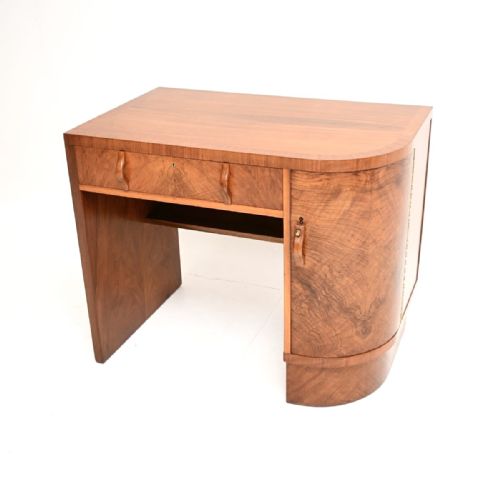
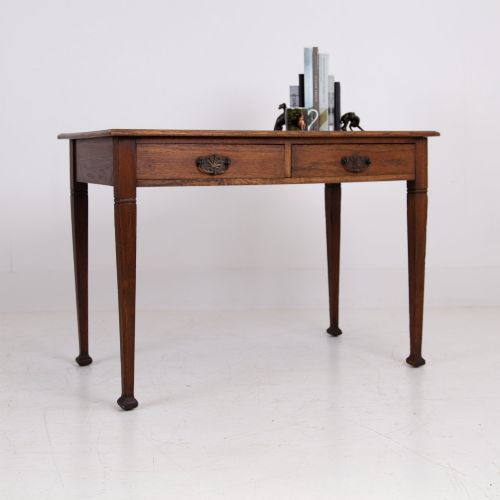
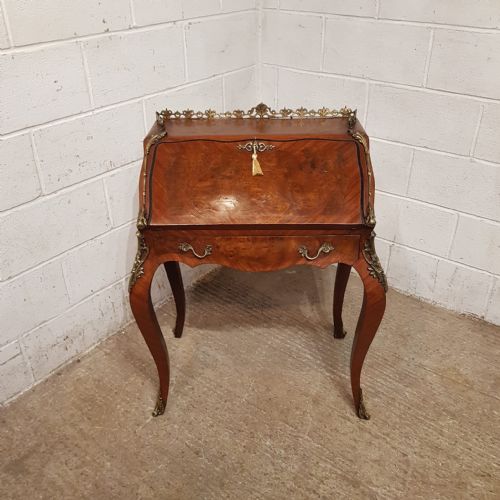
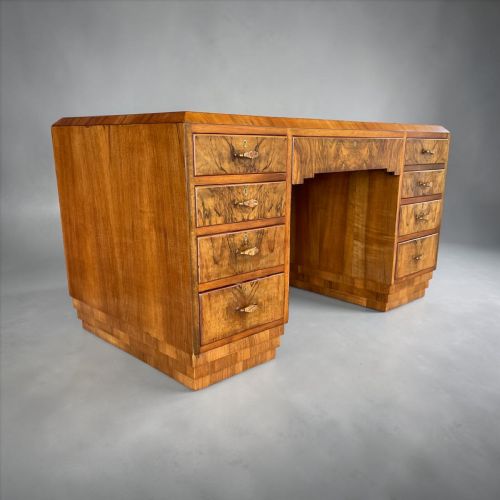
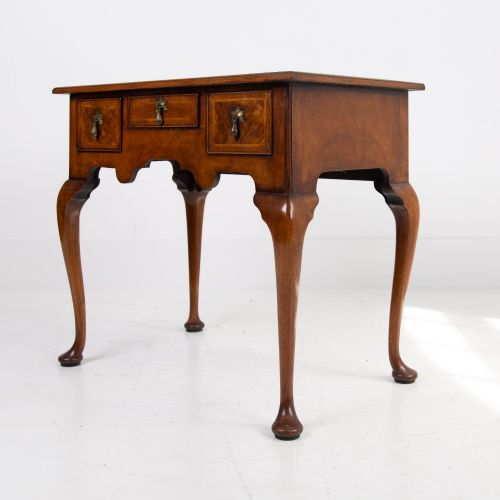
A 1920s writing table encompasses compact desks, bureau de dame forms, and lowboys configured for functional writing and domestic use. Buyers encounter varied stylistic interpretations spanning understated oak designs to bold French Art Deco statements.
Many items incorporate functional drawers, serpentine fronts, and inset leather or suede writing surfaces tailored for daily use. Such variety ensures that collectors find pieces suited to formal studies or domestic living spaces.
How they were made
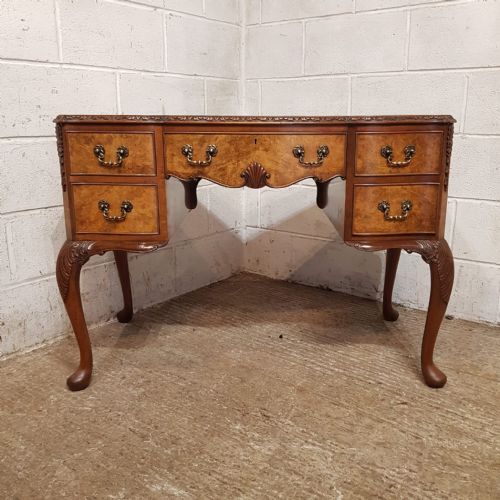
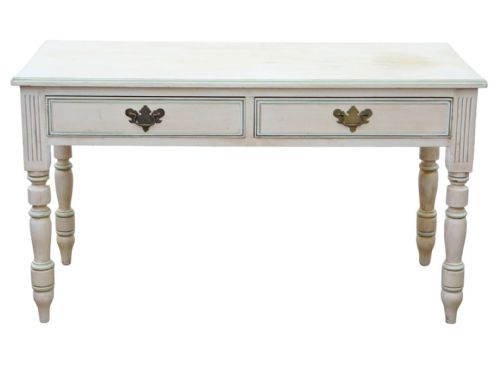
Cabinet makers utilised solid oak and walnut, frequently applying burr walnut veneers to curved and serpentine drawer fronts to showcase rich timber grain. Secondary woods provide structural integrity while exterior surfaces receive careful polishing or period paint finishes.
Detailing involves inset leather and suede writing panels, brass hardware, and carved cabriole legs on revival pieces. Construction methods balance traditional joinery with the sleek geometric requirements of Art Deco design.
Post office sorting tables cross over into domestic writing use, proving that sorting mail was once a stylish interior choice.
What varies in quality
The standard of execution separates standard utilitarian items from fine atelier pieces, particularly within the Art Deco selections. Superior examples display carefully matched burr walnut veneers, harmonious proportions, and refined bronze or brass mounts.
Plain oak models rely on timber selection and sturdy dovetail joinery for their appeal, whereas French iterations gain distinction through painted surfaces and shaped cabriole legs. The integration of original leather or suede writing inserts also influences the overall desirability.
Heals·Maurice Dufrêne
The 1920s Writing Table Glossary
- Bureau de dame
- A small lady's writing desk, often featuring a sloping lid or fitted interior compartments. These compact pieces suit smaller reception rooms.
- Lowboy
- A small table with drawers resembling the lower section of a tallboy, frequently utilised as a dressing or writing table. They often feature cabriole legs and walnut or oak construction.
- Serpentine front
- A furniture front curved with a convex centre flanked by concave wings. This sophisticated shaping requires skilled carpentry and high-grade veneers.
- Cabriole leg
- A furniture leg that bends outward and then tapers downward to a foot, typical of revival styles. The form derives from animal limbs and appeared extensively on eighteenth-century furniture revived in the 1920s.
- Burr walnut
- Wood taken from a walnut tree growth or burl, yielding intricate, swirling grain patterns. Cabinet makers prized this veneer for high-status furniture fronts.
1920s Writing Table: Frequently Asked Questions
How do I identify a 1920s writing table?
Examine the construction methods, timber choices, and stylistic markers such as Art Deco geometry or Queen Anne revival cabriole legs. Characteristic woods like burr walnut and golden quartered oak point directly toward this interwar period.
Check drawer linings and internal fixings for period appropriate manufacturing techniques. Comparing the piece against documented designs from makers like Heals helps confirm the decade.
Were these desks used for writing letters?
These tables served as domestic hubs for correspondence, household accounts, and reading before the widespread adoption of modern office furniture. Their compact dimensions reflect the proportions of period homes.
Fitted drawers provided secure storage for stationery, inkwells, and personal documents. Many incorporated inset leather or suede surfaces to offer a smooth writing platform.
How do I care for a walnut writing table?
Maintain walnut and burr walnut surfaces by keeping them away from direct sunlight and extreme temperature fluctuations. Regular dusting with a dry lint-free cloth preserves the polished finish.
Apply a quality beeswax periodically to nourish the timber and protect the veneer. Avoid chemical cleaning products that strip traditional polish.
What is the difference between an oak and walnut desk?
Oak desks from this period often reflect Arts and Crafts or simpler English country traditions, emphasising visible grain and robust construction. They suit rustic or traditional interiors.
Walnut desks frequently lean toward Art Deco styling or formal revivals, featuring figured veneers and smoother, polished surfaces. Walnut provides a darker, more decorative aesthetic than everyday oak.