
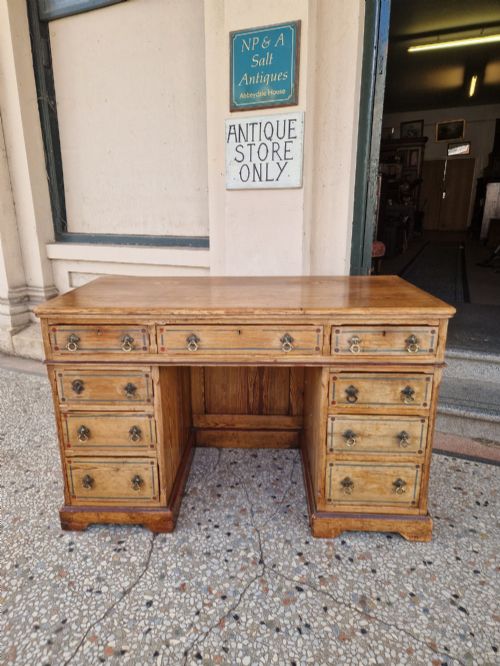
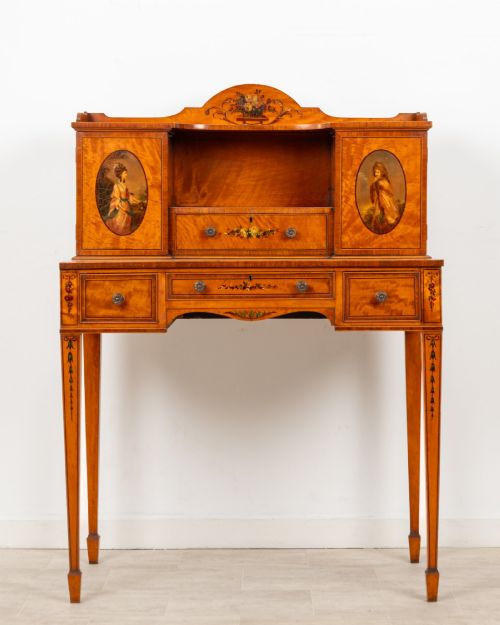
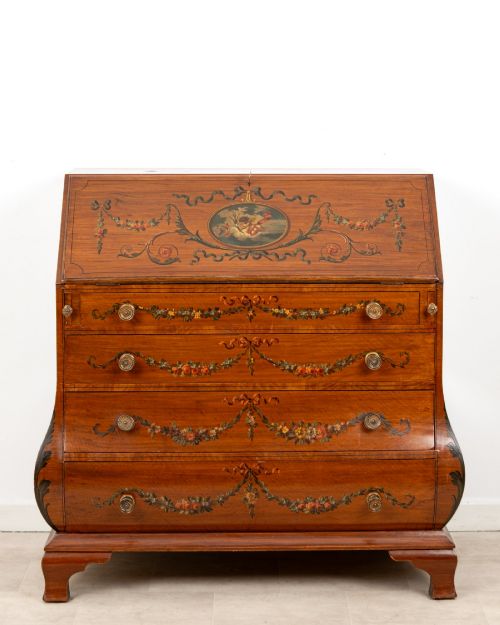
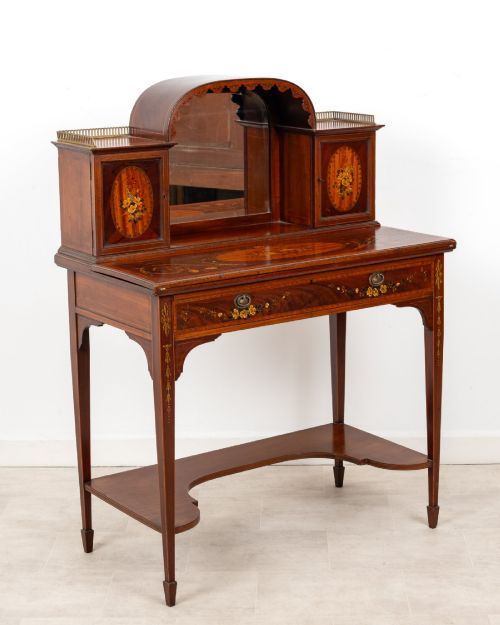
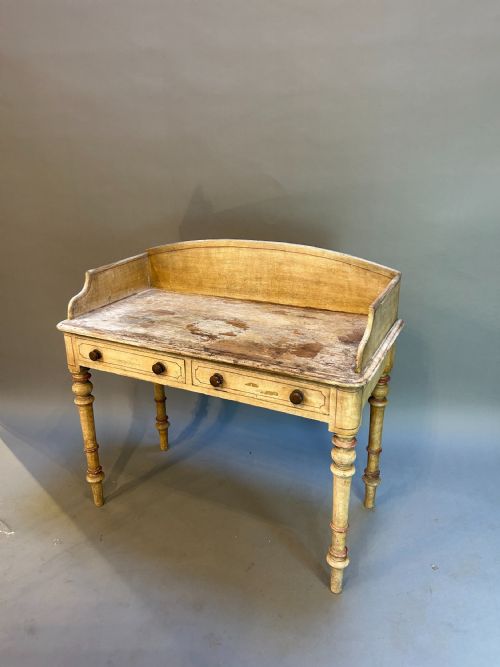
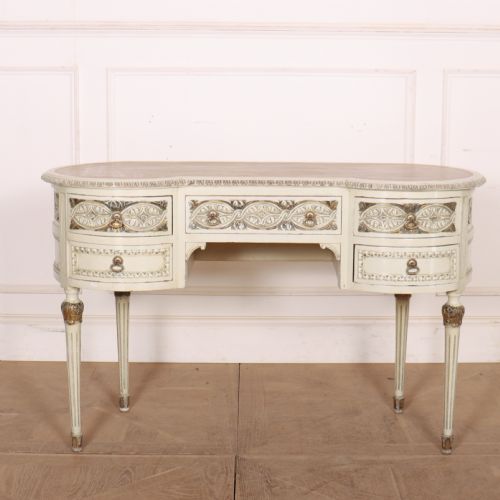
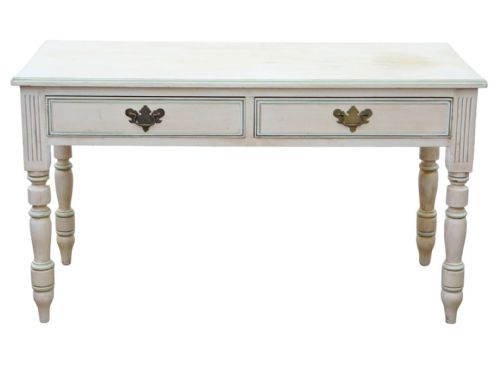


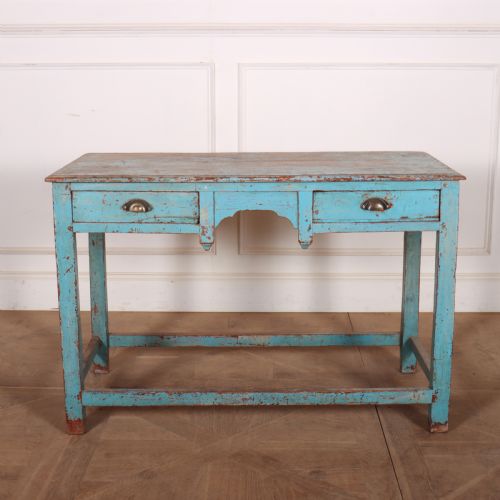
Edwardian Painted Writing Desk
An edwardian painted writing desk brings lightness and colour to a study through delicate brushwork and pale satinwood.
Edwardian Painted Writing Desk
An edwardian painted writing desk combines practical workspace with ornamental painting, emerging predominantly around the turn of the twentieth century. These pieces reflect a revival of neoclassical and Sheraton tastes, favouring lighter timbers over heavier Victorian brown furniture.
The most common forms on this page include satinwood writing tables, bureaux with fitted interiors, and sophisticated Carlton House desks. Many examples feature delicate floral motifs or Chinoiserie decoration applied directly onto the timber.
Makers of the period also produced ladies writing tables equipped with mirrored superstructures and small drawers for correspondence. While the core period is Edwardian, related Victorian and later pieces appear in similar painted satinwood and mahogany.
How they were made
Makers constructed these desks primarily using satinwood, mahogany, and pine, often applying hand-painted decoration over the timber. Brass handles, glass panels, and leather writing inserts completed the finer examples.
Decoration relied on skilled brushwork for floral garlands and classical motifs, sometimes augmented by inlaid wood and polished finishes. Secondary timbers such as pine remained standard for drawer linings and internal framing.
Several desks manage to include mirrored superstructures and hidden compartments while remaining dainty enough to lift without strain.
What varies in quality
The fineness of the hand-painted decoration separates standard production from exceptional pieces. Crisp brushwork and well-chosen satinwood veneers indicate a higher grade of manufacture.
Complexity of form also distinguishes the range, moving from simple writing tables to intricate Carlton House desks and bureaux with fitted compartments.
The Edwardian Painted Writing Desk Glossary
- Satinwood
- A lustrous tropical timber with a golden sheen, frequently used as the primary veneer for painted furniture. It provides a pale, smooth canvas for decorative brushwork.
- Carlton House desk
- A form of writing desk featuring a curved superstructure of small drawers and compartments enclosing the writing surface. This design originated in the late eighteenth century and saw revival popularity.
- Bonheur du jour
- A light lady writing desk featuring a small cabinet or superstructure on the top surface. The name translates from French as daylight pleasure.
- Secrétaire abattant
- A tall writing cabinet with a drop-front panel that conceals a fitted interior of pigeonholes and small drawers. These pieces often display fine painted or veneered surfaces.
Edwardian Painted Writing Desk: Frequently Asked Questions
How do I care for painted satinwood?
Keep painted satinwood surfaces away from direct sunlight and excessive heat to prevent the timber from drying and the paint from fading. Use a soft, dry cloth for dusting.
Avoid liquid polishes and chemical cleaners, which can damage delicate hand-painted decoration over time.
Where were these desks used?
These desks served primarily in light-filled drawing rooms, boudoirs, or private sitting rooms rather than heavy Victorian libraries. Their dainty proportions suited personal correspondence and light reading.
The inclusion of mirrors and superstructures reflects their use as dual-purpose dressing and writing furniture.
How do I tell Edwardian from Victorian pieces?
Edwardian painted desks generally feature lighter satinwood finishes, delicate neoclassical revival motifs, and slender proportions. Victorian predecessors often display slightly heavier frames and darker mahogany elements.
Stylistic overlap remains common, as late Victorian cabinet makers anticipated the bright aesthetics of the Edwardian era.