
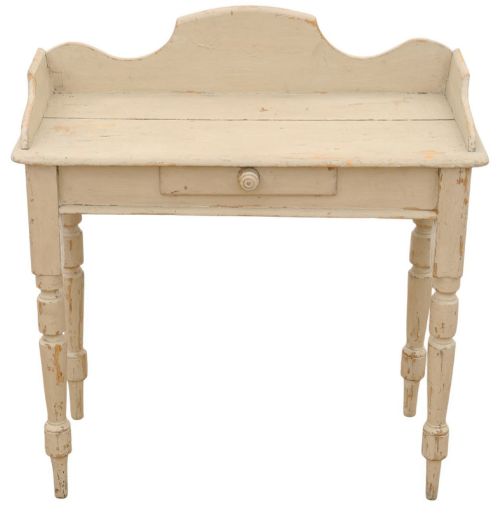
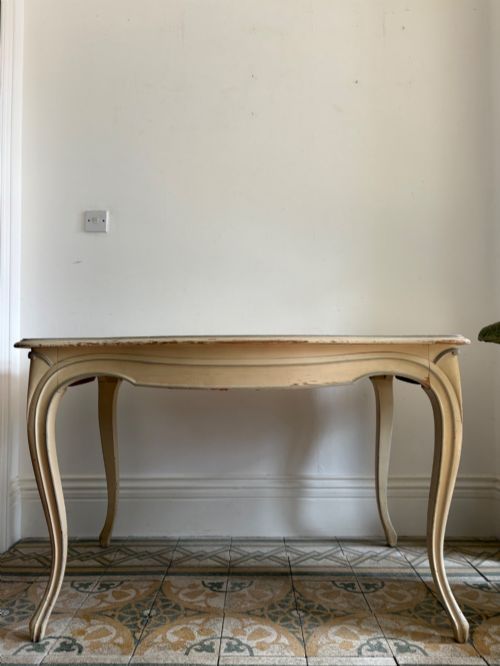
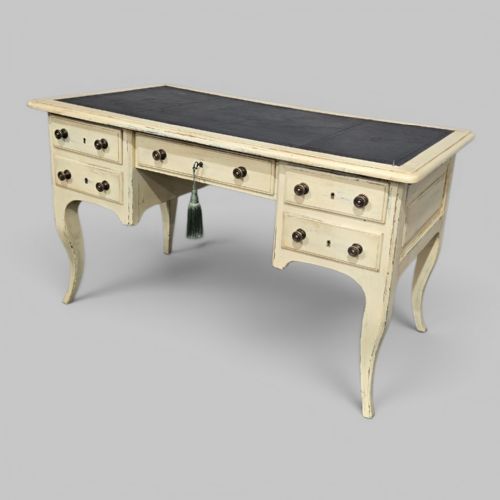
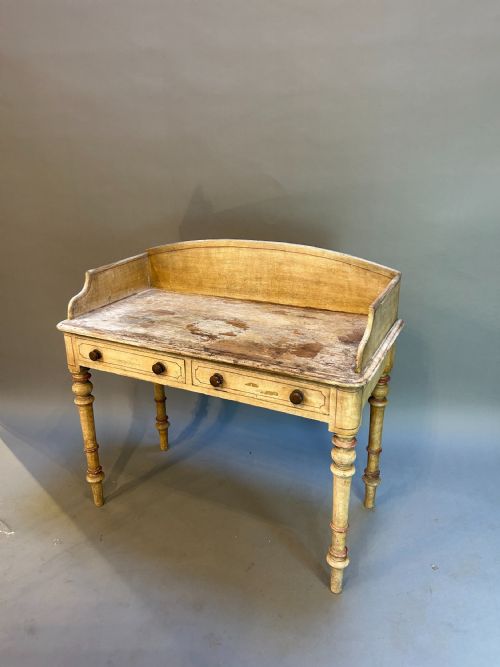
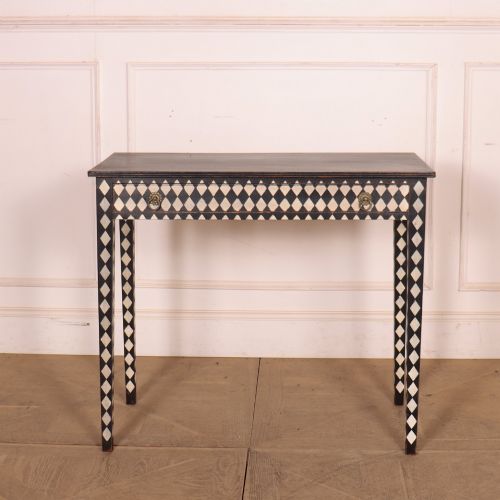
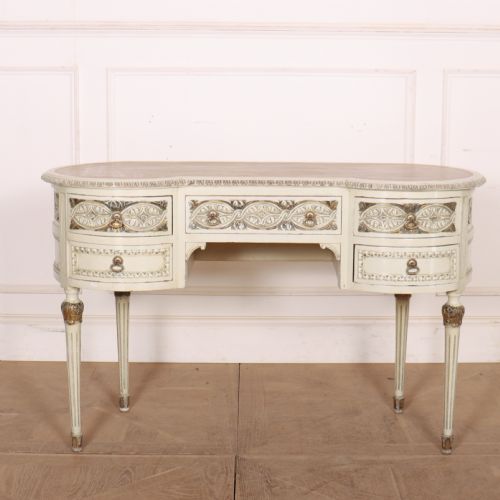
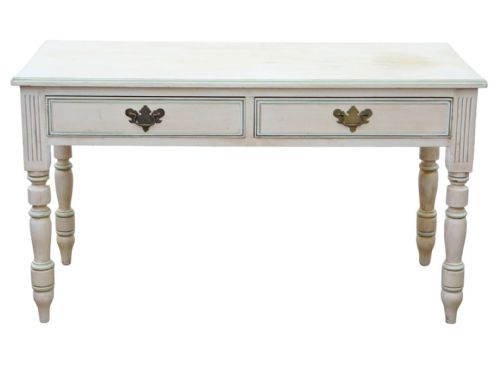


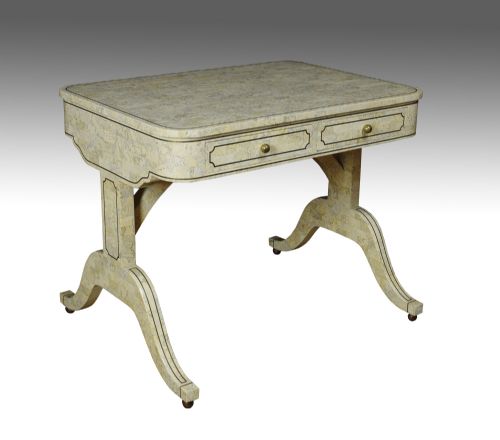

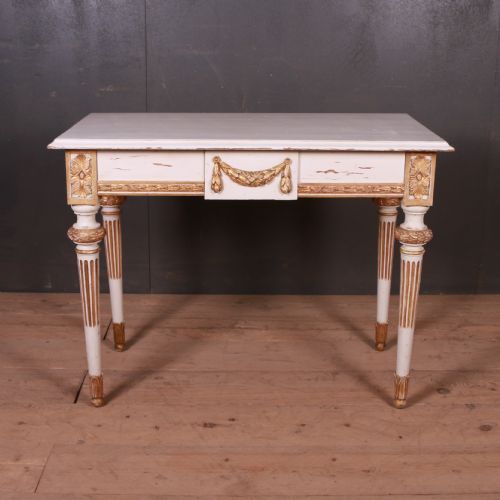

Cream Writing Table
A cream writing table offers a functional workspace finished in a pale, often distressed palette that suits both traditional and country interiors.
Cream Writing Table
A cream writing table provides a dedicated surface for correspondence and study, typically featuring drawers for stationery and compact proportions suited to smaller rooms. These pieces appear across various periods, most notably the nineteenth century and early twentieth century, reflecting both English traditional workshops and continental European aesthetics.
The selections available here span several distinct forms, including kneehole desks, kidney-shaped tables, and console tables adapted for writing. Makers from the Victorian era onward produced these items in painted wood, often incorporating leather or suede inserts on the writing surface.
Stylistic influences range from the clean lines of Gustavian furniture to the curved cabriole legs of French provincial design and the ornamentation of neoclassical pieces. Buyers selecting a cream writing table often gravitate toward these lighter painted finishes to brighten a study or bedroom.
Construction and materials
The primary construction relies on traditional timber frames, utilising woods such as pine alongside general hardwoods for structural stability. Joinery techniques from the nineteenth and early twentieth centuries ensure durability, with dovetailed drawer construction standard in better examples.
Surfaces are finished with paint, often built up in multiple layers to achieve the characteristic cream tone, sometimes showing underlying wood or distressing accumulated over decades. Details such as inset leather or suede writing pads, brass handles, and occasionally gilt wood or applied plaques complete the construction.
Listings feature painted wood, brass, and leather across nineteenth-century and early twentieth-century periods.
Evaluating the standard
Quality in these tables is evident in the integrity of the timber frame and the precision of the drawer joints, which should operate smoothly despite decades of use. The execution of the painted finish also matters, as original or period-appropriate paintwork holds greater appeal than heavy modern repainting.
Detailing elevates certain pieces above standard utility items, such as serpentine fronts, kidney-shaped tops, or the inclusion of original brass hardware and fitted leather writing surfaces. The presence of distinct stylistic motifs, whether French provincial curves or neoclassical plaques, distinguishes finer regional workshops from basic domestic furniture.
The Cream Writing Table Glossary
- Kneehole desk
- A writing desk with a central recess for the sitter's legs, flanked by pedestals containing drawers. This form became popular during the eighteenth century and remained a staple of nineteenth-century study furniture.
- Cabriole leg
- A furniture leg that curves outward at the knee and tapers inward toward the ankle, ending in a simple foot. This shape is characteristic of French provincial and neoclassical furniture styles.
- Serpentine front
- A furniture front characterised by a wavy outline, curving outward in the centre and inward at the sides. It requires skilled carpentry to shape the timber and drawers to this contour.
- Gustavian
- The Swedish interpretation of French neoclassical and rococo styles, defined by a lighter, restrained aesthetic and pale painted finishes. These pieces often feature muted cream or grey tones.
- Suede inset
- A soft, napped leather surface embedded into the top of a desk to provide a smooth writing area. It is frequently bordered with decorative gold tooling.
Cream Writing Table: Frequently Asked Questions
What periods do these tables date from?
The pieces span the nineteenth century up to the early twentieth century, encompassing Victorian productions as well as later continental European styles.
Craftsmen during these eras built furniture using solid timbers and traditional painted finishes that have aged over time.
How were writing tables used historically?
These tables served as functional surfaces for writing letters, managing household accounts, and reading correspondence before the ubiquity of modern technology.
They were typically placed in studies, drawing rooms, or bedrooms where a light and compact desk was required.
Are the painted finishes original?
Many pieces retain their period painted surfaces, though the condition varies from patinated originals showing age to later decorative layers.
Examining the paint closely reveals craquelure and wear consistent with the age of the underlying timber.
How do I fit a cream table into a room?
The neutral cream palette allows these tables to blend easily with both rustic farmhouse decor and more formal traditional or neoclassical interiors.
Pairing the desk with a simple wooden chair or a small upholstered seat maintains the proportions of the workspace.