



Painted Vanity Desk
A painted vanity desk brings surface artistry and practical dressing space into the bedroom, offering elegance alongside everyday utility.
Painted Vanity Desk
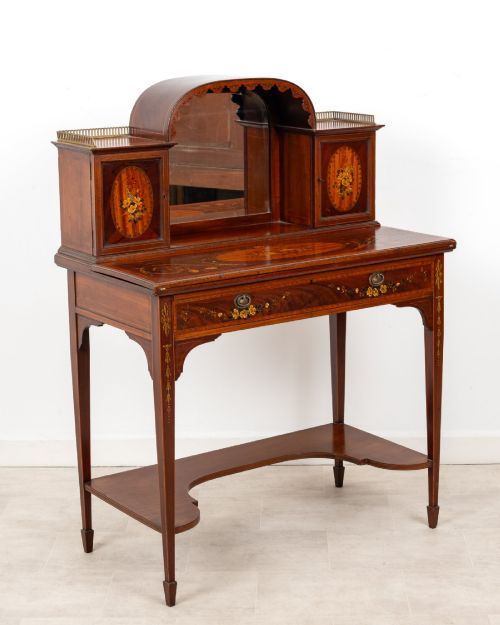
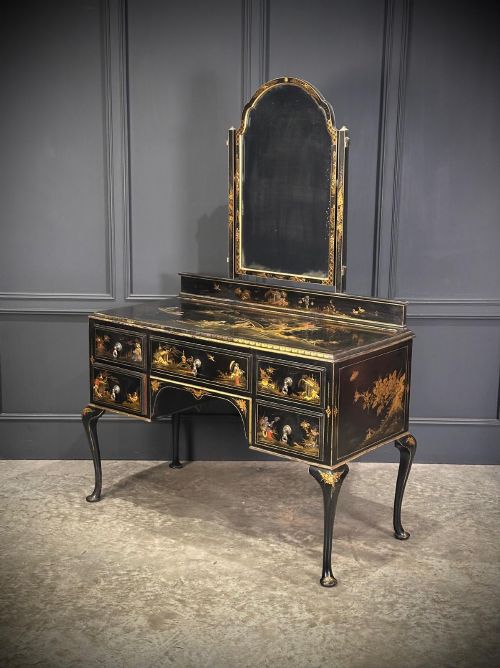
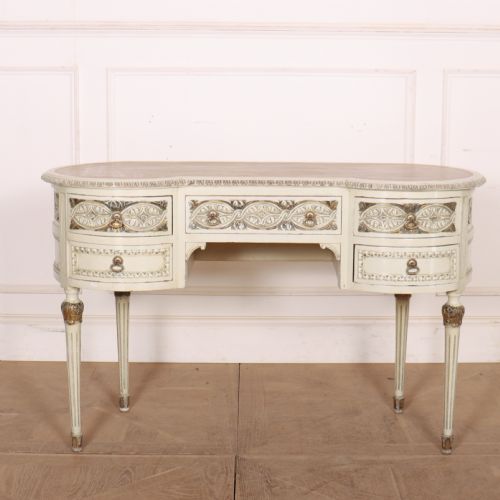
A painted vanity desk combines the surface of a writing table with the mirrors and compartments of a dressing table. When you search for a painted vanity desk, you encounter forms ranging from Edwardian satinwood pieces to kidney-shaped surfaces and French decorative designs.
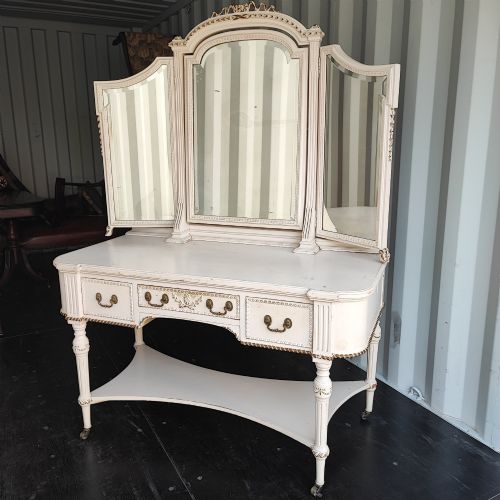
The pieces listed here date from the nineteenth and early twentieth centuries, spanning Victorian, Edwardian, and Art Deco periods. Many examples integrate folding or fixed mirrors, sometimes elevated in a superstructure above drawers and writing space.
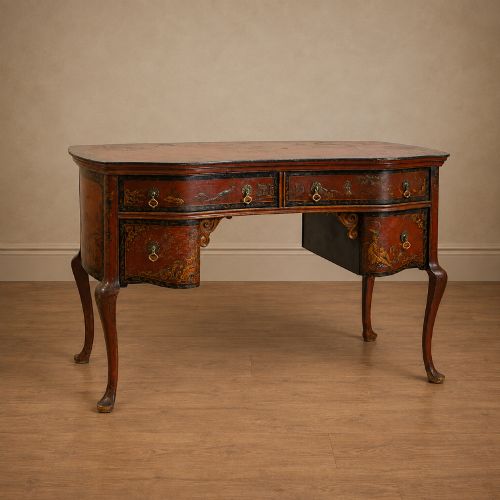
Makers and workshops utilised various regional expressions, from English satinwood ladies writing tables to French chateau and Chinoiserie lacquered dressing tables. These surfaces serve multiple functions as both desks for correspondence and dressing tables for grooming.
How they were made
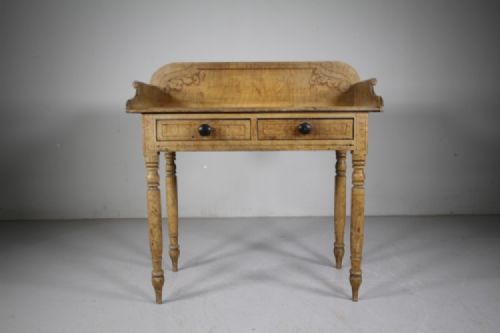
Construction relies primarily on wood carcases of satinwood, pine, mahogany, and satin birch, often enhanced with brass hardware and glass mirrors. Artisans applied decorative paint directly to timber, utilising techniques such as lacquering, stencilling, and faux bois finishing.
Surfaces feature hand-painted motifs, Chinoiserie scenes, and original decorative paintwork applied over prepared wood grounds. Brass embellishments, handles, and swing mirror frames provide functional and structural accents to the painted timber bodies.
Listings feature woods such as satinwood, mahogany, satin birch, and pine, paired with brass and glass.
What varies in quality
Quality rests in the fidelity and preservation of the original decorative paintwork rather than generic uniformity. Desks featuring intact, hand-painted details or specialised lacquering retain greater integrity than later repainted surfaces.
The sophistication of the timber framework, from figured satinwood to sturdy pine, dictates the structural refinement of the desk. Integrated superstructures, original glass mirrors, and matching hardware elevate the execution of these dressing pieces.
Maples of London and Paris·Rowley Gallery
The Painted Vanity Desk Glossary
- Superstructure
- An elevated tier of small drawers, shelves, or mirrors positioned above the main writing surface of a desk or dressing table. It provides additional compartment space and frames the dressing area.
- Kidney-shaped
- A curved desk or table profile resembling a bean, designed to wrap partially around the user. This form is common in late Victorian and Edwardian writing and vanity furniture.
- Chinoiserie
- European decorative style inspired by Chinese art, featuring lacquered surfaces and painted motifs of figures, pagodas, and landscapes. It frequently appears on nineteenth and early twentieth-century dressing tables.
- Satinwood
- A durable, hard timber with a natural golden sheen and satiny texture, highly prized for fine Edwardian and Victorian painted furniture. It accepts delicate hand-painted decoration exceptionally well.
- Faux bois
- A decorative paint technique mimicking the natural grain and texture of wood. Artisans applied this method to transform plain timber surfaces into visually rich finishes.
Painted Vanity Desk: Frequently Asked Questions
How do I use a vanity desk today?
A painted vanity desk functions wonderfully as a bedroom dressing table or a compact writing workspace in a sitting room.
The surface accommodates laptops or daily correspondence while the drawers and mirrors support grooming routines.
What periods do these desks cover?
The pieces span the nineteenth century through the early twentieth century, taking in Victorian, Edwardian, and Art Deco eras.
Styles range from Neoclassical and Louis XVI Revival to Chinoiserie and English country painted furniture.
Are the mirrors original?
Many desks retain their original glass mirrors, often mounted within adjustable frames or elevated superstructures.
Examine the mirror glass for slight foxing or age spots, which indicate genuine period manufacture.
How do I care for painted wood?
Protect painted and lacquered surfaces by keeping them away from direct sunlight and excessive moisture.
Dust gently with a soft, dry cloth and avoid harsh chemical cleaners that might damage the decorative paintwork.