

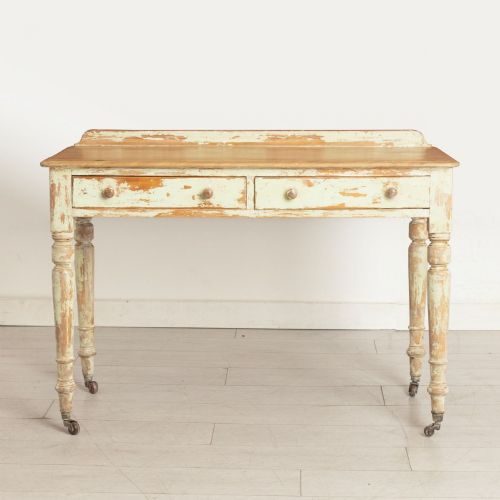
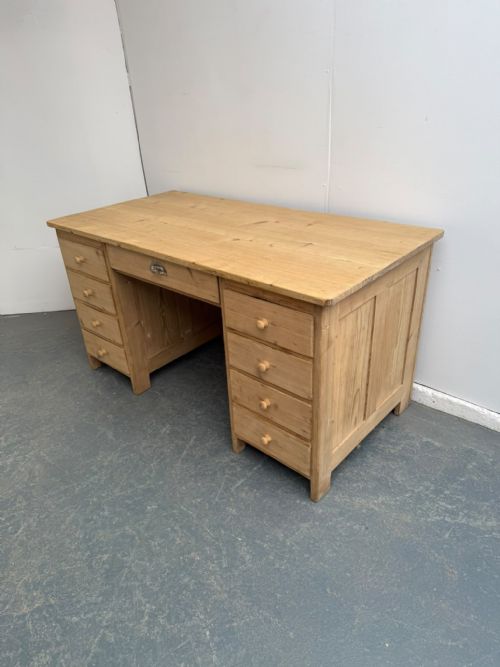

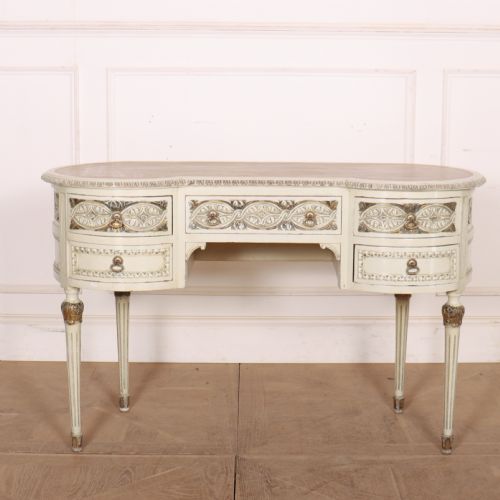
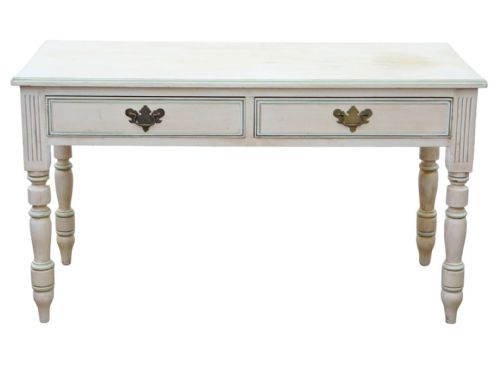


Painted Study Desk
A painted study desk brings colour and character to a room, offering a practical workspace shaped by the Victorian, Edwardian and later eras.
Painted Study Desk
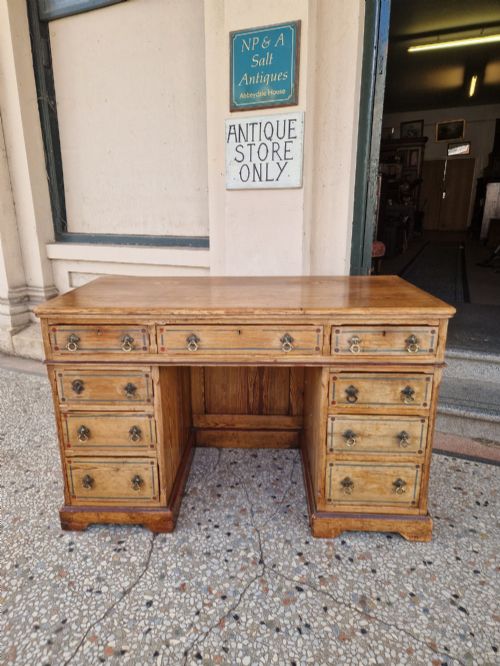
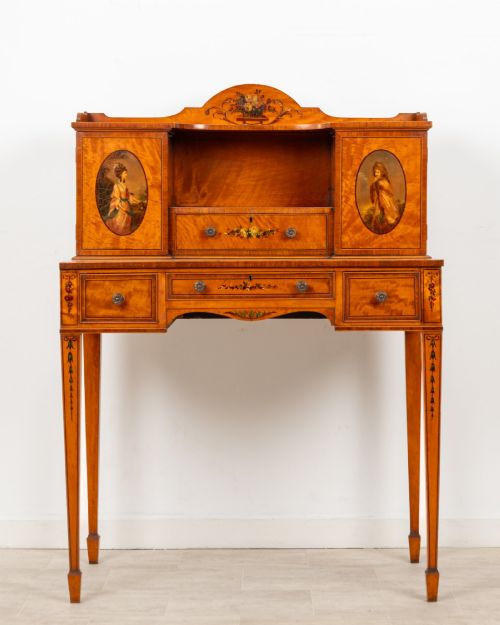
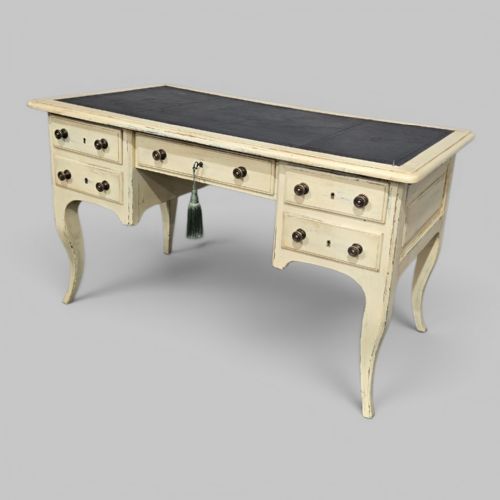
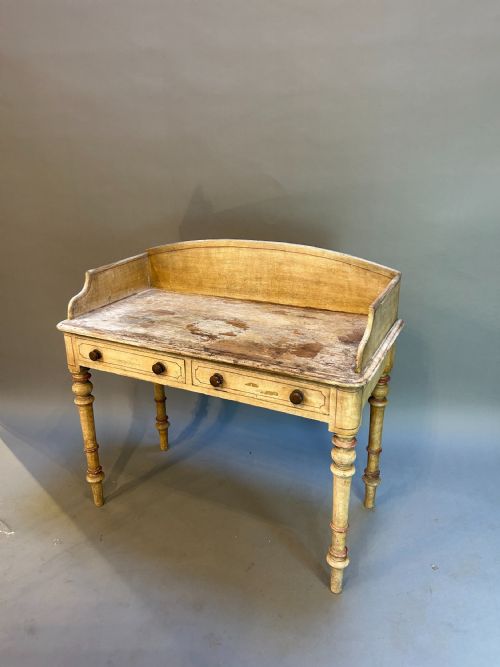
A painted study desk encompasses writing tables, kneehole desks and Carlton House forms originating from the nineteenth and early twentieth centuries. These pieces combine utilitarian function with decorative surface finishes, ranging from simple pine workstations to elegant satinwood examples.
The version most commonly encountered on this page is the Victorian or Edwardian writing table featuring a painted finish over timber. Such pieces reflect regional styles spanning English, French provincial, Swedish and rustic farmhouse traditions.
Beyond traditional timber desks, the selection extends to associated items like cold-painted bronze studies, toleware desk lamps and fitted pencil trays. Each form serves a dedicated function within a traditional study or writing room.
Materials and construction methods
Makers utilised a variety of woods including pitch pine, birch, satinwood and solid pine as the structural foundation for these desks. Surfaces were then prepared and finished with traditional paints, sometimes incorporating hand-painted decorative motifs or gilt wood accents.
Metalwork played a functional and decorative role, with brass handles, leather inserts, and bronze components integrated into the design. Bronze elements on related study pieces frequently employed cold-painting techniques over a metal base, occasionally mounted on onyx plinths.
Construction methods followed traditional cabinetmaking practices, utilising joined drawers, panelled carcasses and freestanding configurations. Surface treatments ranged from flat painted coats to detailed hand-decorated finishes on fine satinwood.
Listings span several decades, featuring pieces from the Victorian and Edwardian eras alongside late nineteenth-century examples.
Distinctions in quality
Quality in these desks is evident in the choice of timber beneath the paint, distinguishing fine satinwood or robust pitch pine from basic utility softwood. The sophistication of the surface decoration, from simple painted finishes to meticulous hand-painted details, further separates standard pieces from superior examples.
The integrity of the construction and the retention of original fittings, such as brass handles and leather writing surfaces, dictate the standing of a desk. Finer pieces demonstrate careful proportion, refined joinery, and well-executed secondary details like internal drawer arrangements.
Franz Bergman·Jennings Brothers·Royal Worcester·Gillows Design
The Painted Study Desk Glossary
- Satinwood
- A hard, durable timber with a natural golden lustre often used for fine cabinetmaking. It provides a smooth base for hand-painted decoration.
- Kneehole desk
- A freestanding desk featuring a central recess for the user's legs, flanked by pedestals of drawers. This form allows for generous storage while maintaining a compact footprint.
- Carlton House desk
- A refined writing table featuring a curved superstructure of small drawers and compartments enclosing the rear and sides of the writing surface. It represents a sophisticated late eighteenth and nineteenth-century furniture design.
- Cold-painted bronze
- A manufacturing technique where bronze sculptures were painted with oil-based colours rather than subjected to high-temperature firing. This method produced vibrant details on animal and figural studies.
- Toleware
- Lacquered or enamelled metalware, frequently utilised for desk lamps and accessories in shades like green. It combines durability with a decorative coloured finish.
Painted Study Desk: Frequently Asked Questions
What is a painted study desk?
A painted study desk is a wooden writing table or kneehole desk finished with a painted surface rather than a clear polish. These pieces range from simple pine work tables to decorative satinwood writing desks.
Such furniture offers a functional surface for reading and writing while introducing colour and period character to an interior space.
Where were these desks used?
These desks were primarily utilised in domestic studies, libraries, and bedrooms for correspondence and household administration. Larger examples served formal office environments.
Smaller writing tables were often placed in reception rooms or parlours for casual letter writing and note-taking.
How do I care for painted wood?
Care involves dusting regularly with a soft, dry cloth and avoiding harsh chemical cleaners that might damage the painted surface. Keeping the desk away from direct sunlight and excessive moisture preserves the integrity of the paint.
Wax finishes on underlying or unpainted timber sections benefit from occasional gentle waxing to maintain the wood.