




Georgian Style Vanity Desk
A georgian style vanity desk combines the compact proportions of eighteenth-century case furniture with practical compartments for daily grooming and correspondence.
Georgian Style Vanity Desk
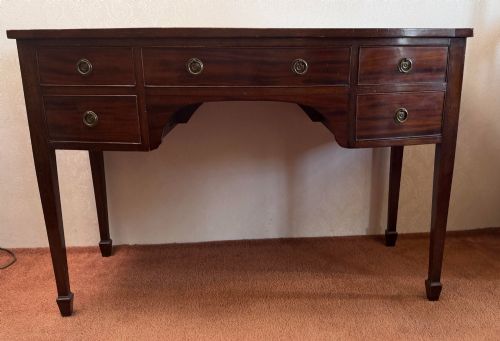
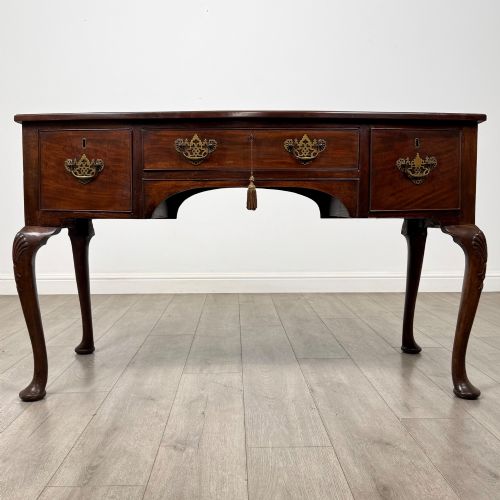
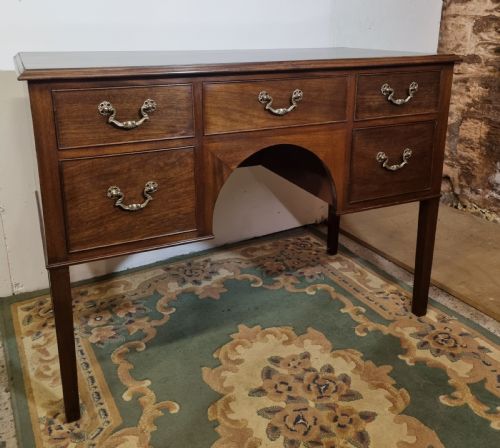
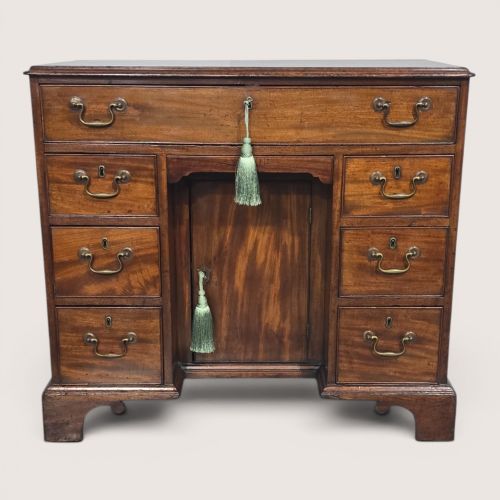
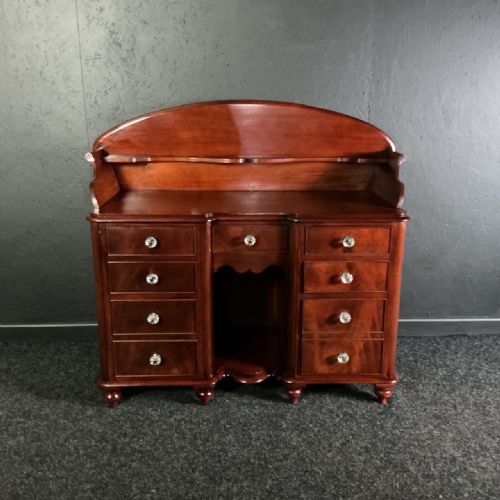
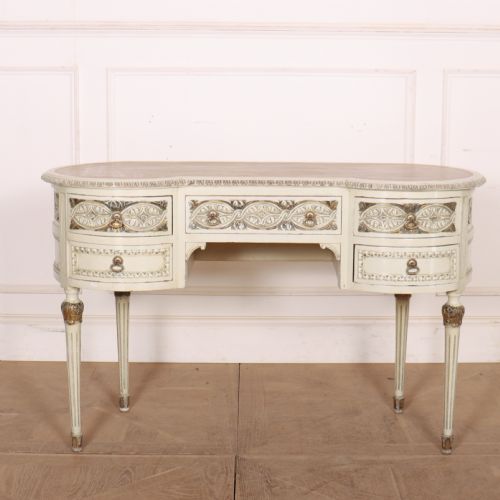
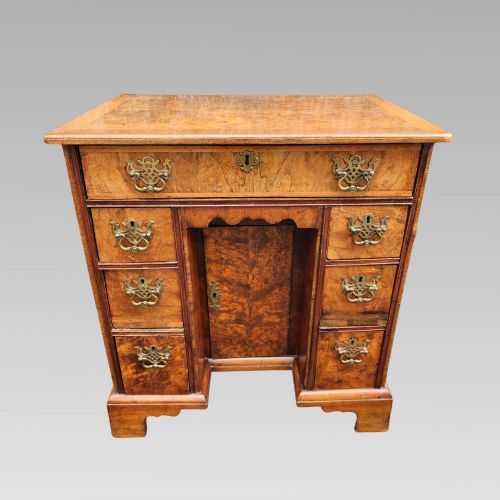
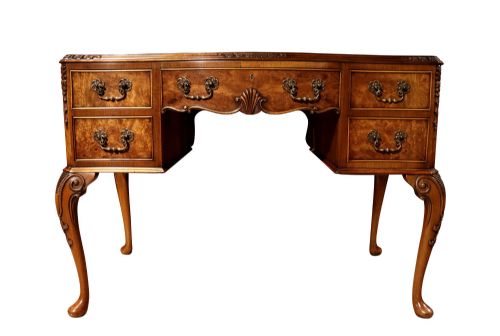
A georgian style vanity desk encompasses forms such as kneehole dressing tables, lowboys, and writing desks produced across the eighteenth, nineteenth, and twentieth centuries. These pieces typically feature multiple small drawers arranged around a central recess, designed originally for personal toilette and letter writing.
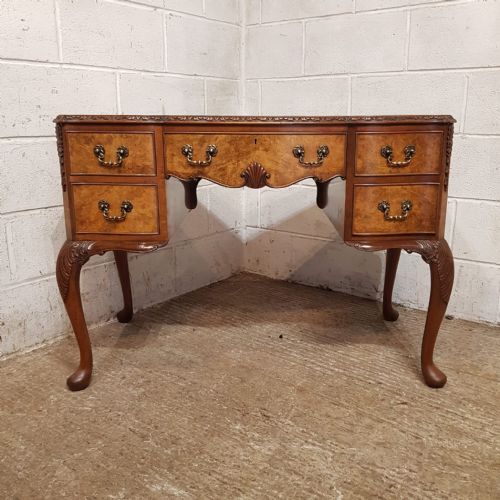
The versions most commonly found here date from the Edwardian era through the nineteen-thirties, alongside genuine period examples from the eighteenth and nineteenth centuries. Makers frequently drew upon earlier George II and Queen Anne aesthetic traditions, employing walnut, mahogany, and burr walnut veneers.
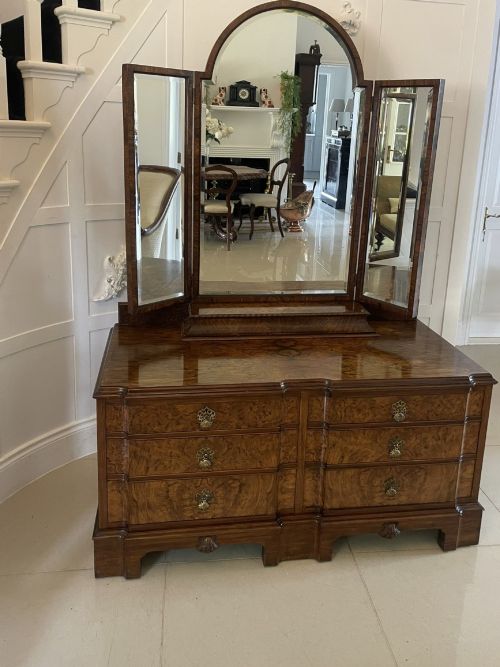
Formations vary from simple side tables with single drawers to elaborate serpentine-fronted chests and kneehole desks fitted with leather writing surfaces. Each variant provides a functional surface for writing or grooming while maintaining traditional proportions.
Materials and Construction
Cabinet makers constructed these desks using solid timbers and decorative veneers such as mahogany, walnut, and burr walnut, often accented with boxwood stringing or crossbanding. Structural elements frequently incorporate secondary woods like oak, whilst drawer linings and internal dividers display traditional dovetailed joints.
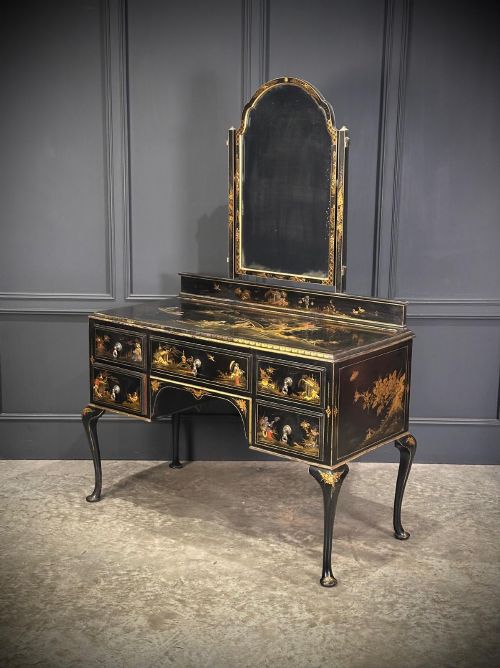
Surface treatments range from clear wax polishes that highlight the natural grain of flame mahogany to specialised finishes like green tooled leather inserts on writing surfaces. Brass handles, escutcheons, and occasional mirror glass attachments complete the hardware of these pieces.
Listings feature pieces spanning from the mid-eighteenth century to the nineteen-thirties, with significant representation from Edwardian revivals.
Evaluating Quality and Execution
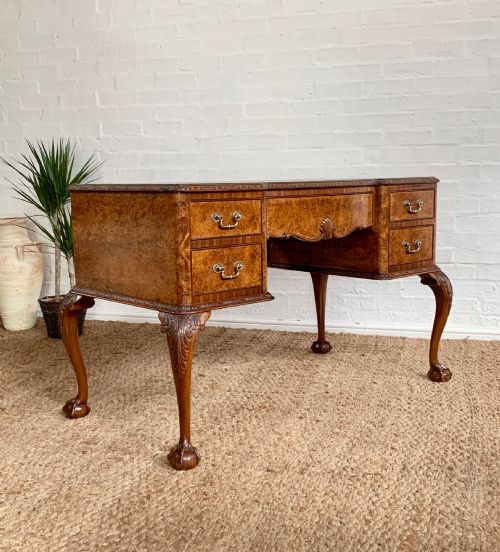
The standard of a georgian style vanity desk depends largely on the selection of timber and the precision of its veneers. Pieces utilising matched burr walnut or figured flame mahogany demonstrate superior craftsmanship compared to simpler uniform timber surfaces.
Construction details such as hand-cut dovetails on drawer boxes and the retention of original brass hardware indicate higher workshop standards. The integration of secondary details like inlaid stringing and finely carved cabriole legs further distinguishes the finer examples from mass-produced reproductions.
maples of london
The Georgian Style Vanity Desk Glossary
- Kneehole desk
- A desk or dressing table featuring a central recess for the user's knees, flanked by pedestals of small drawers. This compact arrangement became popular during the early eighteenth century.
- Lowboy
- A small table with one or more rows of drawers, commonly used as a dressing table or side table during the seventeenth and eighteenth centuries. They typically stand on four tall legs.
- Burr walnut
- Timber taken from the gnarled growths on walnut trees, yielding highly figured wood with swirling grain patterns. Cabinet makers prized this material for veneering prominent drawer fronts and tabletops.
- Serpentine
- A front edge or surface shaped with a concave central section flanked by two convex curves. This undulating outline requires advanced woodworking skill to execute cleanly.
- Boxwood stringing
- Thin inlay lines of pale boxwood set into darker surrounding timber to create geometric borders. Craftsmen used this technique to define drawer edges and tabletops.
Georgian Style Vanity Desk: Frequently Asked Questions
What is the difference between a lowboy and a vanity desk?
A lowboy is typically an open-framed table with one or more rows of drawers beneath the top, standing on tall legs without central pedestals. Vanity desks and kneehole dressing tables incorporate enclosed banks of drawers on both sides of a central knee space.
While both served similar personal grooming functions in period bedchambers, the kneehole configuration provides more structural storage compartments.
Were these desks used for writing or grooming?
Many examples were designed to accommodate both daily correspondence and personal toilette. The inclusion of tooled leather inserts on nineteenth and twentieth-century variations points directly to writing use.
Earlier eighteenth-century forms often accompanied separate dressing mirrors or featured folding compartments intended for cosmetics and small accessories.
How do I distinguish an Edwardian reproduction from an eighteenth-century original?
Dating these pieces involves examining internal construction methods, timber movement, and secondary woods. Edwardian and nineteen-thirties revivals frequently employ machine-sawn backing boards and standardised screw fixings alongside older stylistic motifs.
Period pieces from the seventeen-fifties or earlier exhibit hand-pit-sawn timbers, irregular dovetailing, and natural wear patterns consistent with centuries of use.
How do I care for a veneered walnut surface?
Veneered furniture requires stable room humidity and protection from direct sunlight to prevent timber shrinkage and veneer lifting. Regular application of traditional beeswax helps nourish the wood and maintain the finish.
Avoid placing damp items or liquid containers directly onto polished wooden or leather surfaces to prevent permanent staining.