
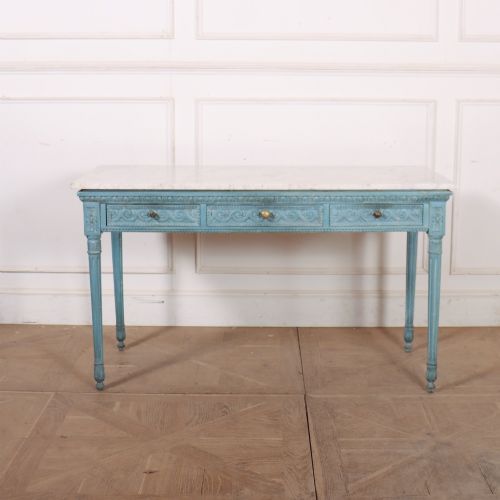
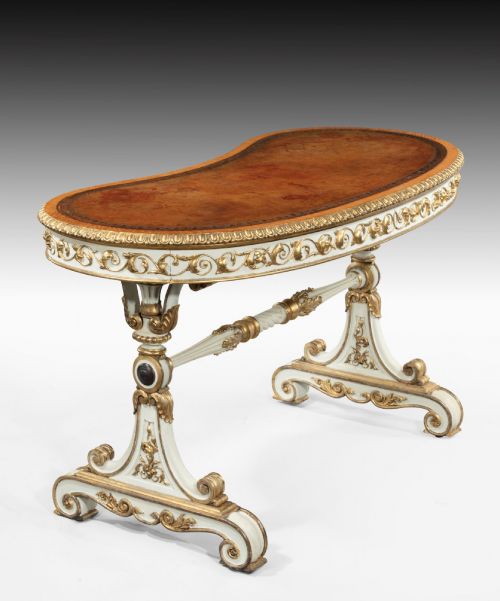
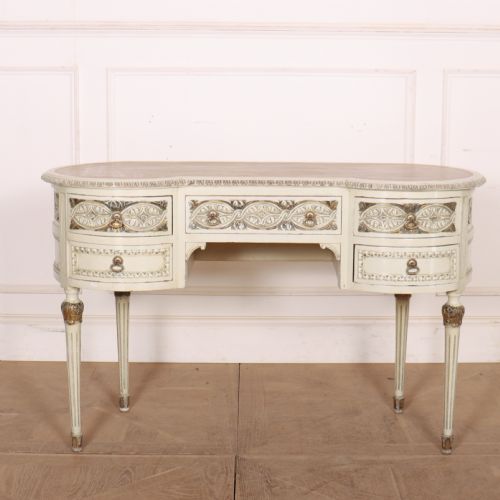


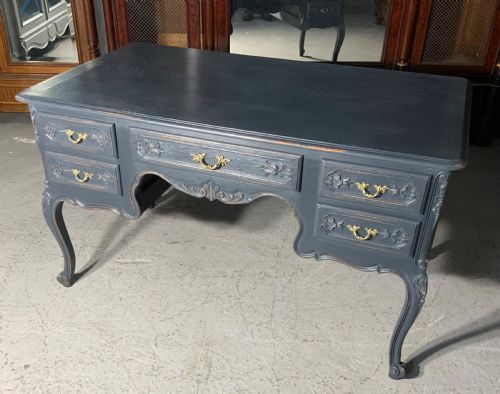


Carved Painted Writing Table
These carved painted writing table pieces combine practical surface area with decorative finishes, offering both utility and historic character for a study or drawing room.
Carved Painted Writing Table
A carved painted writing table serves as a functional workspace while bringing distinct visual character through applied colour and carved detail. When exploring carved painted writing table examples here, buyers encounter forms ranging from compact side tables to substantial desks created across various decades.
Dating across the nineteenth and early twentieth centuries, these tables employ foundational timbers such as pine, oak, and walnut, often finished with specific decorative schemes like ivory paintwork or red lacquer.
How they were made
Carpenters constructed these tables using woods like pine, oak, and walnut, shaping structural elements before applying surface decoration. Carved details in wood and giltwood provide relief and ornamental focus around edges and supports.
Makers applied paint, gilt wood, and red lacquer directly to wooden surfaces, sometimes incorporating inset materials like leather or marble tops and decorative ceramic plaques. Brass fittings and mounts appeared frequently on drawers and structural joints to combine durability with decorative contrast.
Listings span the nineteenth and early twentieth centuries, featuring materials from marble and leather to giltwood and painted pine.
What varies in quality
Quality rests in the harmony between the underlying woodwork and the execution of the decorative painted and carved finishes. Superior examples display refined hand-carved relief work and carefully preserved original painted or lacquered surfaces rather than crude later embellishments.
The choice of secondary materials, such as inset marble tops, Wedgwood plaques, giltwood highlights, and fitted leather writing surfaces, elevates a piece from a simple utility desk to a decorative focal point.
The Carved Painted Writing Table Glossary
- Giltwood
- Wood carved and covered with a thin layer of gold leaf or gold paint. This technique added reflective brilliance and luxury to furniture details.
- Neoclassical
- A style drawing inspiration from the classical art and culture of ancient Greece and Rome. It appears in furniture through restrained symmetry and classical motifs.
- French Rococo
- A decorative style characterised by asymmetry, scrollwork, and elaborate ornamentation. This aesthetic creates fluid, organic shapes on table frames and legs.
- Gustavian
- The Swedish interpretation of Neoclassical and French styles, known for pale painted finishes and simplified carving. It brought a lighter, brighter aesthetic to northern European interiors.
- Lacquer
- A durable resin or varnish applied in multiple coats and polished to a hard finish. Oriental red examples demonstrate this smooth, protective coating technique.
Carved Painted Writing Table: Frequently Asked Questions
What is a carved painted writing table?
A carved painted writing table is a piece of antique furniture designed for correspondence and paperwork, featuring decorative carved woodwork and a painted or lacquered surface finish. These items function practically as desks while serving as decorative elements within a room.
Originating across various European and regional traditions, they combine utilitarian surfaces with stylistic ornamentation ranging from restrained Neoclassical lines to ornate Rococo curves.
How were these writing tables used?
Historically, individuals utilised these tables for reading, writing letters, and managing household or business accounts. Their dedicated surface areas provided a stable, organised space for daily correspondence before the widespread use of modern office furniture.
Placed in studies, drawing rooms, or bedrooms, they often included drawers for storing writing implements, paper, and personal documents.
How do I live with one?
Living with a painted writing table involves positioning it away from direct sunlight and heat sources to protect historic painted finishes and wood movement. Using a blotter on the writing surface helps safeguard original leather or wood panels from daily wear.
Regular dusting with a dry, soft cloth maintains the painted and carved details without introducing damaging moisture to the antique materials.
How do I tell periods apart?
Distinguishing between periods relies on observing the prevailing stylistic vocabulary and structural characteristics of the piece. For instance, William IV and mid-nineteenth-century items often display robust classical revival motifs, whereas later nineteenth-century pieces might incorporate eclectic regional influences or distinct decorative plaques.
Examining the underlying timber, such as oak, pine, or walnut, alongside the application method of the paint or lacquer provides further context regarding the date of manufacture.