


Painted Pedestal Desk
A painted pedestal desk brings colour and working space to a room, offering practical drawers beneath a timber or leather writing surface.
Painted Pedestal Desk
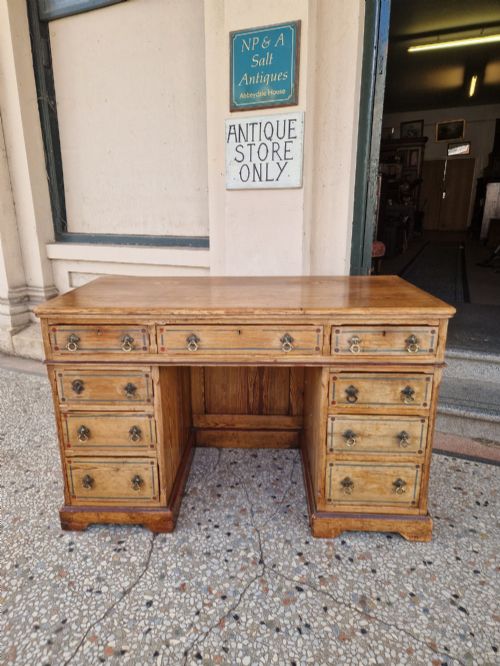
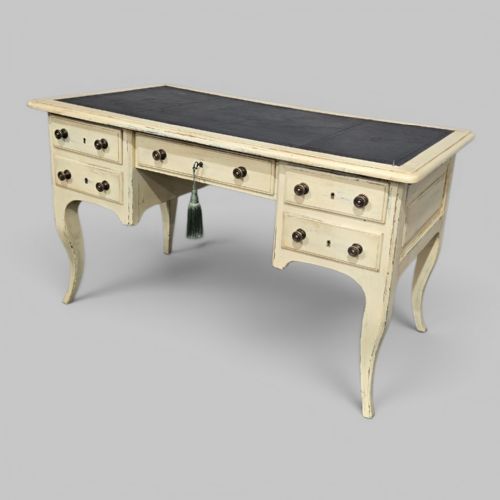
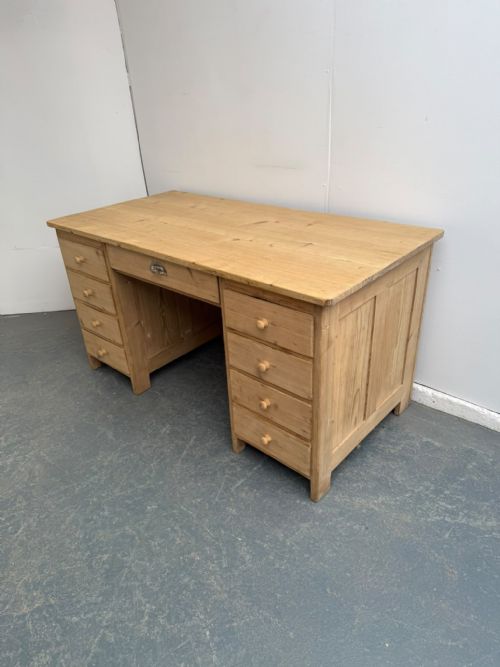
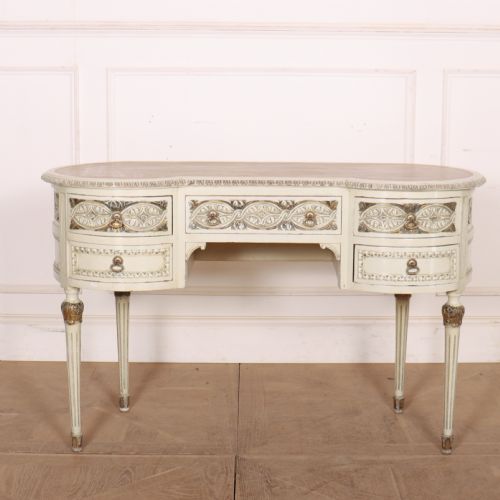
A painted pedestal desk combines twin banks of drawers with a central writing space, finished with painted surfaces rather than bare timber. Buyers searching for a painted pedestal desk encounter examples originating from the nineteenth century, including Victorian and Edwardian periods.
The form appears in varied regional interpretations and decorative treatments, from simple pine office pieces to refined satinwood models. Many examples display painted finishes that range from original decorative schemes to later hand-painted treatments.
How they were made
Construction relies primarily on timbers such as pine and satinwood, joined to form sturdy pedestal bases and working surfaces. Makers applied layers of paint directly to the wood, sometimes incorporating decorative brushwork or retaining contrasting wooden tops.
Fittings such as brass handles and leather inserts were integrated into the design to complete the writing surface and drawer operation. Construction techniques reflect nineteenth-century cabinet-making standards, utilising panelled construction and multi-drawer carcases.
Makers such as Bertram and Son appear in archive records alongside unlabelled nineteenth-century workshop pieces.
What varies in quality
Quality rests significantly on the preservation of the decorative scheme and the crispness of the original paintwork. Pieces retaining untouched period paint surfaces differ markedly from those that have undergone repeated overpainting or stripping.
Structural integrity of the pedestals and smooth operation of the multiple drawers dictate the utilitarian value of the desk. The choice of underlying timber, such as fine satinwood versus utilitarian pine, establishes the baseline tier of the piece.
Bertram and Son
The Painted Pedestal Desk Glossary
- Pedestal desk
- A heavy writing desk featuring two supporting columns or banks of drawers on either side of a central kneehole. This layout provides substantial storage alongside a flat writing surface.
- Satinwood
- A hard, yellow timber imported from tropical regions, frequently used in high-status nineteenth-century cabinet work. It accepts painted decoration exceptionally well.
- Kneehole desk
- A desk featuring a recessed central space for the user's legs, flanked by pedestals containing drawers. This configuration provides a seated working position.
- Pine
- A soft timber commonly utilised for country and secondary furniture, frequently painted or waxed. It forms the carcase of many utilitarian nineteenth-century desks.
Painted Pedestal Desk: Frequently Asked Questions
What is a painted pedestal desk?
A painted pedestal desk is a twin-pedestal writing table featuring a surface finished with paint rather than polished grain. These pieces typically incorporate multiple drawers arranged in banks beneath the top.
Such desks combine workplace utility with decorative painted finishes suited to domestic interiors. They reflect nineteenth-century cabinet designs in varied woods like pine and satinwood.
How do I date a painted desk?
Dating relies upon examining construction methods, timber selection, and the characteristics of the paint layer itself. Nineteenth-century examples often display hand-cut joints and period hardware.
Paint analysis and style markers such as Victorian proportions help distinguish between mid-nineteenth-century items and later revival pieces.
Are these desks suitable for daily work?
These desks provide sturdy writing surfaces and ample drawer space suited to regular administrative tasks. Their robust pedestal construction ensures stability during daily use.
Care should be taken to protect painted finishes and leather writing inserts from excessive wear or moisture during work.
What woods lie beneath the paint?
Painted desks commonly use pine for utilitarian or country pieces, while finer examples employ satinwood or mahogany beneath the finish. The underlying timber often determines the weight and overall grade of the desk.
Exposed timber tops frequently contrast with painted drawer fronts and pedestal carcases.