


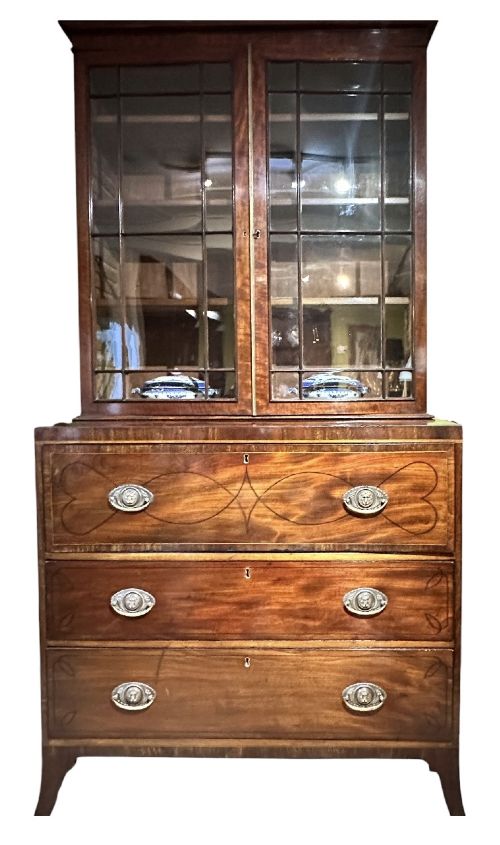
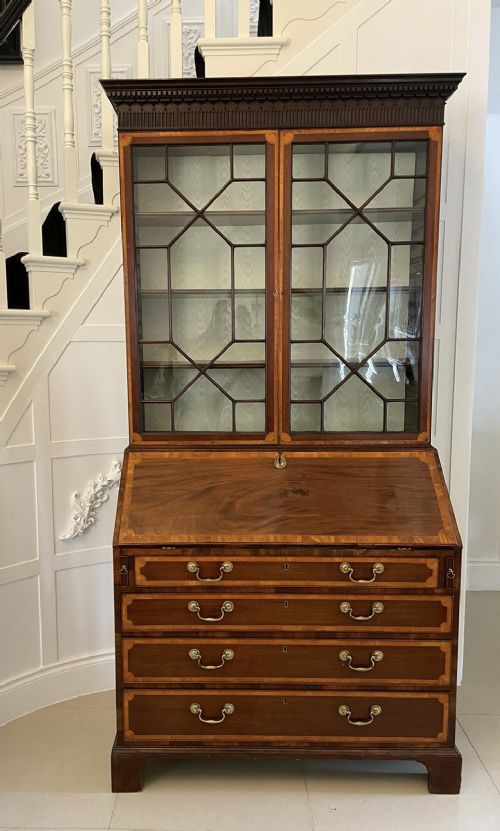
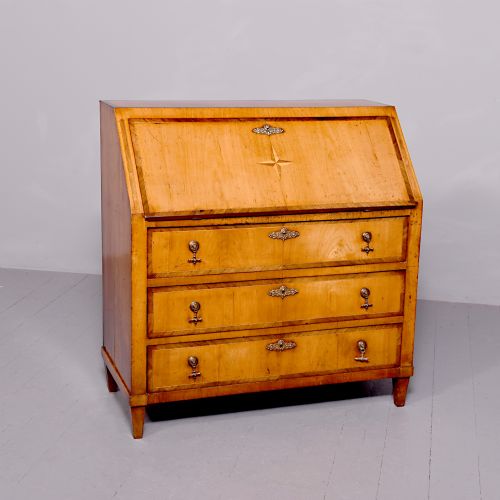
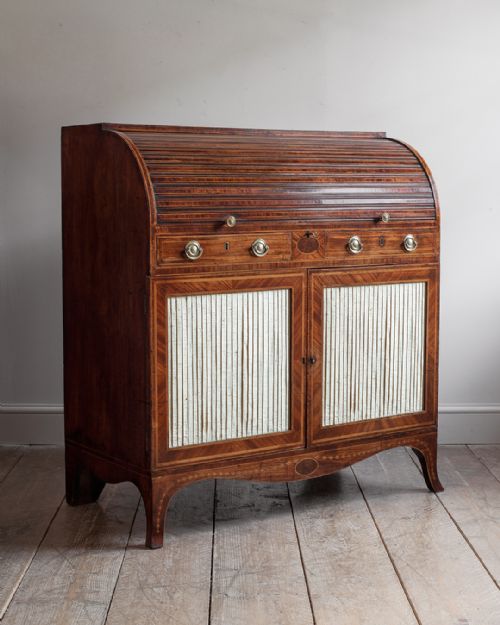
Inlaid Secretary Desk
When you choose an inlaid secretary desk, you select a piece of furniture that combines a concealed writing surface with compartment storage.
Inlaid Secretary Desk
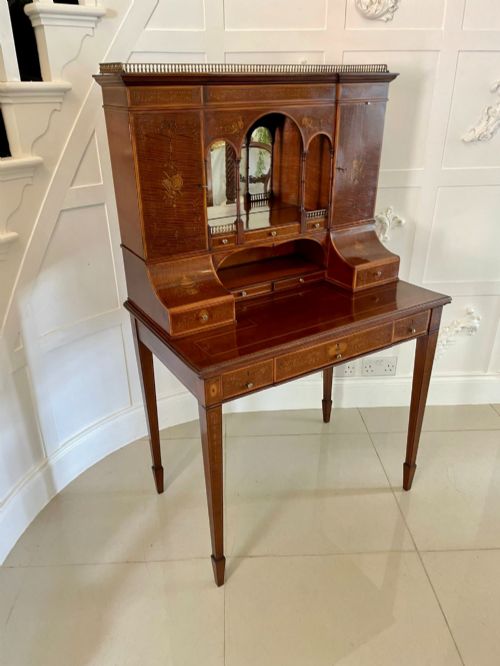
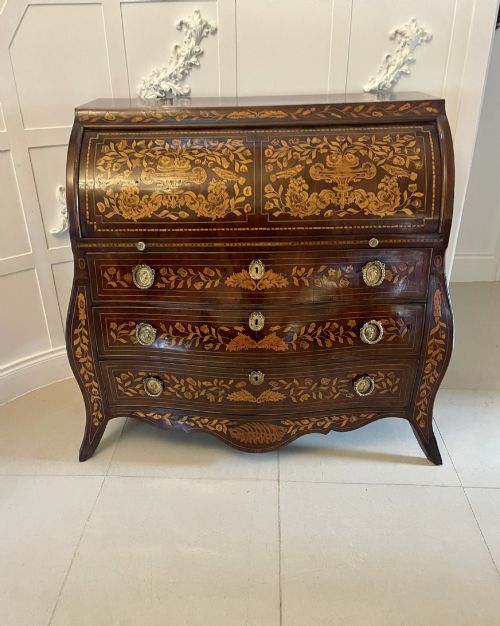
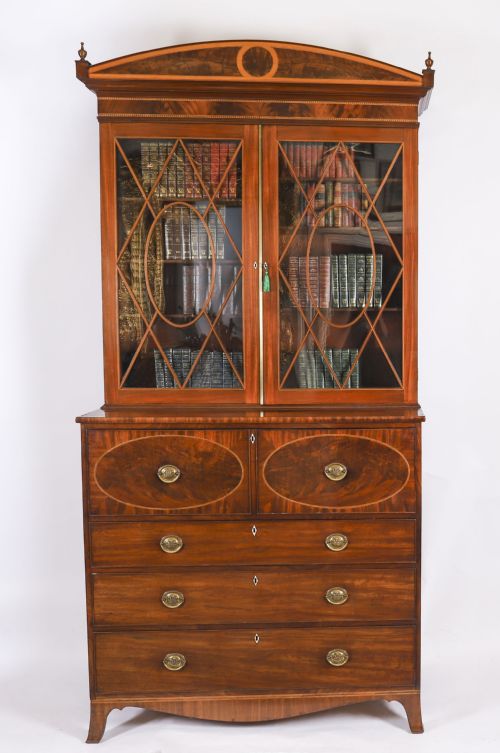
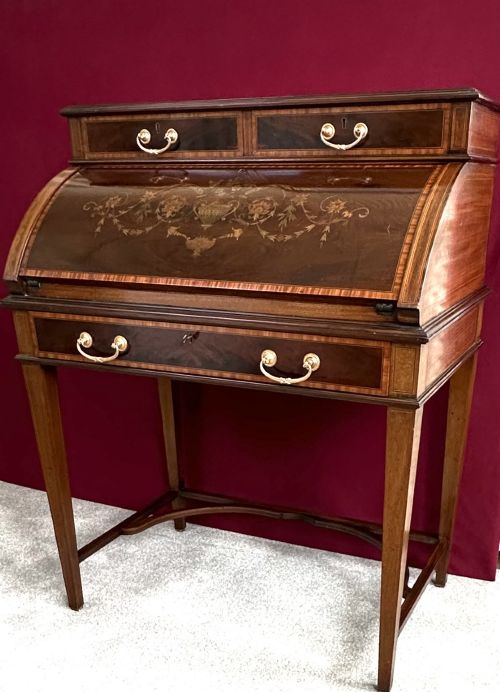
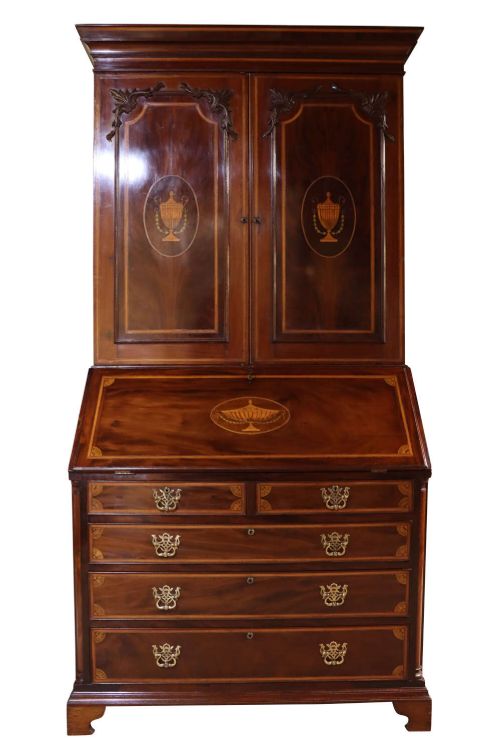
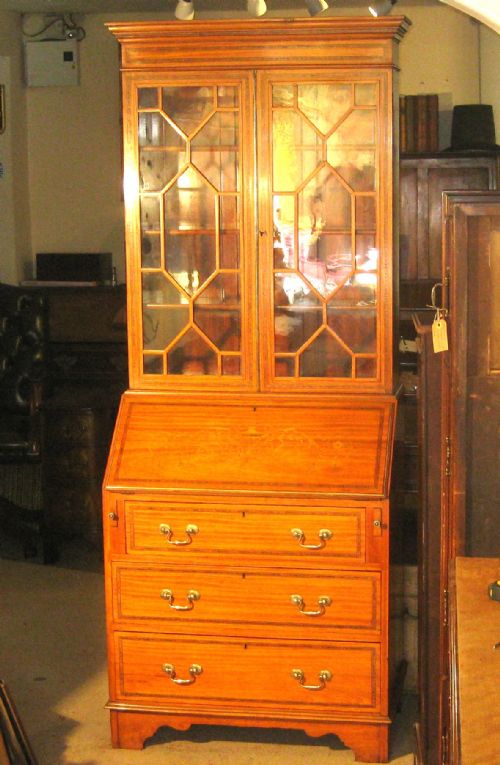
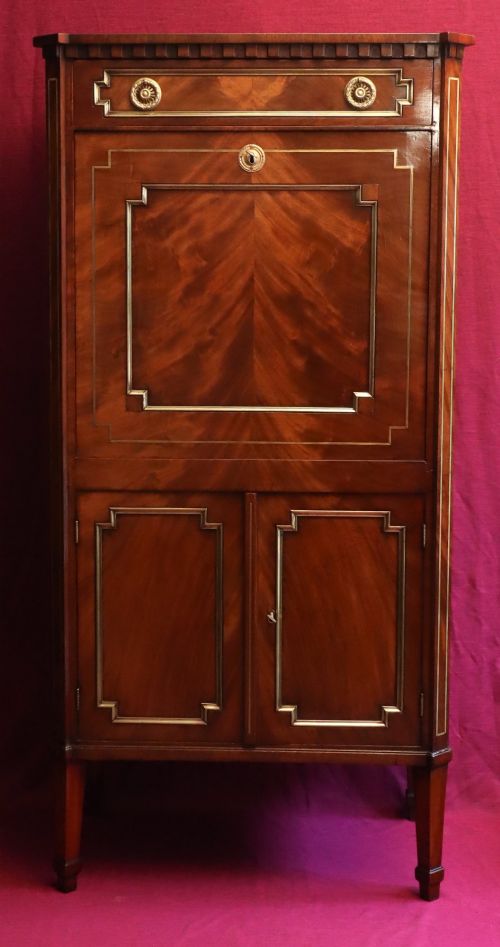
An inlaid secretary desk encompasses several forms including bureau bookcases, fall-front bureaux, cylinder desks, and writing tables. These pieces provide a writing surface alongside internal drawers and pigeonholes.
The selections span from the 18th century through the Georgian, Victorian, and Edwardian periods. Pieces emerge from British, French, Dutch, and Italian origins.
The most common formats on this page are mahogany bureau bookcases and Edwardian satinwood or mahogany desks. These variations reflect the shifts in domestic workspace design across multiple centuries.
How they were made
Carpenters constructed these carcasses from primary timbers such as mahogany, walnut, rosewood, and yew wood. They applied decorative elements using contrasting veneers including satinwood, tulipwood, and blonde walnut.
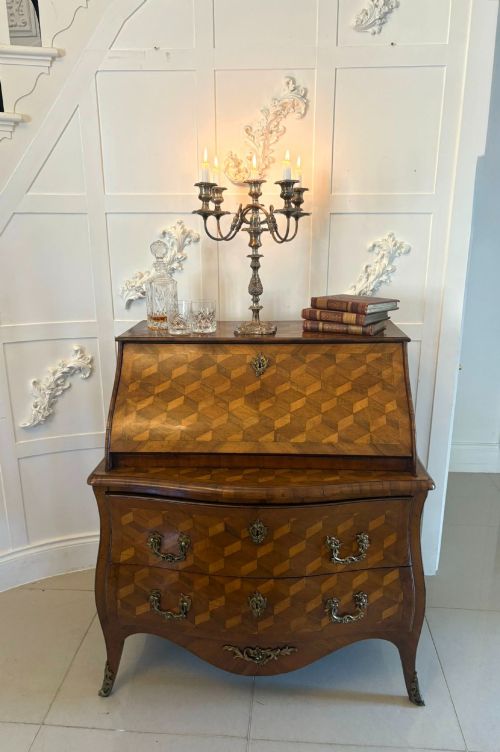
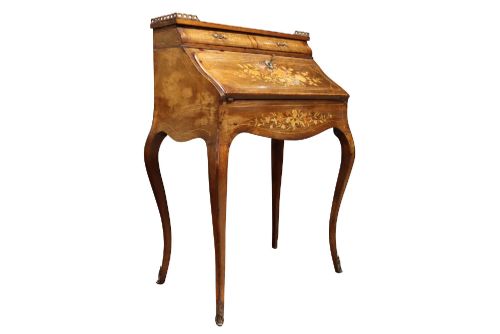
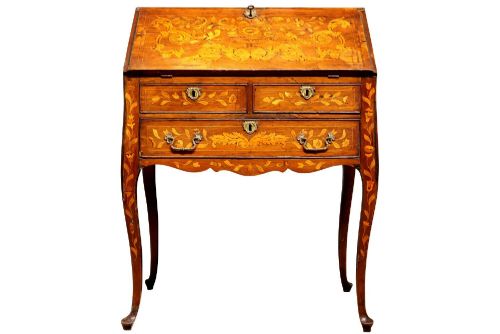
Craftsmen utilised techniques like floral marquetry and geometric parquetry to ornament the surfaces with pictorial and patterned details. Brass mounts, glass panels, and leather writing inserts completed the structural and decorative assembly.
Some desks hide secret compartments behind dummy book spines for storing private correspondence.
What varies in quality
The degree of refinement depends on the precision of the marquetry cutting and the choice of timber figurations such as flame mahogany or burr walnut. Finer examples display meticulous grain matching across the fall-front or cylinder mechanism and the surrounding cabinetry.
Structural integrity of the internal writing compartments and the complexity of the accompanying bookcase or superstructure differentiate standard domestic items from superior studio work.
The Inlaid Secretary Desk Glossary
- Secretaire
- A desk or cabinet containing a concealed writing drawer or fold-down writing flap. This term often interchanges with bureau.
- Marquetry
- Inlaid woodwork forming a decorative picture or pattern using various coloured veneers. Artisans assemble these pieces like a puzzle into the primary timber ground.
- Parquetry
- Geometric mosaic woodwork used for floors or furniture surfaces. It relies on symmetrical patterns formed by small pieces of wood.
- Davenport
- A compact small desk featuring a sloping writing top and drawers accessed from the side. Victorian makers frequently incorporated floral marquetry into these models.
- Bonheur-du-Jour
- A light lady's writing desk with a small cabinet or set of shelves on top. This French form dates predominantly to the 19th century.
Inlaid Secretary Desk: Frequently Asked Questions
What is an inlaid secretary desk?
An inlaid secretary desk is a form of writing furniture featuring a fold-down or pull-out writing surface combined with built-in compartments and decorative wood veneers.
These pieces range from compact Edwardian writing tables to tall 18th-century bureau bookcases designed for both storage and correspondence.
How do I date an antique secretary desk?
Dating relies on observing the primary timber, the style of the inlay, and the structural hardware used in the drawers. Georgian and 18th-century pieces often use solid flame mahogany with floral marquetry, while Edwardian examples favor lighter satinwood.
Construction methods inside the secondary timbers of the drawers also offer clues to the period of manufacture.
Where were these desks made?
The pieces originate from various European workshops, predominantly British, French, and Dutch. Each region developed distinct aesthetic preferences, such as Dutch floral marquetry or French Louis XV and XVI revival styles.
Local timber availability heavily influenced whether a maker utilised native oak and walnut or imported mahogany and rosewood.
How do I care for inlaid wood furniture?
Protect antique veneered surfaces by keeping them away from direct sunlight and maintaining stable room humidity. This prevents the delicate satinwood and marquetry inlay from lifting or drying out.
Apply traditional wax polish sparingly to nourish the timber and maintain the natural lustre of the polished finish.