
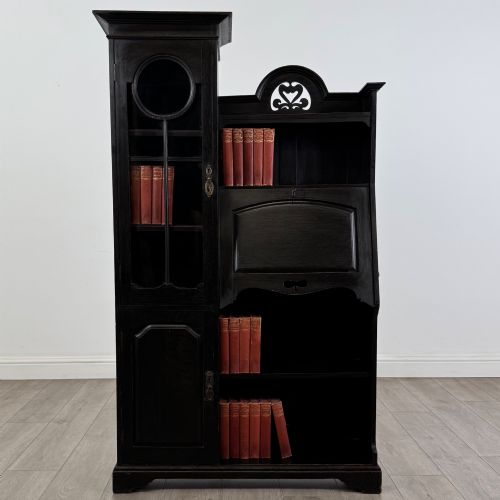
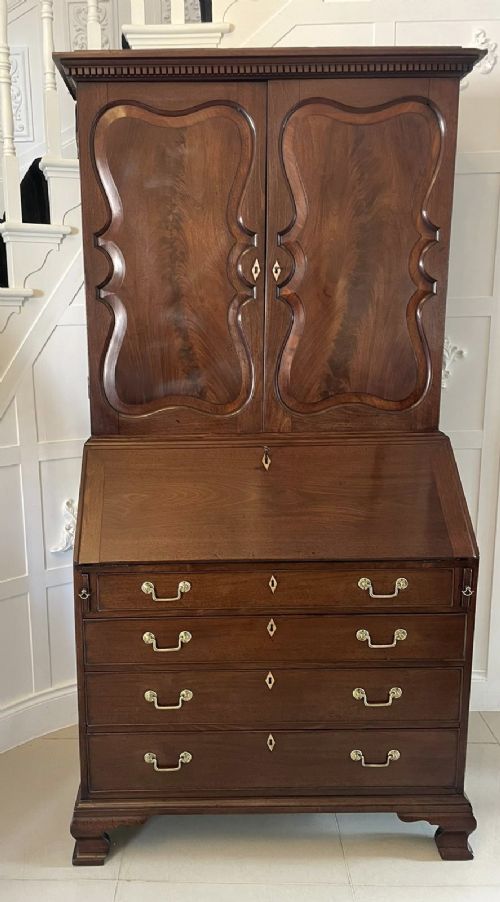
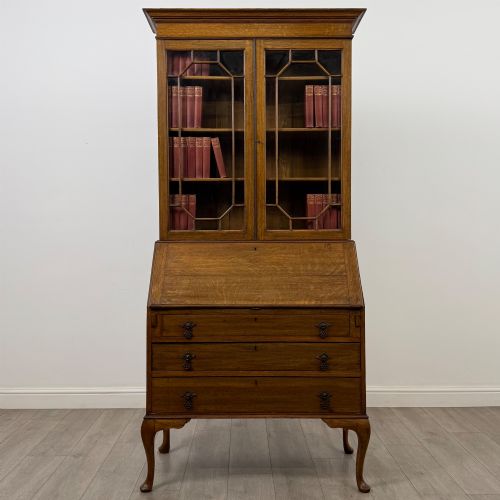
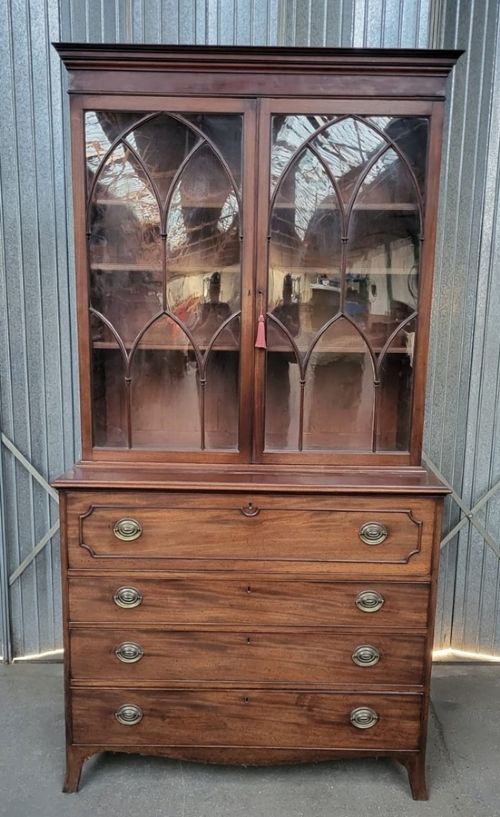
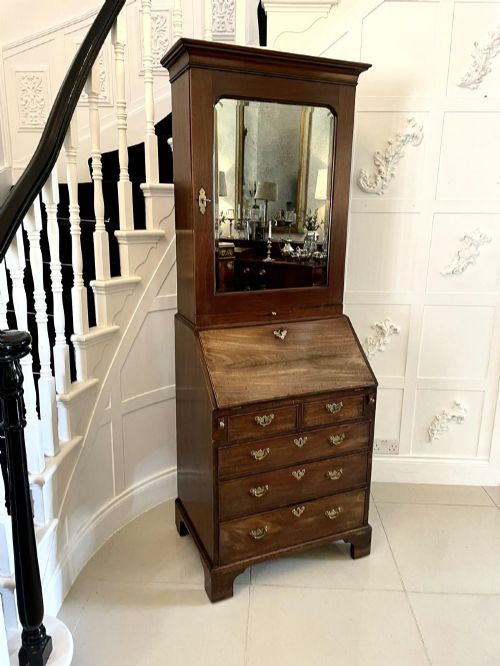
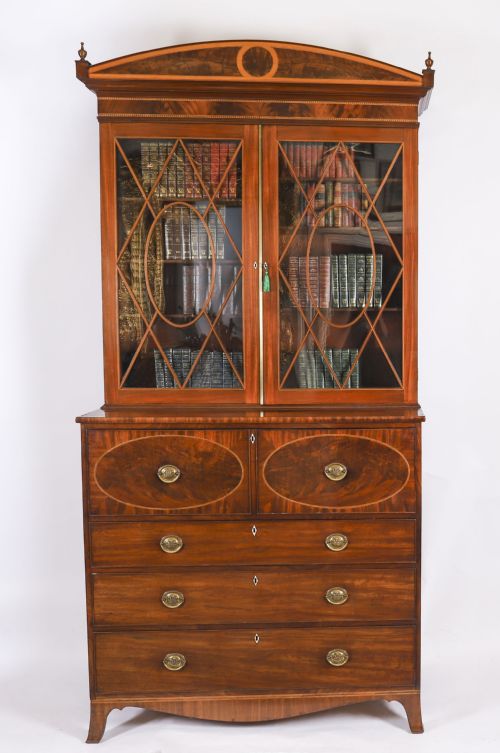
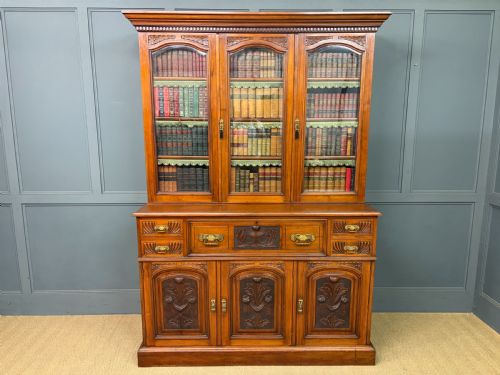


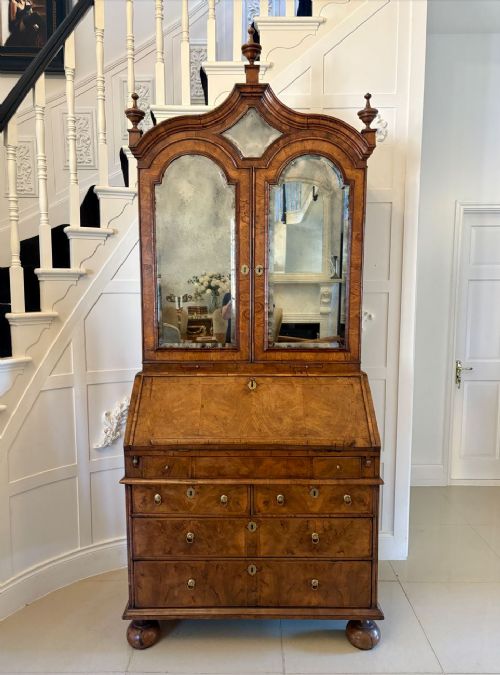
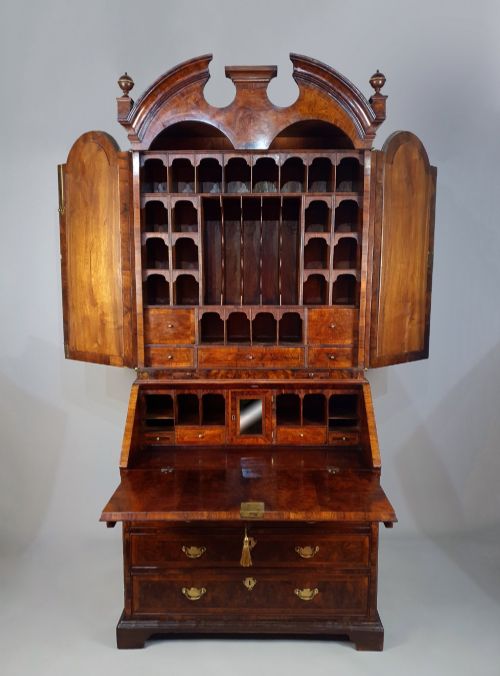
Writing Desk with Bookcase
A writing desk with bookcase combines a drop-front writing surface or fitted secretaire with upper display shelving, offering practical workspace and storage.
Writing Desk with Bookcase
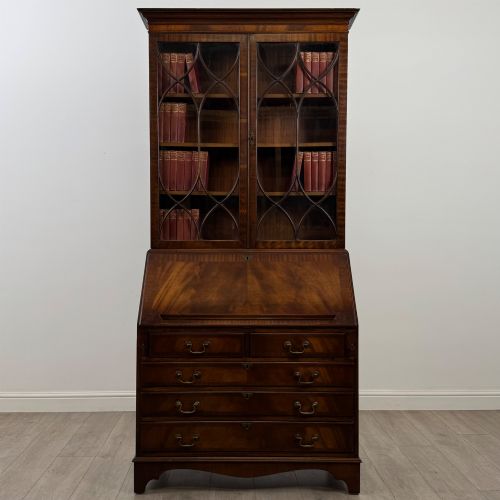
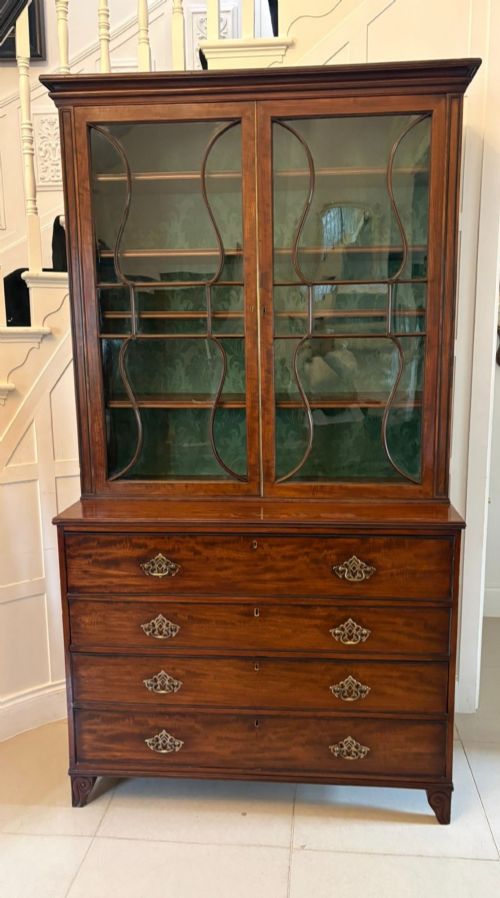
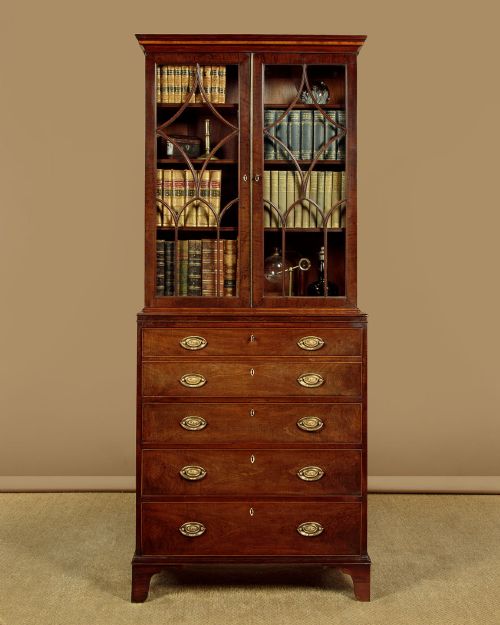
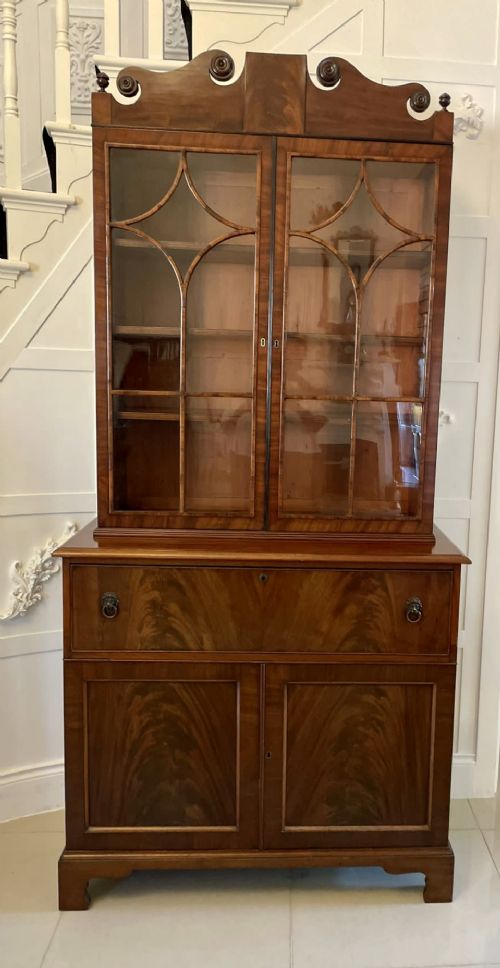
A writing desk with bookcase combines a lower writing cabinet, bureau, or secretaire with an upper glazed or panelled bookcase section. These dual-purpose pieces appear frequently in Georgian, 18th century, and 19th century formats.
Origins span English cabinet workshops alongside continental examples such as South German walnut pieces. Buyers encounter both early Georgian masterpieces and later Edwardian or 1920s interpretations.
Materials and Construction
Cabinetmakers utilised primary timbers like oak, mahogany, and walnut, often enhanced with burr walnut or satinwood veneers and decorative inlay. Glass panels fitted into wooden frames protect the upper bookcase sections.
Listings feature pieces spanning the 18th century, Georgian era, 19th century, Regency period, and the 1920s, constructed in oak, mahogany, walnut, and satinwood.
Craftsmanship and Proportion
Quality depends upon the choice of timber figure, such as highly figured mahogany or burr walnut, and the precision of the cabinetwork in the fitted interior. Superior examples exhibit seamless dovetailing and well-balanced proportions between the upper bookcase and lower desk.
The integration of original glazing bars, fine brass hardware, and intact internal fittings distinguishes exceptional pieces from later adaptations or heavily restored examples.
Gillows·Tudor and Burrey·Edwards and Roberts
The Writing Desk with Bookcase Glossary
- Secretaire
- A piece of furniture containing a drawer or compartment that pulls down to form a writing surface. It often conceals an arrangement of small drawers and pigeonholes.
- Bureau bookcase
- A writing cabinet with a sloping fall-front desk combined with an upper set of bookshelves. The upper section is enclosed by glazed or solid wooden doors.
- Glazed doors
- Doors fitted with glass panes that protect books while allowing visibility into the upper bookcase. These often feature wooden framing bars arranged in geometric patterns.
- Fitted interior
- The arrangement of small drawers, secret compartments, and pigeonholes concealed behind the fall-front or pull-out writing surface of a desk.
- Escutcheon
- A flat plate of brass or other metal surrounding a keyhole to protect the surrounding wood from wear.
Writing Desk with Bookcase: Frequently Asked Questions
What is a secretaire bookcase?
A secretaire bookcase combines a pull-out writing drawer or drop-front desk with an upper bookshelf cabinet. This dual function provided both a private writing space and a library.
Such pieces date predominantly from the Georgian and Victorian eras, serving studies and principal rooms.
How are these desks dated?
Cabinetmakers used distinct construction methods, timber selections, and hardware styles across different reigns. Examining dovetails, secondary woods, and internal layouts reveals the period.
Stylistic cues such as bracket feet, cornice mouldings, and inlay patterns further clarify the decade of origin.
Where were these pieces used?
These cabinets stood in libraries, parlours, and private studies of large houses and urban residences. They allowed owners to manage correspondence and house bound volumes in one piece of furniture.
Today they function equally well in home offices and living rooms for display and writing.
What timber was most popular?
Mahogany and oak dominated English cabinet making through the eighteenth and nineteenth centuries. Walnut was especially favoured during the earlier Georgian and Queen Anne periods.
Cabinetmakers also applied satinwood and burr walnut veneers for decorative contrast.