



Antique Roll Top Secretary
An antique roll top secretary is a fitted writing cabinet with a sliding tambour or cylinder enclosing the desk interior, prized for hiding private correspondence.
Antique Roll Top Secretary
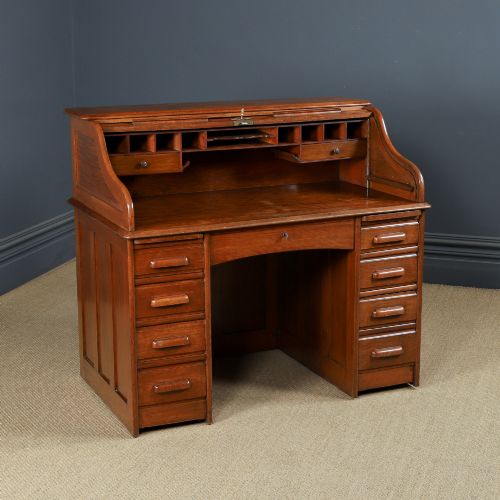
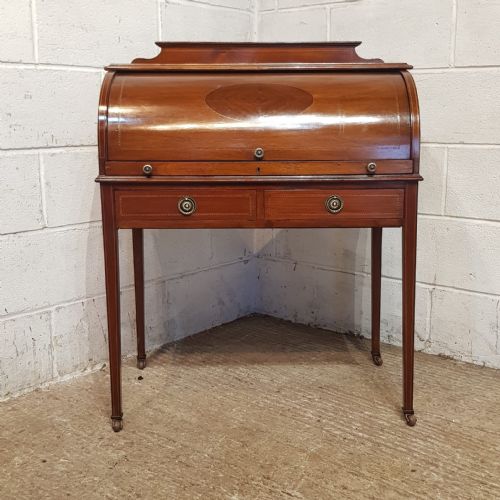
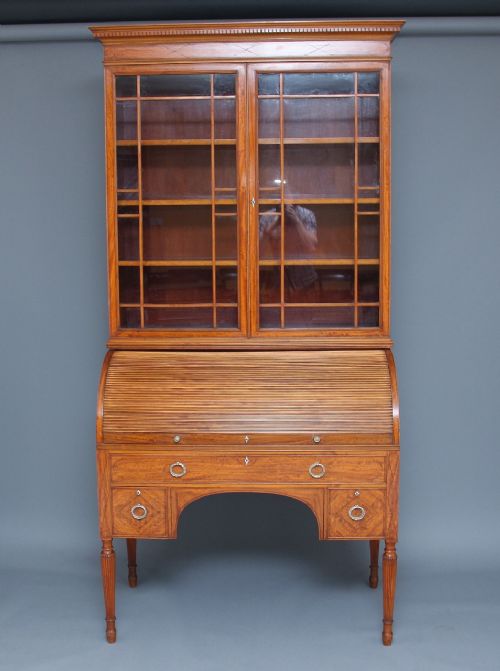
An antique roll top secretary combines a concealed writing surface with enclosed shelving or drawers, providing both a private workspace and a display or storage cabinet. These pieces appear in various forms, from compact Edwardian oak office desks to elegant Georgian satinwood cylinder bureaus.
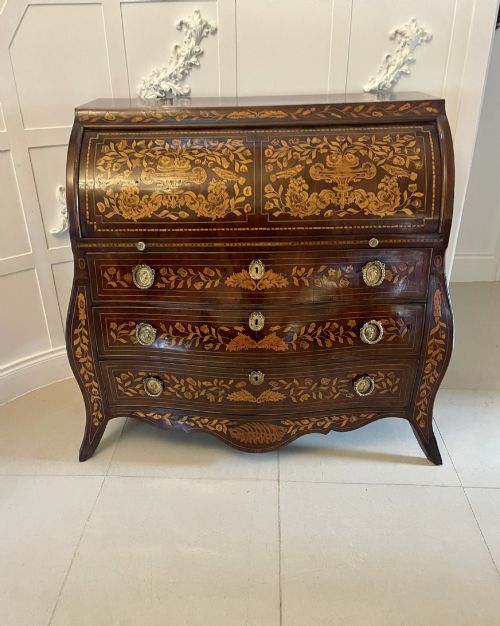
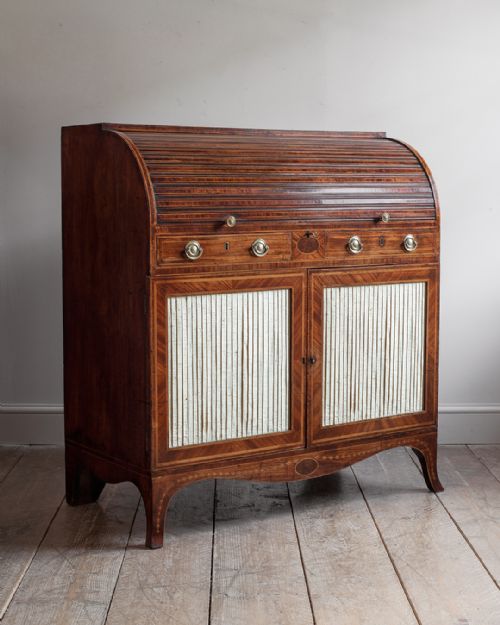
The selection here spans multiple periods, including the 18th century, Regency, William IV, Victorian, and Edwardian eras. Buyers frequently encounter mahogany and walnut constructions, often featuring tambour slides or solid wooden cylinders that roll back to reveal fitted interior compartments.
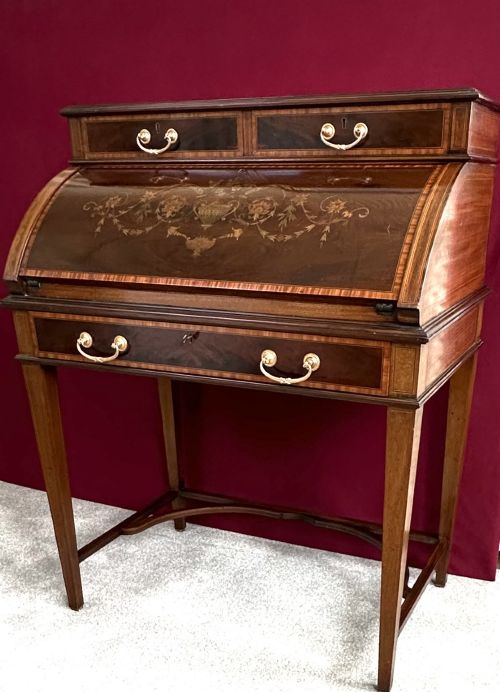
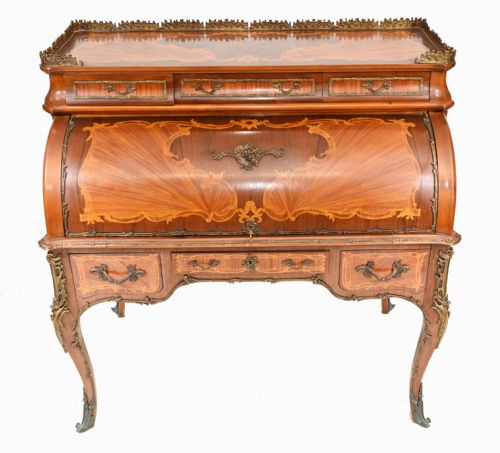
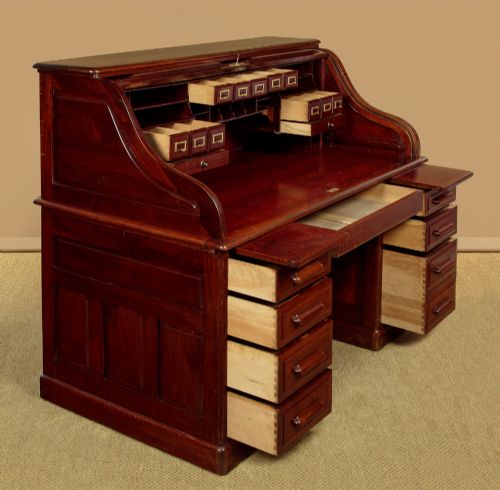
Origin and regional styles diversify the selection, ranging from English pedestal desks to continental baroque secretaries and French-influenced marquetry pieces. Whether seeking a large kneehole office desk or a delicate ladies writing cabinet, the assortment reflects centuries of cabinetmaking adaptation.
Materials and construction methods
Cabinetmakers utilised dense hardwoods like mahogany, walnut, and oak as the structural foundation for these desks. Finer examples incorporate satinwood veneers, brass hardware, and intricate floral marquetry to elevate the exterior appearance.
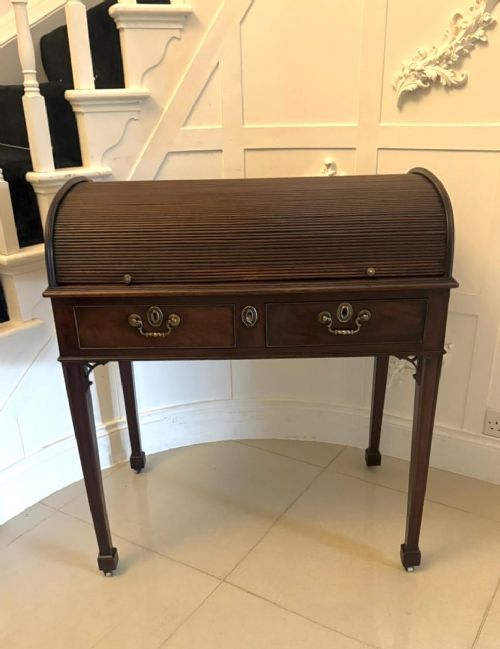
The defining mechanical feature, the tambour or cylinder, is constructed from narrow vertical strips of wood glued to a canvas backing, allowing the curved top to glide smoothly within internal tracks. Secondary timbers such as pine or oak were typically employed for drawer linings and internal partitions.
The listings here span the eighteenth, nineteenth, and early twentieth centuries, featuring woods such as mahogany, satinwood, walnut, and oak.
Factors that separate finer examples
Quality rests in the precision of the sliding mechanism and the structural integrity of the cylinder or tambour tracks. A superior desk operates with effortless fluidity, where the wooden slats align perfectly without binding or sagging.
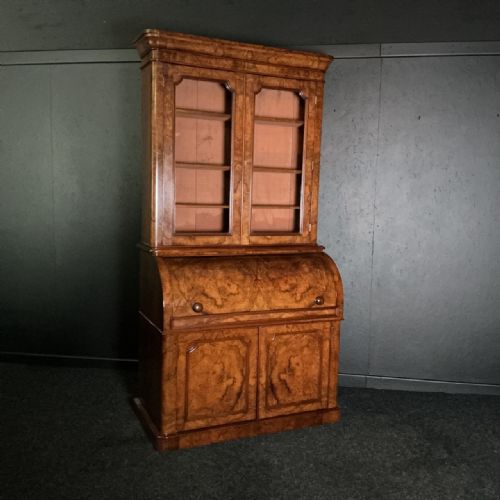
The choice of timber and secondary decorative elements also distinguishes the range. Master workshops employed figured mahogany, burr walnut, and detailed brass inlays, while standard commercial versions relied on plainer grains and simpler joinery.
Tudor and Burrey·Edwards and Roberts·Wells Fargo Wooton·Wiggers
The Antique Roll Top Secretary Glossary
- Tambour
- A flexible sliding shutter formed of narrow strips of wood glued to a fabric backing. It allows the top of a desk to curve around a track and conceal the writing surface.
- Cylinder bureau
- A writing desk featuring a quarter-circle solid wooden roll top that lifts and slides backward into the carcass. This form offers a smooth curved writing enclosure.
- Marquetry
- Decorative veneer work composed of various woods, shells, or metals inlaid into a primary ground to create floral or geometric pictures. It is commonly found on fine Georgian and continental pieces.
- Bonheur du jour
- A light ladies writing desk featuring a small cabinet or set of shelves superstructure above the writing surface. These delicate tables emerged during the 18th century.
- Kneehole desk
- A freestanding desk with a central recess for the user's legs, flanked by pedestals of small drawers. This layout provides substantial storage beneath the writing top.
Antique Roll Top Secretary: Frequently Asked Questions
How do tambour and cylinder desks differ?
A tambour desk uses a flexible shutter made of many narrow wooden slats glued to canvas, which bends around a curved track. A cylinder desk relies on a single solid curved piece of wood that rotates backward into the desk body.
Both mechanisms serve the same purpose of enclosing the desk interior, but the tambour construction is typically found on lighter or more office-oriented furniture, while solid cylinders often appear on formal Georgian and Victorian library pieces.
Were these desks used for writing or storage?
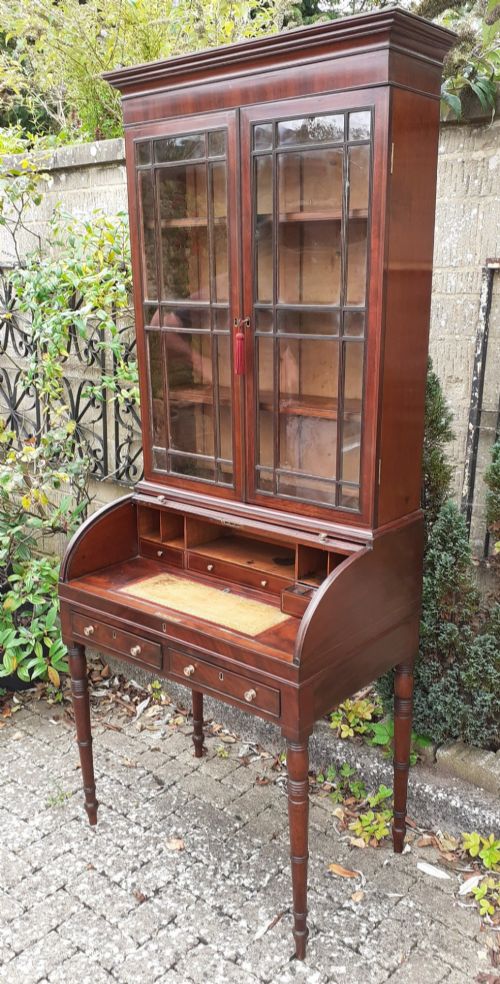
These pieces were primarily designed as private writing cabinets where correspondence, ledgers, and valuables could be secured away from view. The pull-out writing slides and internal pigeonholes allowed users to manage daily paperwork.
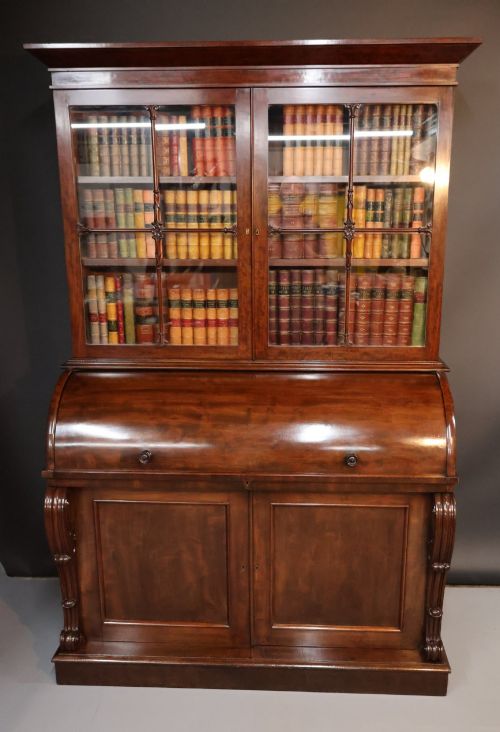
Many variations also incorporate upper bookcase sections with glass doors, turning the furniture into a combined working desk and library cabinet for the home or study.
How do I identify an Edwardian roll top?
Edwardian examples, generally dating around nineteen-ten, often reflect heavier commercial office use in oak or lighter domestic designs in satinwood and mahogany. They tend to feature simpler internal fittings and standard hardware compared to earlier Georgian pieces.
Examining the secondary timbers inside the drawers and the style of the brass handles helps distinguish these early twentieth-century desks from nineteenth-century Victorian or Regency predecessors.
Where should I place a cylinder bureau?
Because the roll top mechanism requires clearance behind or above the desk body, these pieces usually sit best against a flat wall rather than floating in the middle of a room. Adequate floor space is necessary to allow the pull-out writing slide to extend fully.
Placing the desk away from direct sunlight and heat sources protects the polished mahogany or walnut veneers from drying out and preserves the smooth action of the wooden cylinder.