
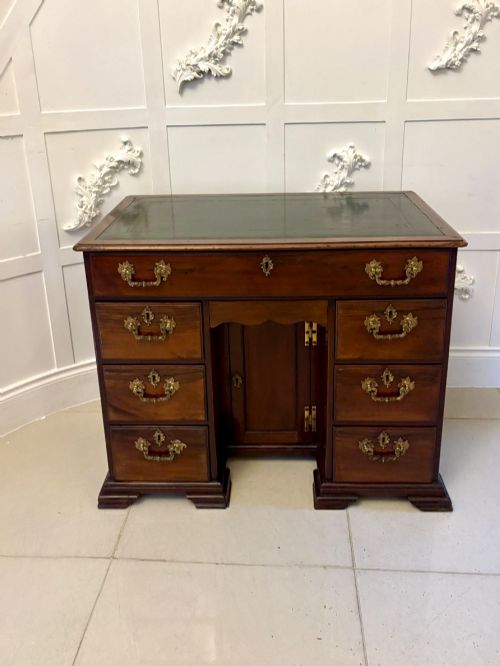
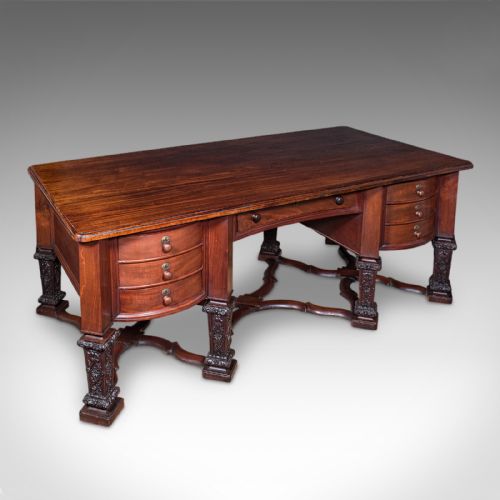
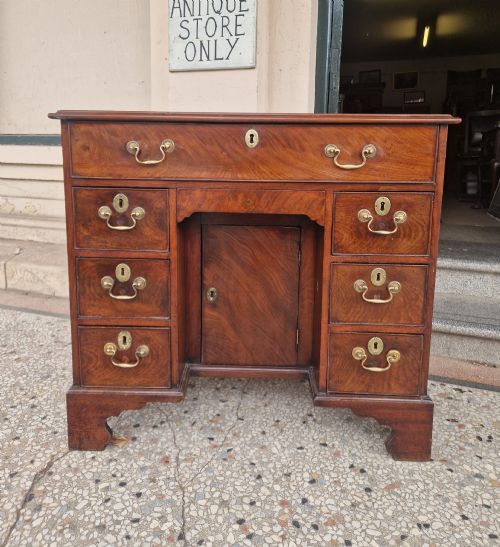
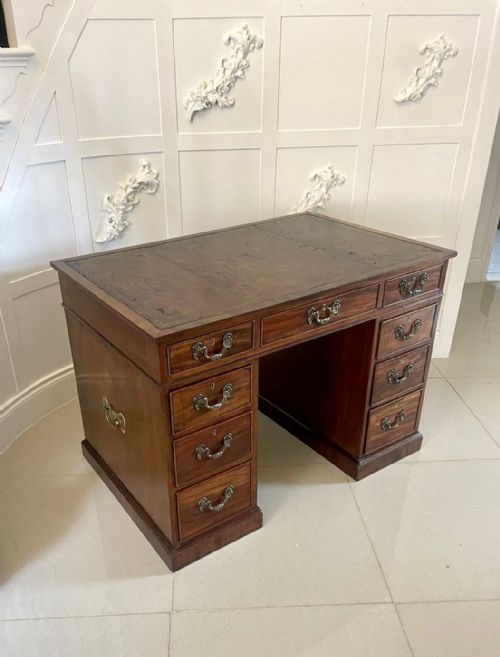

Mahogany Pedestal Bureau
These mahogany pedestal bureau pieces offer serious writing surfaces and deep storage, uniting classical proportions with practical workspace.
Mahogany Pedestal Bureau
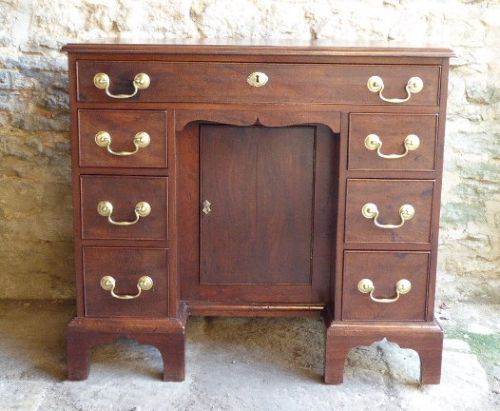
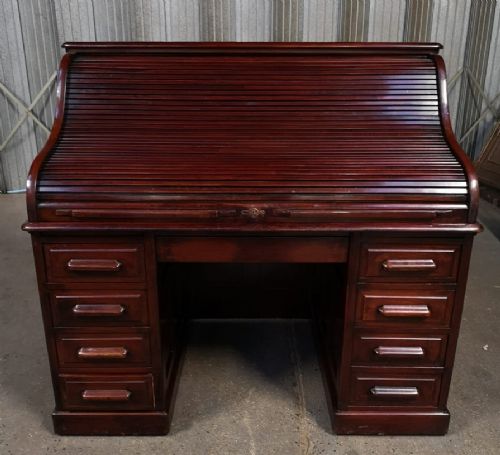
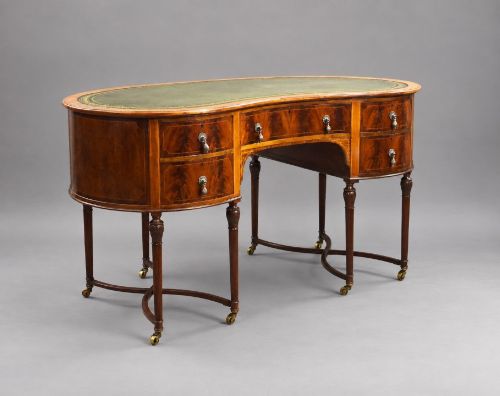
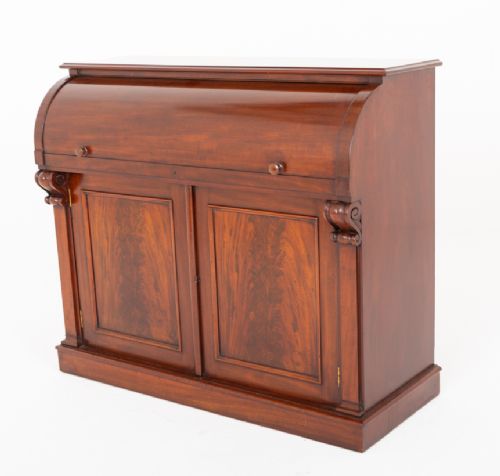
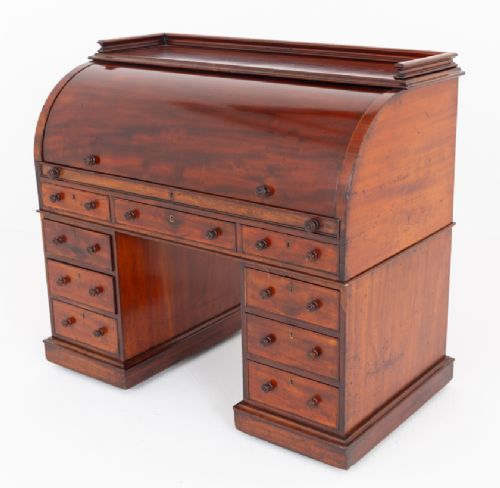
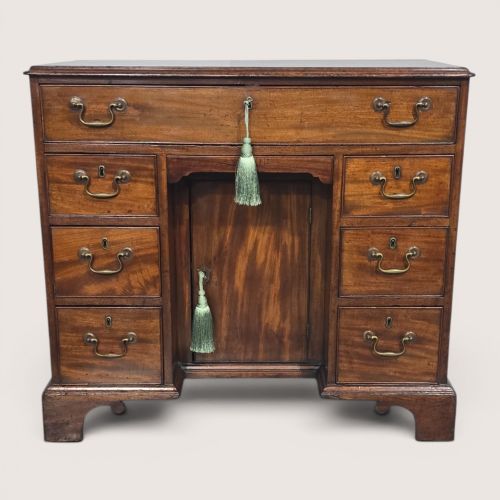
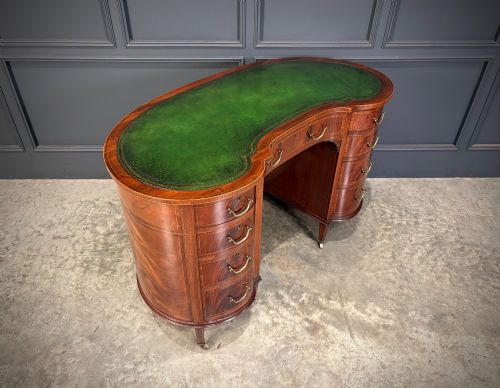
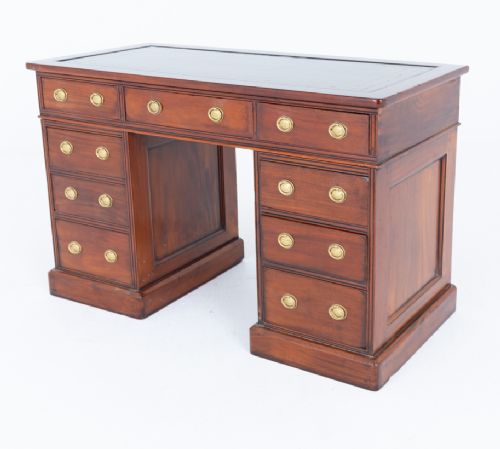
A mahogany pedestal bureau provides a dedicated writing space supported by banks of drawers on either side. Buyers searching this phrase typically encounter variations dating from the eighteenth century through the Edwardian and Victorian periods, including kneehole desks, cylinder desks, and partner's desks.
The form evolved from simple writing boxes on frames into substantial pieces of furniture designed for libraries and studies. Georgian and Victorian examples dominate the selection, often showcasing traditional timber construction alongside revival styles such as Sheraton and Louis XIV.
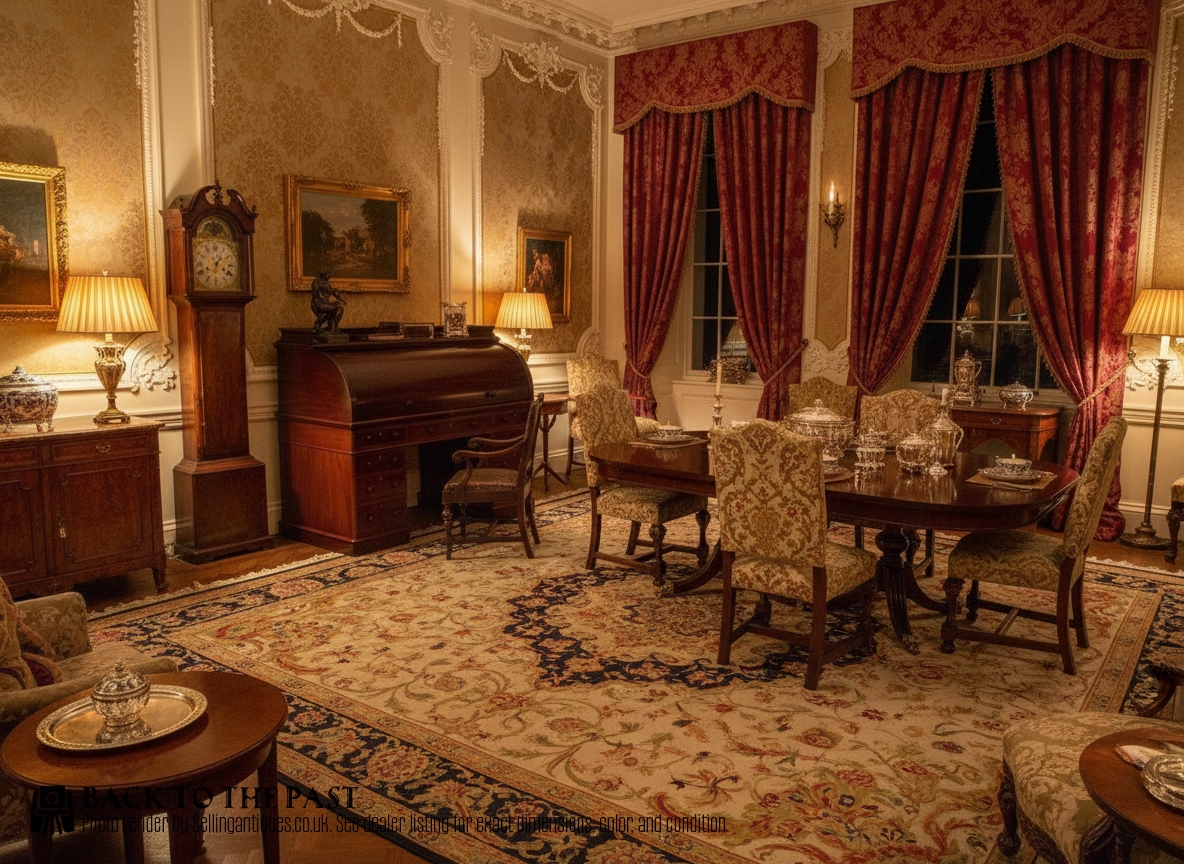
These desks serve equally well as functional home workstations and statement antiques for traditional interiors. The combination of writing surfaces, drawers, and sometimes upper compartments makes them exceptionally versatile for daily use.
Materials and construction methods
Cabinet makers utilised solid mahogany and flame mahogany veneers over secondary timbers such as oak, applying careful polishing to highlight the natural grain. Structural stability relied on traditional joinery, ensuring the twin pedestals could support heavy writing surfaces and loaded drawers.
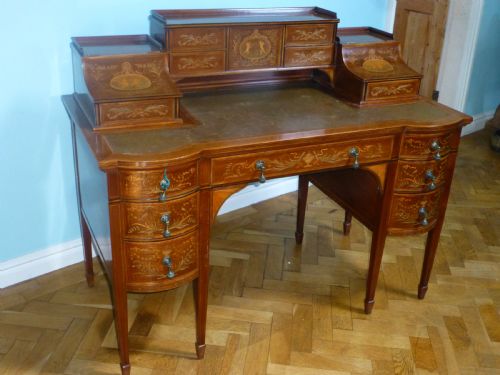
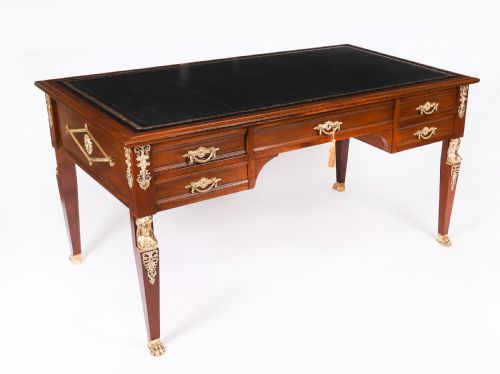
Fine examples incorporate brass hardware, leather writing inserts, and occasionally satinwood stringing or marquetry inlay. Canvases and ormolu mounts also appear on specific French and English revival variants within the selection.
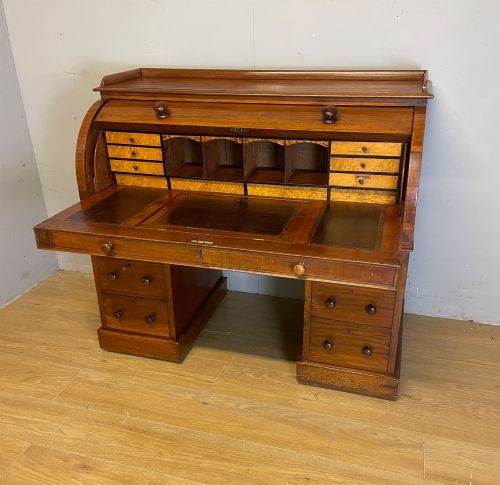
Some cylinder desks hide clever secret compartments behind their rolling wooden shutters for storing confidential correspondence.
Distinctions in quality and execution
The refinement of the timber selection dictates much of the visual appeal, with figured flame mahogany and crisp marquetry inlay separating standard utilitarian desks from exceptional cabinet work. Carved details and the precision of the joinery reflect the skill of the original workshop.
Interior fittings, such as secret drawers within cylinder desks or fitted stationery compartments in Carlton House desks, demonstrate the complexity of the design. The retention of original brass handles and leather inserts adds to the integrity of any piece.
Edwards and Roberts·Maple and Co
The Mahogany Pedestal Bureau Glossary
- Mahogany
- A durable tropical hardwood prized for its rich reddish-brown colour and stable working properties. It forms the primary structural and surface material for these desks.
- Pedestal desk
- A heavy freestanding desk comprising two supporting columns of drawers with a central recess. The top rests upon these twin pedestals.
- Cylinder desk
- A writing desk featuring a rolling curved wooden shutter that conceals the pigeonholes and writing surface when closed. This mechanism protects the interior workspace.
- Kneehole desk
- A compact desk featuring a central recessed space for the legs, flanked by two narrow pedestals of drawers. This form became popular during the eighteenth century.
- Marquetry
- Decorative inlay work using various coloured wood veneers to create pictorial or geometric patterns. It appears frequently on Edwardian and revival pieces.
Mahogany Pedestal Bureau: Frequently Asked Questions
What is a pedestal bureau?
A pedestal bureau combines a writing desk with banks of drawers beneath the work surface, providing both writing space and integrated storage.
These pieces range from straightforward nineteenth-century kneehole desks to complex cylinder and Carlton House writing tables.
How do I date a mahogany desk?
Dating relies on observing construction techniques, timber choice, and prevailing decorative styles such as Georgian restraint or Victorian elaboration.
Hardware styles, secondary woods, and revival influences also help narrow down the period of manufacture.
Are these desks suitable for daily use?
Most pedestal desks offer sturdy construction and ample surface area for contemporary writing and computer work.
Leather inserts and pull-out slides provide practical extensions to the main writing area during use.
What materials are used besides mahogany?
Makers frequently incorporated brass for handles and fittings, oak for drawer linings, and leather for the top writing surfaces.
Satinwood, maple, and canvas also appear as secondary materials or decorative veneers on specific models.