
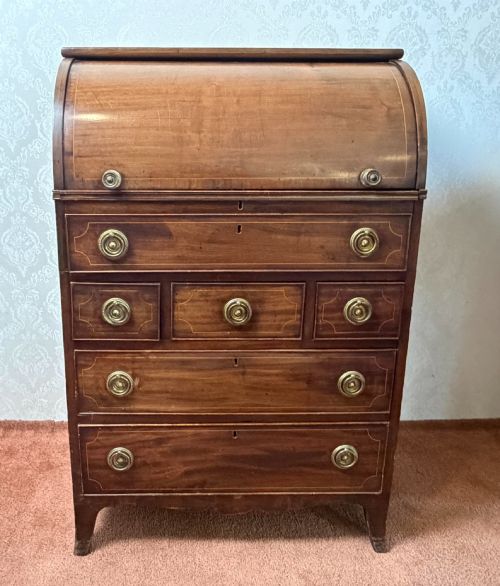
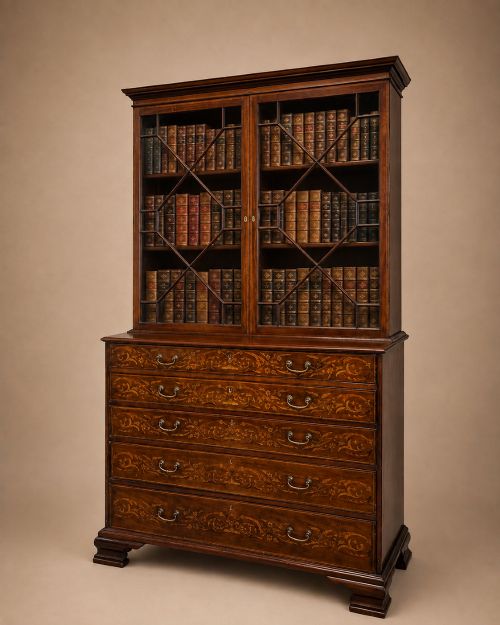
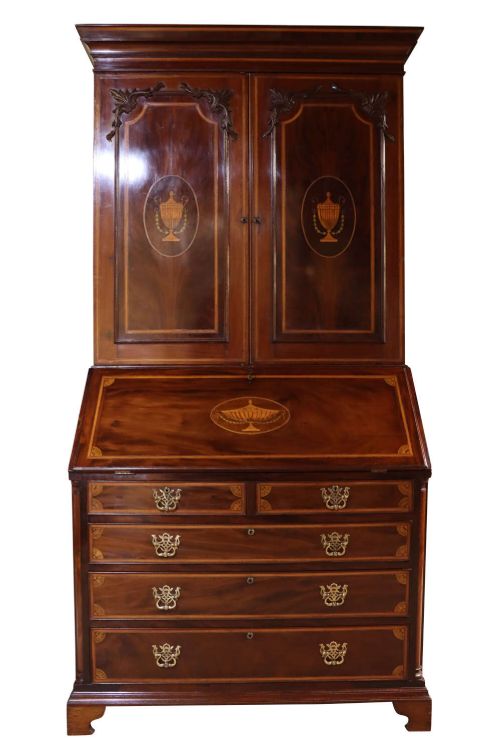
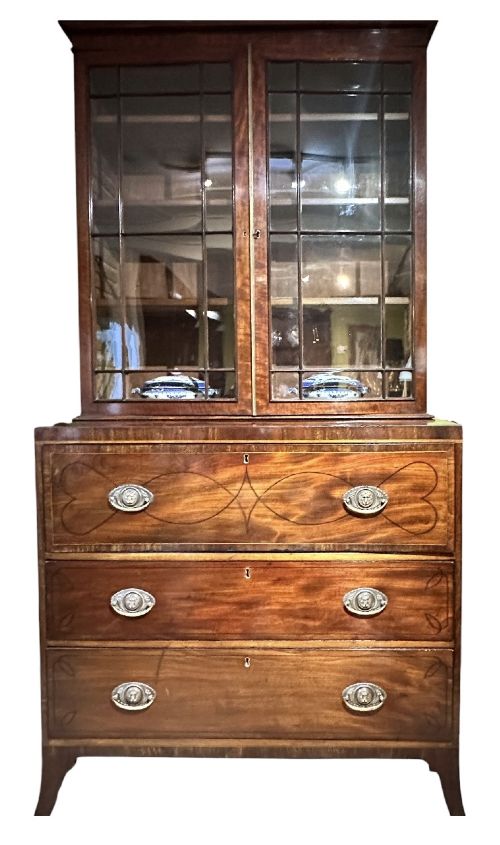
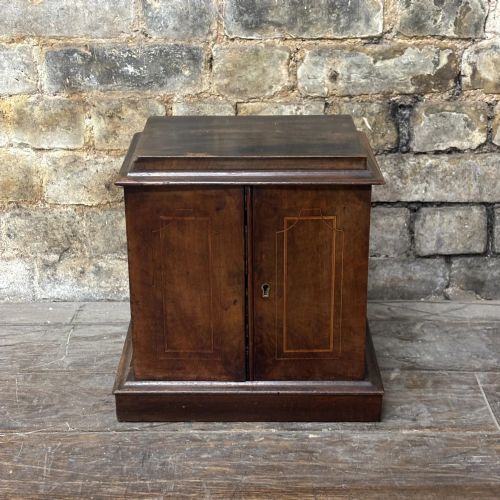
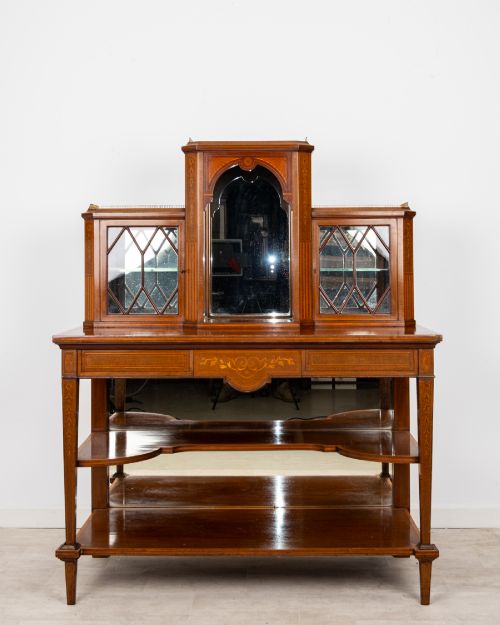
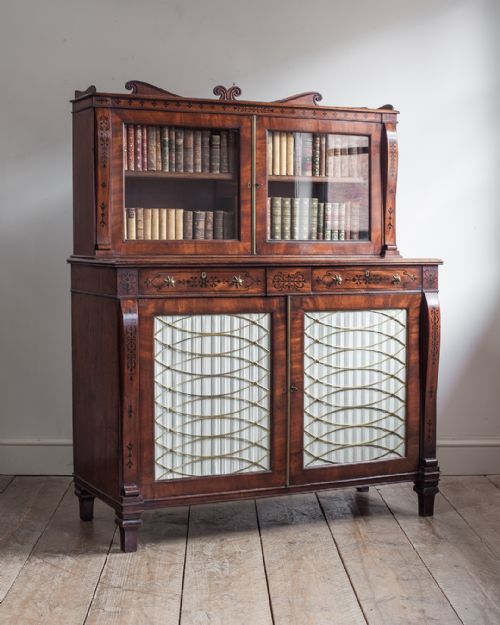
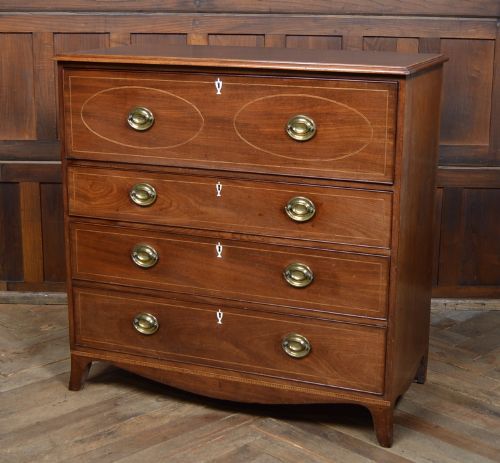
Inlaid Mahogany Writing Cabinet
An inlaid mahogany writing cabinet brings together fine cabinet-making and functional writing space, offering fitted drawers and pigeonholes for correspondence.
Inlaid Mahogany Writing Cabinet
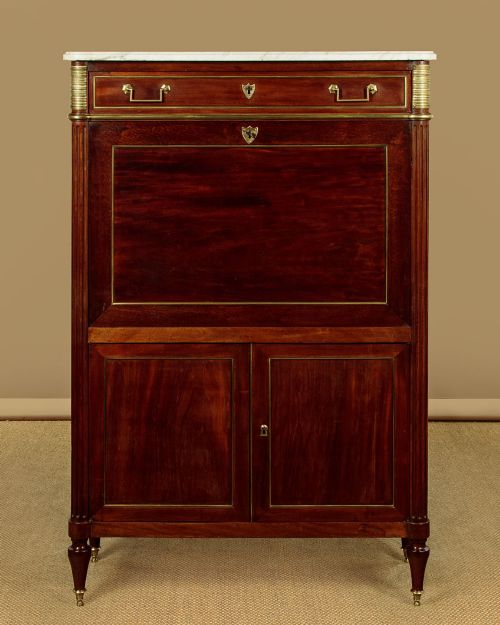
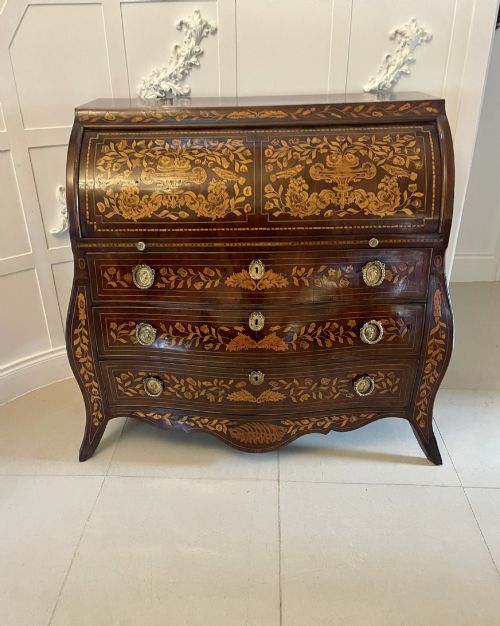
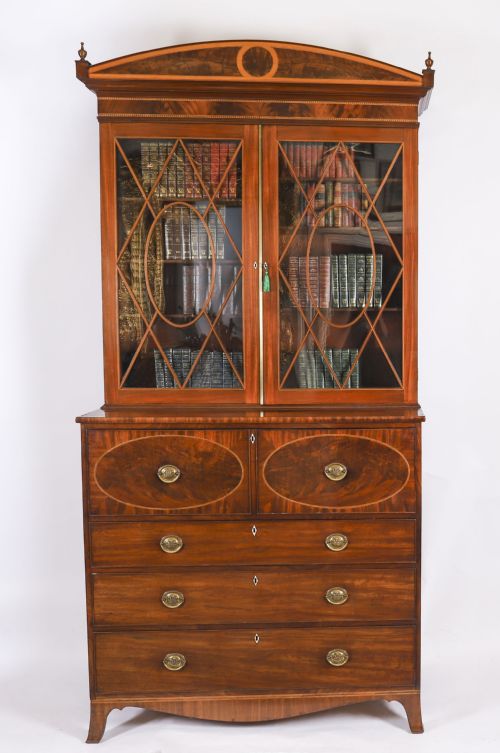
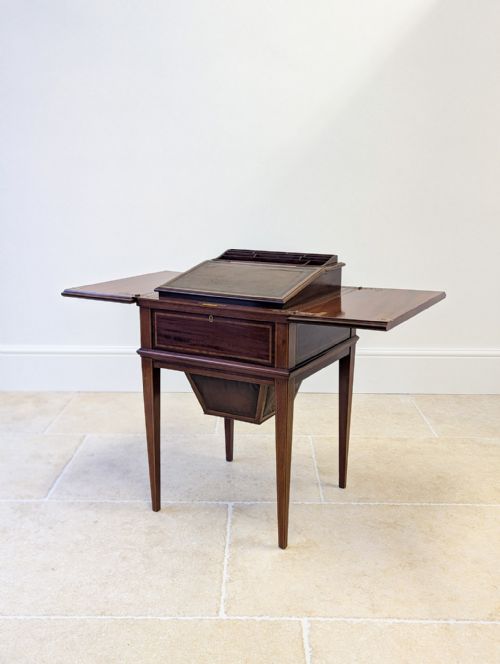
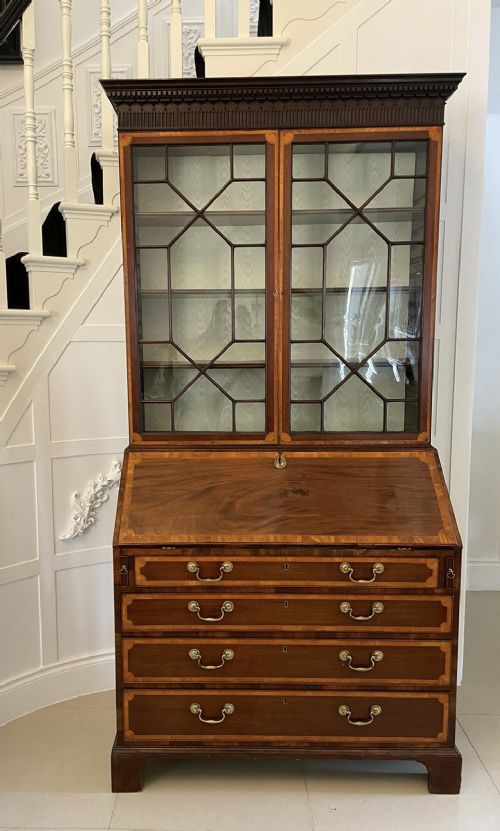
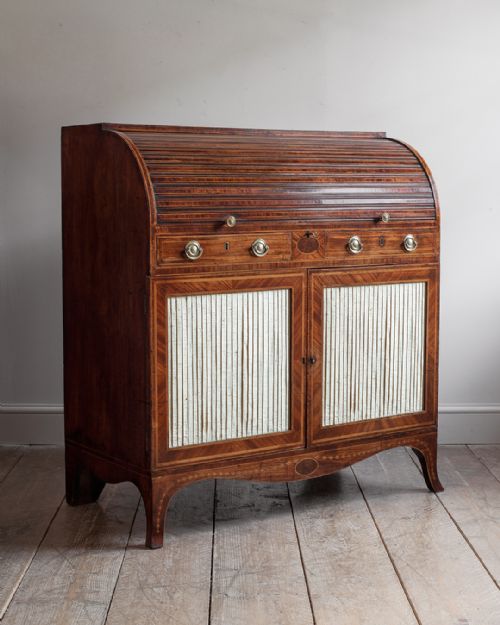
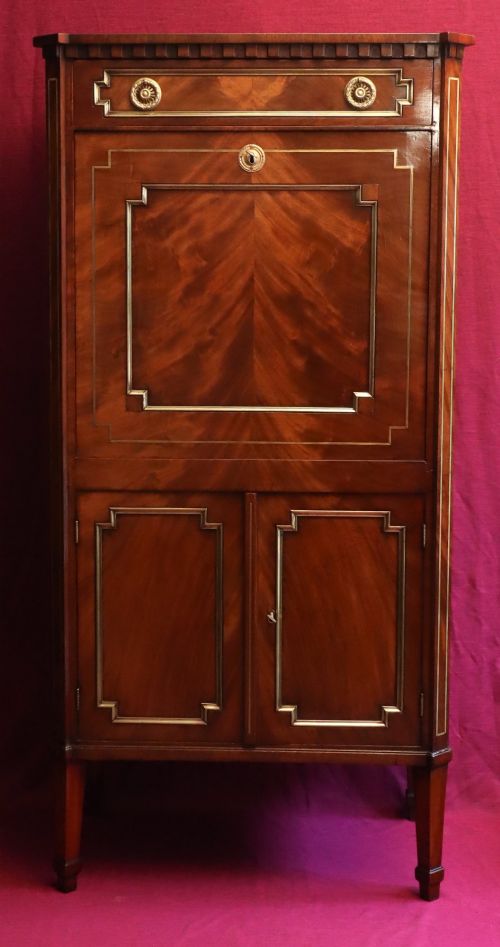
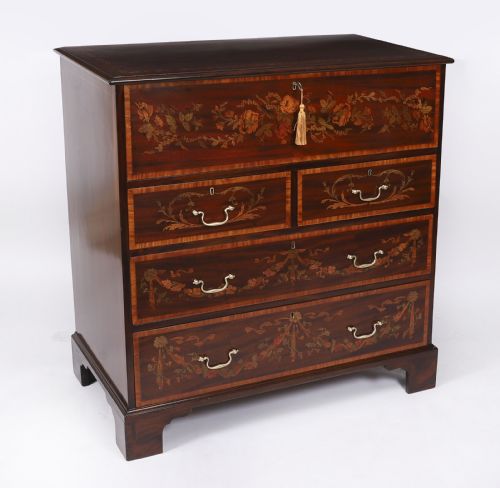
An inlaid mahogany writing cabinet encompasses several forms designed for correspondence and storage, most frequently appearing as bureau bookcases, secretaire chests, and compact writing tables across this selection.
The periods represented span the eighteenth and nineteenth centuries into the Edwardian era, with George III examples and later Edwardian Sheraton Revival interpretations forming a substantial portion of the available pieces.
Origins range from Georgian workshops to nineteenth-century metropolitan makers, utilising cabinet forms that integrate drop-front writing surfaces with shelving or upper bookcase sections.
Materials and construction methods
Construction relies primarily on solid and veneered mahogany, frequently selected for rich grain patterns like flame mahogany and enhanced with contrasting satinwood and boxwood inlay.
Decorative surface techniques incorporate floral marquetry alongside stringing and crossbanding, while hardware integrates brass fittings, glass panel doors, and leather writing inserts.
Interior compartments employ fine secondary timbers for drawers and pigeonholes, paired with mechanical elements found in metamorphic writing tables and tambour cylinders.
Secret compartments hidden behind dummy book spines kept family secrets safe from prying eyes.
Distinctions in construction and detail
Quality rests upon the crispness of the cabinet-making, visible in the precision of the satinwood inlay, the choice of figured mahogany veneers, and the integrity of the secondary woods inside the drawers.
Superior examples display sophisticated interior arrangements with well-fitted stationery compartments and secret drawers, demonstrating careful proportion and harmonious integration of brass hardware and glass doors.
Edwards & Roberts·Shoolbred of London·Chapman, London
The Inlaid Mahogany Writing Cabinet Glossary
- Secretaire
- A desk or cabinet with a fold-down or pull-out writing drawer that conceals a fitted interior of pigeonholes and small drawers. This form allows a tall piece of furniture to double as a practical writing desk.
- Tambour
- A sliding shutter made of narrow vertical strips of wood glued to a canvas backing, used to enclose the writing surface of a cylinder desk. It runs in concealed grooves to glide smoothly around a curve.
- Marquetry
- Decorative veneer work forming pictorial or floral patterns using various coloured woods, shells, or ivory set into a ground veneer. It differs from inlay by assembling the pattern before applying it to the carcase.
- Bonheur du jour
- A light lady's writing desk featuring a small cabinet or set of shelves atop the writing surface. This form gained popularity during the eighteenth century and saw revivals in the Edwardian period.
- Flame mahogany
- Timber cut from the fork of the mahogany tree where the branches meet the trunk, producing a distinctive flickering flame-like grain pattern. Cabinet-makers reserved this highly figured veneer for primary display surfaces.
Inlaid Mahogany Writing Cabinet: Frequently Asked Questions
What is a secretaire bookcase?
A secretaire bookcase combines a tall upper bookcase with lower shelving and a dedicated writing drawer that drops down to reveal compartments. This dual function made it a staple piece of furniture for libraries and parlours.
In living spaces, these pieces served both as a display area for bound volumes and as a private station for managing correspondence.
How do I date an inlaid mahogany writing cabinet?
Dating relies on examining construction techniques, timber choice, and the style of the inlay work. Georgian pieces often show flame mahogany veneers and restrained satinwood stringing, while Edwardian revivals employ lighter framing.
Interior drawer construction, such as hand-cut dovetails and the use of oak or pine secondary woods, provides further clues to the period of manufacture.
Where were these cabinets placed in a home?
These cabinets typically stood in reception rooms, private studies, or drawing rooms where owners managed their daily letters and household accounts. Their finished backs and refined proportions allowed them to sit prominently against walls.
Smaller formats like the bonheur du jour were often positioned near windows to make the best use of natural light for writing.