
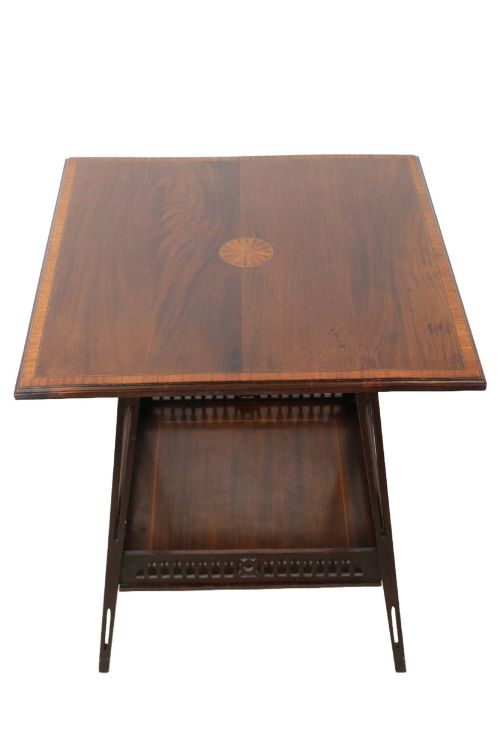

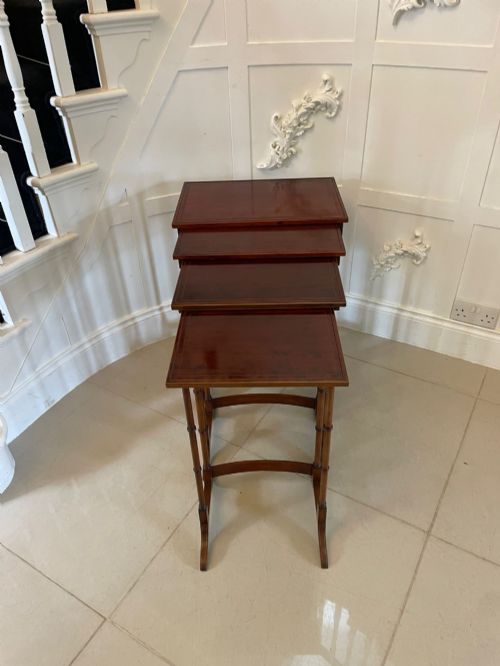
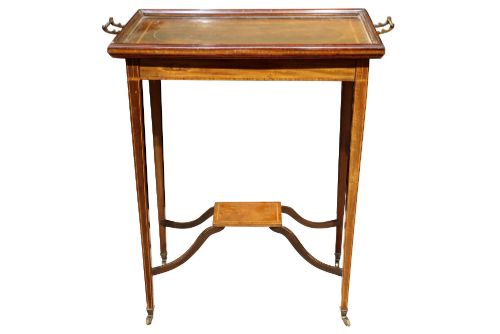
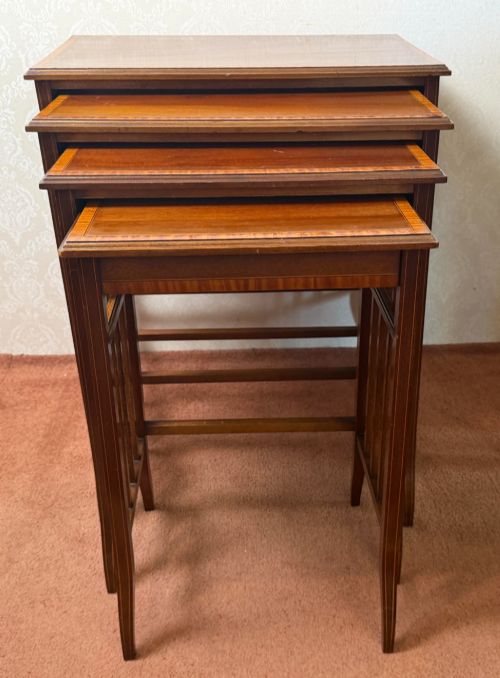
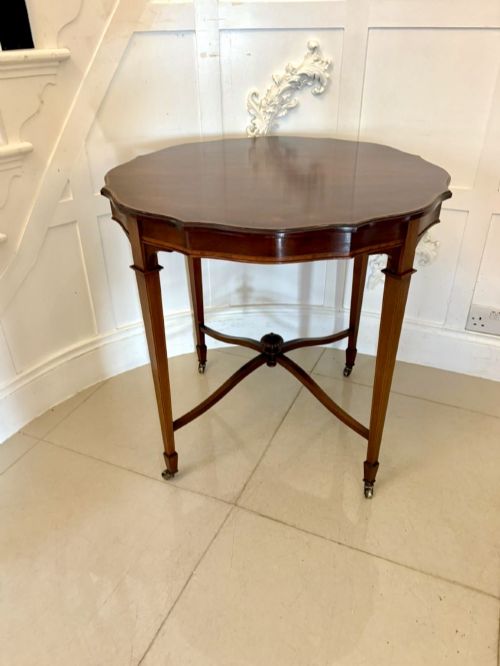
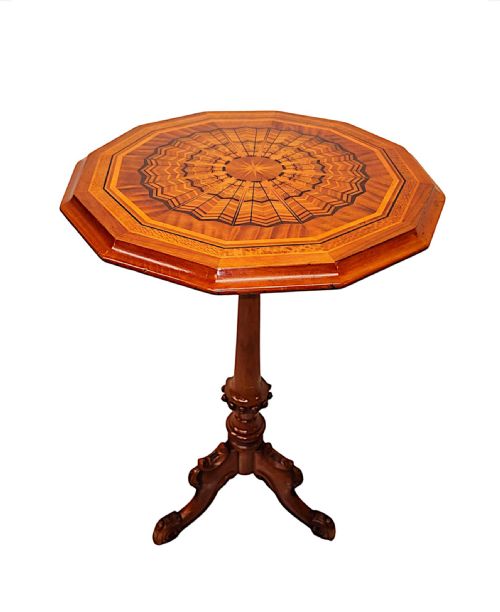
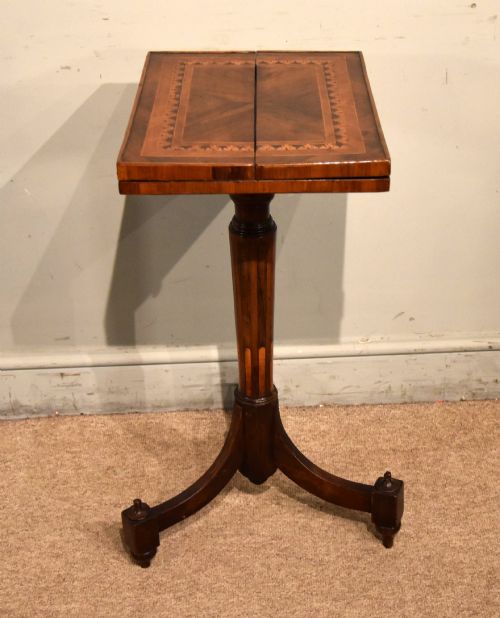
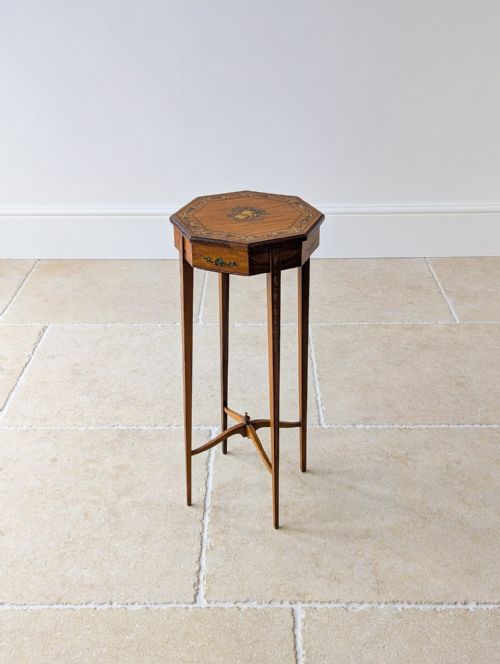

Inlaid Satinwood Occasional Table
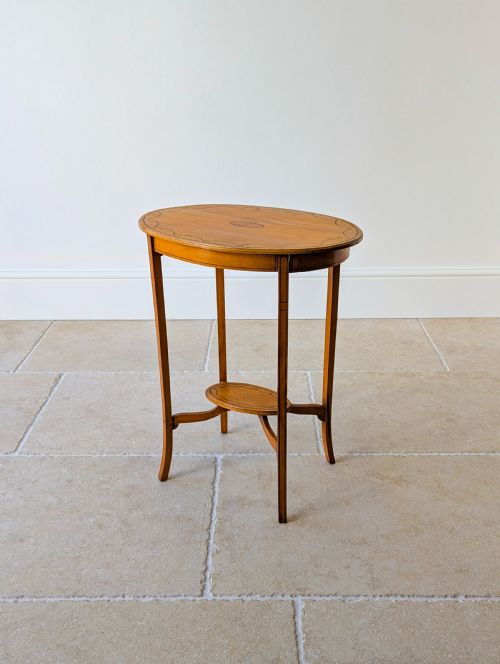
An inlaid satinwood occasional table brings refined geometry and subtle warmth to a room, serving as a functional surface with decorative presence.
How they were made
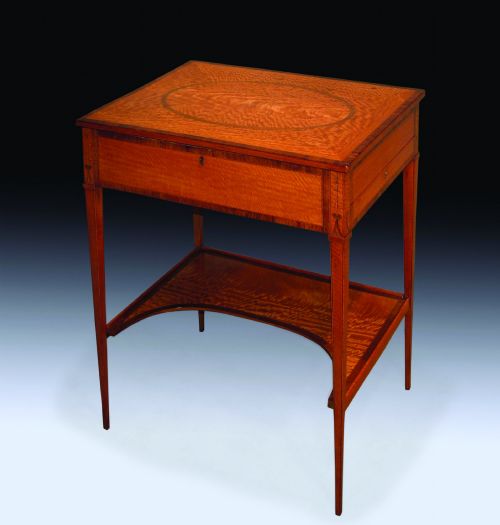
Makers utilised dense cabinet timbers like mahogany, rosewood, and harewood as structural bases or contrasting veneers, overlaying them with fine sheets of yellow-toned satinwood. Boxwood and ebony served as stringing or inlay material, creating sharp borders and geometric frames around tabletops.
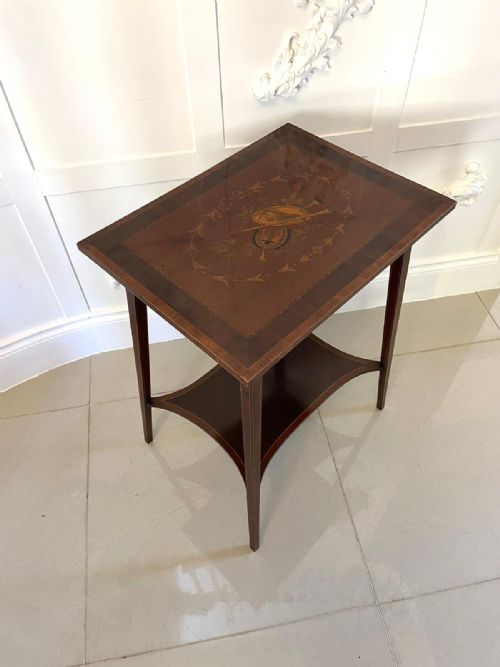
Marquetry techniques involved cutting intricate floral, ribbon, or urn motifs from dyed and natural woods, then fitting them meticulously into recesses within the top surface. Cross banding framed the perimeters, while brass hardware such as hinges, castors, and drop handles finished pieces intended for frequent movement.
What varies in quality
The standard of craftsmanship shows in the crispness of the inlay work and the tightness of the timber joints. Superior examples display perfectly flush veneers with no lifting along the edges, alongside delicate, unbroken stringing that follows curves without awkward gaps.
Proportion and timber selection dictate the upper tier of the range. Finer tables utilise highly figured, lustrous satinwood paired with balanced marquetry, whereas simpler versions rely on plain veneers and minimal boxwood lines.
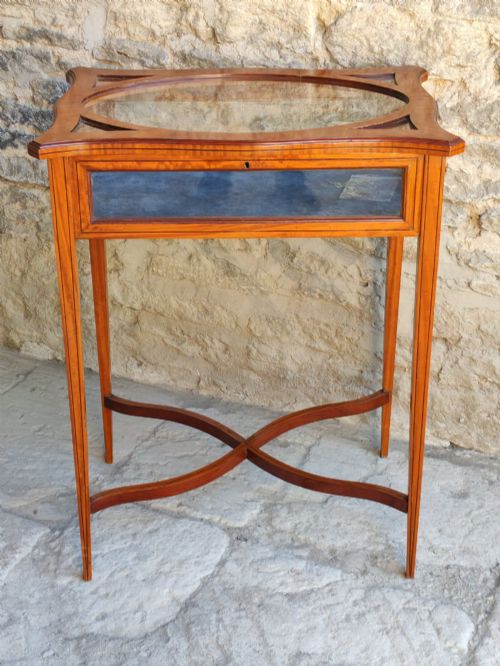
Listings feature satinwood tables spanning from the 18th Century through the Victorian and Edwardian eras, utilising mahogany, boxwood inlay, and glass.
Trevor Page and Co·Gillows·Donald Ross·Maple and Co
The Inlaid Satinwood Occasional Table Glossary
- Satinwood
- A hard, durable timber with a natural golden sheen that catches the light. It forms the primary visual element of these decorative tables.
- Inlay
- The technique of embedding contrasting woods, shells, or metals into a recessed surface to form patterns. This defines the surface decoration of the pieces.
- Marquetry
- Elaborate veneer work arranged to form pictorial or geometric designs across a tabletop. It requires high precision from the cabinetmaker.
- Cross banding
- A border of veneer laid around the edge of a table top with the grain running perpendicular to the centre. This frames the main panel.
- Stringing
- Thin lines of contrasting wood inlaid into channels on table legs or tops. It creates delicate linear boundaries.
- Pembroke table
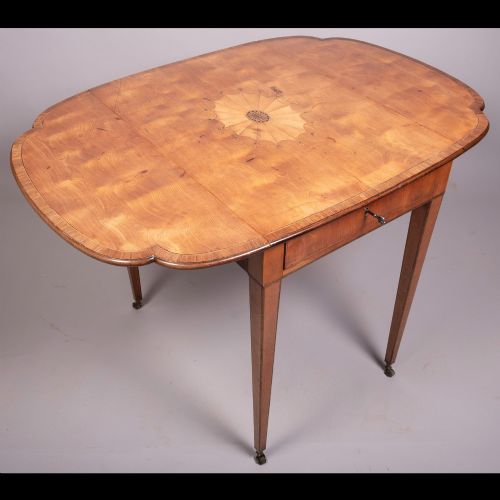
- A small rectangular table with hinged flaps on opposite sides supported by folding brackets. These versatile pieces served multiple domestic functions.
Inlaid Satinwood Occasional Table: Frequently Asked Questions
What is an occasional table used for?
An occasional table was designed to be moved around a room as needed for specific tasks. Owners placed them beside chairs to hold lamps, tea services, or books.
Over time, these versatile pieces transitioned from functional furniture to decorative accents intended to display ornaments or plants.
How do I identify a Sheraton Revival table?
Sheraton Revival pieces date mostly to the late 19th and early 20th centuries, imitating the lighter, neoclassical styles of the 18th century. They feature satinwood veneers, square tapered legs, and painted or inlaid classical motifs.
Makers of this era focused on symmetry, elegant proportions, and refined stringing rather than heavy, dark timber.
What is a nest of tables?
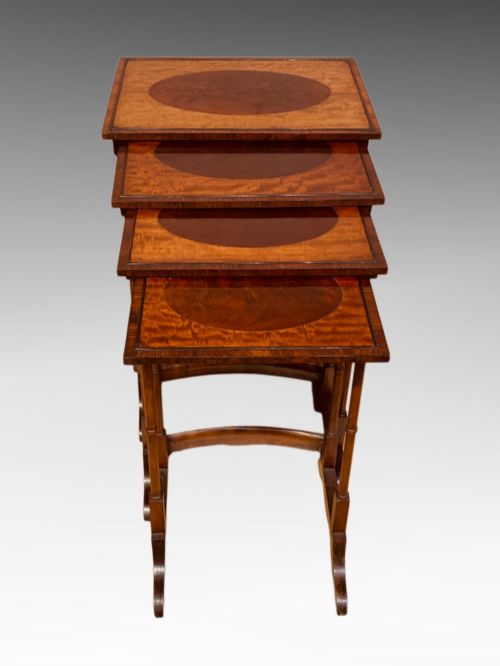
A nest of tables consists of a set of graduating tables that slide neatly underneath one another to save space. They often appear as quartetto sets comprising four distinct pieces.
Victorian and Edwardian makers produced these in mahogany with satinwood inlay to provide extra surfaces for guests without cluttering the room.
How should I care for satinwood furniture?
Satinwood benefits from minimal intervention, requiring only a soft, dry cloth for regular dusting. Avoid placing these tables in direct sunlight or near heat sources to prevent the veneers from drying out.
Occasional application of high-grade beeswax preserves the warm lustre of the timber without building up heavy residues.