
Georgian Crossbanded Table
A georgian crossbanded table brings disciplined framing to timber surfaces through contrasting border veneers.
Georgian Crossbanded Table
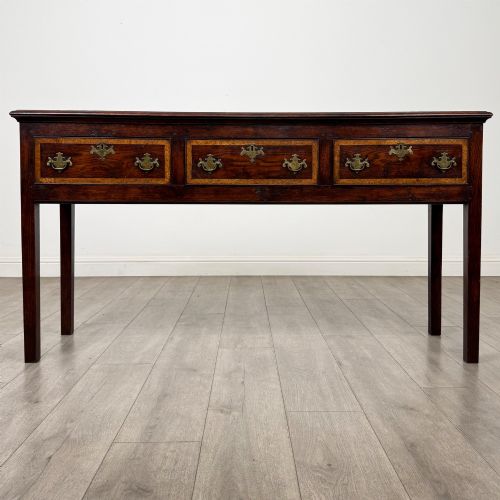
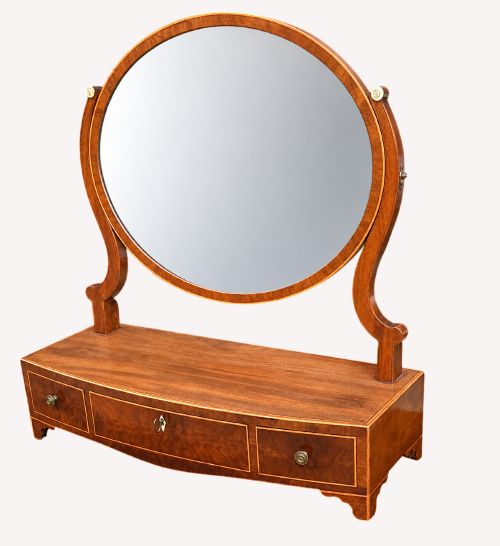
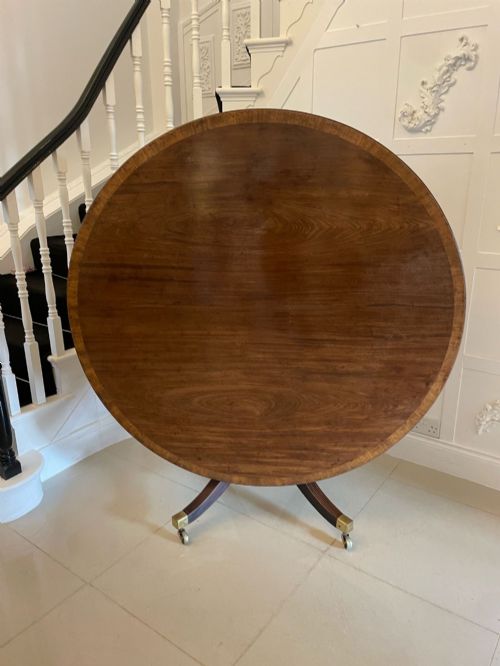
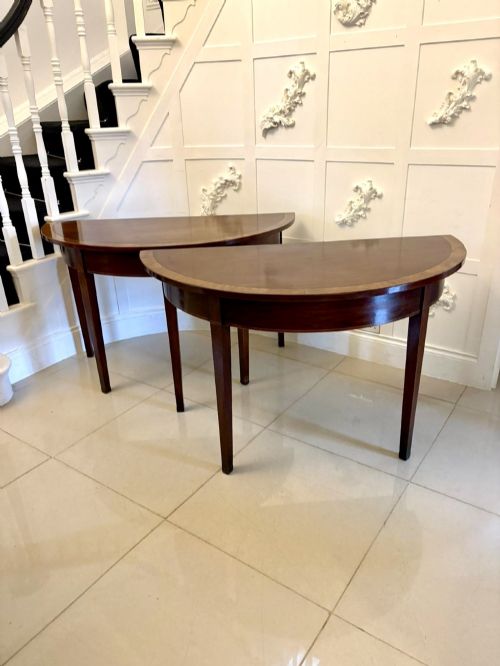
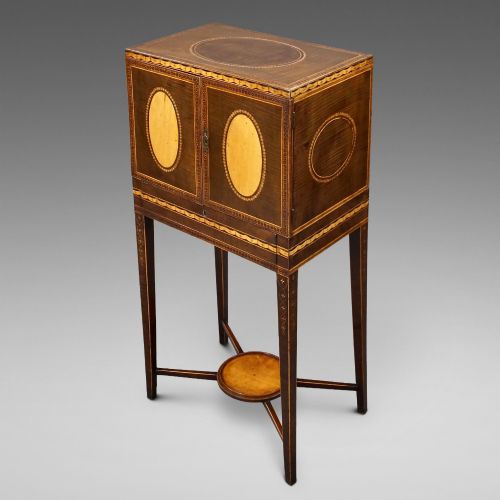
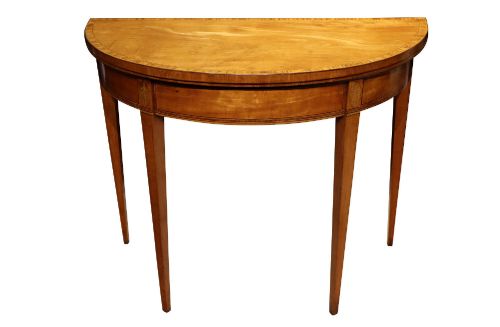
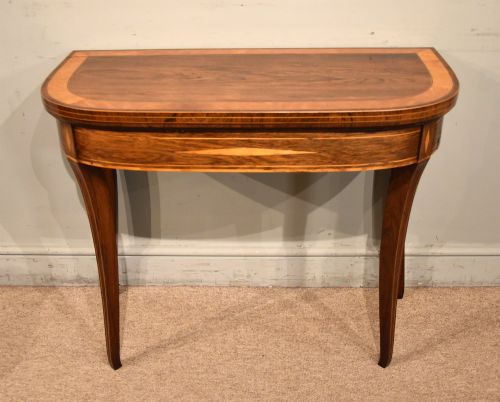
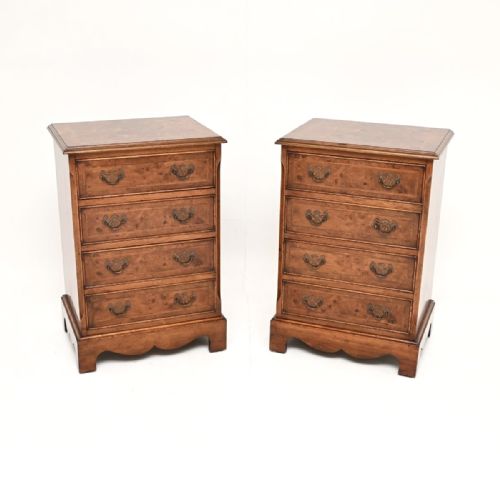
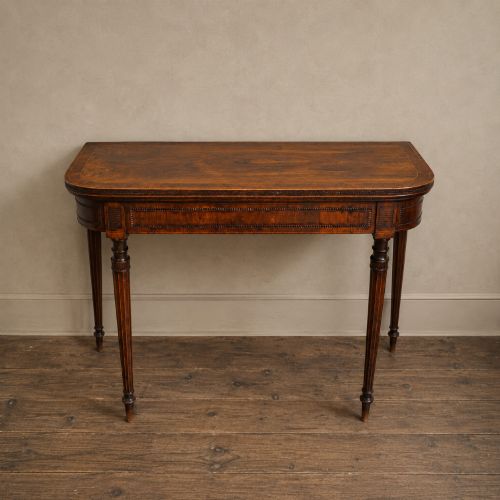
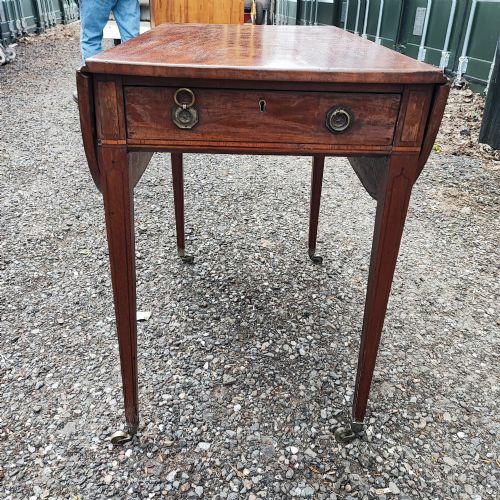
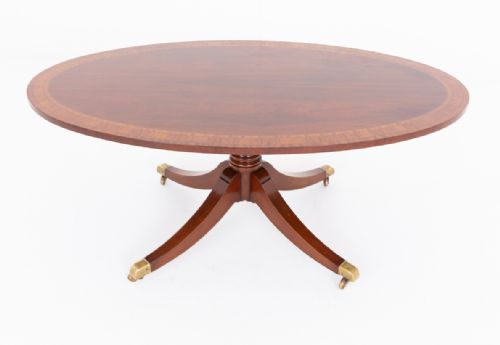
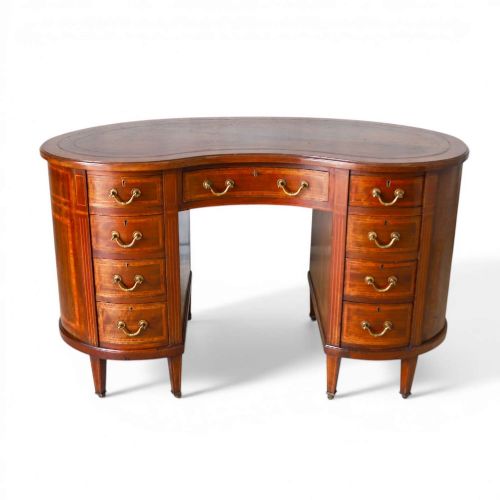
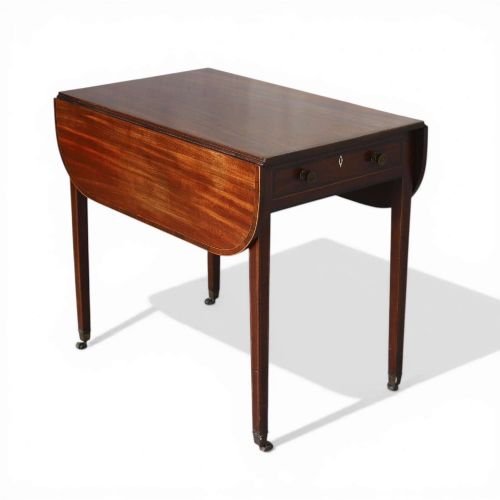
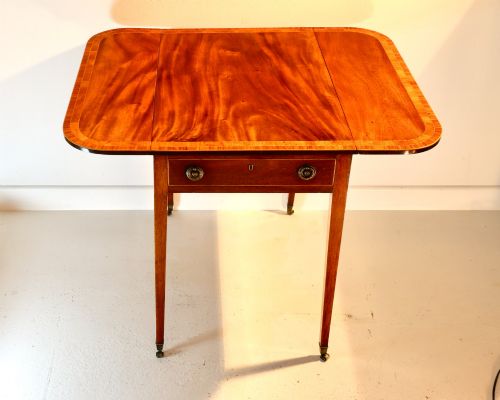
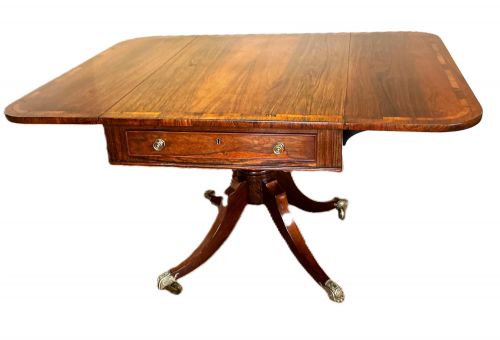
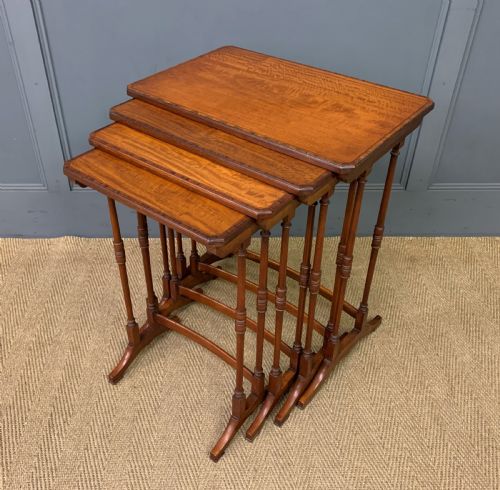
When you search for a georgian crossbanded table, you encounter pieces defined by a distinctive border technique where the grain of the outer veneer runs perpendicular to the central surface. The selection spans card tables, Pembroke tables, console tables, and dining tables originating from the eighteenth and early nineteenth centuries. These forms reflect the functional domestic requirements of their period, from fold-over gaming surfaces to drop-leaf tea tables.
The version you meet most frequently on this page is the mahogany card table or Pembroke table featuring satinwood or boxwood crossbanding. These examples often date from the George III and Regency eras, displaying the classic proportions and clean lines associated with Sheraton and general Georgian design. Oak and walnut alternatives also appear alongside later revival interpretations from the Edwardian and early twentieth-century periods.
Materials and construction
Cabinet makers built these surfaces using a primary timber such as mahogany, oak, or walnut for the main carcase and legs. They then applied contrasting secondary veneers like satinwood, rosewood, kingwood, or partridge wood to the edges, running the grain at a ninety-degree angle to the central panel.
Fine stringing lines in boxwood or ebony frequently accompany the crossbanded border to define the geometric layout. Joinery relied on traditional techniques including dovetails for drawer construction and tenons for leg attachments, ensuring stability across folding leaves and tilting tops.
Georgian Crossbanded Table Retail Price Guide 2026
Typical asking prices for georgian crossbanded table among the pieces listed under this phrase on Sellingantiques today, from the lower quarter to the upper quarter. They describe what is for sale here now, not the wider market.
Some card tables hide secret compartments beneath their folding tops, designed precisely for storing ivory gaming counters and heavy guineas.
Assessing craftsmanship and execution
The distinction between standard execution and superior work lies in the precision of the veneer matching and the selection of the timber figures. Top-tier pieces display finely figured mahogany or richly coloured satinwood with seamless, tight joints where the crossbanded mitres meet at the corners.
Execution quality also shows in the handling of secondary elements such as stringing lines, edge mouldings, and the integration of pivoting or folding mechanisms. Lower-tier examples may exhibit coarser timber selection, thicker or uneven veneer borders, and less refined carving or turning on the legs.
The Georgian Crossbanded Table Glossary
- Crossbanding
- A border veneer applied to the edge of a table top or drawer front where the grain runs perpendicular to the main panel. This technique creates a distinct visual frame around the central timber.
- Stringing
- Thin inlaid lines of contrasting wood, such as boxwood or ebony, used to outline panels and borders. It provides a sharp linear accent adjacent to broader crossbanded areas.
- Pembroke table
- A small rectangular table featuring two hinged drop leaves on opposing sides. It often includes a single drawer and slender legs.
- Demi-lune
- A half-moon shape characteristic of console and card tables designed to sit flush against a wall. They frequently feature folding tops supported by a swinging rear leg.
- Tilt-top
- A mechanism allowing the table top to pivot to a vertical position when not in use. This design saved space in period dining rooms and parlours.
Georgian Crossbanded Table: Frequently Asked Questions
How do I date a Georgian table?
Dating relies on examining the timber species, secondary woods used in the interior construction, leg styles, and assembly methods. The transition from heavy early Georgian walnut to lighter mahogany and satinwood veneers marks distinct stylistic shifts.
Hardware types, such as original brass hinges or handles, also offer reliable chronological indicators when assessing a piece.
Were Pembroke tables used for dining?
Pembroke tables served primarily as occasional, breakfast, or tea tables rather than formal dining furniture. Their drop leaves allowed owners to expand the surface area quickly for writing or light meals.
Their compact footprint made them versatile additions to smaller sitting rooms and bedchambers throughout the eighteenth century.
What is Sheraton style?
Sheraton style refers to the neoclassical furniture designs popularised in the late eighteenth century, characterised by straight tapering legs, geometric shapes, and delicate inlay work. It draws inspiration from classical antiquity.
Pieces in this style often incorporate satinwood banding, contrasting stringing, and balanced proportions.