




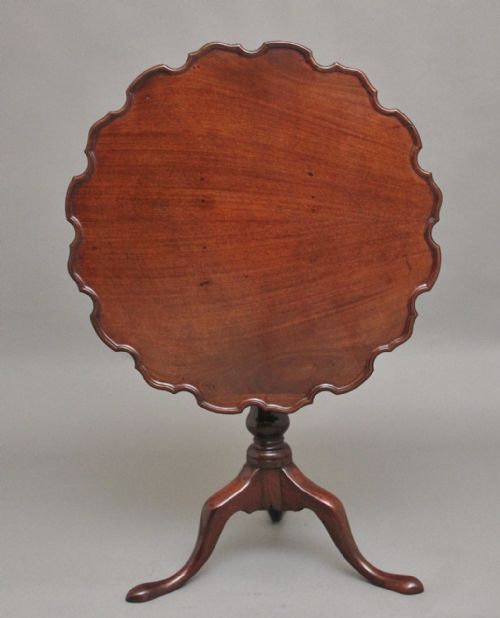
Georgian Tilt Action Table
A georgian tilt action table is a versatile surface for a room, prized for its clever mechanism that folds away flat when not in use.
Georgian Tilt Action Table
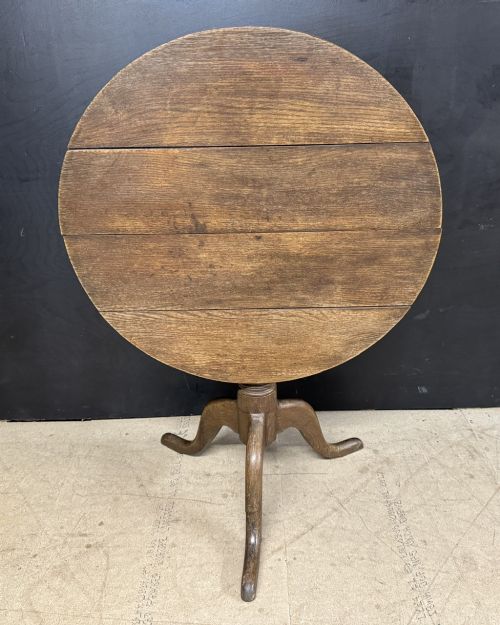
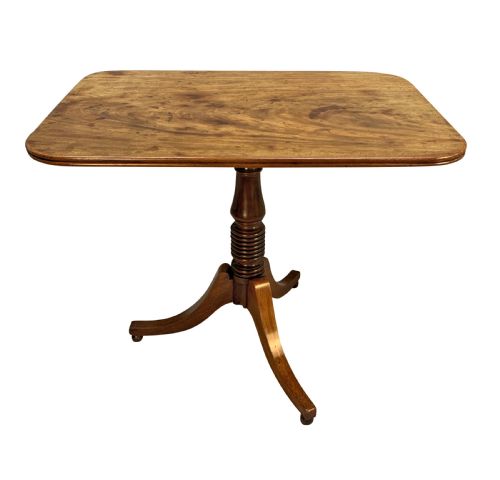
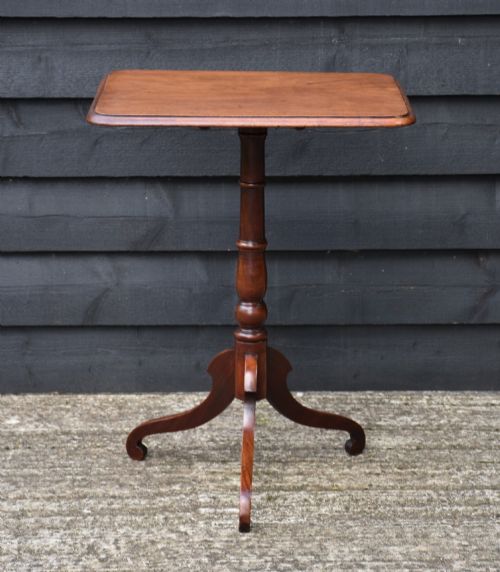
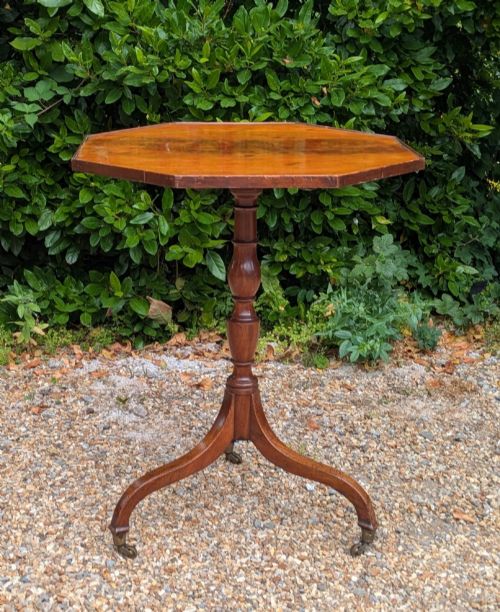
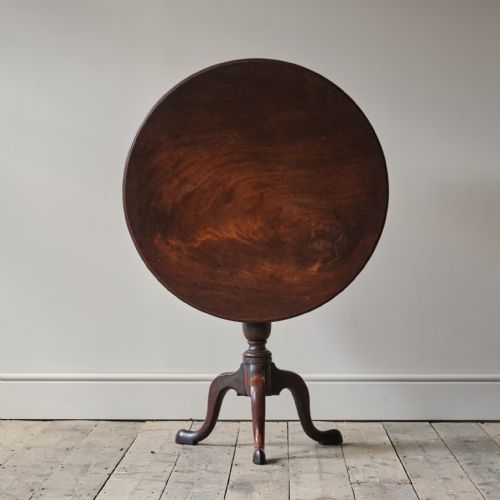
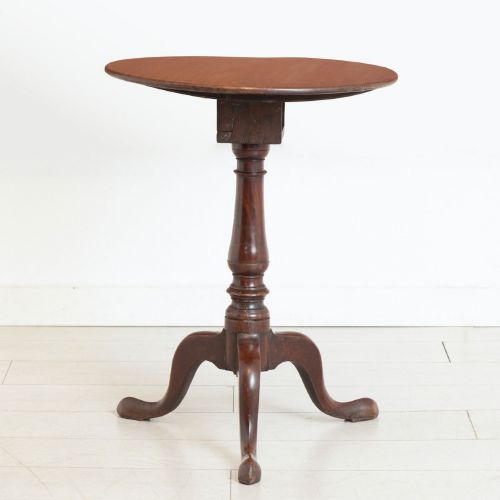
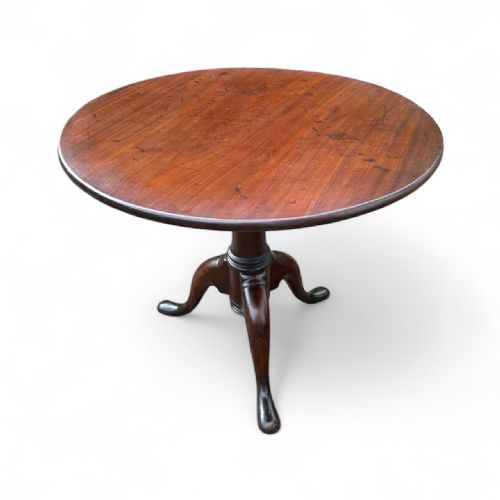
The georgian tilt action table appears in several distinct guises across this selection, from compact wine tables and tripod occasional pieces to larger breakfast and dining formats. Most examples date from the Georgian era and the subsequent Regency period, span the eighteenth and nineteenth centuries, and include specific stylistic phases such as George II and George III.
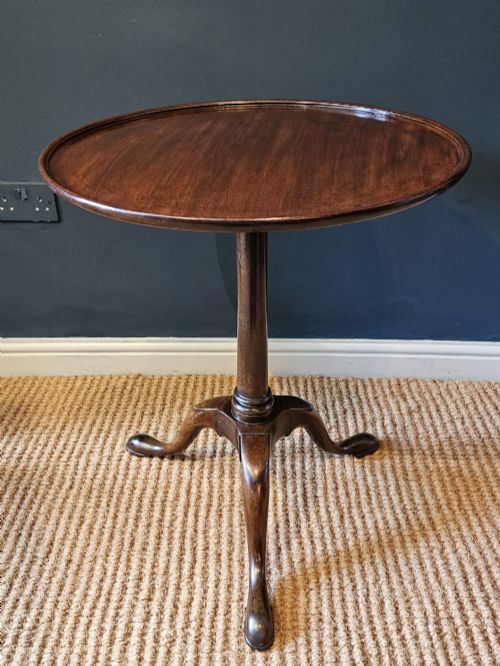
Buyers will encounter round, oval, and occasional tables supported on tripod legs, alongside pedestal breakfast tables. Forms range from simple country oak and mahogany designs to sophisticated tripod tables featuring birdcage actions and shaped edges.
The assortment on offer draws heavily upon eighteenth-century cabinet-making traditions, though nineteenth-century interpretations and revivals also feature prominently. These practical furnishings served various domestic functions, acting as tea tables, side tables, and dining surfaces that could be tipped vertically to save space against a wall.
Materials and construction
Mahogany dominates the construction of these tables, frequently paired with secondary timbers and supported by iron or brass fittings within the tipping mechanism. Cabinet-makers also utilised red walnut, oak, and occasional touches of satinwood for finer decorative details.
The defining mechanical feature is the tilt-top action, often incorporating a revolving birdcage frame that allows the tabletop to rotate as well as pivot. Tripod bases are standard on smaller forms, terminating in pad feet or carved legs, whilst larger breakfast and dining versions utilise heavy central pedestals.
One cheerful survivor in the archive spent time later in life beneath a coat of paint, proving that even formal dining furniture occasionally suffered a brush with domestic whimsy.
Assessing craftsmanship
Quality in a georgian tilt action table rests upon the integrity of the timber used for the top, particularly whether it is fashioned from a single board rather than joined planks. Finer pieces display careful selection of grain and rich natural patination across the mahogany or walnut surface.
The precision of the birdcage action and the stability of the pivoting mechanism dictate the upper tier of manufacture. Superior examples maintain a firm, wobble-free connection between the top and the pedestal when locked flat, alongside well-proportioned tripod legs and restrained carving such as pie-crust edges or dish tops.
The Georgian Tilt Action Table Glossary
- Tilt-top table
- A table with a hinged top that rotates and pivots to a vertical position when not in use. This clever design allowed eighteenth-century households to store the furniture flat against a wall.
- Birdcage action
- A rotating wooden frame situated beneath the tabletop that enables the surface to turn in circles independently of the pillar. It provides extra stability and flexibility for the user.
- Tripod base
- A pedestal support terminating in three legs, typically arched and ending in pad feet. This configuration keeps the table steady on uneven floors.
- Pie crust edge
- A decorative raised rim carved into the perimeter of a circular tabletop with undulating curves. It prevents cups and plates from sliding off during tea service.
- Dish top
- A solid timber tabletop turned with a concave, recessed centre surrounded by a raised circular border. This refined detail is characteristic of early eighteenth-century tables.
Georgian Tilt Action Table: Frequently Asked Questions
How do you tilt the table top?
Most tables use a catch or a pivoting pin beneath the surface that releases the top from its horizontal lock. Once disengaged, the wooden leaf swings upward on its hinges to rest vertically against the central column.
To return the table to use, simply lower the top back down until the latch drops securely into place. The birdcage mechanism allows the whole top to spin horizontally even when locked flat.
Where were these tables used?
These tables served multiple rooms in a Georgian home, functioning as tea tables in reception spaces, wine tables beside seating, or dining surfaces in modest parlours. Because the top folded flat, servants could tuck the furniture out of the way against a perimeter wall to clear floor space.
In modern interiors, their compact footprint makes them ideal as bedside surfaces, hallway stands, or lamp tables. They fit comfortably beside sofas and armchairs without dominating a room.
How do I distinguish George II from George III?
George II pieces, dating roughly from the mid-eighteenth century, frequently exhibit robust proportions, rich red walnut timbers, and restrained ornamentation like dish tops. The legs often terminate in pad feet with a strong, muscular silhouette.
George III and later Regency examples tend to embrace lighter mahogany veneers, slender tripod legs, and refined decorative carving such as pie-crust edges or birdcage actions. Proportions became more elegant and classical as the century progressed toward 1800.
What is a birdcage mechanism?
A birdcage is an ingenious assembly of small wooden posts and plates fitted directly beneath the table surface. It connects the pivoting hinge to the central pillar, allowing the tabletop to rotate freely in a full circle.
This construction distributed weight evenly and reduced wear on the central pivot point. Cabinet-makers used it on higher-quality tripod tables to improve daily utility.