



Crossbanded Satinwood Table
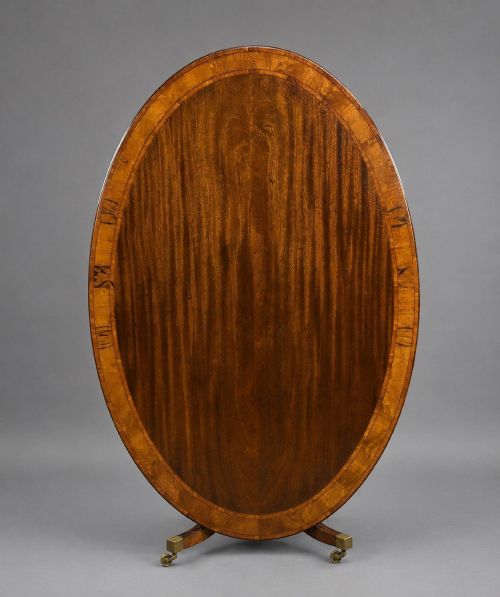
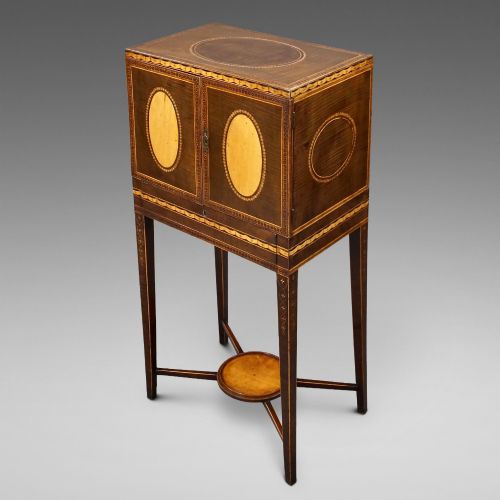
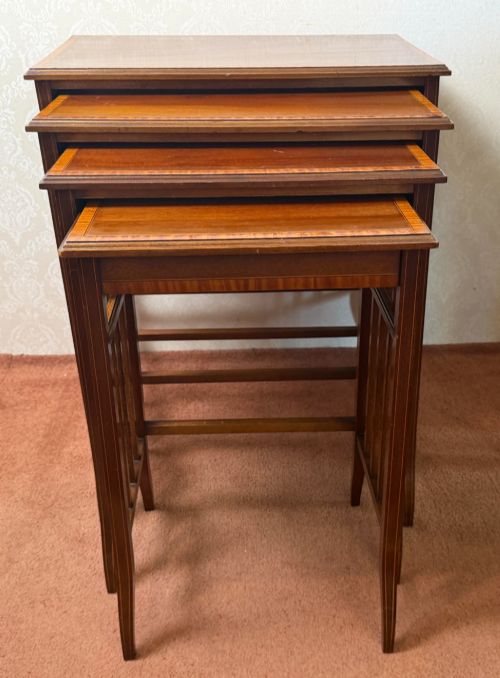
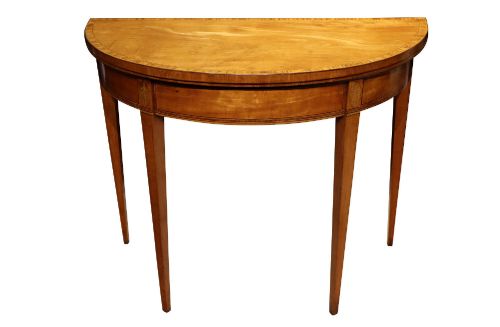
A crossbanded satinwood table brings bright contrasting borders and figured timber into a room, offering both warmth and surface utility.
What crossbanded satinwood tables are
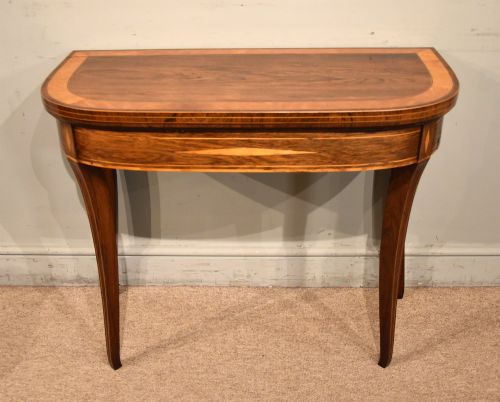
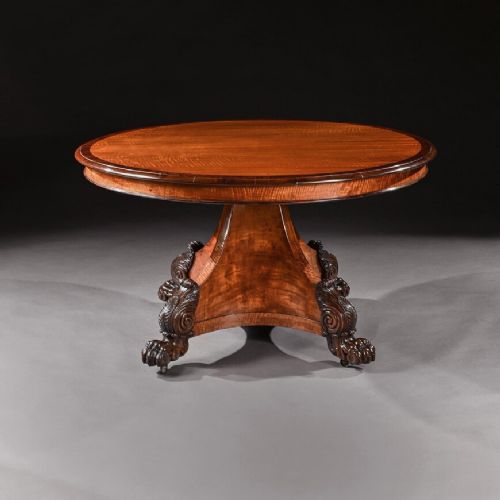
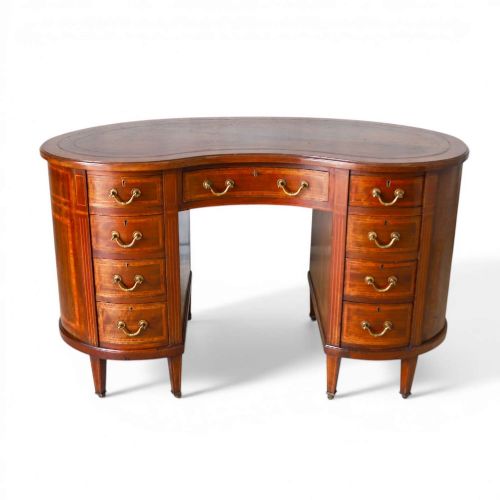
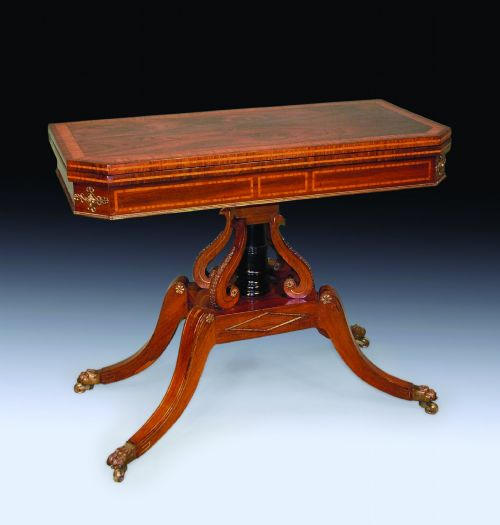
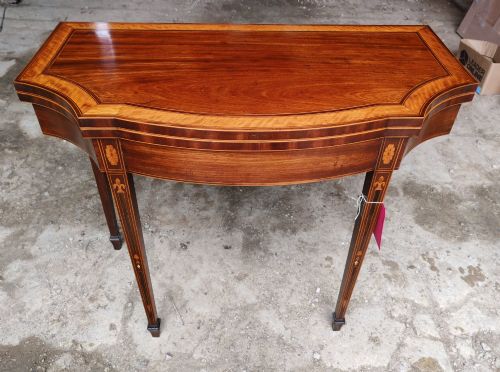
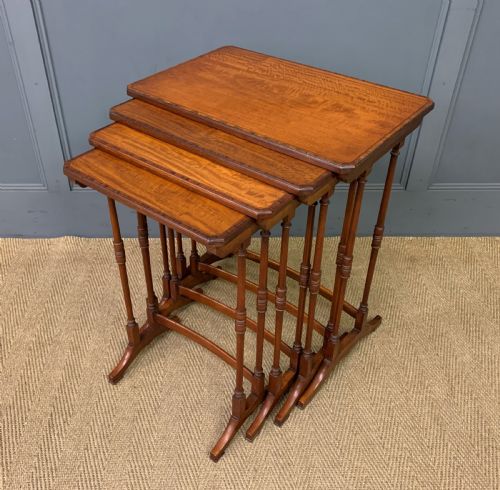
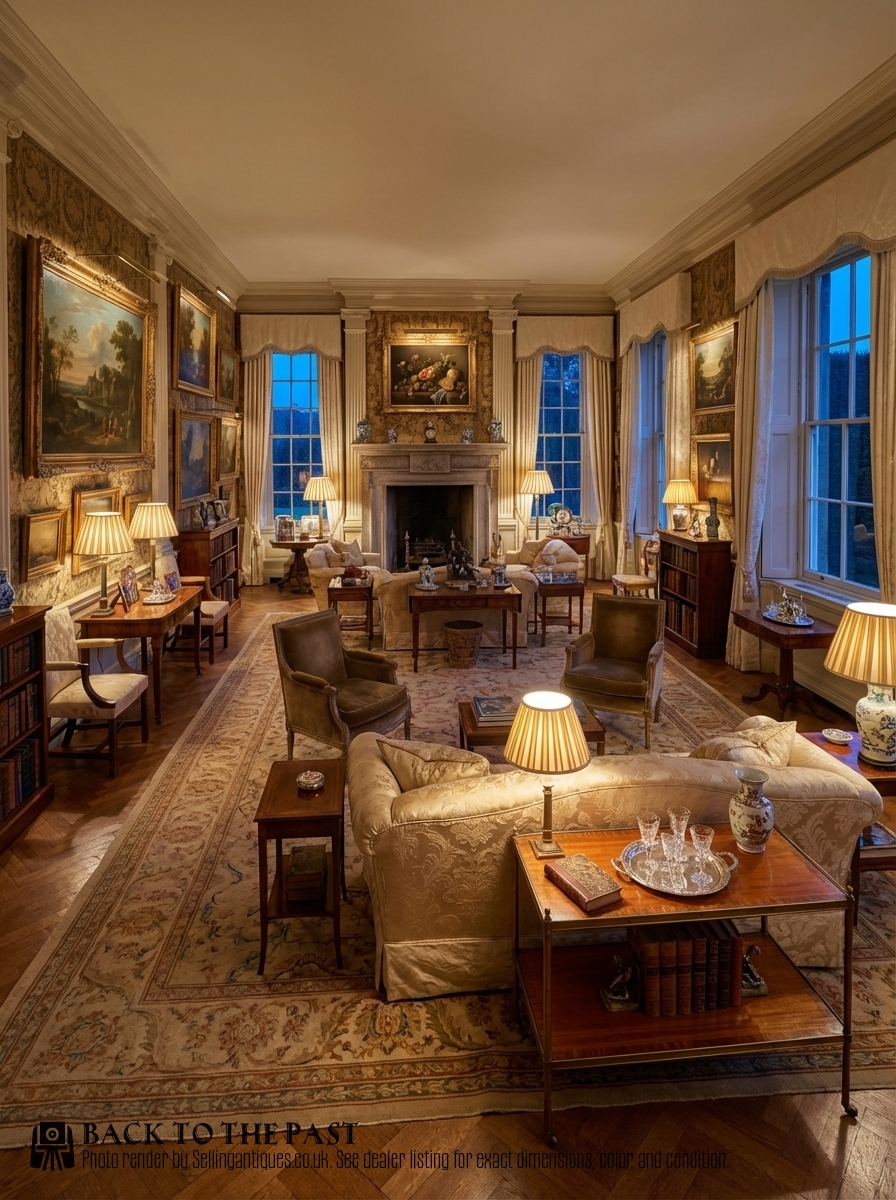
A crossbanded satinwood table is a piece of antique furniture defined by its striking timber framing and luminous central grain. Buyers searching for a crossbanded satinwood table encounter forms ranging from fold-over card tables and pembroke tables to console tables, dressing tables, and low etagere tiers.
The pieces on this page span the Georgian and Edwardian eras, alongside later interpretations made in the 1920s and 1930s in a Georgian style. These surfaces served various domestic uses, from the formal drawing room card table to the private bedroom dressing table.
Mahogany often forms the primary carcase or structural timber, contrasted with lighter satinwood veneers and darker decorative borders. Console tables and hall tables provide architectural presence, while Pembroke and card tables offer folding or drop leaves designed for flexibility.
How they were made
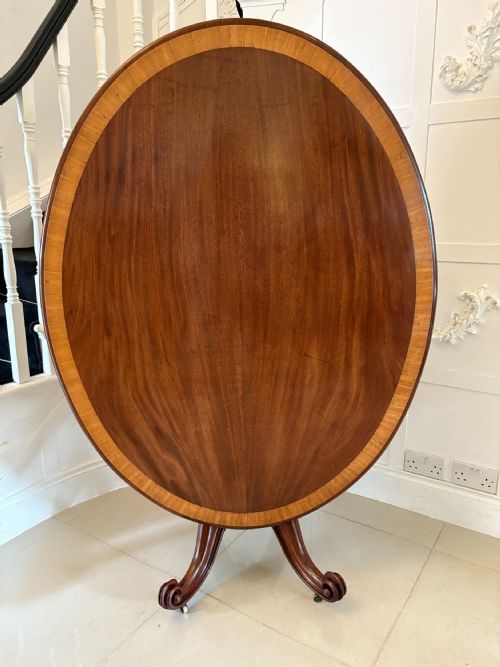
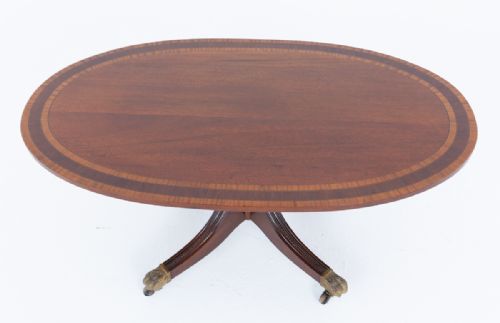
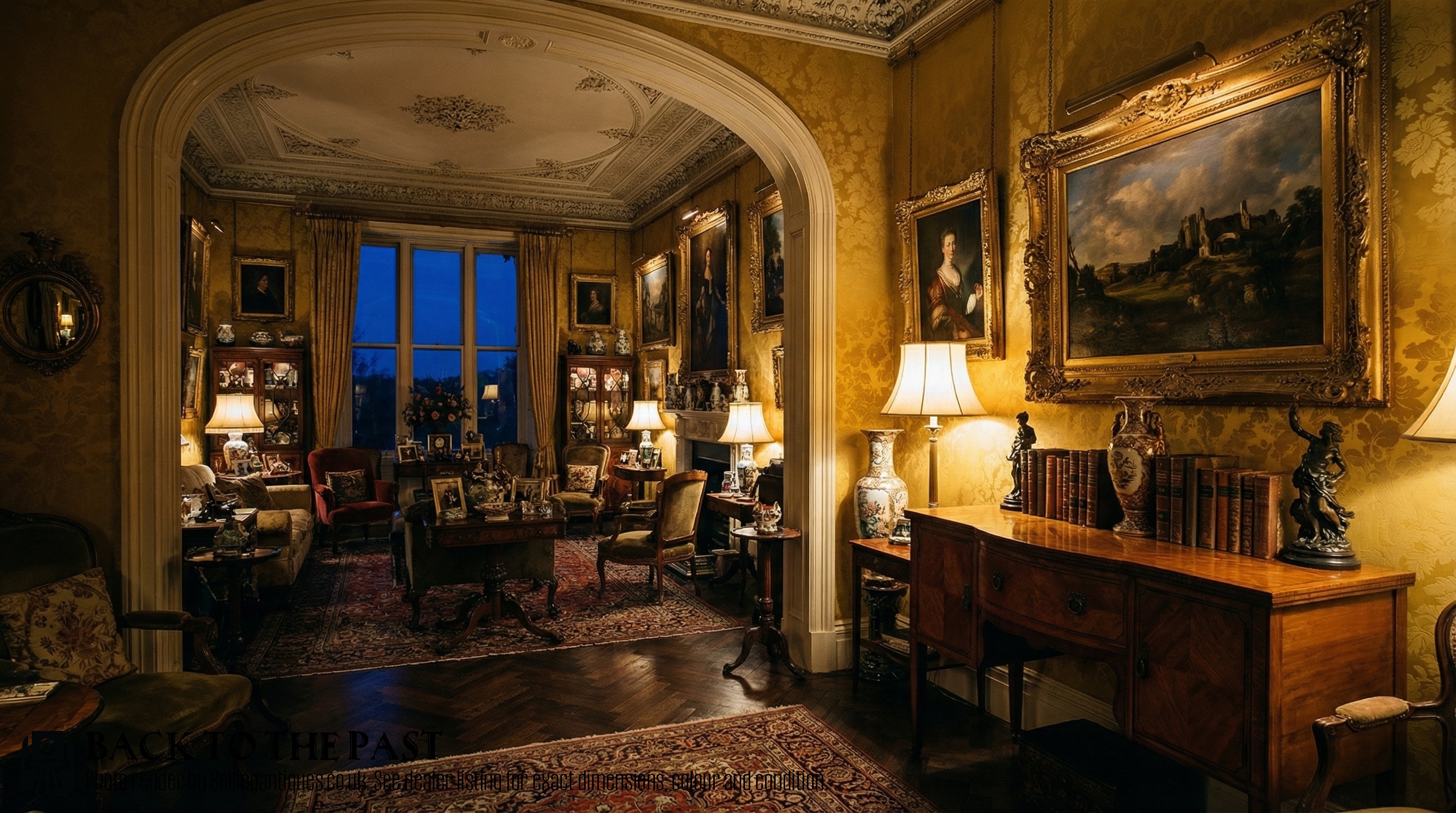
Cabinet makers constructed these pieces using solid timbers such as mahogany, applied with fine satinwood veneers to create luminous top surfaces. Crossbanding involves laying veneer strips perpendicularly to the grain of the main top, framing the central panel with a disciplined geometric border.
Inlay and stringing techniques introduced further linear definition, incorporating contrasting woods like boxwood, ebony, hazelwood, rosewood, and tulipwood. Brass fittings such as cast frames or handles appeared on specific forms, while edge stringing demanded precise hand-cutting and fitting by skilled artisans.
Retail Price Guide 2026
Typical UK retail prices for crossbanded satinwood table, calculated from the Sellingantiques database of over a million retail prices indexed since 2003. This retail price guide relies exclusively on Sellingantiques data; no external sources or auction records are used, so the figures do not describe the wider market.
Listings feature items from the Georgian and Edwardian periods, alongside 1920 and 1930 interpretations.
What varies in quality
Quality rests in the selection of the timber figures and the precision of the contrasting border work. Master cabinet makers chose satinwood for its natural chatoyancy, ensuring the grain catches the light differently as one moves around the room.
The crispness of the crossbanding and stringing dictates the refinement of the piece. Subtle variations in wood selection, such as pairing mahogany with rich rosewood or delicate boxwood borders, elevate the visual depth of the furniture.
The Crossbanded Satinwood Table Glossary
- Crossbanding
- A border of veneer laid with the grain running perpendicular to the central panel, creating a framed effect.
- Satinwood
- A pale, lustrous hardwood prized for its golden colour and reflective, dappled grain.
- Stringing
- Thin lines of contrasting timber inlaid into channels on the surface to form decorative borders.
- Pembroke table
- A small, drop-leaf table with hinged flaps on opposing sides designed for versatile placement.
- Etagere
- An open tiered shelving unit used for displaying small decorative objects or books.
Frequently Asked Questions
What is a crossbanded satinwood table?
A crossbanded satinwood table is a piece of antique furniture featuring a luminous satinwood surface framed by a perpendicular border of contrasting timber veneer.
These pieces range from console and hall tables to pembroke, card, and dressing tables produced across the Georgian and Edwardian periods.
Where were these tables used?
Such tables were placed in reception rooms, halls, and bedrooms depending on their specific form and function.
Card tables and console tables furnished formal living spaces, while dressing tables and pembroke tables served private chambers and sitting rooms.
How do I care for satinwood?
Satinwood furniture benefits from gentle dusting with a soft, dry cloth and protection from direct sunlight and excessive heat.
Aimed at preserving the delicate veneers and polish, avoiding moisture and harsh chemical cleaners ensures the timber retains its natural lustre.
How can I tell the period?
Dating relies on observing construction methods, timber choices, and stylistic cues characteristic of Georgian, Victorian, or Edwardian cabinet making.
While 18th-century pieces display specific structural joinery and native hardwoods, later 19th and early 20th-century examples often emulate these earlier classical proportions.