
Inlaid Satinwood Furniture
Inlaid satinwood furniture brings luminous timber and delicate banding into living spaces, offering refined proportions from eighteenth-century and Edwardian workshops.
Inlaid Satinwood Furniture
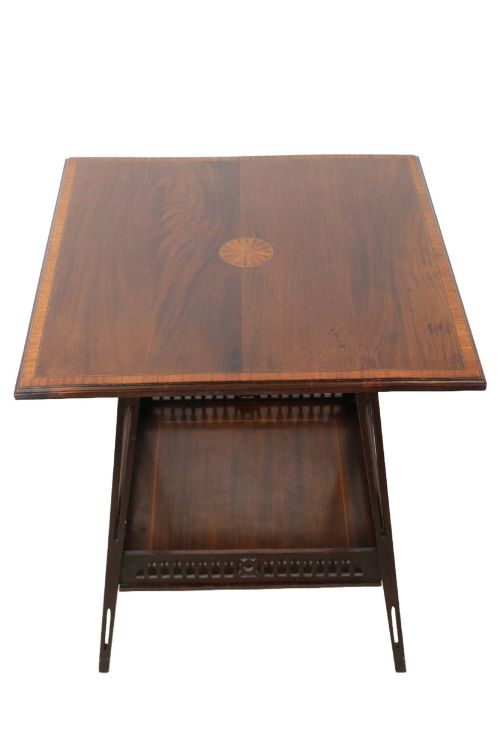
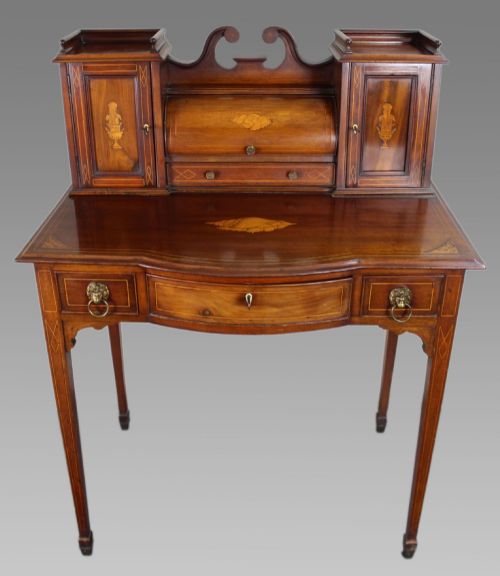
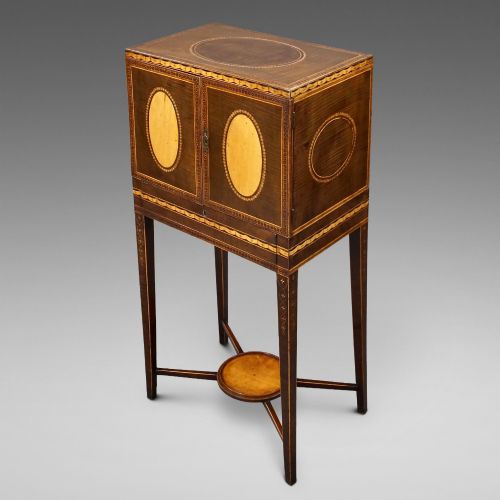
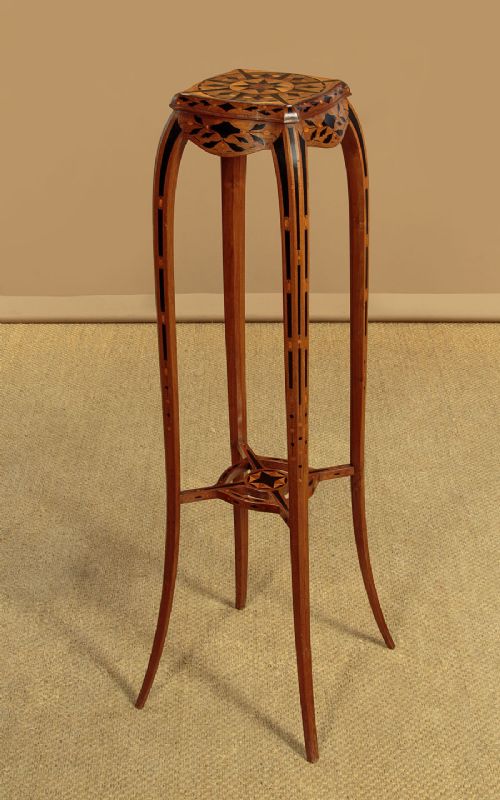
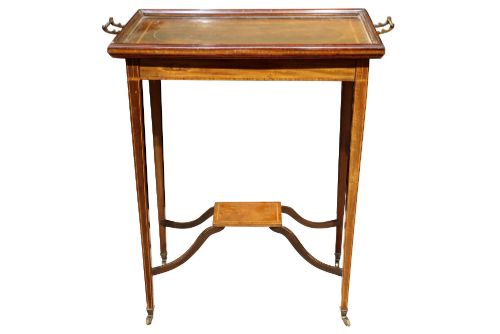
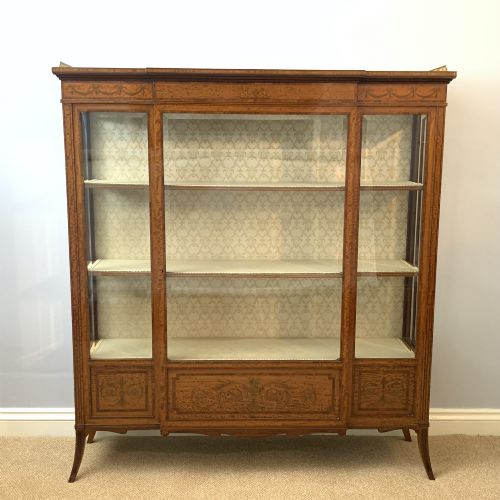
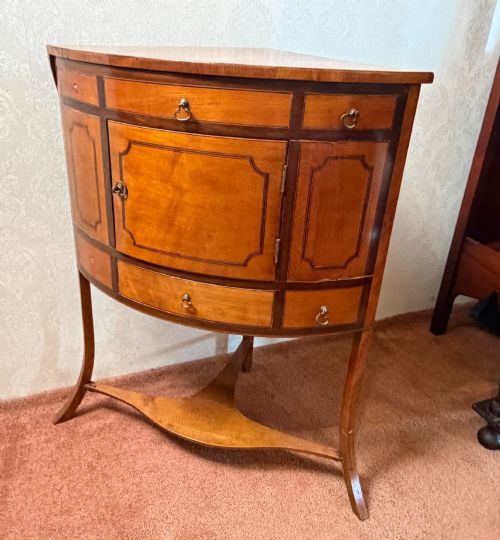
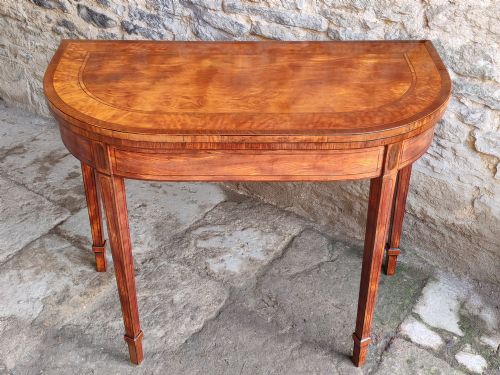
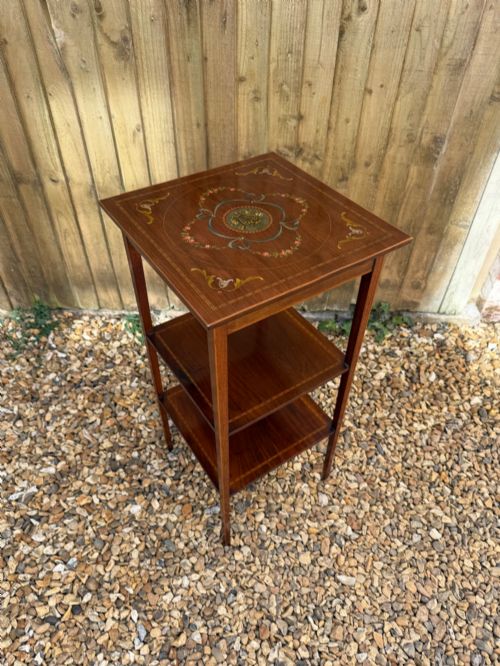
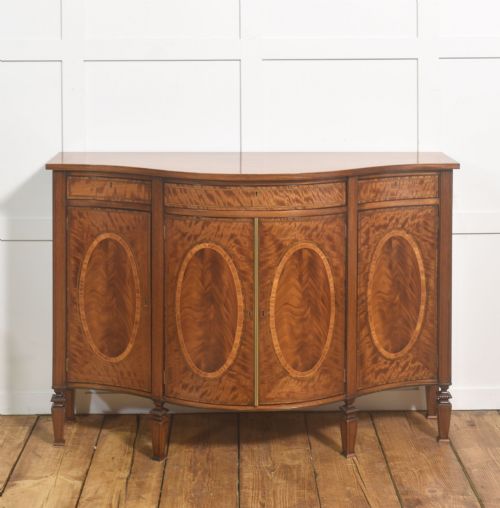
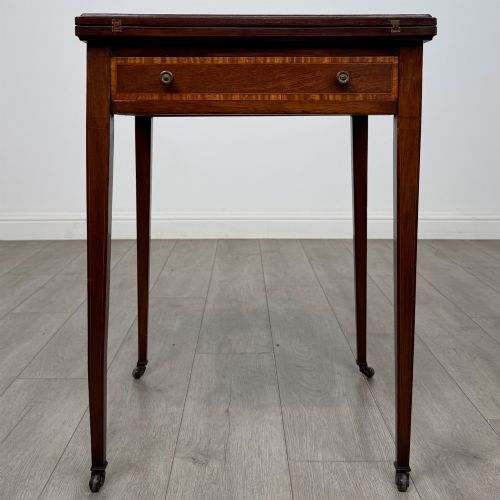
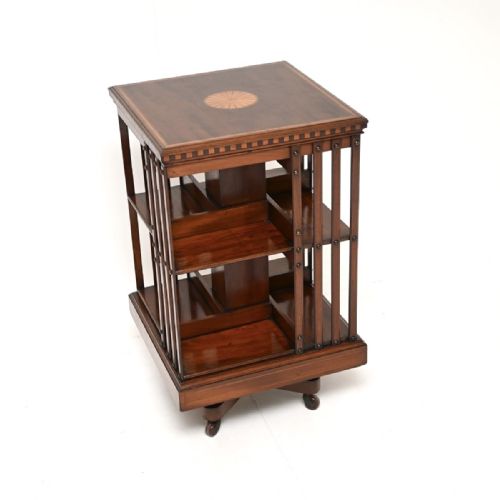
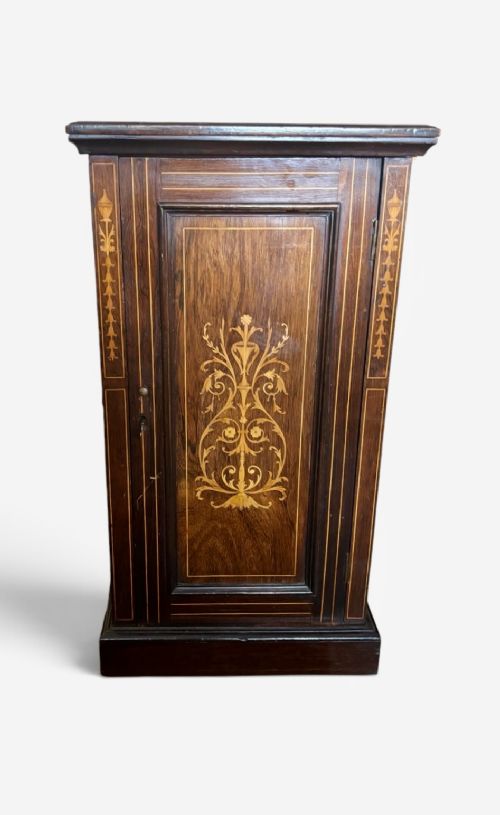
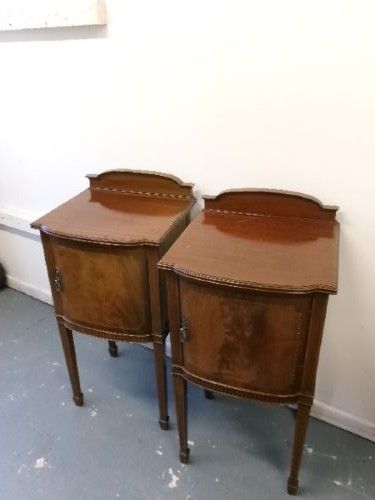
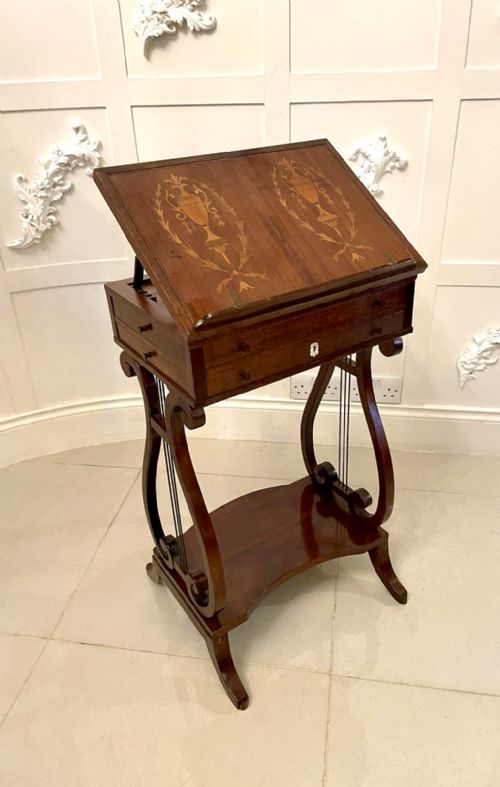
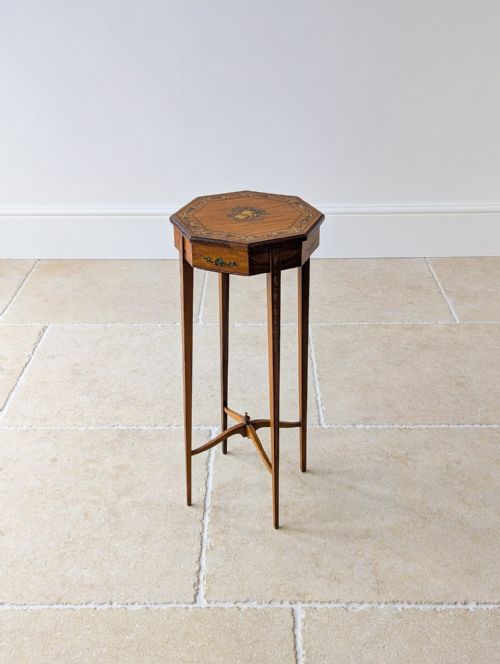
Inlaid satinwood furniture encompasses a diverse selection of utilitarian and decorative forms, ranging from compact card tables and revolving bookcases to expansive display cabinets and writing desks. Buyers searching for inlaid satinwood furniture encounter pieces originating predominantly from the Edwardian era and the eighteenth century, alongside Victorian examples.
The Edwardian period supplies the majority of surviving items on this page, often manifesting as mahogany carcasses enriched with satinwood panels and contrasting bandings. Earlier eighteenth-century pieces appear in more select quantities, showcasing native cabinet-making skill from the Georgian and Sheraton periods.
Materials and Technique
Craftsmen built these items using a primary timber such as mahogany, rosewood, or solid satinwood, upon which pale satinwood veneers and contrasting stringing were applied. Secondary woods like boxwood and ebony formed intricate floral or geometric inlays, requiring precise hand-cutting and fitting into recessed channels.
Surface ornamentation often included painted motifs alongside the traditional woodwork, while structural elements integrated brass hardware, glass panels, and leather writing inserts. Cabinet-makers balanced contrasting grains to create optical depth across table tops, cabinet doors, and desk surfaces.
Inlaid Satinwood Furniture Retail Price Guide 2026
Typical asking prices for inlaid satinwood furniture among the pieces listed under this phrase on Sellingantiques today, from the lower quarter to the upper quarter. They describe what is for sale here now, not the wider market.
A surprise drinks cabinet awaits those who appreciate hidden compartments nestled inside Edwardian mahogany.
Design and Execution
Superior examples demonstrate meticulous alignment of the inlay work, where botanical or geometric patterns flow seamlessly across drawer fronts and table edges without visible gaps in the contrasting timbers. The crispness of the painted details and the selection of highly figured satinwood veneer distinguish master workshops from standard production items.
Construction methods determine durability, visible in the tightness of the joinery on revolving bookcases and the smooth operation of drop-front desks or card table pivots. Finer pieces retain original brass handles, well-fitted glass, and intact internal fittings such as pigeonholes or lined compartments.
Trevor Page & Co·Edwards & Roberts·Morant & Co·Maple & Co
The Inlaid Satinwood Furniture Glossary
- Satinwood
- A hard, yellow-toned timber prized for its lustrous grain and smooth texture. It serves as the primary veneer for decorative highlights on classical cabinet work.
- Inlay
- A technique where pieces of contrasting wood, metal, or shell are inserted into recesses flush with the surface of the main timber. This method creates decorative borders and pictorial motifs.
- Sheraton Revival
- A late nineteenth and early twentieth-century design movement inspired by the neoclassical furniture of George Sheraton. It reinterprets light proportions, painted decoration, and satinwood veneers.
- Stringing
- Thin strips of contrasting wood embedded in linear channels around the edges of table tops and drawer fronts. It frames the central panels and defines the geometric outline.
- Banding
- A decorative border composed of contrasting wood veneers arranged to form a repeating pattern around the perimeter of a panel or table top.
Inlaid Satinwood Furniture: Frequently Asked Questions
How do I care for satinwood surfaces?
Maintain satinwood by keeping pieces away from direct sunlight and extreme temperature fluctuations to prevent veneer cracking. Apply a microcrystalline wax periodically to nourish the timber and protect the polished finish.
Avoid using liquid cleaners, silicone sprays, or damp cloths on the wood. Dust gently with a dry, soft cloth to preserve the delicate inlay and stringing.
Were these tables used daily?
Card tables, writing desks, and occasional tables served functional roles in period drawing rooms and parlours. They accommodated social card games, correspondence, and decorative objects during formal household routines.
Many folding tables and smaller stands were designed to be moved easily around the room as needed. Their robust internal hinges and pivoting tops supported practical everyday use.
How can I distinguish Edwardian pieces from 18th century originals?
Edwardian revival pieces often utilise machine-sawn veneers, standardised brass fittings, and secondary timbers like birch or deal inside drawer construction. They frequently combine a mahogany frame with satinwood panels rather than utilising solid satinwood throughout.
Eighteenth-century examples display hand-cut dovetails, older secondary woods such as oak or pine, and subtle patination developed over long periods. The construction techniques and tool marks on internal surfaces reveal the earlier hand-working methods.
Where should I place a display cabinet?
Position display cabinets and side cabinets against interior walls away from heat sources and windows to protect the fragile veneers and glass contents. Ensure the floor is level so the doors hang straight and latch correctly.
Allow enough surrounding space to open doors fully without obstruction. These pieces function well in studies, drawing rooms, or hallways where their reflective satinwood surfaces brighten the room.