
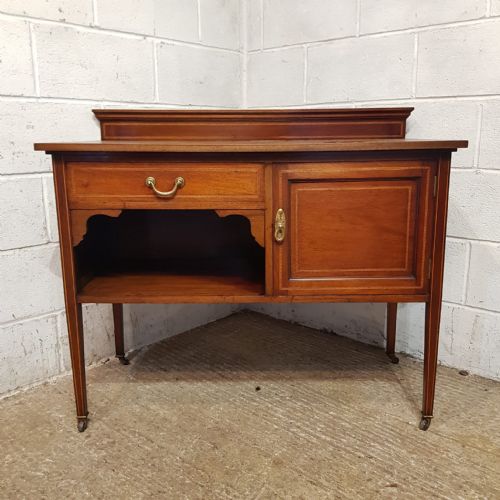
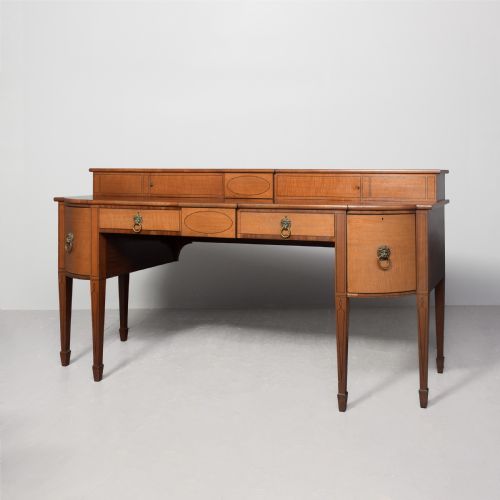

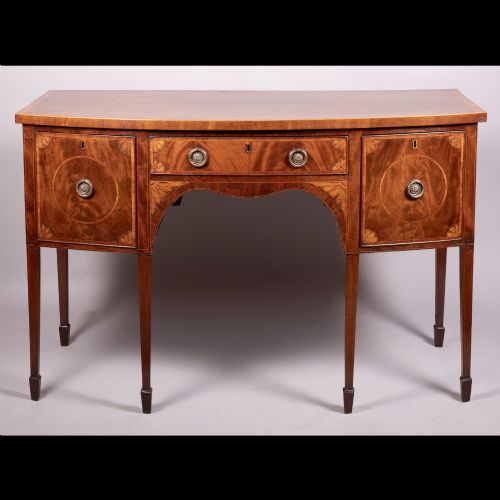
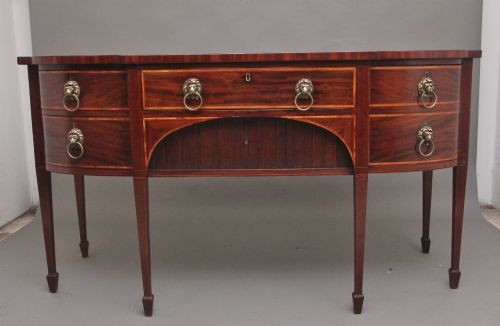
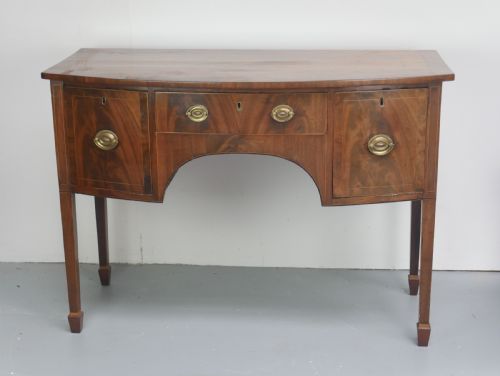
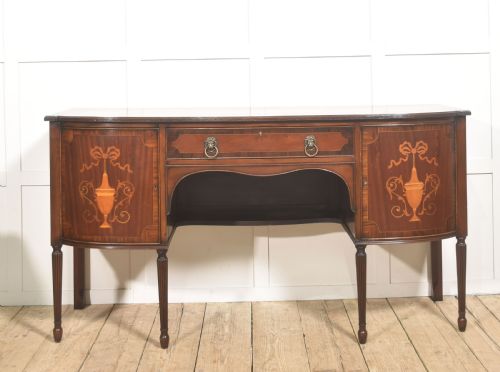
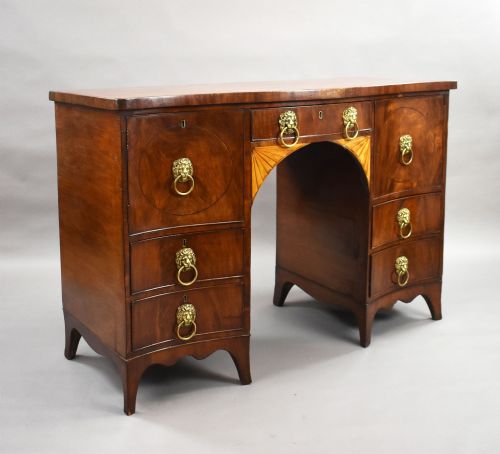
Inlaid Mahogany Sideboard Table
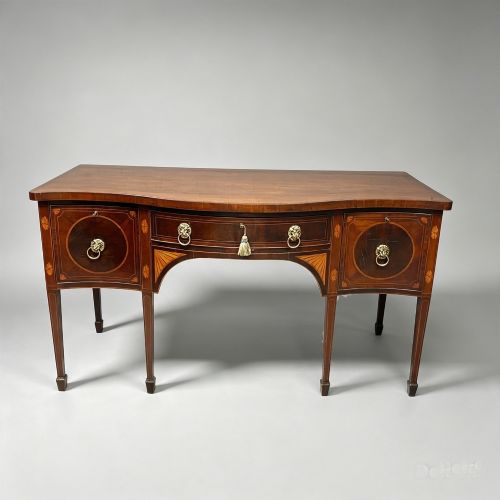
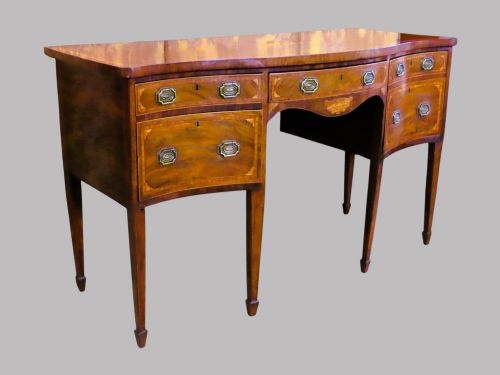
An inlaid mahogany sideboard table combines deep timbers with precise contrasting stringing, serving as a formal dining room centrepiece.
Inlaid Mahogany Sideboard Table
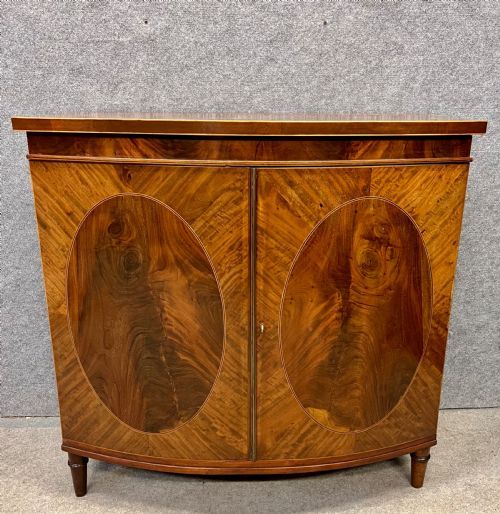
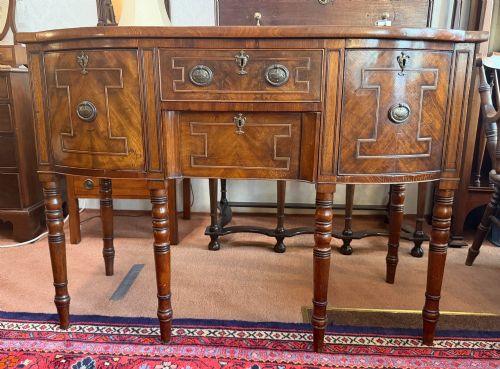
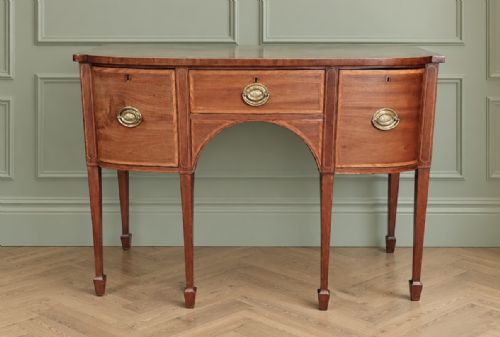
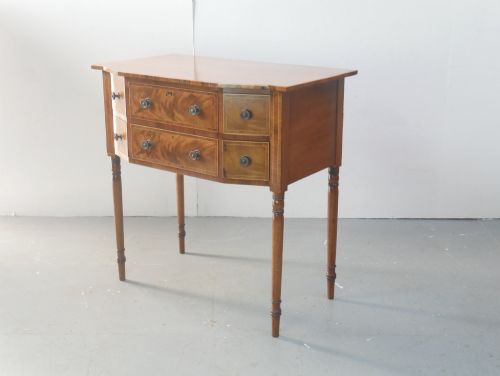
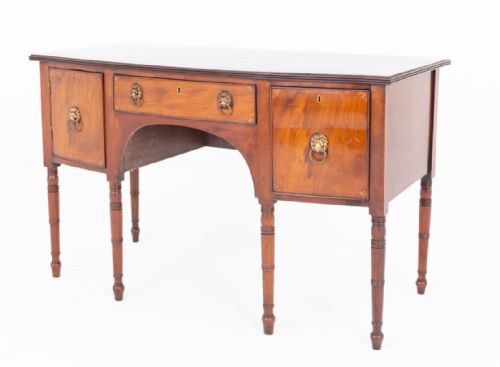
An inlaid mahogany sideboard table search brings up dining room servers, console tables and large storage pieces from the Georgian, Regency and Edwardian eras. The most frequent pieces are bow-front and serpentine sideboards dating to the late eighteenth and early nineteenth centuries, alongside later Sheraton Revival examples.
Makers designed these items for formal serving and storage in dining spaces, utilising shapes ranging from straight fronts to breakfronts and demi-lune cabinets. Scottish and English workshops produced these forms in varying scales, from compact small sideboards to large stage-back and six-legged variants.
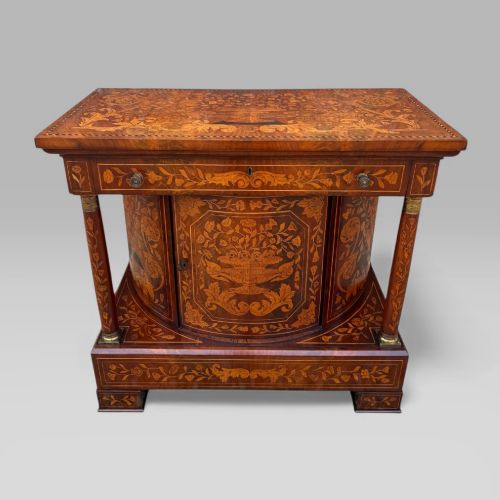
The material palette spans the eighteenth, nineteenth and early twentieth centuries, capturing periods when mahogany served as the primary structural and surface timber. Pieces from this selection range from strict Georgian styles to Dutch Baroque and later revival interpretations.
Materials and technique
Carpenters constructed these items primarily from solid and veneered mahogany, frequently selecting figured grain for drawer fronts and top surfaces. Workshops then applied contrasting details using boxwood, satinwood and ebony.
Inlay techniques defined the ornamentation, featuring delicate stringing, marquetry panels and geometric crossbanding around the borders. Brass hardware, including handles and occasional inlay strips, completed the construction on formal Regency and Georgian pieces.
Listings feature pieces spanning the Georgian, Regency and Edwardian eras, constructed from mahogany with boxwood, satinwood and ebony inlay.
Judging the range
The distinction between ordinary and superior pieces rests on the precision of the timber selection and the crispness of the joinery. Fine examples display carefully matched grain patterns across multiple drawers and doors, maintaining structural integrity without warping.
Quality also shows in the execution of the wood inlay and crossbanding, where contrasting timbers fit flush into the mahogany ground without gaps. The integration of secondary woods inside drawers and the refinement of brass mounts separate standard utility items from high-status dining furniture.
George Oakley
The Inlaid Mahogany Sideboard Table Glossary
- Bow-front
- A convex curved cabinet front that swells outward in the centre. This shape became popular during the late eighteenth century on dining room sideboards.
- Serpentine
- A front contour characterised by a concave central section flanked by convex ends, or the reverse. It requires advanced woodworking skill to execute properly.
- Crossbanding
- A border strip of veneer laid around the perimeter of a surface with the grain running perpendicular to the centre. It provides a neat framing effect on drawer fronts.
- Marquetry
- Elaborate pictorial or decorative patterns formed by the insertion of various coloured woods into a veneer ground. Dutch makers utilised this technique extensively.
- Stringing
- Thin lines of contrasting wood inlay set into shallow channels on furniture surfaces. This linear detail defines panel borders and edge work.
Inlaid Mahogany Sideboard Table: Frequently Asked Questions
What is an inlaid mahogany sideboard table used for?
These pieces function primarily as serving surfaces and storage units in dining rooms. Historic households utilised the drawers and cupboards for cutlery, linen and serving dishes during meals.
Today, they serve a similar purpose in domestic interiors while acting as prominent decorative furniture against a dining room or hallway wall.
How do I tell a Georgian piece from an Edwardian revival?
Georgian pieces date from the eighteenth and early nineteenth centuries, exhibiting period construction methods, hand-cut dovetails and older secondary timbers like oak or pine. They show natural wear consistent with active use over two centuries.
Edwardian revival items date from around nineteen hundred, often copying Sheraton styles with cleaner internal construction, different secondary woods, and lighter framing overall.
What woods appear alongside mahogany in these tables?
Workshops utilised satinwood and boxwood for light-coloured contrasting inlay, stringing and banding details. Ebony occasionally provided dark accents.
Secondary woods inside drawers typically include oak, pine or deal, depending on the regional workshop and the period of manufacture.
Where were these sideboards manufactured?
The majority of these pieces originate from English and Scottish workshops operating during the Georgian and Regency periods. Regional centres produced distinct variations in scale and proportion.
Continental makers, particularly in the Netherlands, produced distinct marquetry-decorated console tables and cabinets during the eighteenth century.
How should I care for a mahogany sideboard?
Keep the wood away from direct heat sources and strong sunlight to prevent the mahogany and internal veneers from drying out or fading. Maintain a stable indoor humidity.
Apply traditional wax polish sparingly to nourish the timber surface and buff gently with a soft cloth to preserve the finish.