
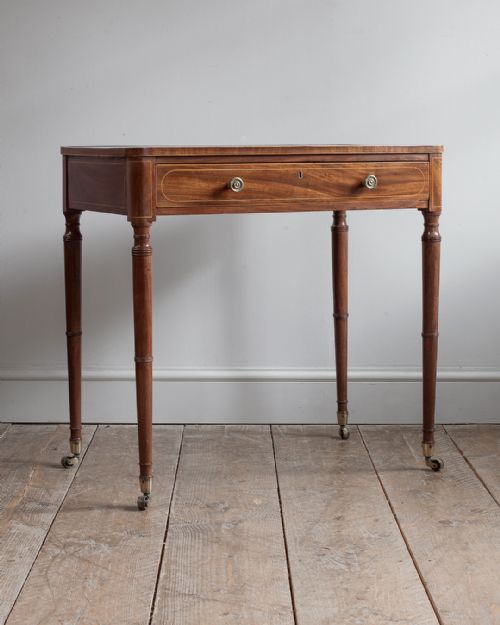
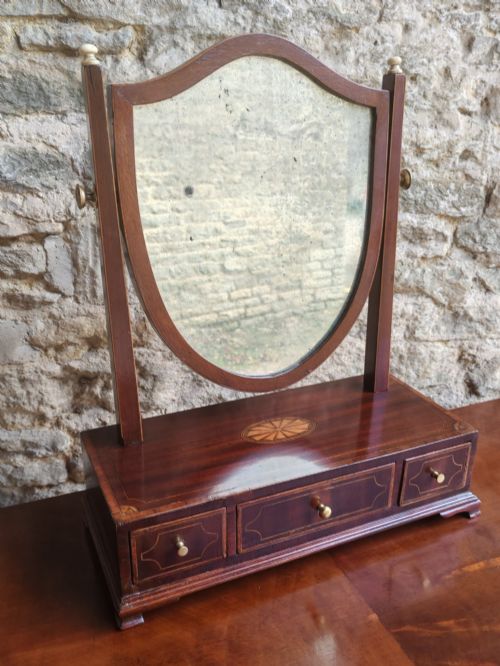
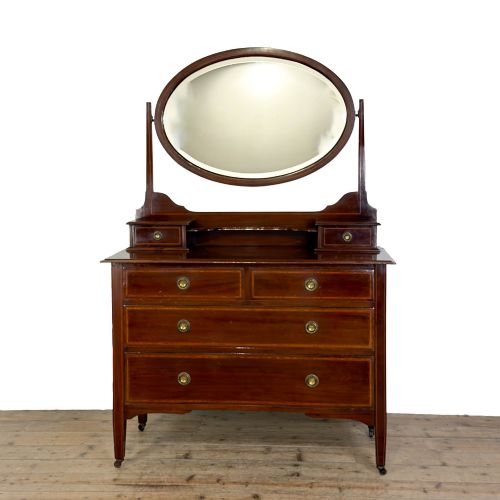

Inlaid Mahogany Drawer Table
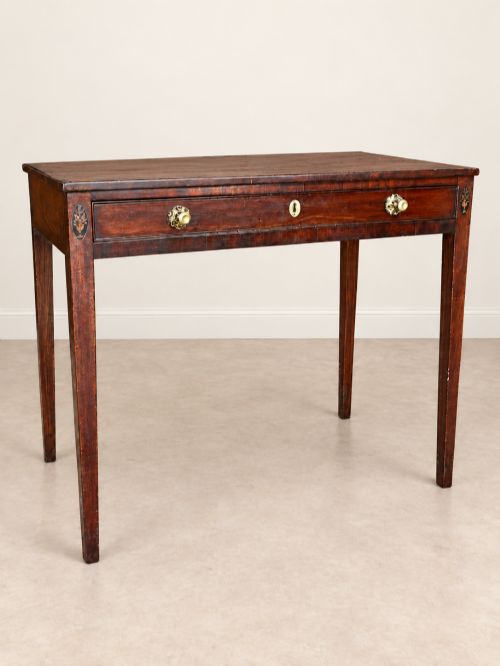
An inlaid mahogany drawer table brings timber warmth and restrained linear decoration into a room, serving daily utility with period character.
Inlaid Mahogany Drawer Table
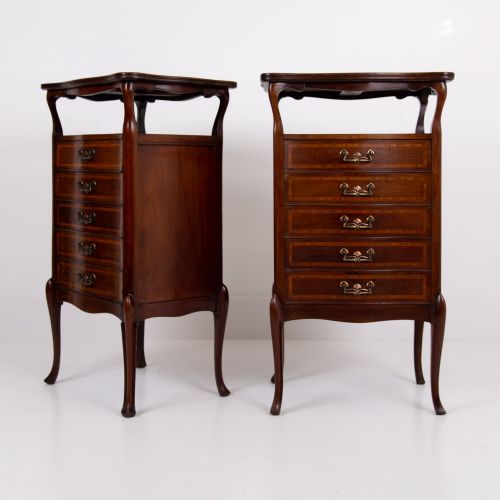
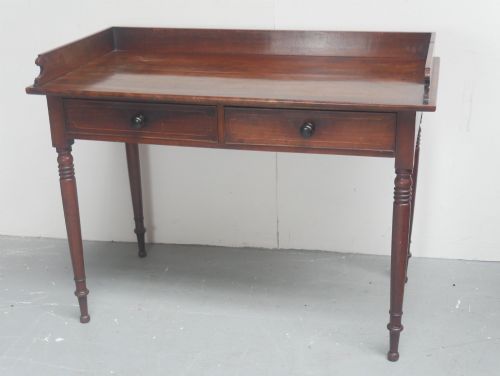
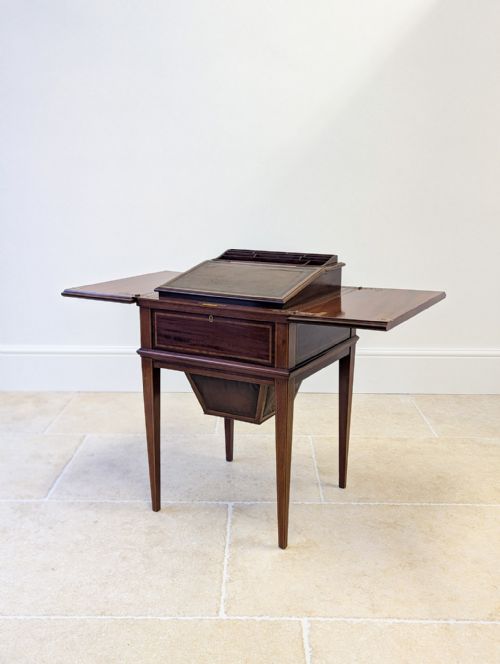
An inlaid mahogany drawer table combines the deep reddish-brown tones of tropical timber with contrasting lighter wood details, providing practical surface space and concealed storage. Buyers searching for an inlaid mahogany drawer table encounter forms ranging from compact occasional pieces to larger writing desks and serving consoles.
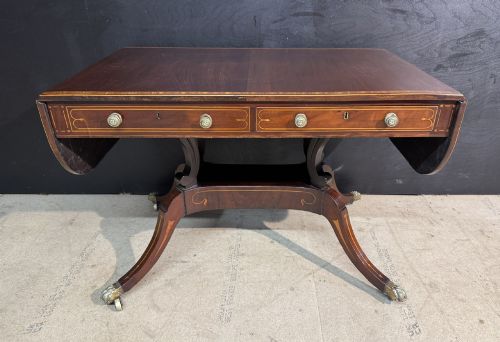
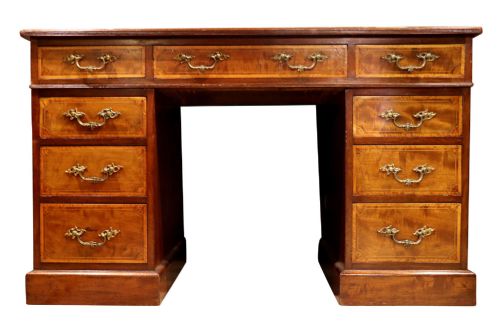
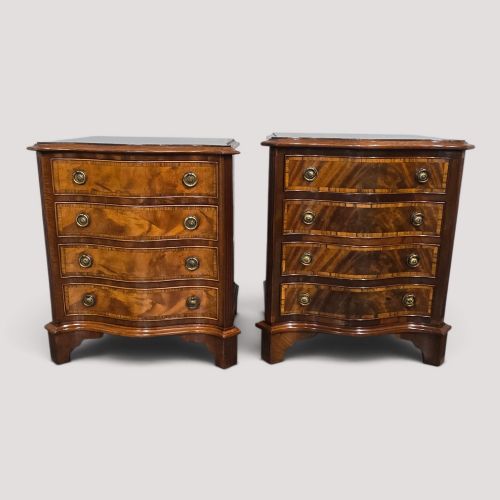
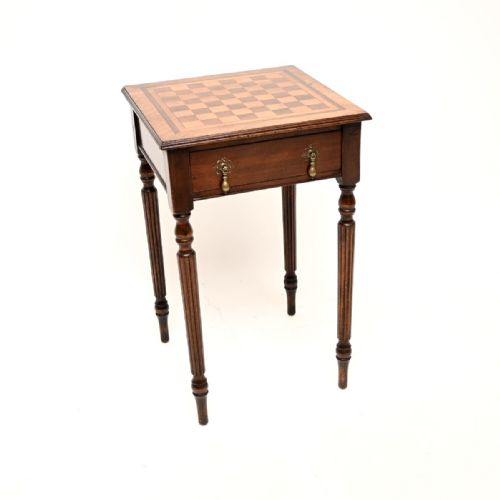
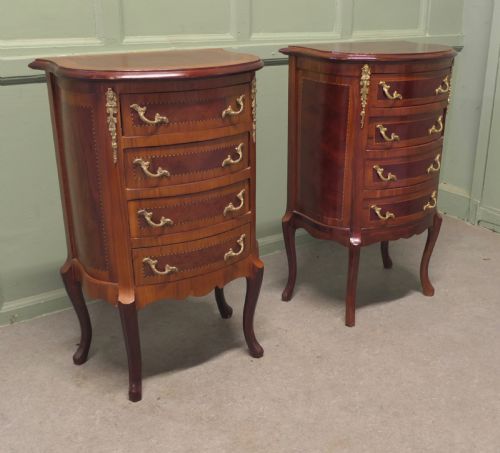
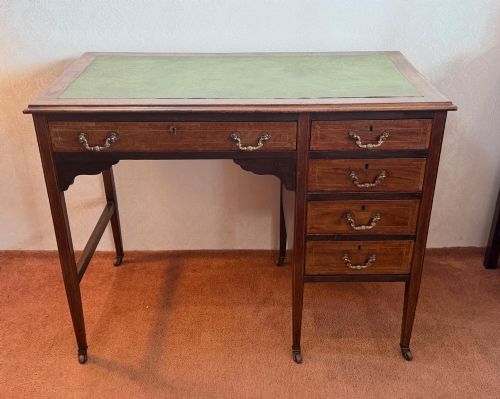
The selections span multiple eras, with Edwardian interpretations and Georgian exemplars appearing alongside 19th-century variants. Side tables, writing tables, and kneehole desks dominate the available pieces, often featuring one, two, or multiple frieze drawers.
Makers and cabinetmakers working in the Sheraton Revival, Georgian, and Regency styles utilised classic proportions and slender legs. These tables suit hallways, drawing rooms, and studies where a blend of utility and decorative inlay is required.
How they were made
Makers constructed the primary carcases from solid or veneered mahogany, incorporating secondary timbers such as oak for drawer linings. Timber selection focused on rich grain patterns and durability.
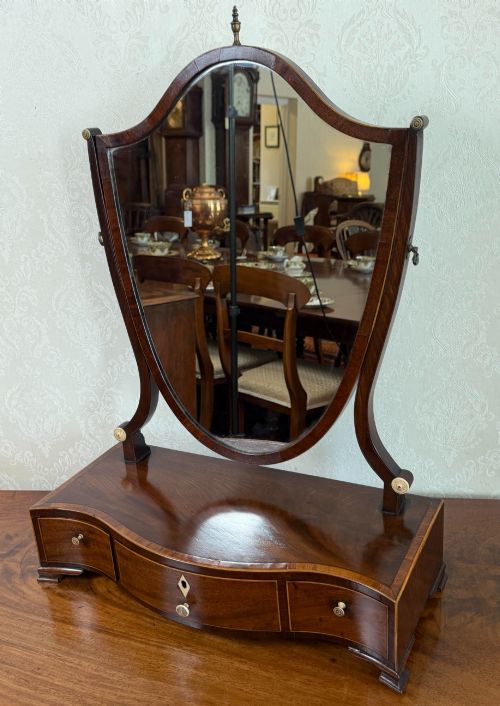
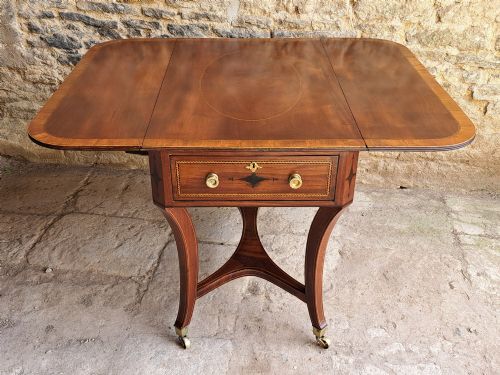
Surface decoration relied on precision inlay techniques, employing satinwood, boxwood, and general wood stringing to create geometric borders, shell motifs, or classical swags. Brass hardware, handles, and occasional ormolu mounts completed the construction of the drawers and supports.
Current listings feature inlaid mahogany drawer tables spanning the Georgian, Regency, Victorian, and Edwardian periods, alongside Edwardian and Sheraton Revival styles.
What varies in quality
Quality rests upon the crispness of the cabinetmaking, visible in the tight tolerances of the drawer dovetails and the alignment of the secondary wood linings. Superior examples exhibit hand-cut joints and clean internal construction rather than hurried assembly.
The intricacy and preservation of the inlay define the visual tier of each piece. Finer tables feature sharp, complete satinwood and boxwood line work that remains flush with the surrounding mahogany surface.
Edwards & Roberts
The Inlaid Mahogany Drawer Table Glossary
- Inlay
- A decorative technique where pieces of contrasting timber, such as satinwood or boxwood, are set into recesses flush with the mahogany surface. This method creates geometric lines or pictorial motifs.
- Frieze drawer
- A drawer integrated directly into the structural band beneath the table top. These drawers often feature original brass handles or pull rings.
- Satinwood
- A lustrous, yellow-toned timber utilised extensively for contrasting inlay work and banding during the Georgian and Edwardian periods. It provides a bright visual counterpoint to dark mahogany.
- Stringing
- Thin, narrow strips of light-coloured wood inlaid in shallow channels around the edges of table tops and drawer fronts. This linear detail defines the Sheraton and Regency styles.
- Dovetail
- A traditional wood joint formed by interlocking wedge-shaped fingers, securing drawer corners with exceptional strength. Hand-cut dovetails indicate earlier craftsmanship.
Inlaid Mahogany Drawer Table: Frequently Asked Questions
How do I date an inlaid table?
Dating relies on examining construction methods, timber choice, and the style of the inlay work. Georgian pieces typically display hand-cut dovetails and subtle line inlay, while Edwardian revivals often incorporate machine-cut elements alongside Sheraton-inspired motifs.
Secondary woods inside the drawers also offer clues, as older workshops utilised regional timbers like oak before later factory standardisation.
Where should I place a drawer table?
These pieces function well in hallways as side serving tables or in studies as compact writing desks. Their shallow depth allows them to sit against walls without obstructing walkways.
Placing them away from direct sunlight preserves the rich colour of the mahogany and prevents the delicate satinwood inlay from fading.
How do I care for mahogany surfaces?
Maintain the finish by dusting with a dry, soft cloth and applying a traditional beeswax polish sparingly when the wood appears dry. Avoid silicone sprays or excessive moisture, which can degrade antique polishes.
Keep the table away from direct heat sources to prevent the mahogany veneer and fine boxwood inlay from warping or lifting.
What is the difference between a side table and a writing table?
A side table prioritises display and surface area, featuring shallow frieze drawers primarily meant for small flat items. A writing table is engineered for sitting and working, often featuring deeper kneeholes or leather-lined writing surfaces.
Writing tables also tend to exhibit sturdier leg construction to support active daily use.