

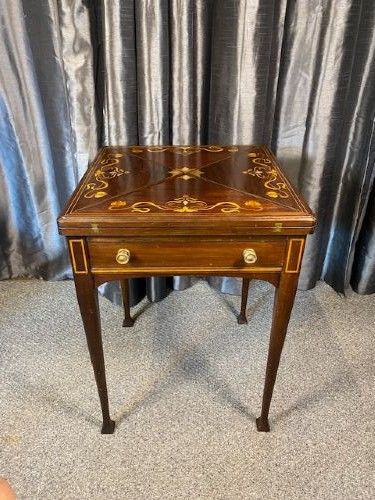
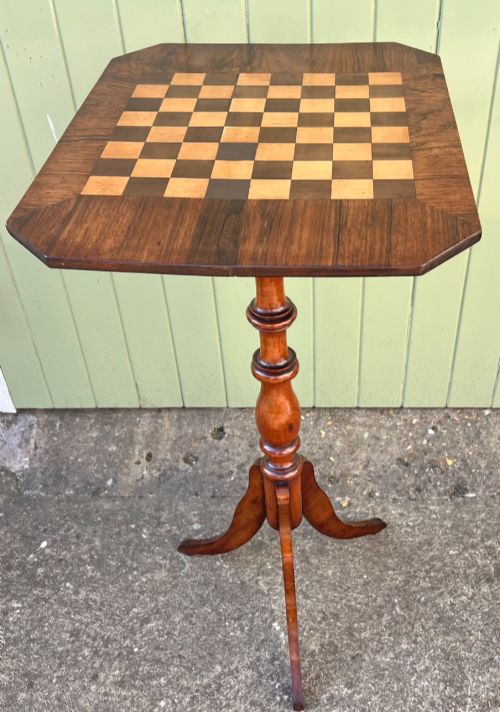
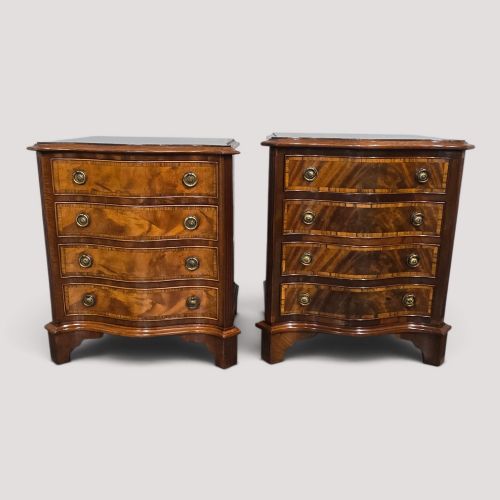
Inlaid Dark Wood Tables
Inlaid dark wood tables combine rich timbers with precise contrasting detail, offering both functional surfaces and striking decorative focus for a room.
Inlaid Dark Wood Tables
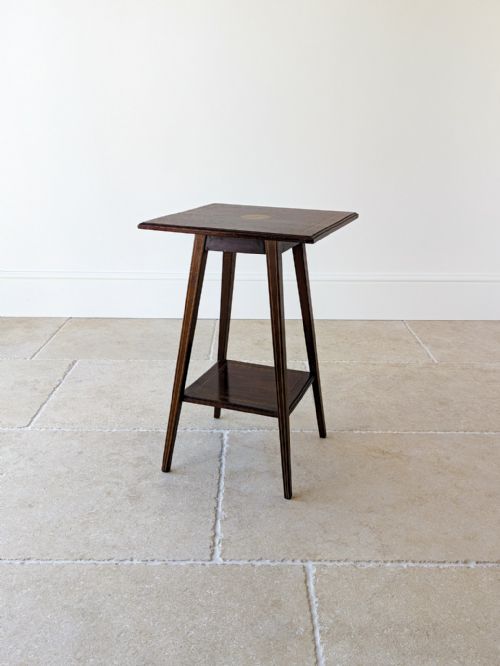
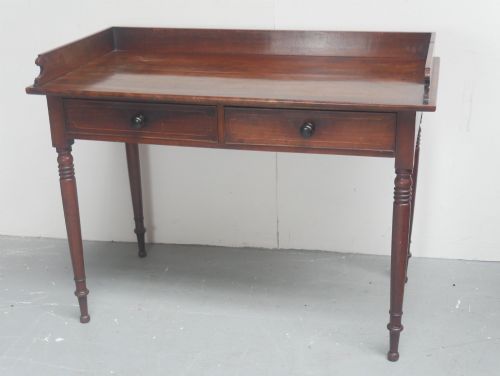
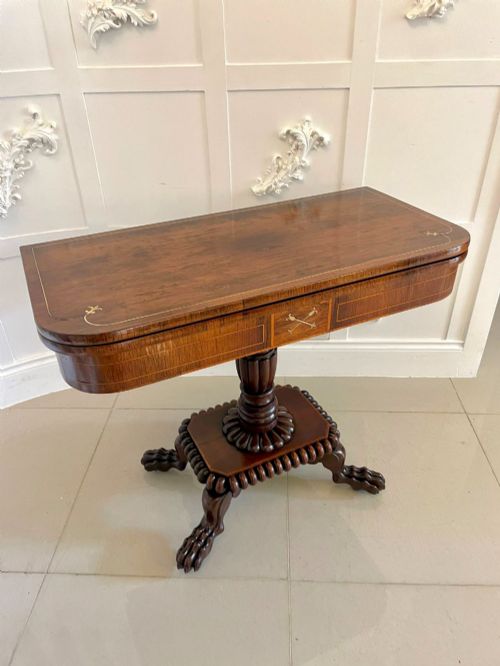
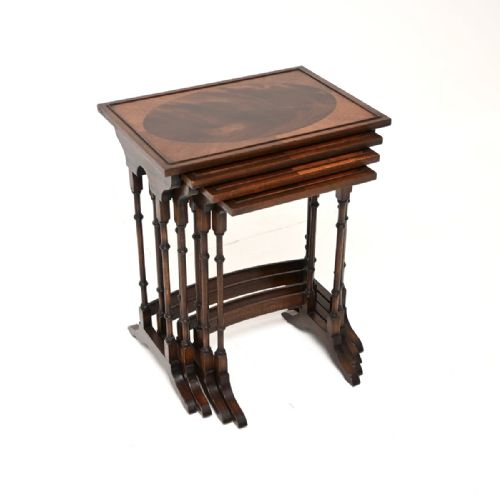
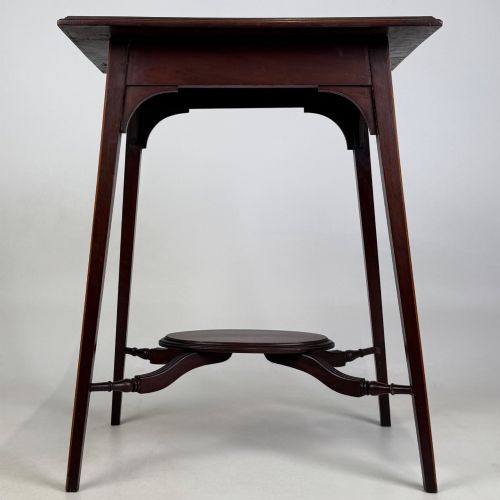
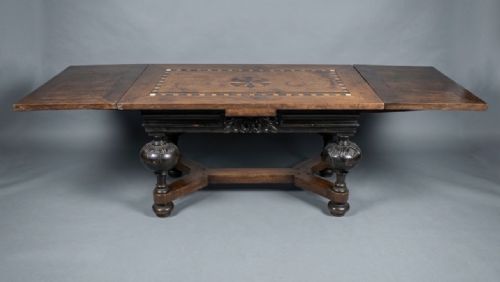
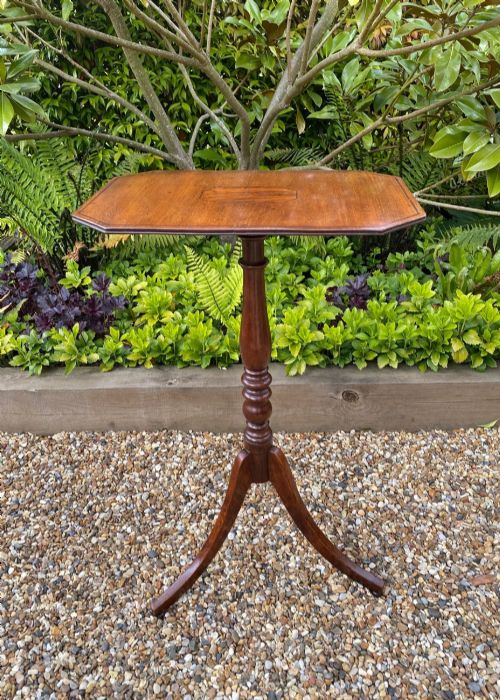
When you search for inlaid dark wood tables, you encounter a selection spanning the Georgian, Regency, Victorian and Edwardian eras. These pieces appear primarily as card tables, occasional tables and nests of tables designed for versatile domestic use.
Mahaogny and rosewood dominate the surfaces, whilst regional variations bring in specific craftsmanship styles from British workshops, Anglo-Indian makers and Moorish Revival influences. The selection ranges from folding card tables with intricate veneers to compact octagonal occasional stands.
Standards of execution
The distinction between standard and superior pieces rests upon the precision of the timber matching and the crispness of the inlay work. Finer examples display seamless integration of bone, brass or contrasting woods without gaps or filler in the joints.
Structural integrity of the legs, hinges on fold-over tops and the depth of hand-carved details further separate high-tier workshops from mass-produced domestic furniture of later decades.
Elephant-shaped occasional tables stand alongside standard card and wine tables.
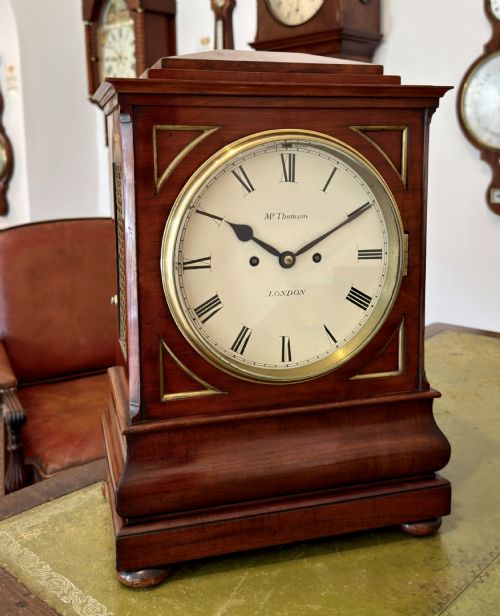
George Bullock·Liberty And Co·Thomson of London
The Inlaid Dark Wood Tables Glossary
- Inlay
- A technique where pieces of contrasting material are embedded into a recessed surface to form a design. This method creates a smooth, flush finish across the table top.
- Card table
- A folding table designed for gaming, typically featuring a baize-lined interior and a swiveling or fold-over top. These were popular in Georgian and Regency drawing rooms.
- Satinwood
- A durable, yellowish timber prized for its lustrous sheen and used extensively for contrasting stringing and banding on dark wood furniture. It provides sharp visual depth against mahogany.
- Hoshiarpur
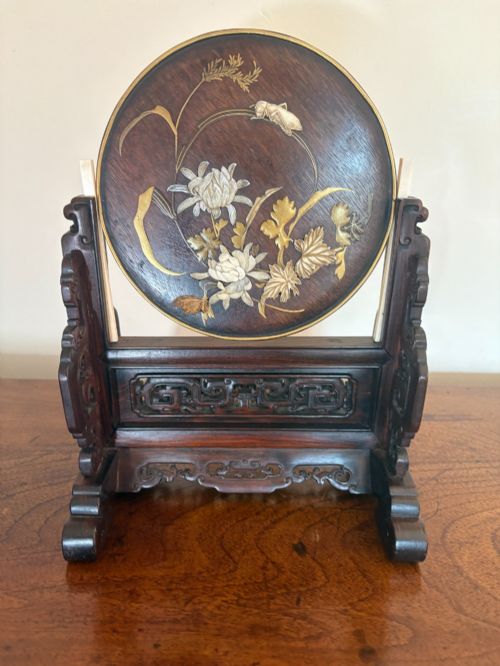
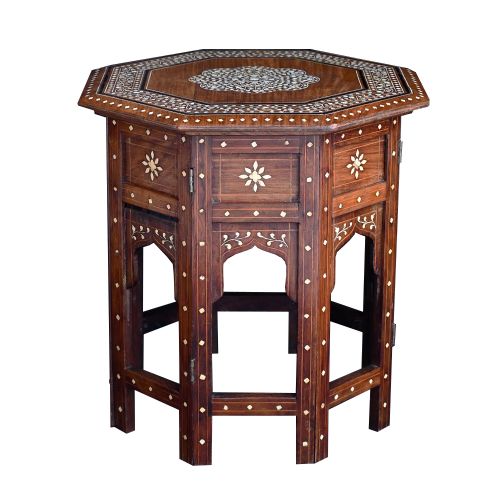
- A North Indian style of intricate woodwork characterised by dense floral carvings and geometric bone or brass inlays. Pieces from this tradition often utilise shisham or similar dark woods.
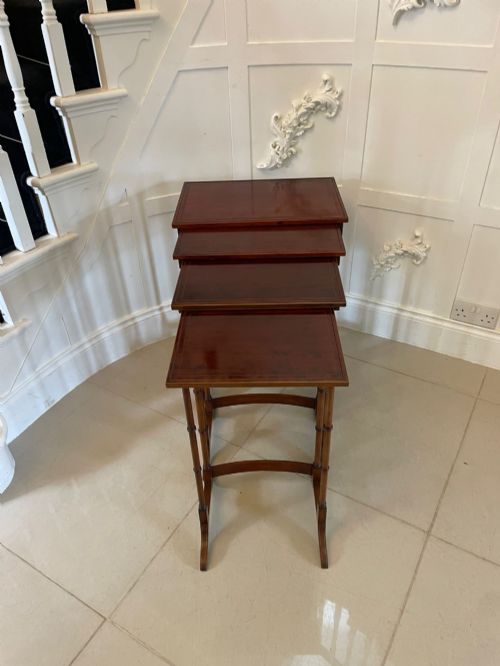
- Quartetto nest
- A set of four graduating tables that fit neatly beneath one another. Edwardian makers frequently produced these in mahogany with delicate inlay.
Inlaid Dark Wood Tables: Frequently Asked Questions
How do I date an inlaid dark wood table?
Dating relies on identifying the primary timber, the style of the legs, and the complexity of the inlay motifs. Georgian and Regency pieces typically display crisper hand-cut veneers and classical proportions, whereas Edwardian examples often utilise lighter satinwood banding on mahogany.
Secondary woods used in the drawer linings and the construction methods underneath also provide clear chronological markers. Examining the hardware and hinges helps confirm whether a piece belongs to the nineteenth or early twentieth century.
What is the difference between inlay and marquetry?
Inlay involves sinking pieces of material into solid wood that has been carved out to receive them. This method is common for brass, bone, and contrasting dark or light woods.
Marquetry, by contrast, assembles a pictorial veneer puzzle on a paper backing before gluing the entire sheet onto the furniture carcass. Both techniques appear across different regional styles represented in these listings.
How should I care for rosewood and mahogany?
Maintain stable humidity levels in your room to prevent the timber and intricate inlay work from drying out or shrinking. Keep tables away from direct heat sources and direct sunlight to protect the rich colour of the dark wood.
Dust regularly with a soft, dry cloth and avoid silicone-based polishes. Occasional application of quality beeswax helps nourish the grain without building up a heavy residue.
Were card tables used exclusively for playing cards?
While specifically engineered for games like whist with folded tops and coin wells, these tables served multiple purposes during the day. When closed, they functioned as console tables, side tables, or serving surfaces against a drawing room wall.
The clever pivoting and folding mechanisms allowed households to maximise floor space in formal entertaining rooms.