




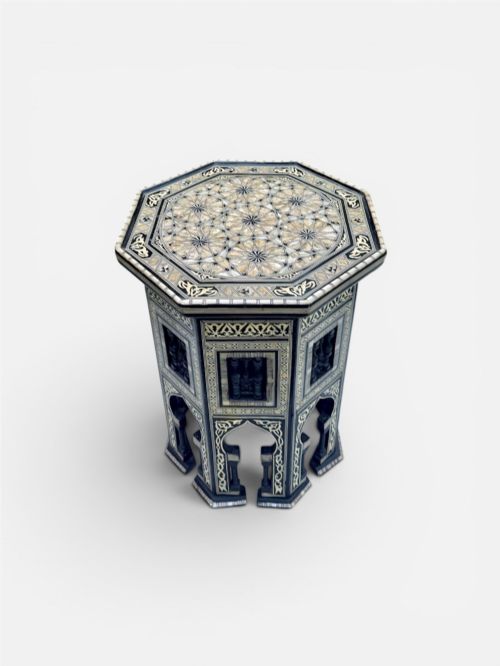
Indian Carved Tea Table
When choosing an Indian carved tea table, you select an intricately worked piece of colonial furniture designed for entertaining.
Indian Carved Tea Table
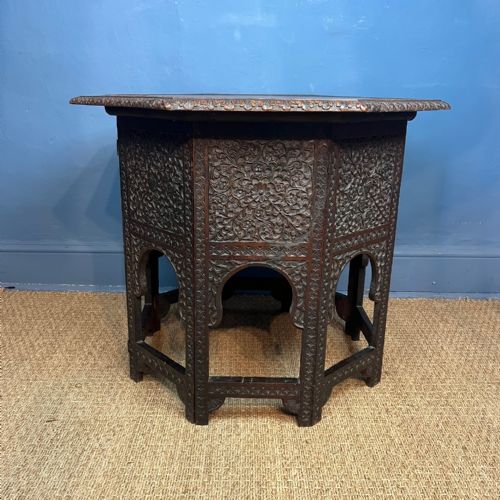
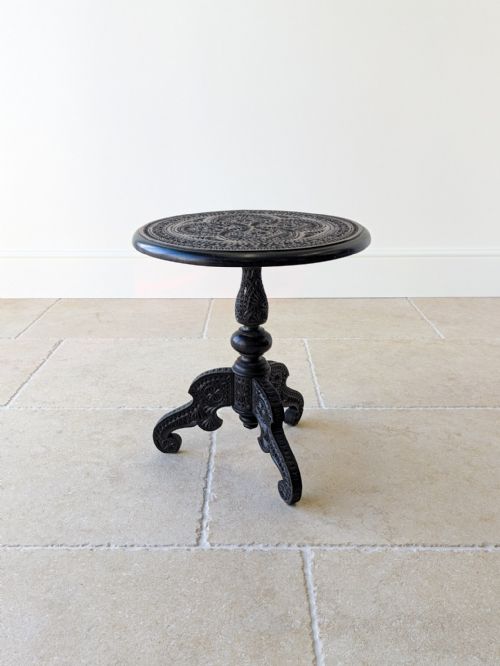
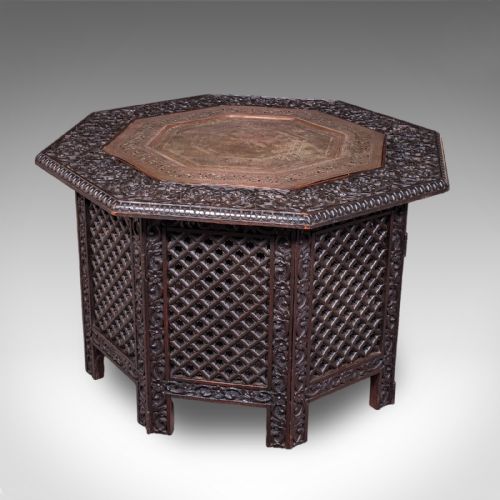
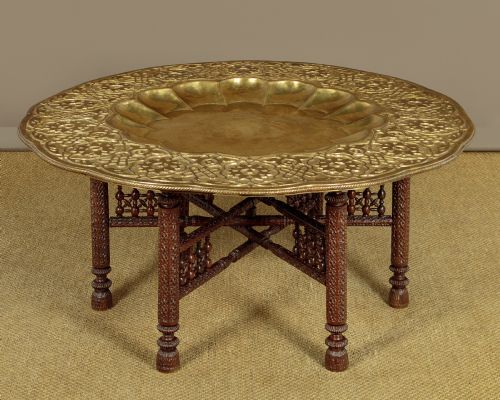
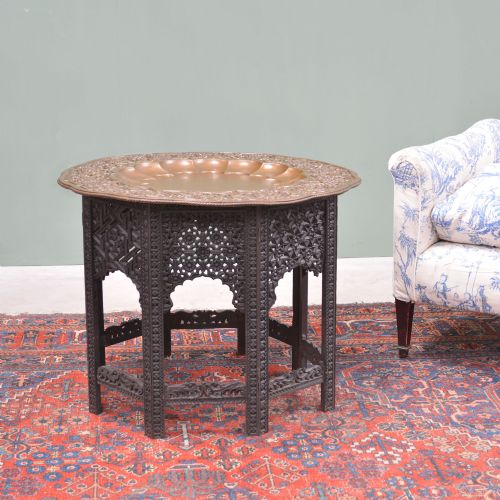
The indian carved tea table category encompasses occasional, coffee, and tray tables produced primarily during the nineteenth and early twentieth centuries. These tables frequently appear in octagonal, circular, or rectangular formats, often utilising folding bases for practical mobility.
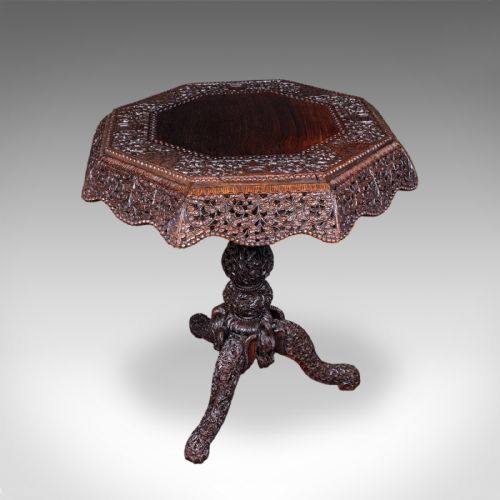
Makers in regions such as Hoshiarpur and Bombay supplied domestic and export markets with distinctive furnishings that blended traditional motifs with British colonial room requirements. Common variations include folding tray tables, pedestal wine tables, and low coffee tables designed for sitting or light display.
Materials and Construction
Workshops relied heavily on dense tropical timbers such as teak, padouk, and rosewood, which accepted microscopic chip carving and deep pierced relief without splitting. Artisans constructed folding bases with clever hinged joints that allowed octagonal tops to lock securely into place.
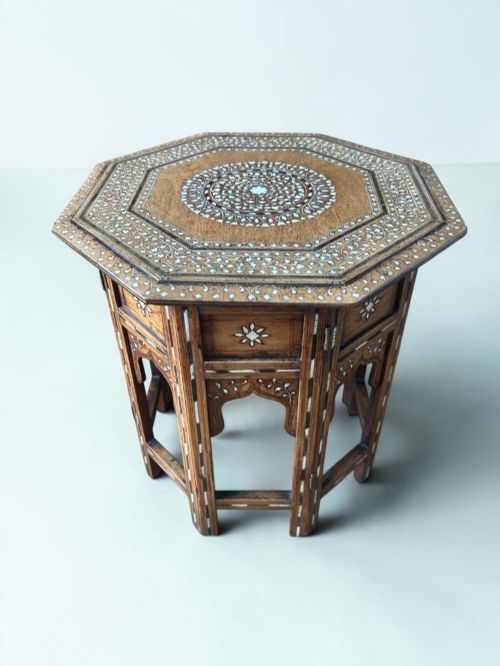
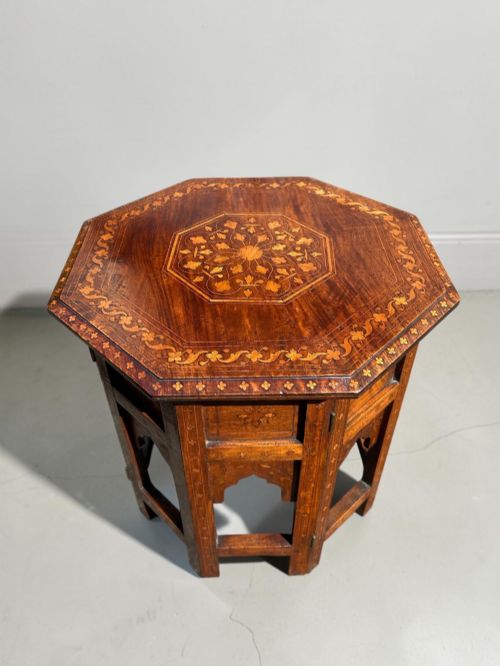
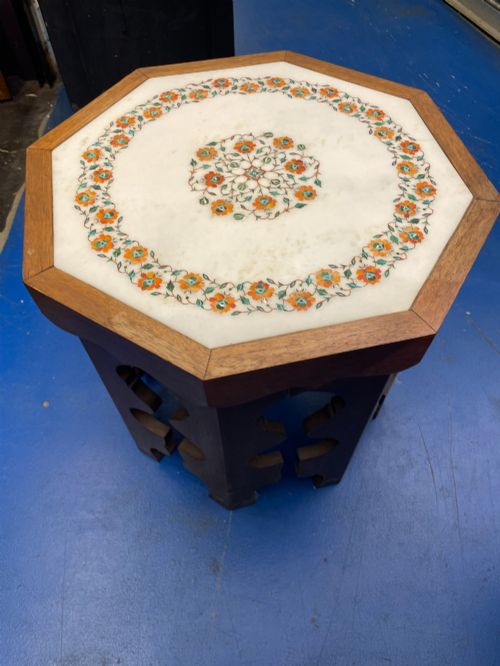
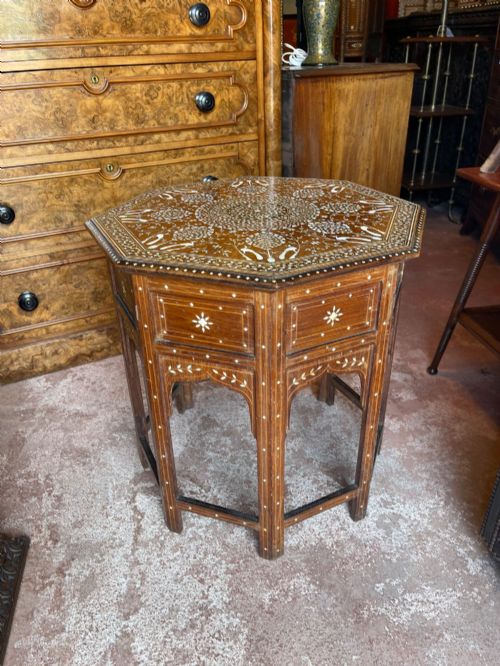
Surface enrichment frequently involved contrasting inlays of brass, copper, bone, and mother-of-pearl pressed into geometric channels. Some variations combined carved foliage with painted panels or marble tops imported to suit European tastes.
Indian Carved Tea Table Retail Price Guide 2026
Typical asking prices for indian carved tea table among the pieces listed under this phrase on Sellingantiques today, from the lower quarter to the upper quarter. They describe what is for sale here now, not the wider market.
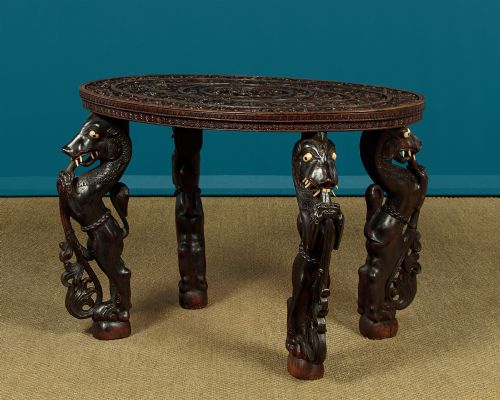
Several tables feature carved elephants supporting the top with their trunks, turning a simple tea surface into a miniature menagerie.
Assessing Craftsmanship
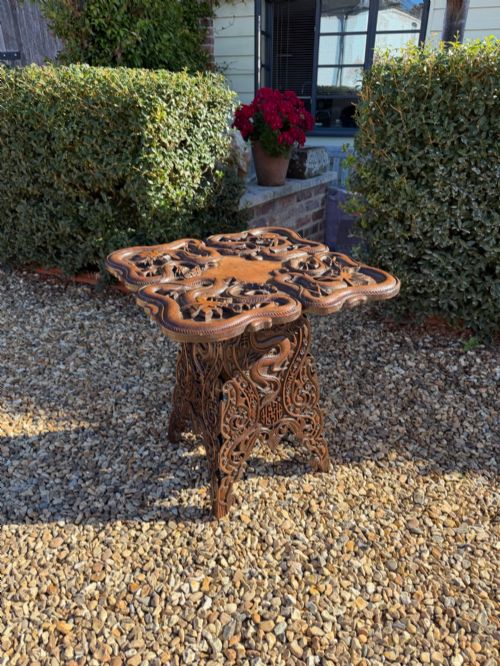
Quality rests upon the depth and crispness of the carving, where superior examples display sharp undercut foliage and symmetrical geometry rather than shallow, softened stamping. The density of the timber and the precision of the joints dictate stability, particularly in folding models.
Inlaid materials should sit flush with the surrounding wood, secured cleanly without excessive adhesive or gaps. Tables bearing retail stamps or documented regional provenance from centres like Hoshiarpur or Bombay command higher regard among collectors.
Liberty and Co
The Indian Carved Tea Table Glossary
- Anglo-Indian
- A style describing furniture produced in India during the British colonial period, combining local craftsmanship with European forms. These items often feature dense carving and exotic hardwoods.
- Hoshiarpur
- A North Indian town renowned for intricate woodwork, particularly tables featuring dense geometric chip carving and bone or brass inlay. Work from this centre is highly recognizable.
- Padouk
- A heavy, durable reddish-brown tropical hardwood favoured by colonial cabinetmakers for its stability and rich grain. It accepts fine carving exceptionally well.
- Teak
- A durable, oil-rich Asian timber widely utilised for structural stability and resistance to warping in carved tables. It forms the primary substrate for the majority of these pieces.
- Tilt-top
- A tabletop hinged to a pillar tripod base that tips vertically for convenient storage when not in use. This mechanism appears frequently on nineteenth-century occasional pieces.
Indian Carved Tea Table: Frequently Asked Questions
What is an indian carved tea table used for?
These tables served colonial households as versatile surfaces for serving afternoon tea, displaying ornaments, or functioning as occasional side furniture in drawing rooms. Their folding capabilities made them convenient for transport and repositioning.
Today, they suit modern interiors as compact coffee tables or lamp stands that bring rich texture and historical character to a room.
How do I fold an octagonal base?
Most octagonal tables utilise a clever interlocking hinged lattice frame that folds flat once the top is lifted off its support dowels. Gently easing the wooden hinges apart allows the framework to collapse smoothly without forcing the timber joints.
When setting the table back up, align the top carefully with the central notch points to ensure the structure remains level and stable.
Are these tables made of solid teak?
The majority of nineteenth-century examples utilise solid tropical hardwoods such as teak or padouk, which provided the structural strength required for deep relief carving. Artisans carved directly into the timber rather than applying thin veneers.
Secondary woods occasionally appear in internal framing or secondary structural battens, but the visible carved surfaces remain solid timber.
How do I care for bone and brass inlay?
Maintain inlaid surfaces by dusting regularly with a soft, dry cloth and avoiding harsh liquid cleaners that might seep into the carved recesses or loosen the adhesive. Natural beeswax applied sparingly keeps the surrounding hardwood nourished.
Keep these tables away from direct heat sources and strong sunlight to prevent the organic inlay materials and timber from drying out or shrinking.