


Indian Carved Lamps
These indian carved lamps bring intricate regional woodwork and warm brass illumination into a room, offering tactile history for the collector.
Indian Carved Lamps
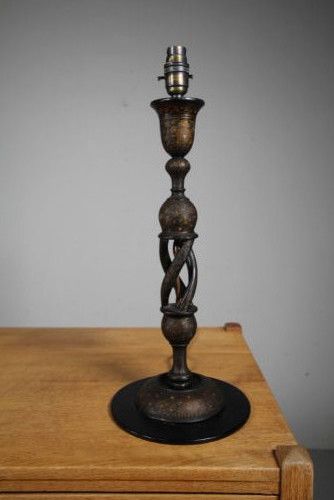
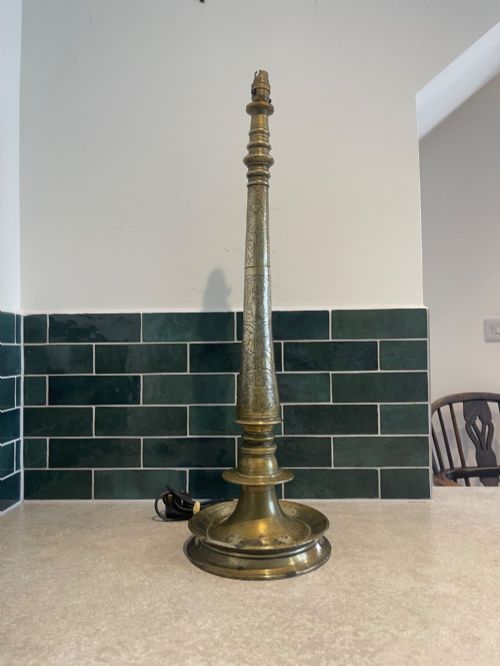
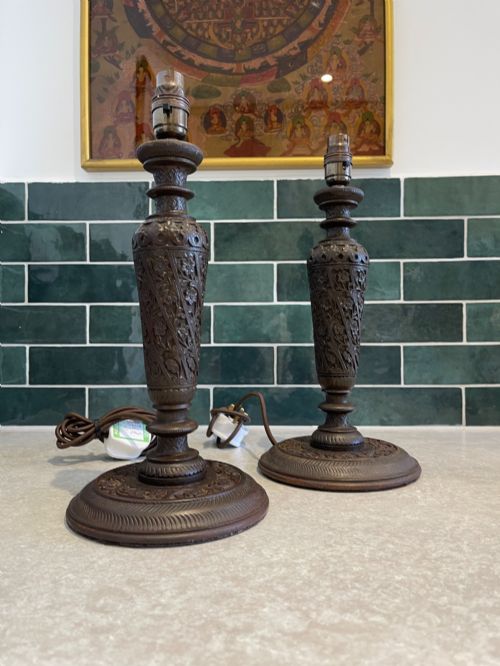
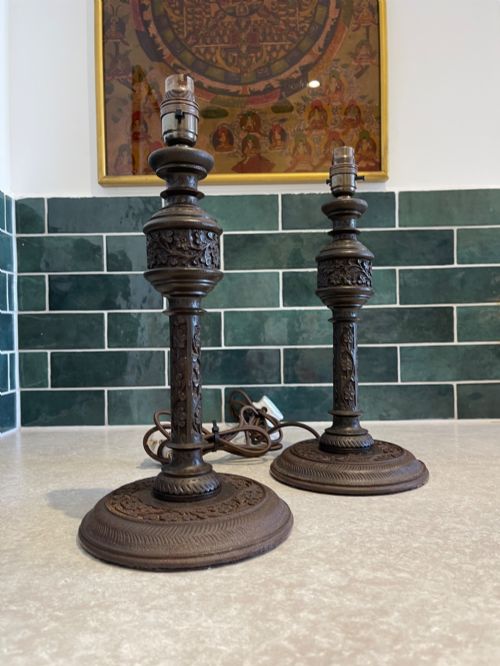
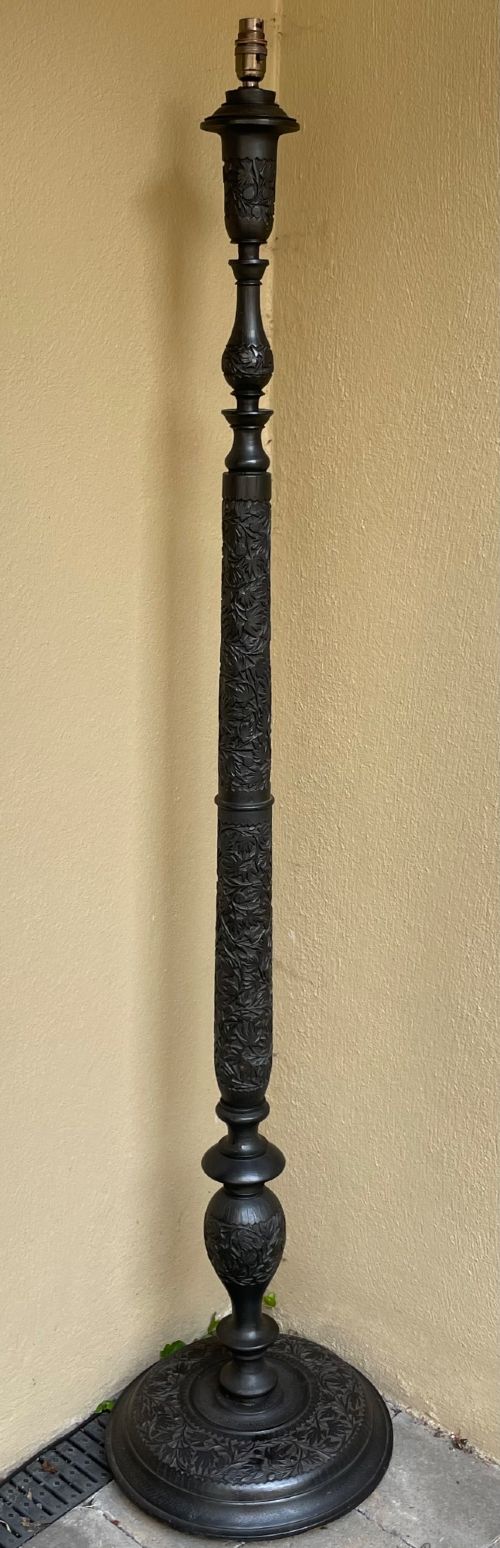
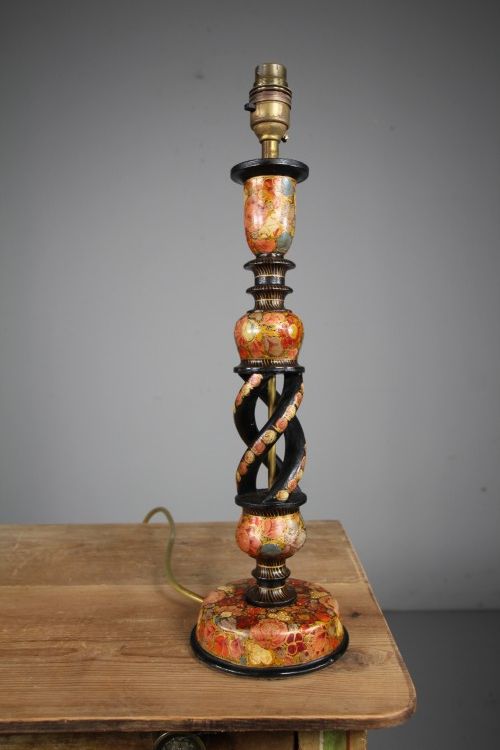
Indian carved lamps combine traditional domestic lighting with dense regional woodworking, appearing as tall standard lamps, floor lamps, and table lights originating from periods such as the Victorian era and the early twentieth century. You will encounter tall Kashmiri twist designs alongside pairs of turned wooden lamps and pierced brass pendant lights that reflect British colonial influence and indigenous craftsmanship.
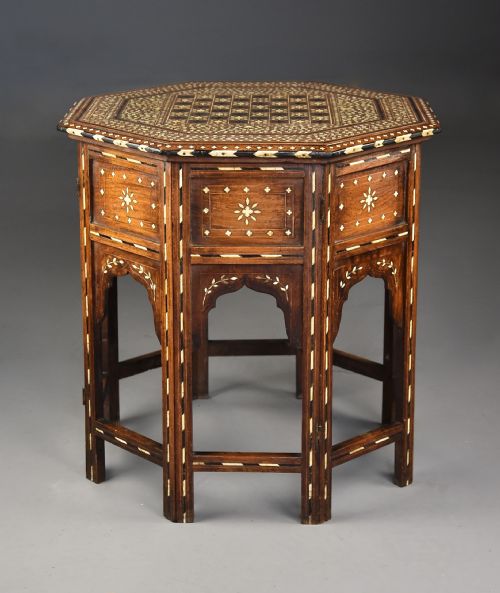
Makers utilised heavy tropical timbers like teak, padouk, and walnut, frequently applying intricate chisel work or multi-panel construction to standard lamps and occasional table combinations. The forms span regional aesthetics, including Anglo-Indian, Anglo-Burmese, and Moorish Revival styles that bridge utilitarian function and decorative carving.
How they were made
Artisans shaped these pieces from dense timbers such as teak, rosewood, hardwood, and padouk, relying on hand-carving techniques to achieve deep relief foliage and geometric patterns. Brass elements appear both as solid cast components and as pierced sheet metal work on pendant lights.
Surface treatments range from natural wax finishes on dark hardwoods to colourful lacquer applications seen on specific Kashmiri items. Joinery often incorporates folding mechanisms or pegged joints suited to colonial transport.
Twist lamps from Kashmir bring a tactile, spiralling rhythm to a dark corner that flat wood simply cannot match.
What varies in quality
Quality rests in the crispness of the chisel work and the depth of the timber relief rather than mere surface decoration. Superior examples display balanced proportions, tight joints in multi-part structures, and well-selected hardwoods that have retained their structural integrity across the decades.
The sophistication of the design dictates distinction, separating standard turned posts from deeply pierced or intricately twisted columns. Original components, consistent patination, and intact brass or lacquer finishes elevate the standing of an individual piece.
The Indian Carved Lamps Glossary
- Anglo-Indian
- A style describing decorative arts and furniture produced during the British period in India, merging European forms with local carving traditions.
- Padouk
- A heavy, durable tropical timber with a reddish hue frequently utilised in nineteenth-century Burmese and Indian furniture.
- Kashmiri
- Pertaining to items originating from the Kashmir region, often characterised by distinct surface painting, lacquer, or specific twist-carved wooden profiles.
- Standard lamp
- A tall freestanding floor lamp designed to hold a light fitting at eye level or above.
- Pierced brass
- Metalwork perforated with decorative patterns to allow light to filter through, common in hanging pendant lights and shades.
Indian Carved Lamps: Frequently Asked Questions
How do I date these lamps?
Dating relies on timber choice, construction methods, and stylistic markers recorded in nineteenth and early twentieth-century examples.
Heavier padouk and dense teak often point to Victorian or mid-nineteenth-century origins, while twist columns and specific electrical rewiring evidence early twentieth-century production.
Are these lamps wired for modern use?
Many surviving examples require rewiring to meet contemporary safety standards, though some arrive already updated by dealers.
Buyers should consult a professional electrician to fit modern flex and plugs while preserving the antique wooden or brass body.
What woods were commonly used?
Craftsmen selected robust tropical hardwoods capable of holding intricate, deep-relief carving without splintering.
Teak, padouk, walnut, and rosewood predominate across the surviving pieces, often paired with cast or sheet brass components.
How do I care for carved wood?
Maintenance requires gentle dusting with a soft brush to clear crevices in the relief carving and occasional application of appropriate furniture wax.
Direct sunlight and sudden humidity changes should be avoided to protect the dry tropical timbers and lacquer finishes.