



Hand Carved Lamp Bases
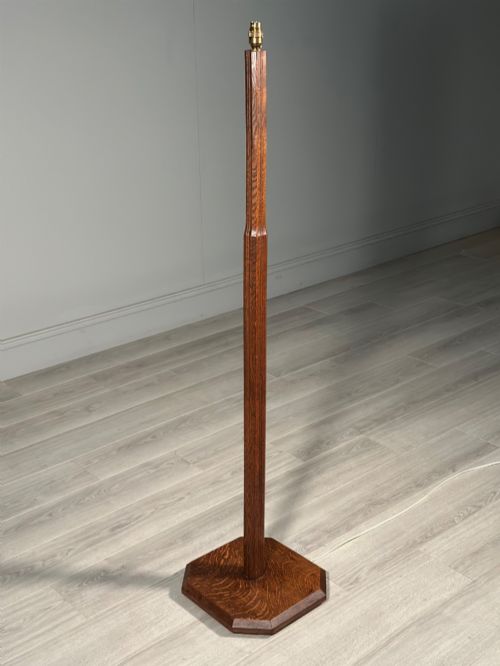
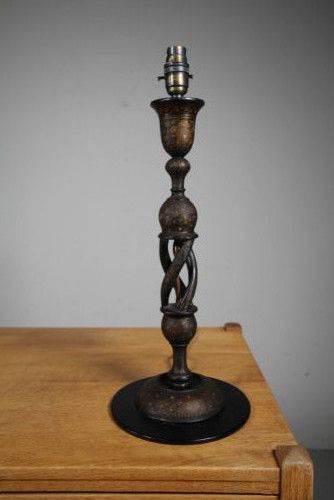
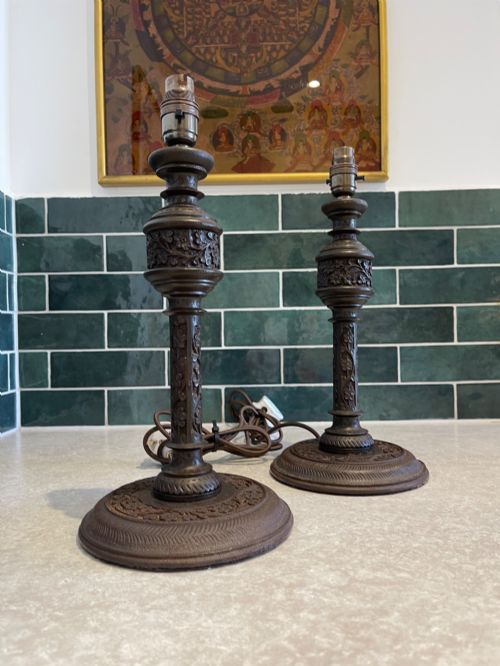
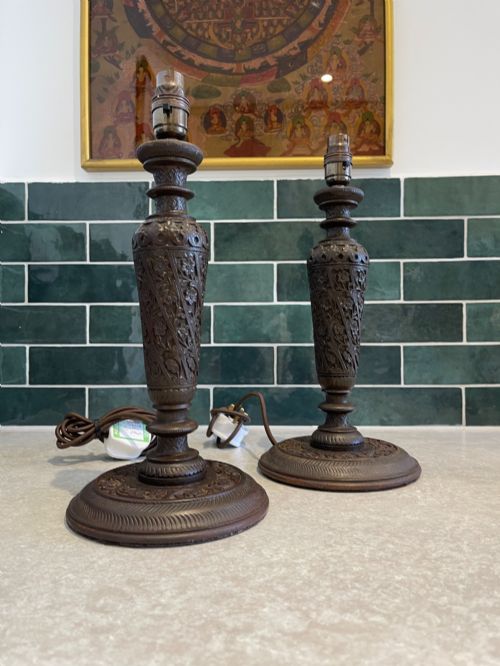
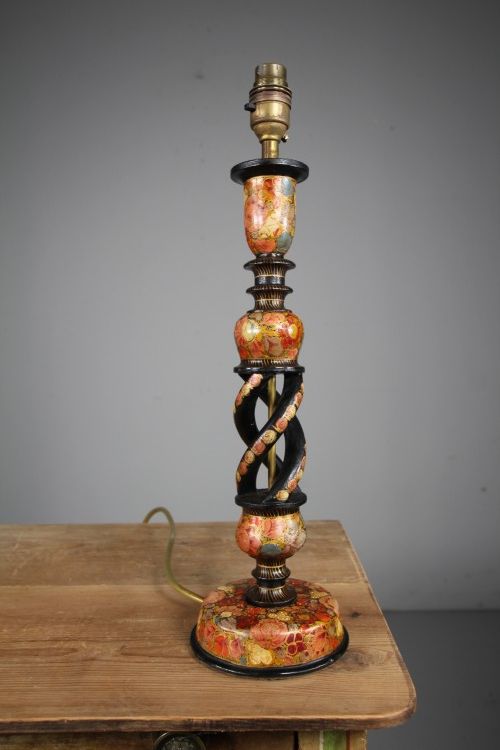
Hand carved lamp bases bring rich texture and organic warmth to a room, ranging from intricate Kashmiri twists to striking root wood forms.
Hand Carved Lamp Bases
Hand carved lamp bases encompass table lamps, standard lamps, and torchiere pedestals shaped from timber, root wood, and earthenware across various global styles. Buyers searching for hand carved lamp bases frequently encounter regional turning and carving traditions dating from the late nineteenth century through to the interwar period.
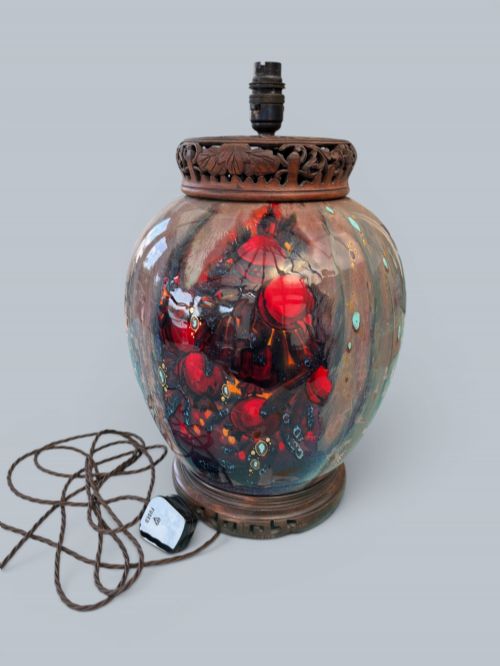
Forms vary significantly in height and silhouette, from tall standard floor lamps to paired table lamps and large torchiere columns. Materials extend beyond plain timber to incorporate silver leaf accents, brass fittings, lacquer, and Moorcroft art pottery elements.
Materials and Making
The construction relies heavily on solid woods such as walnut, hardwood, and regional root wood, shaped entirely by hand with chisels and gouges. Artisans utilised twisting lathes for specific columnar profiles alongside intricate hand-chiseled surface ornamentation.
Surface decoration frequently involves applied silver leaf, intricate lacquer work, or polished finishes that accentuate the natural grain of the timber. Some pieces integrate earthenware pottery bodies or brass components to support electrical wiring during subsequent period conversions.
Hand Carved Lamp Bases Retail Price Guide 2026
Typical asking prices for hand carved lamp bases among the pieces listed under this phrase on Sellingantiques today, from the lower quarter to the upper quarter. They describe what is for sale here now, not the wider market.
Several dragon torchiere bases stand ready to guard the corner of your study.
Assessing Quality
Quality rests upon the depth, precision, and crispness of the carving, where master craftsmanship produces sharp undercutting and fluid natural lines rather than shallow, mechanical impressions. The choice of raw material dictates the baseline, with dense walnut and characterful root wood holding fine detail substantially better than softer secondary timbers.
Proportion and structural integrity define the superior pieces, ensuring that tall standard lamps and heavy torchiere columns stand balanced and plumb without relying on excessive filler or clumsy stabilisation. The harmony between the original carved body and subsequent electrical adaptation also marks the distinction between thoughtful restoration and careless alteration.
The Hand Carved Lamp Bases Glossary
- Torchiere
- A tall standing lamp or pedestal designed originally to hold a torch or candle, adapted later for electric illumination. These tall supports elevate light sources significantly above table level.
- Root wood
- Timber sourced from the root ball of a tree, prized by carvers for its dense, gnarled grain and unique natural contours. It provides sculptural shapes unique to each piece.
- Kashmiri
- Pertaining to decorative arts from Kashmir, traditionally featuring dense painted or carved floral and twist motifs on wood. These pieces often display intricate surface detail.
- Standard lamp
- A tall floor-standing lamp base designed to illuminate a room from a corner or beside seating. They provide substantial vertical presence in interior schemes.
Hand Carved Lamp Bases: Frequently Asked Questions
How do I style a carved lamp?
Pair tall standard lamps with simple, neutral shades to let the carved timber grain and silhouette remain the primary focus in the room.
Smaller table lamps suit side tables or chests, where their texture contrasts effectively against plain walls and polished wood surfaces.
Are these lamps recently rewired?
Many older pieces have been updated with modern electrical flex and fittings to meet contemporary safety standards while retaining their original aesthetic.
It remains wise to have any antique lighting checked by a qualified electrician before daily use.
What is root wood?
Root wood comes from the underground root structure of trees, harvested for its dense, twisting grain patterns and irregular natural forms. Artisans work directly with these organic shapes to create sculptural bases.
No two root wood items share the exact same silhouette.
How do I date an old lamp?
Dating relies on stylistic clues, timber choice, manufacturing marks, and the presence of period wiring components or brass fittings. Comparing carving techniques against documented regional traditions helps narrow the decade.
Construction methods often reveal whether a piece originates from the late nineteenth century or the interwar decades.